Direct Answer: If the original jamb is plumb, square, and solid, order a slab prepped to match it. If the jamb is rotted, racked, or the wall is being rebuilt, order prehung.
You are replacing six interior doors in a house built in 1925, and the thing keeping you up is simple. What happens if they show up and none of them fit the openings?
It is a fair worry in this part of the East Bay. Close to half of Berkeley’s housing stock was built before 1940, and those openings were framed before anyone standardized anything. Non-standard door openings are one of the most common ordering headaches people bring through our doors.
The Slab vs Prehung Decision Is Made by the Jamb, Not Your Budget
Most advice online tells you prehung is the easy button and slab is the cheap option. In a pre-war Berkeley, Oakland, or Albany house, that framing misses the point.
The real question is whether the existing jamb is still good. If it is, keeping it is usually the smarter order. If it is not, you are rebuilding the opening anyway and a prehung unit makes sense.
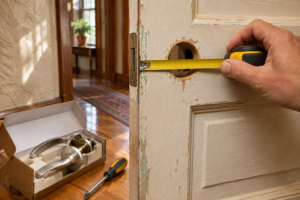
Walk the opening with a level and a tape before you write anything down:
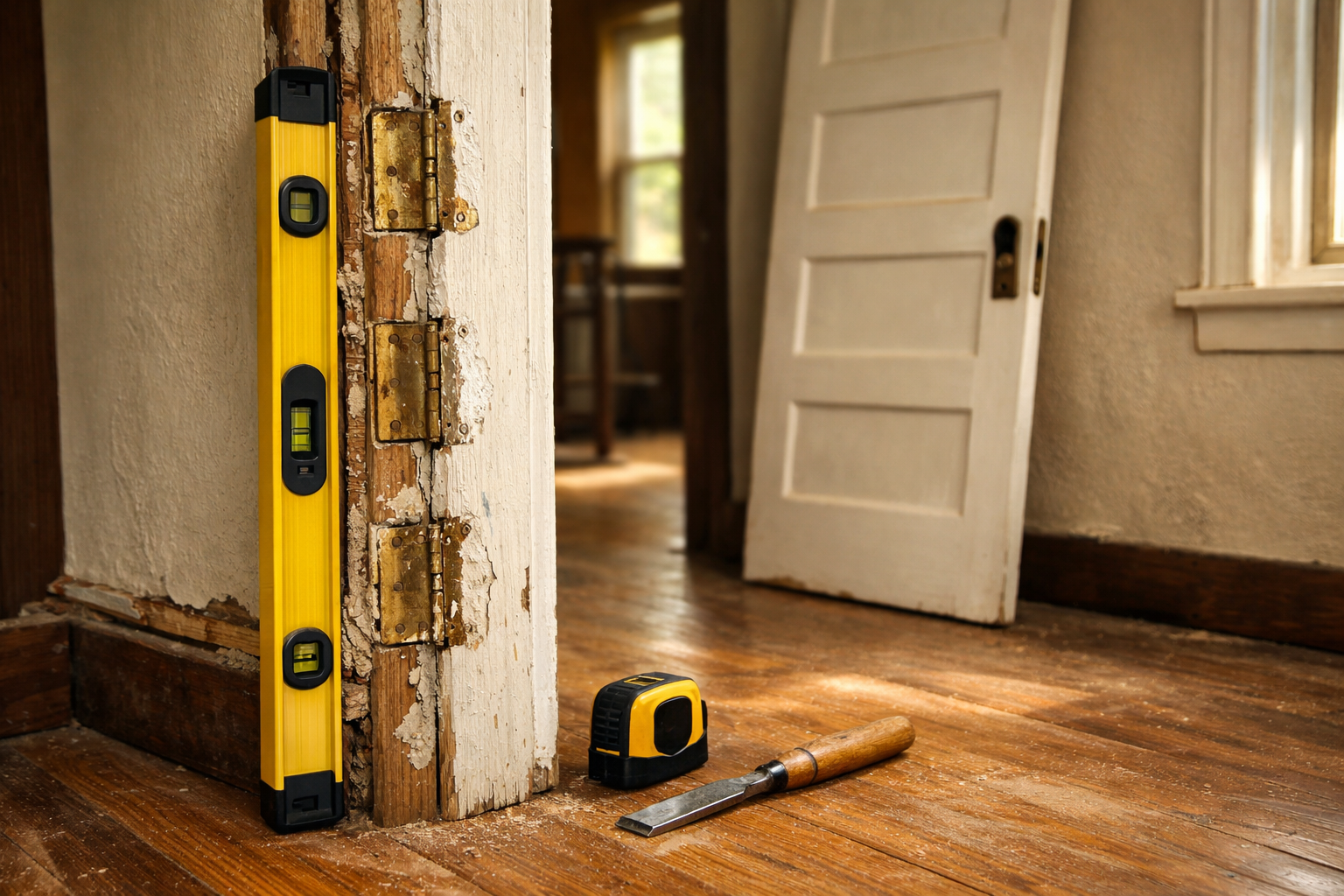
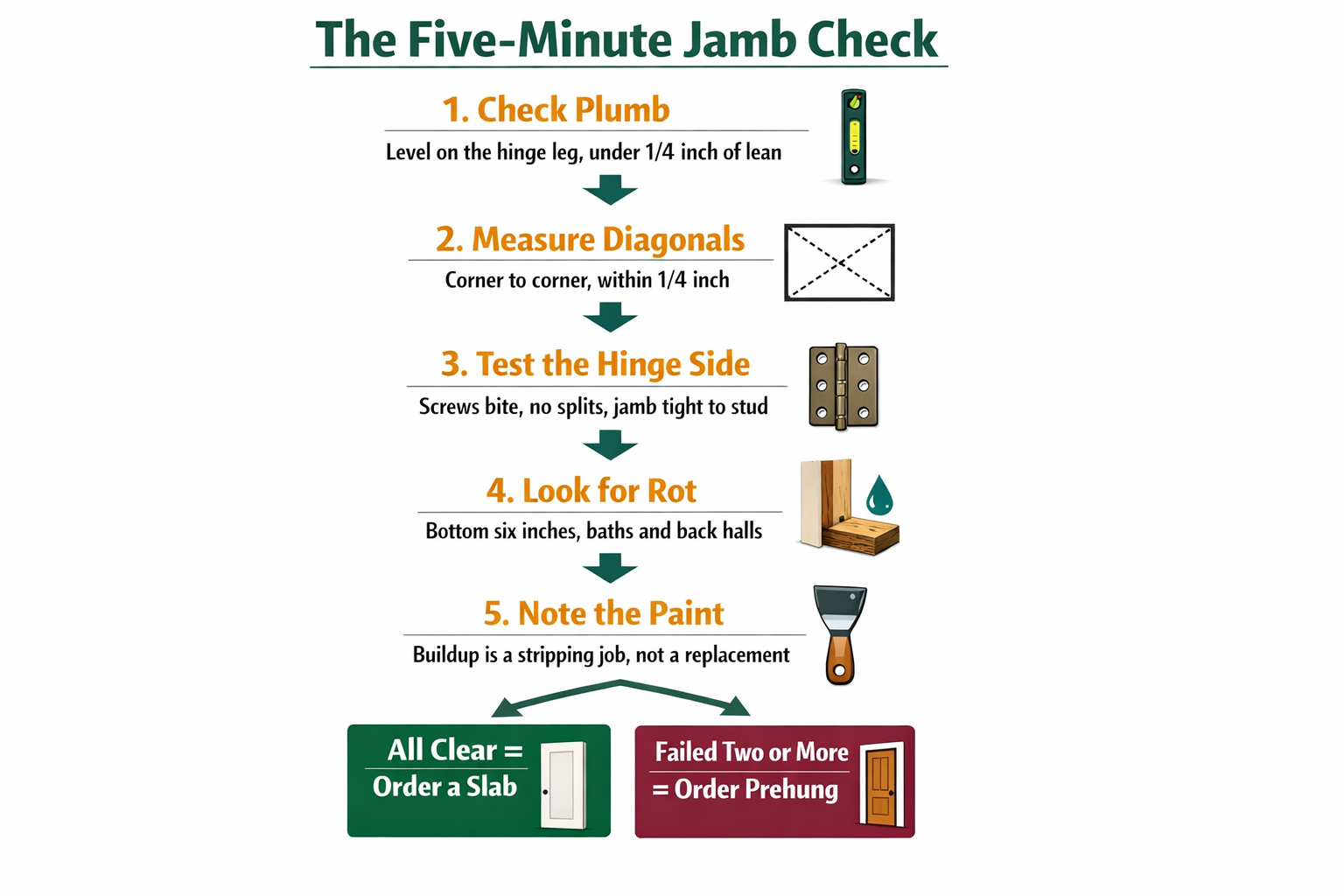
- Plumb: Hold a long level on the hinge-side jamb leg. A little lean is normal in an old house. A leg that is out more than about 1/4 inch over its height is telling you something moved.
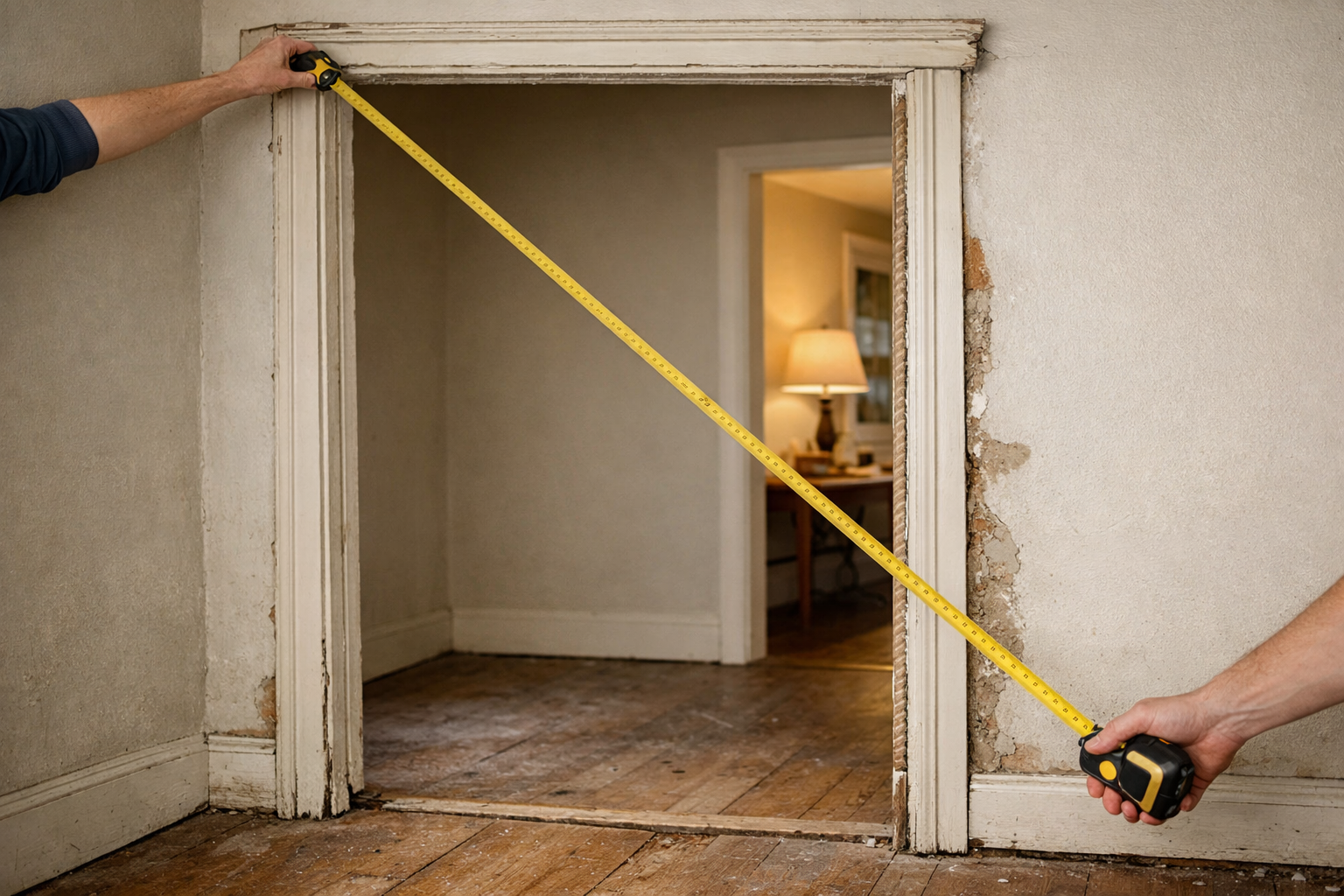
- Square: Measure corner to corner, both diagonals. If they are within roughly 1/4 inch of each other, you are in workable shape.
- Hinge side solid: Push on it. Check that the screws still bite, the leg is not split behind the hinge, and the jamb has not pulled away from the stud.
- Rot and water: Look at the bottom six inches, especially bathroom and back-hall openings.
- Paint buildup: Twelve coats of paint rounds off the stop and fills the mortises. That is a stripping problem, not a replacement problem.
Here is the part generic content never says. A sound original jamb in a 1920s house is usually worth keeping. Old-growth fir jambs are harder, straighter, and better fastened than most of what gets installed today, and the casing around them is often a profile you cannot buy off a rack. Pulling that out to save an afternoon of fitting is a bad trade.
What Hanging a Slab Actually Involves
People underestimate this one constantly. A slab is just a blank door until someone matches it to your opening, and that work has to happen somewhere.
Here is what a slab needs before it swings right:
- Hinge mortises located off the existing jamb. Not off a template. The spacing in an old house is whatever the carpenter felt like in 1925.
- Hinge size and corner shape. Many pre-war doors run 3-1/2 inch butt hinges with square corners. Most stock doors come prepped for 1/4 inch radius corners. Mix those up and the mortise does not match.
- Lock prep. A modern bored lockset needs a 2-1/8 inch face bore, a 1 inch edge bore, and a backset of either 2-3/8 or 2-3/4 inches. Plenty of 1920s doors used a mortise lock instead, which is a completely different prep.
- Bevel on the lock edge. Usually about 3 degrees, roughly 1/8 inch over the door’s thickness, so the edge clears the jamb as it closes.
- Trim limits. You cannot just shave a door to fit. On a solid core, you run out of stile fast. On a hollow core, the solid rails at the top and bottom are often only about 1-1/4 to 1-3/4 inches deep, and once you cut past them you are into air.
A crew can burn half a day fitting one door this way. Across a whole floor, that is the budget. A pre-fit slab, bored and mortised at the shop to match measurements taken off your actual jamb, takes most of that guesswork off the jobsite.
When Prehung Is the Right Call
Sometimes the jamb loses the argument, and then prehung is clearly the better order. The common cases we see:
- Rot or water damage, usually on bathroom and back-hall openings where a leak sat for years.
- A racked jamb that is out of square badly enough that no slab will close evenly against the stop.
- Walls being moved or furred out, which changes the jamb depth anyway.
- Openings cut for narrow jambs. Lath and plaster walls run thicker than modern drywall assemblies, and old jamb widths often do not match today’s stock 4-9/16 inch depth. This is one of the most frequent sources of ordering errors.
- Garage-to-house openings, which typically call for a 20-minute fire-labeled prehung unit. Rating requirements are set by code, so confirm what applies with your building department and the current standards published through the California Building Standards Commission.
One thing to be honest about. A prehung unit dropped into an out-of-plumb 1925 rough opening still has to be shimmed, still has to be checked for reveal, and still needs new casing. It is not the shortcut most people picture.
On relative cost, keep it simple. A prehung carries the jamb, the hinges, and the factory prep in the price. A slab shifts that labor to the shop or the jobsite. Custom widths, heights, and non-stock species add time and cost either way, so ask for a quote on your actual sizes rather than assuming one route is always cheaper.
Which Order Fits Your Opening
Match what you found during the jamb walk to what belongs on the order form.
| What you found | What to order | Why |
|---|---|---|
| Jamb plumb, square, solid, just painted over | Slab, pre-fit to the existing jamb | Keeps original casing and old-growth jamb in place |
| Jamb sound but opening is an odd width or height | Custom-sized slab, cut and reblocked | Trimming a stock door past the stile is not an option |
| Rot at the base of a bathroom or back-hall jamb | Prehung unit | The jamb is being replaced regardless |
| Wall is moving or being furred out | Prehung with jamb depth built to the finished wall | Plaster walls rarely match stock jamb depth |
| Jamb racked badly out of square | Prehung, reset and shimmed plumb | No slab will close evenly against a twisted stop |
| Garage to living space | 20-minute fire-labeled prehung | Rated assembly requirement, confirm locally |
The Five-Minute Jamb Check
Run this on every opening before you order anything. It takes a level, a tape, and about five minutes per door.
What to Have in Hand Before You Order
This is different from measuring for a replacement door. You are specifying a part that has to mate with existing millwork, so bring the details that describe the opening, not just the hole.
Have this ready for each door:
- Hand and swing. Stand on the side the door swings toward you. Hinges on your left is left hand, on your right is right hand.
- Slab thickness. Most interior doors are 1-3/8 inches, but old houses turn up oddballs.
- Jamb depth measured through the plaster, wall face to wall face, not the drywall assumption.
- Hinge count, size, and corner shape. Photograph a hinge with a tape next to it.
- Existing bore and backset, or a note that it is a mortise lock.
- The casing profile already on the wall. Bring a cutoff piece in if you have one.
That last one matters more than people expect. Matching a 1920s profile is done from a sample, not from a catalog page, which is the same reason matching original trim profiles in a 1920s Berkeley home usually starts with somebody carrying a chunk of baseboard into the yard.
The value of walking through this with someone who orders doors all day is real. As one customer put it in a review, “They have helped me with everything from custom sizing a pre-made door to researching denim insulation.”
Have the Order Conversation Before Demo Week
Interior door shopping climbs every fall and peaks in January, usually right after a holiday season of doors that stick and latches that spin. If your project is queued for winter, timing is the other half of getting this right.
Stock slabs can come off the rack. Custom sizes, shop pre-fitting, and non-stock species cannot. Those take real lead time, and the clock starts when the measurements are confirmed, not when you decide.
So sequence it this way:
- Walk and measure every opening before anything gets torn out
- Confirm sizes, preps, and jamb depths with the yard
- Place the order, then schedule demo
The same logic applies to bigger packages, which is why we wrote about how early to order windows and doors for a spring remodel.
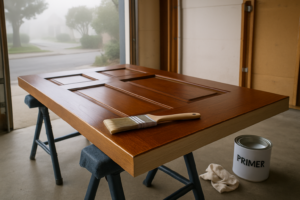
Core construction, pocket door framing in an old wall, and finishing are separate decisions, and we cover those elsewhere. Worth knowing that even a perfectly fitted door will move on you if it is not sealed properly, which is the whole point of the six-sided finish rule. For the product side of interior doors and hardware, see our residential door supplier page.
Frequently Asked Questions About Slab vs Prehung Interior Doors
How much can I trim off a slab door to fit an old opening?
Less than most people think. On a solid core you run into the stile quickly, and on a hollow core the solid top and bottom rails are often only about 1-1/4 to 1-3/4 inches deep. Every manufacturer publishes its own trim allowance, so check it before you cut. If the opening is well outside stock sizes, ordering a custom-sized or cut-and-reblocked slab is the cleaner path.
My jamb is covered in a dozen coats of paint. Does that mean I need prehung?
Usually not. Paint buildup is a surface problem. If the jamb is plumb, square, and solid underneath, stripping the stop and the hinge mortises gets you back to a jamb worth keeping.
Do prehung doors fit the thicker walls in older East Bay houses?
Not off the shelf. Lath and plaster assemblies often run deeper than the standard 4-9/16 inch jamb, so a prehung for an older wall typically needs a custom jamb depth. Measure wall face to wall face through the plaster and bring that number with you.
Is prehung always faster to install?
No. A prehung unit going into an out-of-plumb 1925 rough opening still has to be shimmed, checked for even reveal, and re-cased. A pre-fit slab hung on a sound original jamb can actually go quicker, because the jamb is already set and the casing stays put.
What do I need for a door between the garage and the house?
That opening is typically a rated assembly, which usually means a 20-minute fire-labeled prehung unit rather than a slab. Requirements come from code, so confirm the current rules with your local building department before ordering.
Getting an Old Berkeley Door Opening Right
Our in-house door shop at the Berkeley yard handles the work that makes an old opening cooperate: custom sizing and cut-and-reblock, custom jamb details, matching preparations and pre-fit slabs, mortising and lock prep, and labeling each door by room so it lands in the right place on the jobsite. For projects across Berkeley, Oakland, San Francisco, and the broader East Bay, that is where the product knowledge sits. If you want to talk through an opening before you order, the Windows and Doors showroom at 1831 Second Street is at 510-649-4400, and bringing a photo of the hinge and a piece of the old casing goes a long way.