Direct Answer: Bring a clean 6 to 12 inch piece of the original trim to a yard with a millshop. Staff can match a stock profile or grind a custom knife to reproduce the shape.
You pulled one doorway apart to add a closet, and now you need eight feet of casing that matches the rest of the house. The stuff at the chain store looks close on the rack and obviously wrong the second it sits next to the original.
That is a common problem here. Berkeley’s median home construction year is 1944, and roughly 46% of the housing stock was built before 1940. Patching trim in a house like that means matching a profile that has not been milled commercially in eighty years.
This guide covers what actually works: how to identify the profile you have, how a real match gets made, and the two old-house realities that ruin otherwise clean trim work.
Start by figuring out what you already have
Before you shop, read the existing trim like a spec sheet. Modern casing is usually thinner and narrower than pre-war stock, and the profile is cut to a different shape, so a rough guess almost never lands.
Four things to write down:
- Overall width. Many 1920s Berkeley casings run wider than the 2 1/4 inch stock sold today.
- Thickness. Original casing is often a full 3/4 inch or heavier. Modern stock is frequently milled thinner.
- Backband, yes or no. A lot of Craftsman door openings use a flat casing with a separate backband at the outer edge. Two pieces, not one.
- Profile family. Flat Craftsman stock with a slight taper, a Victorian-era ogee with tight curves, or a Mission square edge with almost no detail at all.
The National Park Service treats crown molding, baseboards, and window and door millwork as character-defining interior features worth retaining in a rehab. That is the practical argument too. Trim is the first thing a buyer’s eye lands on in an old house, and a mismatched run reads as a repair forever.
How a profile match actually gets made
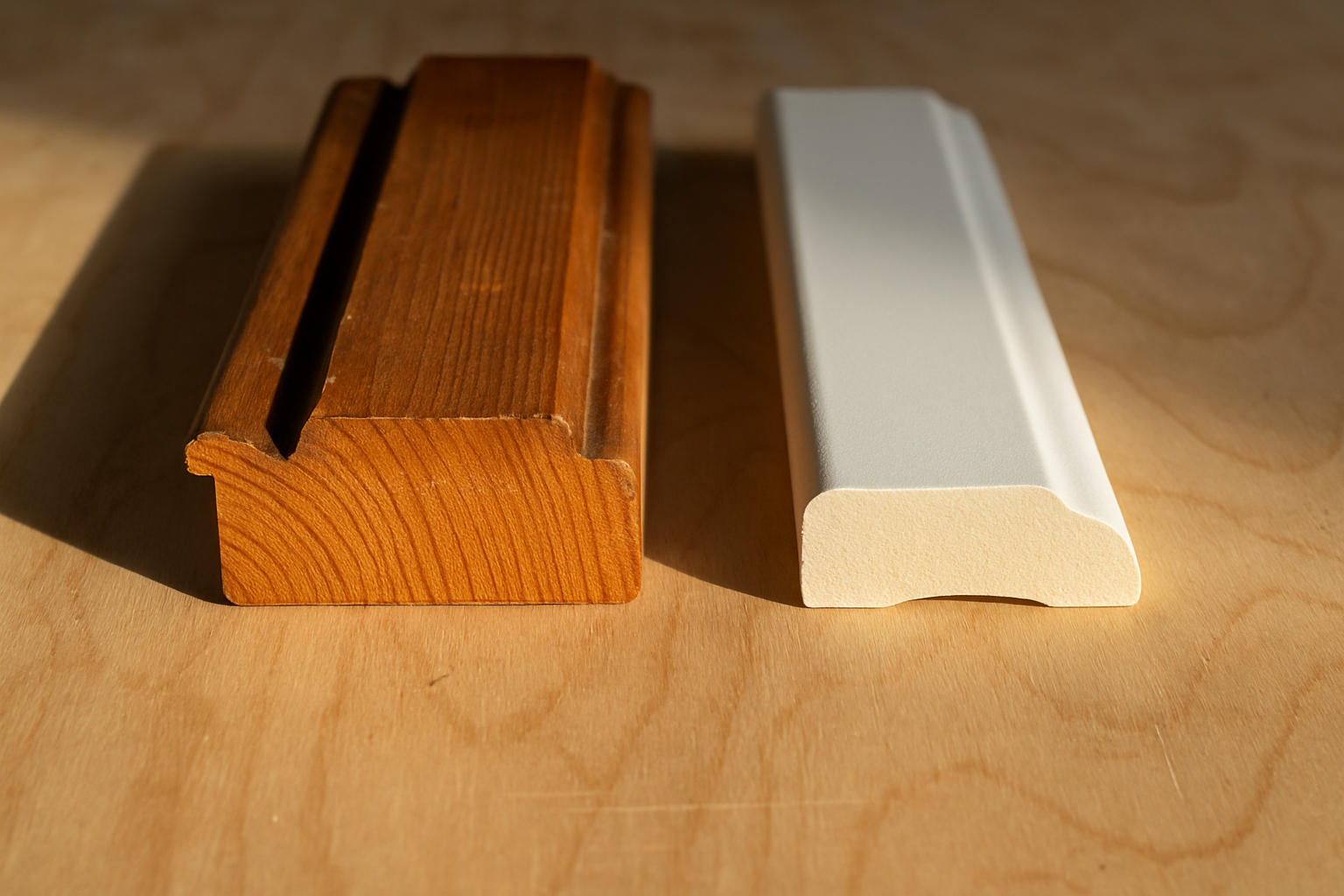
Almost no national content explains this part, so here it is straight. A photo does not work. A measurement on a napkin does not work either. The reliable method is a physical sample.
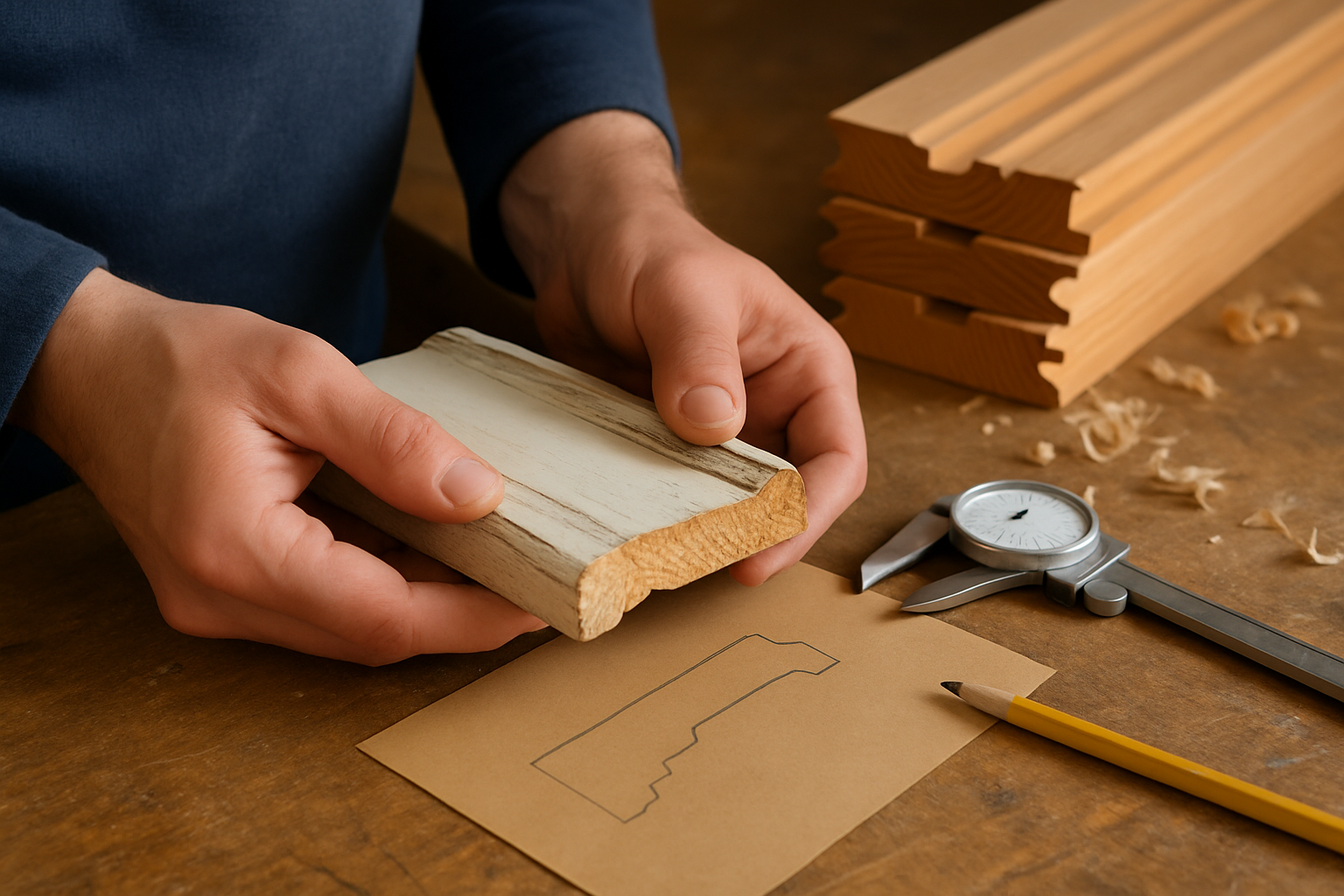
Pull a clean piece of the original, 6 to 12 inches is plenty, from somewhere the gap will never show:
- Inside a closet, low on the jamb
- An attic or basement doorway
- Behind a door that always swings open against the wall
- A section already scheduled for demo
Walk that piece in. From there, there are two paths.
A yard with a millshop can pull stock profiles and lay your sample against them. If one matches, you are done, and you pay for material instead of setup.
If nothing matches, the shop grinds a custom knife shaped to your sample and runs the profile. That reproduces the original exactly, including the width and the depth of the detail. We will tell you honestly which one you are looking at, because a near-match usually announces itself once it is installed, caulked, and painted. The eye catches the shadow line, not the dimensions.
Common East Bay Trim Styles and What to Check
Most pre-1940 Berkeley and Oakland interiors fall into one of three families. Here is what each one demands before you order anything.
| Style family | What it looks like | What to confirm first |
|---|---|---|
| Craftsman (roughly 1905-1930) | Flat or slightly tapered casing, often with a separate backband, square-cut head trim | Thickness, backband profile, whether the original is clear-finished fir |
| Victorian / Edwardian (pre-1910) | Fluted casings, ogee curves, decorative corner blocks | Curve depth after paint stripping, corner block dimensions |
| Mission / early Modern (1920s-1930s) | Square edges, minimal detail, wider flat stock | Overall width and exact reveal at the jamb |
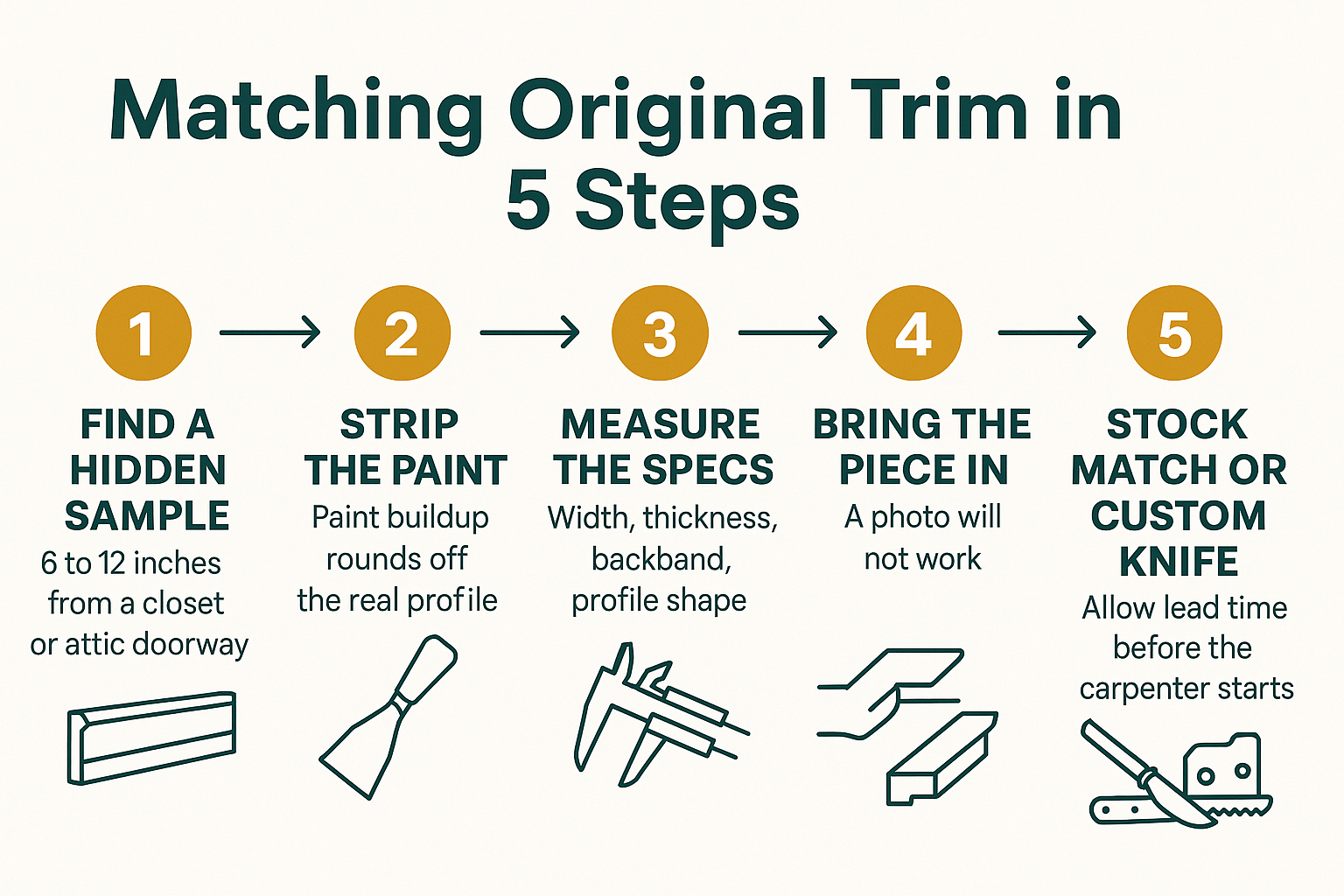
The Five-Step Trim Match
A quick look at the sequence that keeps a trim repair from turning into a rework.
Two old-house realities that wreck good trim work
Paint buildup lies to you. Eighty years of oil, then latex, then whoever owned the place in 1978 rounds off every crisp edge. If you measure a painted sample, the reproduction comes back soft and shallow compared to the original.
Strip the sample first, or at least strip a two-inch window on it, then measure. A shop can only copy what it can see.
Pre-1940 walls are not square. Houses in the Berkeley flats and up in the hills have settled, been re-plastered, and in plenty of cases been through a quake or two. Inside corners are rarely 90 degrees.
That is why crown and casing in these homes call for coped inside joints and scribing, not tidy 45-degree miters. A cope holds its line when the corner moves seasonally. A miter opens up and shows a white caulk seam by the second winter. Outside corners on out-of-plumb walls usually need a slight bevel adjustment cut on site, which is another reason to order a few extra feet.
Species and finish decide whether the repair disappears
This is the decision to make before anything gets milled, and people skip it constantly.
A lot of Berkeley Craftsman interiors were trimmed in clear vertical-grain Douglas fir with a clear or shellac finish. Finger-jointed primed pine will never match that once afternoon light hits the wall. You will see the joints, and the grain will read wrong even under stain.
So split the job honestly:
- Paint-grade work. Poplar and primed stock are fine. Stable, takes a finish well, easier on the budget.
- Clear-finished original woodwork. You need the same species and the same grain orientation. Vertical grain fir next to flat-sawn fir still looks like two different boards.
If you are chasing a stained or shellacked run, plan on sourcing the material and the profile together. And if your project also involves hardwood trim, keep an eye on material markets, since import costs on hardwoods have been in flux and that affects both price and availability.
Why trim jobs stall: lead time
Interior trim is winter work in the East Bay. When rain shuts down exterior projects from roughly November through February, crews move inside, and demand for casing, base, and crown climbs right along with it.
That is the same stretch when storm prep pulls exterior attention and shops get busy. Custom knife runs and special-order profiles carry real lead time. Bring the sample in weeks before the finish carpenter is scheduled, not the morning the trim is due.
On cost, we will not throw a number at you, because the real drivers are specific to your piece:
- Profile complexity. More curves and more depth mean more setup.
- Species. Clear vertical-grain fir is a different conversation than poplar.
- Linear footage. Setup gets spread across the run, so short orders carry more of it.
- Whether a new knife has to be ground. A stock match avoids that entirely.
Walk the sample in and ask for a quote on your actual profile. Same logic applies if you are trimming out a new build or a Berkeley or Oakland ADU that needs to read as part of the main house.
Frequently Asked Questions About Matching Original Trim
Can I just send a photo of the trim instead of pulling a piece off the wall?
No. A photo cannot show thickness, and lens distortion changes the curve of a profile. Bring the physical piece, even a short scrap.
How much of the original do I need to remove for a sample?
6 to 12 inches is enough. Take it from inside a closet, an attic doorway, or behind a door that always swings open, so the gap never shows.
Is a close-enough stock profile really that noticeable?
Usually, yes. Once a run is installed and painted, your eye reads the shadow line where the profile turns. A quarter inch of width difference or a shallower curve shows up plainly, especially on a door opening between two rooms with original trim.
Why do people say to cope crown instead of mitering it in old houses?
Because pre-1940 walls in Berkeley and Oakland are rarely square or plumb. A coped inside joint keeps a tight line when the corner is off by a degree or two and when the house moves with the seasons. A miter opens up and shows a gap.
Should I strip the paint off my sample before bringing it in?
Yes, or at least strip a small section of it. Decades of paint round off crisp detail, and a shop can only reproduce the shape it can measure.
What if I need matching corbels or a rail cap, not just casing?
A custom millshop can cut, rip, and shape wood to spec, including scrolled beam ends, corbels, deck rail caps, and stair stringers. Same rule applies: bring the sample or a full-size drawing.
Bringing a Trim Sample In
Matching an eighty-year-old profile is a capability, not something sitting on a shelf, and that is why people drive a broken piece of casing across town instead of settling for the closest chain-store match. One customer put it this way after a recent job: “I received excellent customer service from Thom who collected the details of what I needed and then from Terrence who reproduced the additional trim pieces exactly from the sample I provided.” – Lois B.
Our in-house door shop and millshop in Berkeley works from customer samples and specs, and the lumber and hardware counter at 642 Hearst Avenue can talk through species and grain before anything gets milled. If you want to ask about a profile on your own project, the Lumberyard and Hardware line is 510-841-0511, or you can look through product categories at truittandwhite.com.