Direct Answer: Finish both faces, both side edges, and the top and bottom before hanging. Bare end grain on the top and bottom soaks up moisture fast, which is what bows and sticks the door.
The door went in during September and looked perfect. By February the latch does not line up, the top of the slab is swollen against the jamb, and you have to lean on it to close it.
Nine times out of ten this is not a bad door. It is a door that got finish on the two faces and nothing on the top and bottom edges, where bare end grain pulls in water faster than any other part of the slab.
In the East Bay that matters more than national advice admits. A shaded north-facing entry in west Berkeley stays damp for days after the rain stops, so an unsealed edge never gets a real chance to dry back out. Here is what the six-sided rule actually means, why your warranty depends on it, and how to read your own doorway before you pick a color.
Why the Top and Bottom Edges Are Where Doors Fail
Wood drinks through end grain. Cut across the fiber and you have opened up thousands of little straws that take on moisture far faster than a flat face does.
The top and bottom of a door are end grain. They are also the two surfaces nobody looks at once the door is hung, which is exactly why they get skipped.
When one part of a slab gains moisture and the rest does not, the wet side swells and the dry side does not move with it. That difference is what produces the bow, the cup, and the sticking latch.
Watch for these early signs before the door gets bad enough to plane:
- The top corner on the latch side starts rubbing the jamb first
- The deadbolt throws rough while the knob latch still works fine
- A visible gap opens at the bottom hinge side when the door is closed
- Paint on the faces looks fine but the edges feel cool and slightly soft
- Weatherstrip compresses hard on one corner and not at all on the other
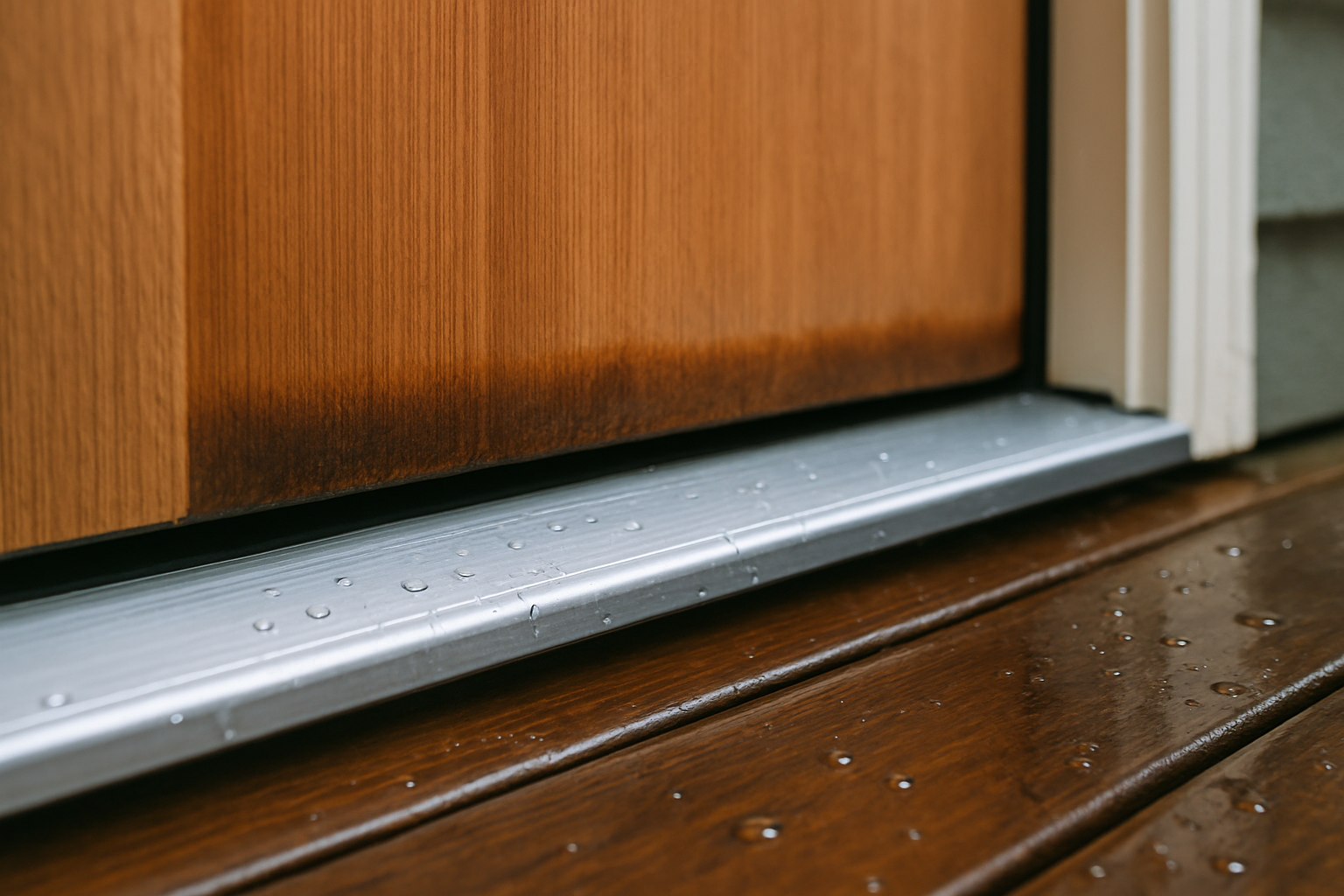
Bottom edges take it from the other direction. Rain blows under a shallow stoop, bounces off the porch deck, and wicks straight up into an uncoated bottom rail. On a fog-belt entry that surface can sit damp most of the winter.
The Six-Sided Rule Is a Warranty Condition, Not a Suggestion
This is the part buyers usually learn too late. Door manufacturers across the board require the door to be finished on all six surfaces: both faces, both side edges, the top, and the bottom. Several state plainly that skipping any one of them voids coverage.
Simpson’s published care and finishing instructions spell this out, along with rules on sealing around glass and limits on how much you can trim a slab.
A few details that catch people out:
- There is often a clock on it. Some manufacturers require finish within days of delivery, not after the door has sat on a jobsite for three weeks.
- Warp is measured against a published tolerance. A door that moved a small amount may not be treated as defective at all, so the finish is your real protection, not the claim form.
- Certain finish products are named as warranty voiders. Read the care sheet before you buy a gallon of anything.
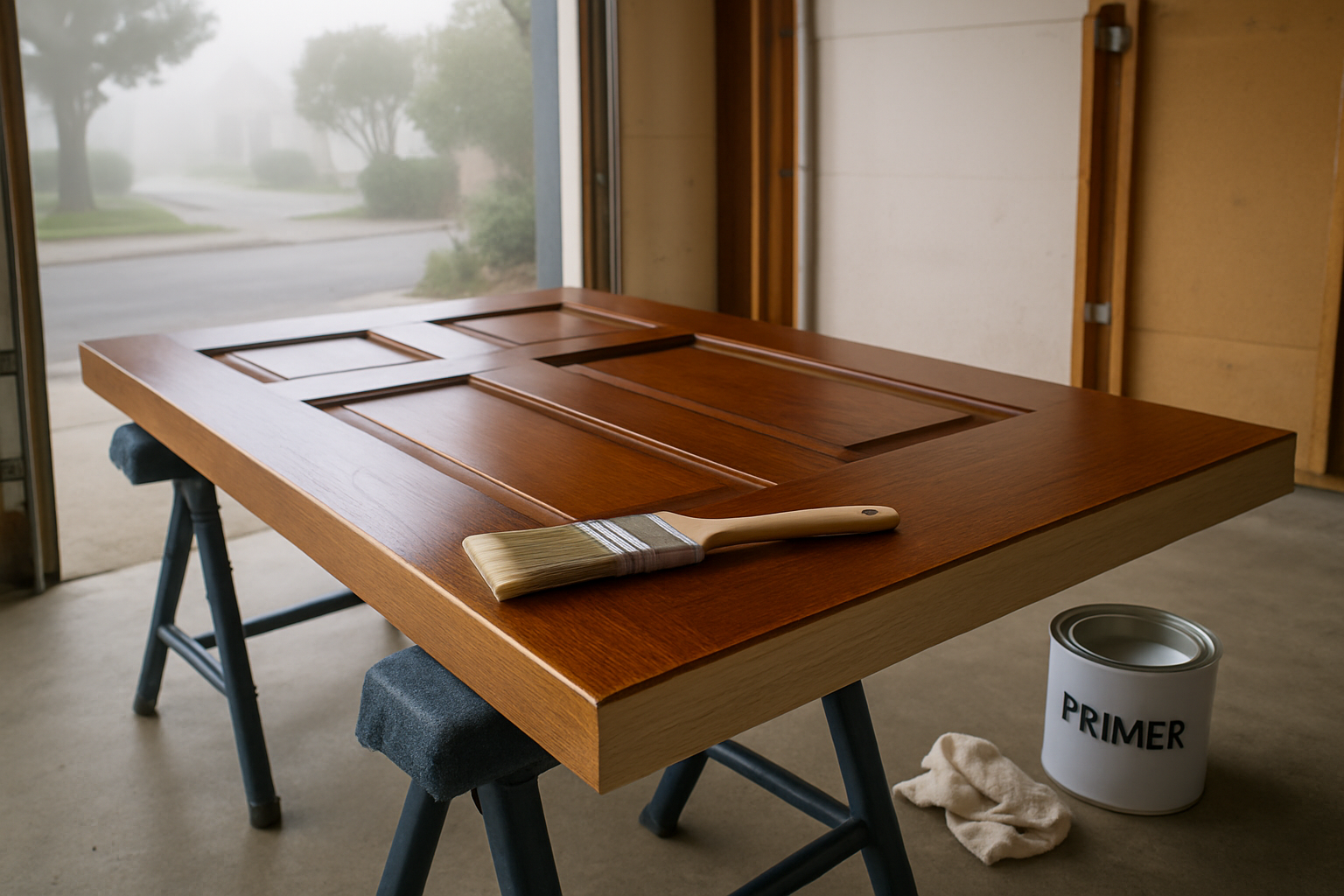
- Storage counts too. A slab stood on bare concrete or left leaning against a stud wall in a damp garage is already absorbing moisture before a brush touches it.
We pull the manufacturer care sheet for the specific door rather than guessing, because the requirements are not identical from one brand to the next.
How to Read Your Own Doorway Before You Pick a Color
Two identical doors on the same block can perform completely differently. Exposure is the reason.
Most manufacturers expect an exterior door to sit under an overhang that is roughly half the distance from the bottom of the door to the bottom of that overhang. Measure that on a typical Berkeley bungalow porch or a narrow Oakland hills entry landing and a lot of them come up short.
So before you settle on a stain or a paint color, go stand at your own door and answer three things:
- Which direction does it face, and how many hours of direct sun does the slab take?
- How deep is the cover overhead compared to the height of the opening?
- Does that porch stay wet for a day after the rain, or does it dry within hours?
A west-facing door in a dark color taking full afternoon sun is the highest-risk combination there is. Surface temperatures climb, the finish checks, and once it checks, water gets in. A shaded fog-belt entry is fighting the opposite problem, which is moisture that never leaves.
The same exposure logic drives other openings on the house. It is the same reasoning behind choosing sliding or swinging patio doors based on Bay Area weather.
Reading Your Entry: Exposure, Risk, and What to Prioritize
Use this to match your finish decisions to the doorway you actually have, not the one in the brochure photo.
| Exposure | What It Does to the Door | What to Prioritize |
|---|---|---|
| West-facing, little or no overhang | Heat buildup, finish checking, dark colors run hottest | Lighter color, UV-rated topcoat, more maintenance coats |
| North-facing, shaded, west Berkeley fog belt | Slow constant moisture, edges never dry back out | Heavy build on top and bottom edges, sealed fresh cuts |
| Deep porch, overhang meets the half-height guideline | Lowest movement risk of any entry type | Standard six-sided finish and routine inspection |
| Shallow stoop with splash-back off the deck | Water wicking up into the uncoated bottom rail | Extra coats on the bottom edge, check threshold drainage |
| Oakland hills entry with wind-driven rain | Water forced into glazing perimeters and panel joints | Compatible sealant bead at glass and panel edges |
The Finishing Sequence, Start to Finish
The order matters as much as the product. Here is the sequence that keeps a new slab flat through a Bay Area winter.
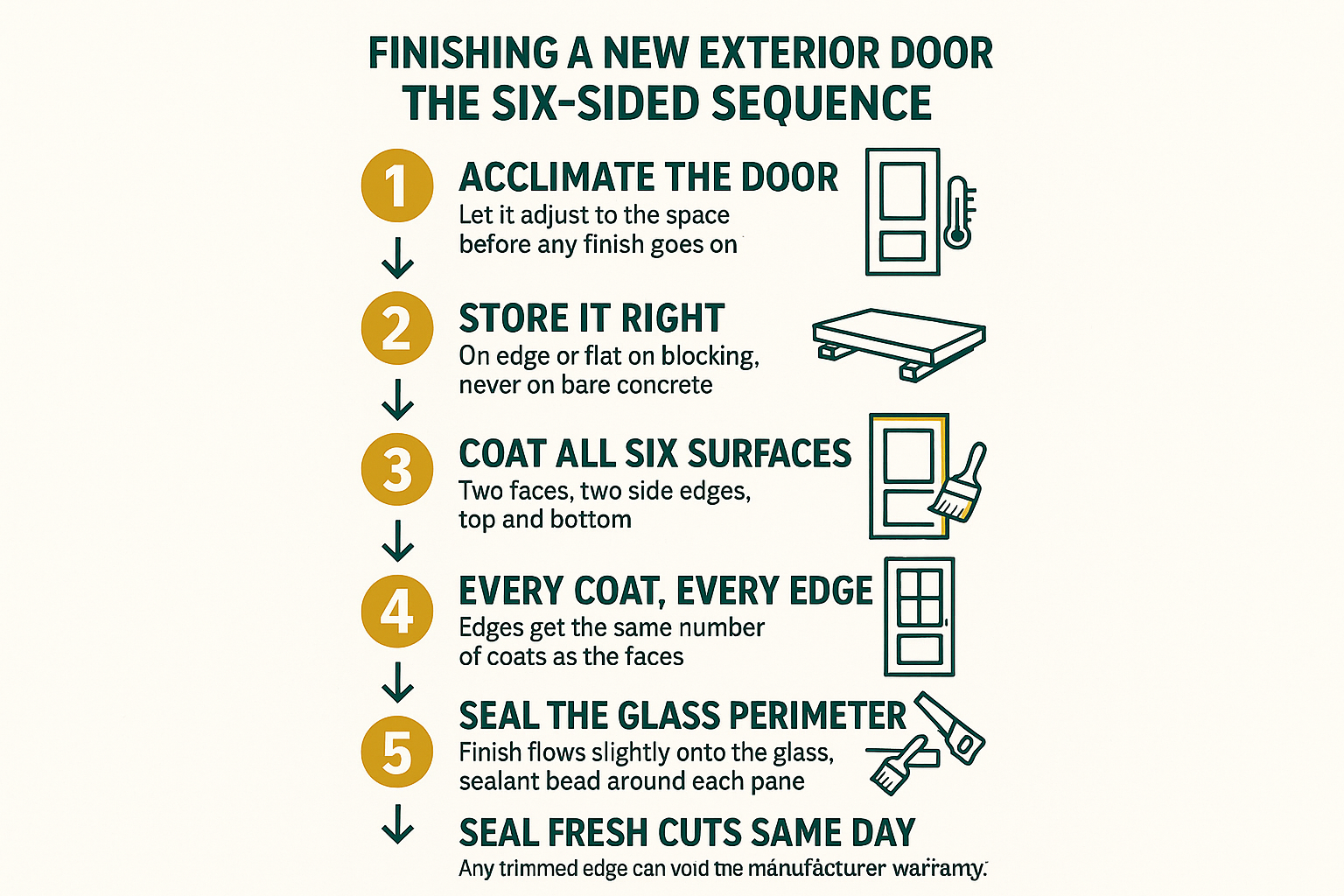
What a Correct Finishing Sequence Looks Like
You do not need a paint tutorial here, just the parts that get missed.
Start with a door that is dry and acclimated to the space it will live in. A slab pulled off a cold truck and finished an hour later is being coated at a moisture content it will not hold.
Store it on edge or flat on blocking. Concrete gives up moisture into anything resting on it.
Then the finish itself:
- Every coat that goes on a face goes on the edges too. Not one quick pass at the end after the faces got three.
- On glazed doors, let the finish flow slightly onto the glass so there is no bare line where the wood meets the pane.
- Run a compatible sealant bead around the perimeter of each pane and each panel so water cannot track into the glazing.
- Check the care sheet for products the manufacturer names as warranty voiders before you buy.
Cost varies with how much of this happens in a shop versus in the field, how many coats the exposure calls for, and whether the door is stain grade. Factory-applied finish usually costs more up front and takes longer to arrive, while field finishing costs less in material and more in labor and weather risk. Ask for an exact figure on your specific door rather than working off a number you read somewhere.
Berkeley Openings Are Rarely Square, and Trimming Has Limits
Berkeley’s housing stock skews old. The median construction year sits in the mid 1940s and close to half of the homes here predate 1940.
That means out-of-square jambs, undersized rough openings, and slabs that get trimmed to fit. Anyone who has hung crown moulding in an old Berkeley house already knows the feeling.
Trimming has real limits. Commonly you can take no more than a couple of inches off the height and only a very small amount off each side before you cut into the engineered components inside the stiles and rails. Past that point you have exposed material that was never meant to see daylight.
And every fresh cut has to be sealed the same day it is made. A trimmed bottom left raw over a weekend on a damp jobsite is the exact failure this article is about.
This is also the honest reason wet-season timing works against you. Finishing wants dry air, moderate temperatures, and cure time that a rainy December jobsite will not give you. If the work has to happen in winter, finish in a conditioned space and keep the slab out of the weather until it is fully cured. The same planning logic applies to windows and doors going into an El Niño winter.
Frequently Asked Questions About Finishing a New Exterior Door
Can I just paint the top edge later once the door is hung?
Not really. Once the door is on hinges you cannot get a proper coat on the top edge or the bottom, and by then the slab has already started taking on moisture. Finish all six sides before it hangs.
My door is already warped. Is that a warranty claim?
Maybe, but two things decide it. First, warp is measured against a published tolerance, so a small amount of movement may not count as a defect at all. Second, if the top and bottom edges were never coated, most manufacturers treat the warranty as void. Pull the care sheet for your specific door and check both before you file anything.
Does a fiberglass door need the same treatment?
The six-sided rule is mostly about wood and end grain, but fiberglass and composite doors still have their own finishing requirements, and cut edges on those need attention too. Check the manufacturer instructions for the exact door rather than assuming fiberglass is maintenance free.
How dark can I go on a west-facing door?
Darker colors absorb more heat and move more, and a west-facing entry with a shallow overhang is the worst place to test that. Some manufacturers restrict dark colors on certain products or shorten the warranty on them. If you want a deep color on a sun-blasted door, plan on a UV-rated topcoat and a shorter maintenance cycle.
How often should I recoat an exterior door in the East Bay?
It depends entirely on exposure. A door under a deep porch may go years. A west-facing slab with no cover can need attention in a fraction of that time. Inspect every fall before the rains and recoat as soon as you see dulling, chalking, or fine checking, not after water has already gotten in.
Planning a door order for a Berkeley or Oakland project?
The lumber yard and hardware store on Hearst Avenue stocks the primers, finishes, sealants, and fasteners on the same floor as the doors themselves, and the staff will pull the manufacturer care and finishing sheet for your specific slab instead of guessing. As one customer put it, “The staff takes the time to work with you, answer all your questions, and do whatever it takes to meet your needs.” If you want to talk through exposure, finish systems, or trimming limits before you order, the Truitt & White lumberyard line is 510-841-0511 and the windows and doors showroom is 510-649-4400.