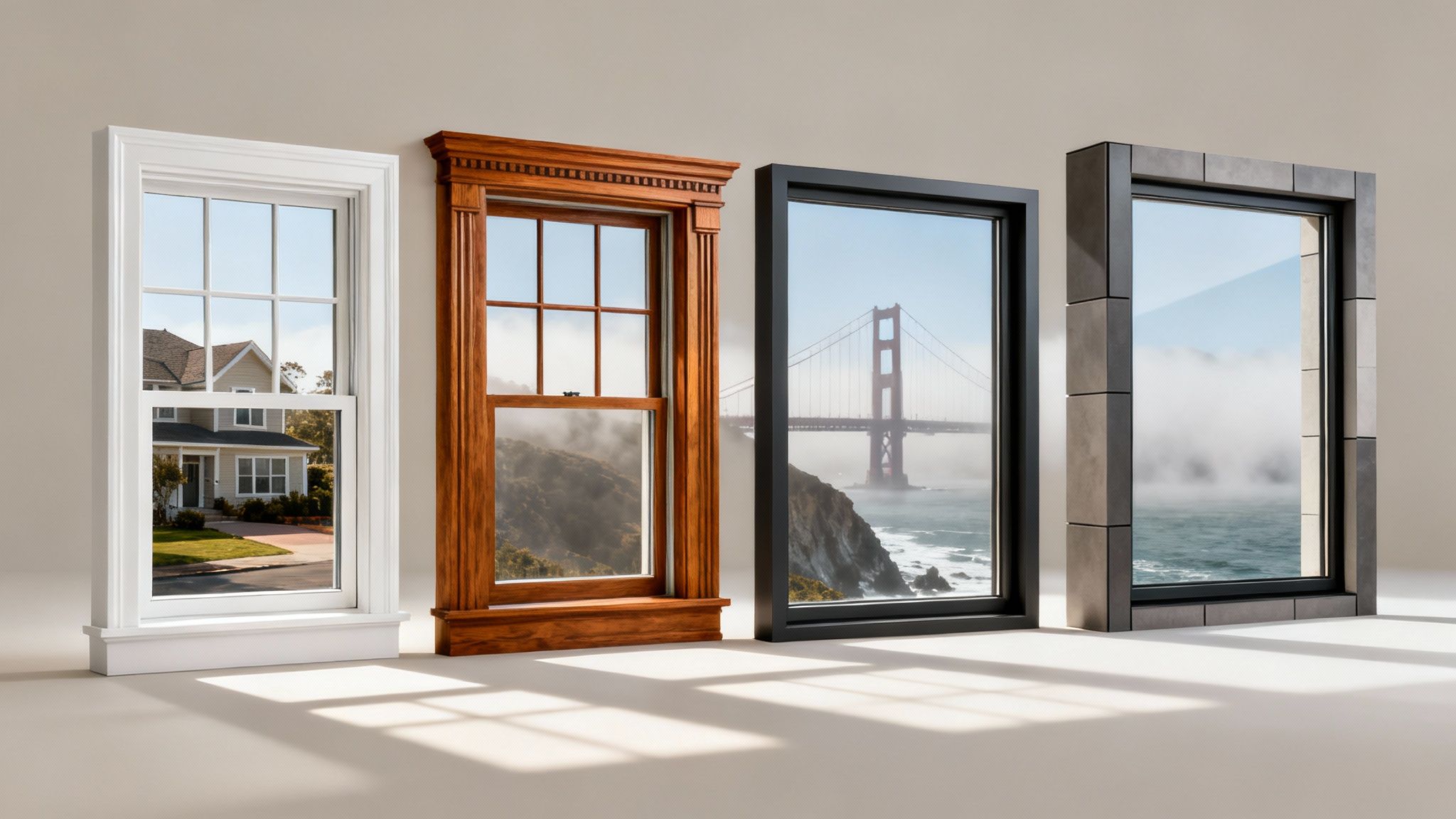
Picking the right window material is a big decision. It affects the look, budget, and performance of a project for years. The goal is to balance upfront cost, long-term durability, and energy efficiency.
Vinyl is a popular choice for its low cost, and wood offers a classic look. But modern materials like fiberglass are now providing the strength needed for demanding Bay Area projects.
Why Your Window Material Choice Matters in the Bay Area
For any new build or remodel in Berkeley, Oakland, or San Francisco, choosing the right windows is critical. This choice goes deeper than looks. It affects a building's energy use, future maintenance, and ability to meet strict local codes like California's Title 24.
A bad choice can lead to drafty rooms and high energy bills. The right material can boost a property's value and keep people comfortable for decades.
The market for high-performance windows is growing fast. According to Mordor Intelligence, the global windows and doors market is expected to reach $216.04 billion by 2025. This growth shows that builders and architects now prioritize materials that deliver real performance, not just looks.
Key Factors for Bay Area Builders and Homeowners
When looking at options in the Bay Area, you need to consider local challenges:
- Climate Durability: Materials must handle coastal fog, salty air, and strong sun without warping, fading, or rusting.
- Energy Efficiency: Meeting California's Title 24 energy standards is a must. A window's U-factor and Solar Heat Gain Coefficient (SHGC) are key numbers.
- Wildfire Safety: In hillside areas, windows must follow Wildland-Urban Interface (WUI) codes. This means using materials that resist extreme heat and embers.
- Architectural Style: The window material should match the building's style, from historic Victorians in San Francisco to modern homes in Oakland.
A window's role in a building's energy use is a big part of its value. For more on this, check out this guide on commercial building energy efficiency. Also, local rules can limit your choices. Learn more in our guide on how Berkeley's new green building mandates change your window and lumber choices.
Expert Insight: For two-thirds of architects, product quality is a top priority. With the median remodeling cost hitting $24,000 in 2023, homeowners are also investing in durable, high-value materials.
Comparing Window Frame Materials at a Glance
Choosing the right window material is a big decision for pros in the Bay Area. You are balancing looks, budget, and performance against our unique challenges—sun, moisture, and tough energy codes. A direct comparison helps you see how materials stack up for your project.
The demand for high-performance windows is rising because of the push for more energy-efficient buildings. This makes choosing the right material even more important.

Key Performance and Cost Factors
It's easy to focus on the upfront cost, but that is only part of the story. To understand a window's true value, you must look at its total cost over time. This includes maintenance and energy savings over many years.
For example, a cheaper window might seem like a good deal at first. But if it needs constant painting to survive the Bay Area's salt air, those costs add up. Our detailed window replacement cost estimator can help you plan for project expenses.
A Head-to-Head Comparison
To make your decision easier, we created a table that compares the four main window frame materials. It focuses on what matters most for projects in Berkeley, Oakland, and the rest of the Bay Area. Use this as a starting point to narrow down your options.
Window Material Comparison for Bay Area Professionals
This table compares common window frame materials based on key factors for Bay Area projects.
| Material | Average Cost (Per Unit) | Typical Lifespan | Maintenance Needs | Thermal Performance | Best For |
|---|---|---|---|---|---|
| Vinyl | $ – $$ | 20–30 Years | Low | Very Good | Budget-friendly projects, rentals, and remodels where low maintenance is key. |
| Wood | $$$ – $$$$ | 30–50+ Years | High | Excellent | Historic homes, custom builds, and projects where classic style is essential. |
| Aluminum | $$ – $$$ | 30–45 Years | Low | Good (Thermally Broken) | Modern designs needing slim frames, large glass areas, and high durability. |
| Fiberglass | $$$ – $$$$ | 50+ Years | Very Low | Excellent | High-performance homes, coastal areas, and projects needing top durability and energy efficiency. |
While this table gives a good overview, the best choice depends on the specific job. A modern home in the sunny Oakland hills would benefit from fiberglass. A historic Victorian in San Francisco needs the authentic look of wood.
Key Takeaway: The best window material is not a one-size-fits-all solution. It's a careful choice based on the project's style, location, budget, and performance goals.
Vinyl Windows: The Cost-Effective and Low-Maintenance Choice
For many home projects in the Bay Area, vinyl windows are a top contender. Made from a type of plastic called uPVC, this material offers a good mix of low cost, energy efficiency, and easy care. It's a practical choice for both builders and homeowners.
Vinyl is often 20-30% cheaper than wood. It can also cut home energy costs by 15-20% over its life because it insulates well. This combination of savings makes it a smart choice.
Performance and Durability in the Bay Area
Vinyl's multi-chambered frames create air pockets that slow down heat transfer. This is a big help for meeting California's Title 24 energy standards. It helps keep Bay Area homes comfortable without high utility bills.
Vinyl is also resistant to moisture and pests, making it a low-maintenance option. Unlike wood, it won’t rot or need regular painting to stand up to our coastal fog and rain. A simple cleaning is usually all it needs.
Builder's Insight: For rental properties or budget-friendly remodels, the "set it and forget it" nature of vinyl is a big plus. Its low cost over time and reliable performance are great for property owners.
Considering the Drawbacks
Vinyl does have some limits. In the past, it was known to expand and contract with temperature changes. This could stress window seals over time, especially in hotter inland areas of the East Bay.
However, modern vinyl windows have improved a lot. New formulas make them more stable and durable. And while colors were once limited to white or beige, many now come in darker shades that resist heat and fading.
If you are thinking about installing windows yourself, you can learn more about it in our guide about replacing windows yourself.
Wood and Clad-Wood Windows for Timeless Appeal
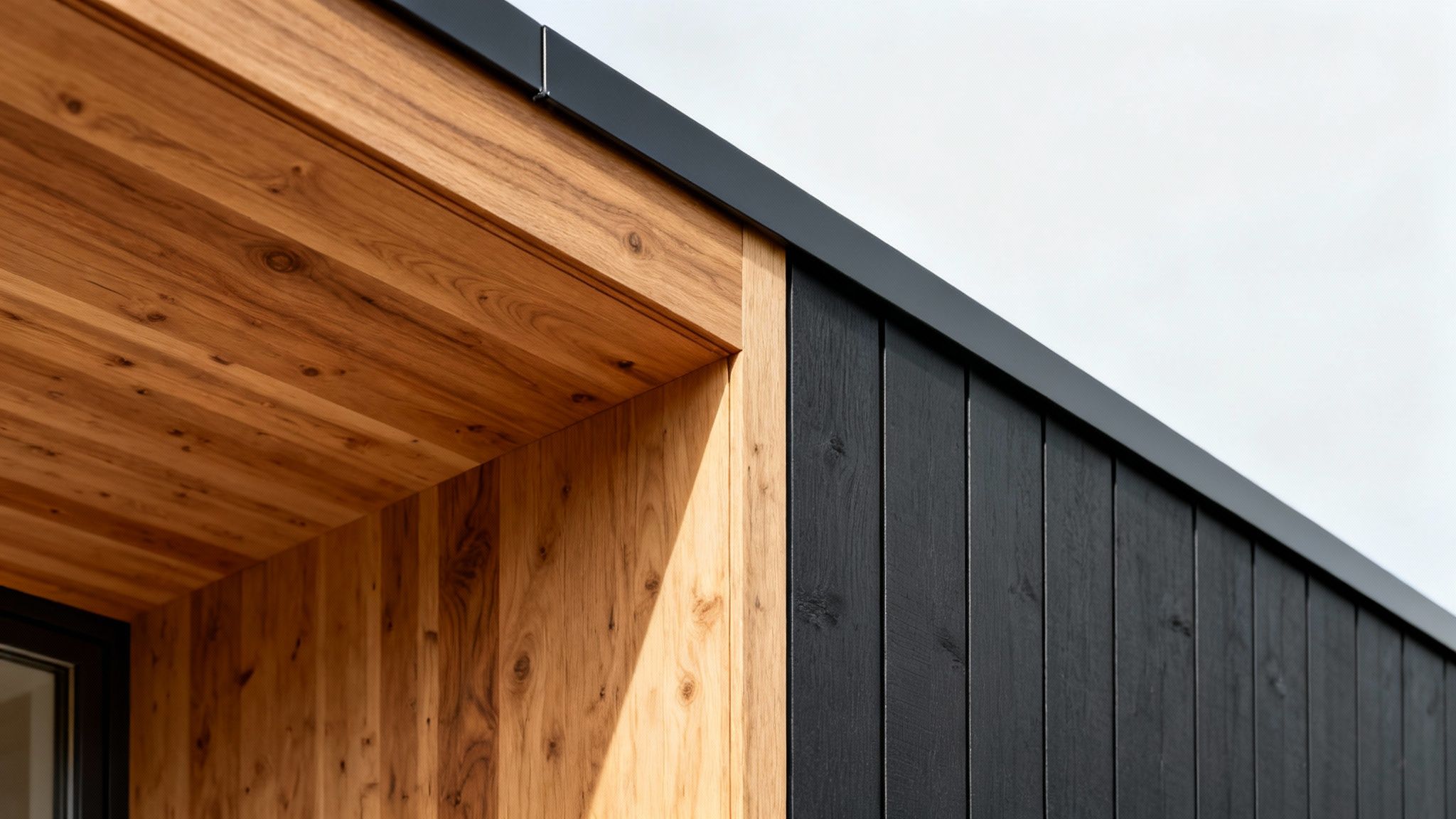
When a project needs classic style, nothing beats the natural beauty of wood. It's the top choice for historic homes in San Francisco and custom houses in Berkeley and Oakland. Wood is also a great natural insulator, which helps keep homes comfortable.
But wood's beauty requires regular maintenance. This is a big deal in the Bay Area’s damp, coastal climate. All-wood frames need regular painting or sealing to protect them from moisture and prevent rot.
The Maintenance Reality of Wood
Wood windows require ongoing care. Depending on sun and rain exposure, wood frames may need repainting every 3 to 7 years to prevent decay. The cost of this work can add up over time.
This upkeep is vital to avoid swelling, warping, and rot. For builders and homeowners in the Bay Area, protecting this investment is key.
Clad-Wood: A Modern, High-Performance Solution
Clad-wood windows offer the best of both worlds. They have a beautiful wood interior that keeps the classic look inside the home. On the outside, a tough layer of aluminum or fiberglass protects against the weather.
This combination has serious advantages for our region.
- Superior Durability: The outer cladding resists fading, salt air, and rain, which greatly reduces maintenance.
- Design Flexibility: You get a customizable wood interior without giving up a tough exterior.
- Enhanced Performance: The cladding protects the wood core, helping the window keep its shape and energy efficiency for much longer.
Key Insight: Clad-wood windows are perfect when a client wants the rich look of wood but needs a low-maintenance exterior. This makes them ideal for custom homes in the Oakland hills or upscale renovations near the coast.
Clad-wood windows blend timeless style with modern technology. They solve wood's biggest problem while keeping its best qualities. This makes them a smart, long-term investment.
Aluminum and Fiberglass: The Modern Performance Leaders
For modern Bay Area projects that need clean lines and maximum durability, aluminum and fiberglass windows are the best choices. These materials are strong and resilient. They are a smart investment for sleek Oakland homes and commercial buildings in San Francisco.
They offer a unique mix of modern looks and strong, long-term performance.
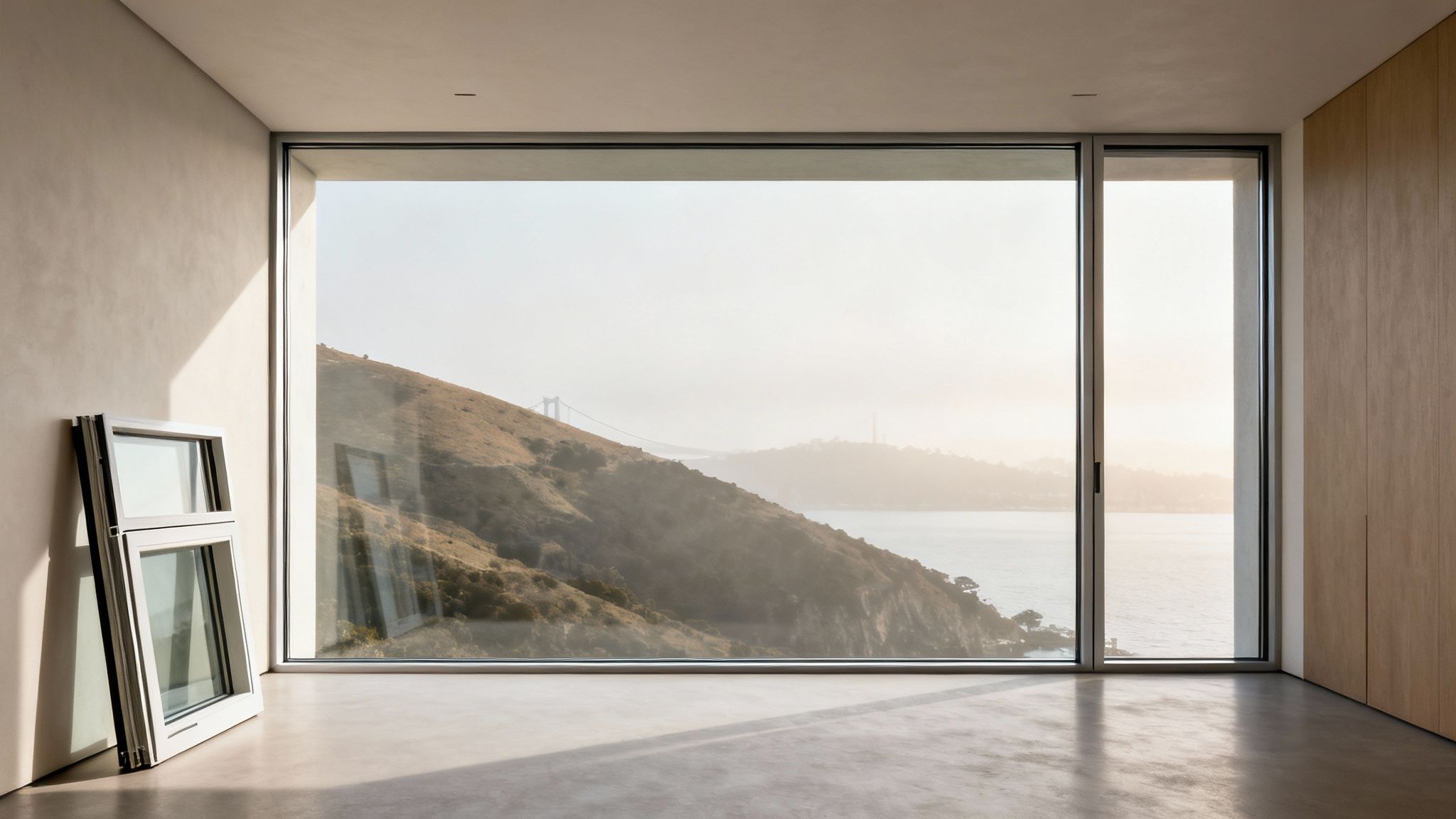
While old aluminum windows were poor insulators, today's thermally broken aluminum windows are different. They have a plastic barrier that separates the inside and outside metal frames. This "break" greatly reduces heat transfer, a big deal for energy efficiency.
Thermally Broken Aluminum: A Sleek and Strong Choice
Thermally broken aluminum is very strong but lightweight. This allows for slim frames that can hold large panes of glass. Architects love this material for maximizing natural light and Bay Area views.
Meeting California's Title 24 energy code is required, and the thermal break makes aluminum a compliant choice. Without it, the frame would conduct heat and cold, leading to poor energy performance.
Key benefits include:
- Minimalist Looks: The slim profiles create a modern, clean look perfect for today's architecture.
- Great Strength: Aluminum can handle very large windows without needing thick, bulky frames.
- Low Maintenance: The durable finishes resist rust, fading, and chipping.
Fiberglass: The Ultimate in Durability and Stability
When a project needs the very best durability and energy efficiency, fiberglass windows are the answer. Made from glass fibers bonded with resin, fiberglass is incredibly strong. Its biggest advantage is that it expands and contracts at nearly the same rate as glass.
This stability is perfect for the Bay Area’s changing climate. While other materials expand and contract with temperature swings, fiberglass stays stable. This keeps window seals tight for decades, preventing drafts and saving energy. Learn more about products designed for our climate in our overview of all-weather windows built to withstand the Bay Area.
Project-Specific Guidance: For a home in Berkeley with lots of sun exposure, fiberglass is a great choice because it won't warp or weaken. For a coastal project in Pacifica facing salt spray, fiberglass’s resistance to rust makes it a much better option than other materials.
Fiberglass also resists rot, rust, and insects. This makes it one of the longest-lasting and lowest-maintenance window materials available. While it costs more upfront, its long life and consistent performance offer great long-term value.
How to Select the Right Window for Your Project
Choosing the right window is about more than just numbers on a spec sheet. It's about matching the material to the needs of your Bay Area project. The final decision should mix style, local climate, and long-term value.
The goal is to pick a window that meets building codes and improves the property. A smart choice delivers performance, durability, and happy clients.
Scenario-Based Recommendations for Bay Area Projects
Let's look at a few common project types in our area. These examples show how a specific window material can solve different challenges.
-
For a Historic Berkeley Renovation: To preserve classic details, clad-wood windows are the clear winner. They provide an authentic wood interior that matches the home's character. The durable outer cladding protects against the damp Bay Area climate.
-
For a Modern Oakland Hills Home: To capture panoramic views and meet strict energy codes, thermally broken aluminum is a perfect fit. The slim frames maximize the glass area. The thermal break ensures excellent insulation, preventing heat loss on cool, foggy mornings.
-
For a Coastal Home in Pacifica: Durability is key when facing salt spray and moisture. Fiberglass windows are the top performer here. They resist rust and won't warp, keeping a tight seal against harsh coastal weather.
-
For a Budget-Conscious Multi-Family Project in Oakland: When cost and low maintenance are the main goals, high-performance vinyl windows are a great solution. They offer good insulation to meet Title 24 and require little upkeep, reducing long-term costs.
Beyond the frame, you also need to think about the glass. Knowing how to care for your windows by maintaining double-pane windows will ensure they save energy for their entire lifespan.
Expert Takeaway: Your project's location, style, and goals should guide your material choice. Instead of a one-size-fits-all approach, tailor your choice to the specific needs. That's how you get the best result.
Your Next Step Toward the Perfect Windows
Choosing a window material can be complex. Each option has its own benefits. Whether you're dealing with Title 24, style, or budget, making a good decision is key to success.
If you're still weighing your options, expert advice can help. The team at Truitt & White, a trusted Berkeley building materials supplier, knows local codes and climate challenges. We can help you compare high-performance options to find the perfect fit for your project.
Ready to make a confident choice? Visit our Berkeley showroom for expert advice. Our experts at our lumberyard near Oakland can help you select the ideal windows.
Frequently Asked Questions (FAQs)
1. Which window material is best for meeting California's Title 24 energy code?
Fiberglass and high-performance vinyl windows are typically the best for meeting Title 24. Their frames are excellent insulators, which helps projects in Berkeley and Oakland easily meet energy requirements. Thermally broken aluminum and clad-wood windows can also be very efficient, but always check the product's official NFRC rating.
2. What is the most durable window material for the Bay Area's coastal climate?
For homes near the coast in areas like San Francisco, fiberglass is the most durable choice. It strongly resists salt spray, moisture, and rust. Because fiberglass expands and contracts very little, its seals stay tight for years, preventing drafts and maintaining energy efficiency.
3. Are wood windows a bad choice for homes in wildfire-prone areas?
No, but you must choose the right type. While all-wood windows can be risky, clad-wood windows are an excellent option for homes in Wildland-Urban Interface (WUI) zones. The tough aluminum or fiberglass exterior provides strong protection against embers and heat, helping you meet local fire safety codes.
4. How should I balance upfront cost vs. long-term value?
Vinyl windows often have the lowest upfront cost. However, materials like fiberglass and clad-wood can offer a better return on investment over the life of the building. This is due to their longer lifespan, superior durability, and higher resale value, making them a smart long-term choice.
5. What's the difference between aluminum and thermally broken aluminum windows?
Standard aluminum conducts heat and cold easily, making it very inefficient. Thermally broken aluminum windows solve this problem by inserting a plastic insulator between the interior and exterior metal frames. This "thermal break" stops heat transfer, making the window much more energy-efficient and suitable for Bay Area projects.
Not sure which window or door material fits your project? The experts at Truitt & White in Berkeley can help you compare options based on climate, code, and design goals.
Visit our Berkeley showroom for expert advice.