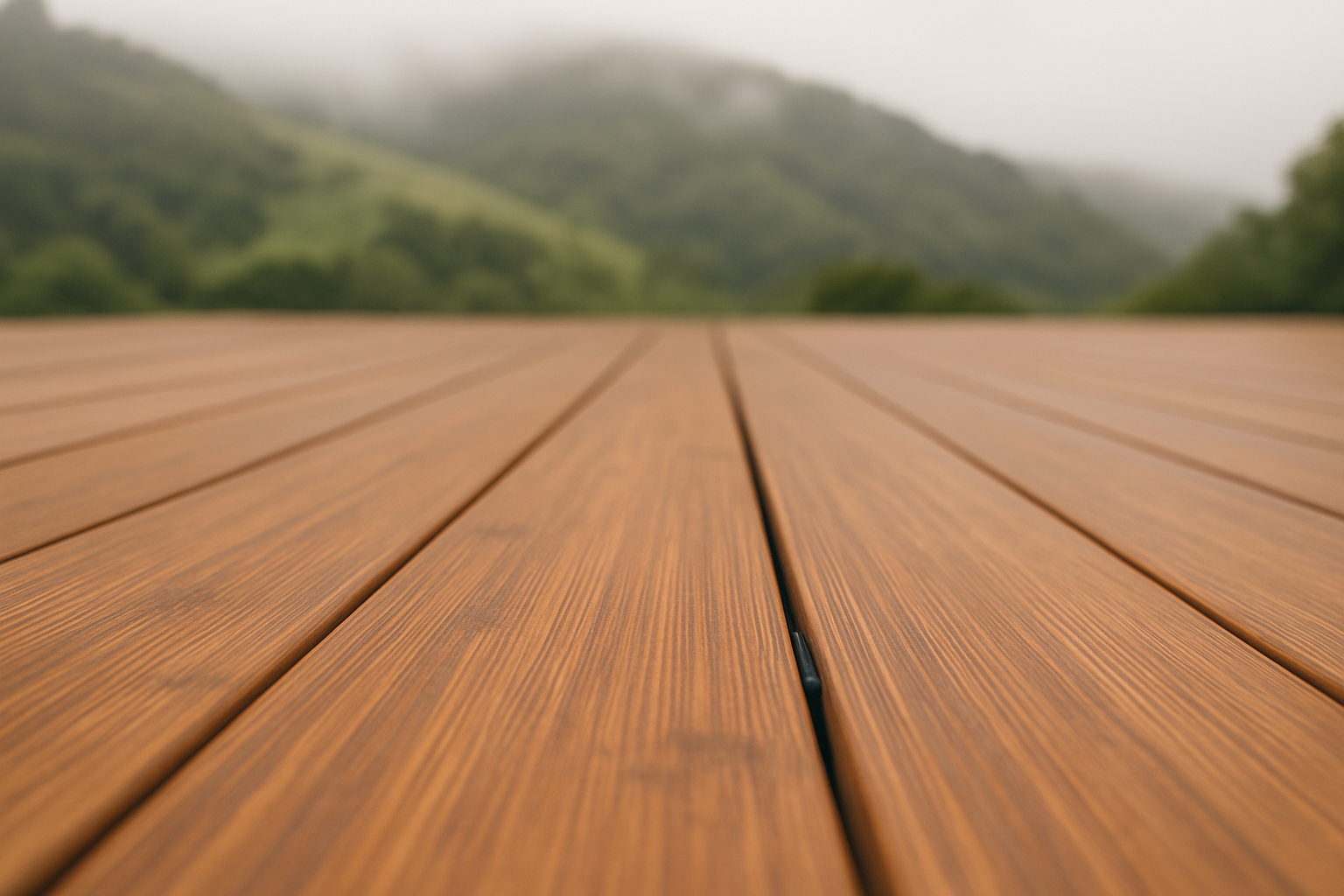
Direct Answer: MOSO Bamboo X-treme is a genuinely exterior-grade product rated for 25-plus years of service life, and it handles Bay Area fog, moisture, and WUI fire zone requirements better than most alternatives.
Architects and contractors ask us about MOSO Bamboo X-treme more than almost any other specialty decking material right now. The question usually goes something like: is this a product that looks great on a spec sheet but falls apart on a real East Bay jobsite?
That is a fair question, and the answer matters a lot more here than it does in drier climates. The Bay Area throws coastal fog, wet El Niño winters, and periodic full sun at a deck, often within the same week. Add in the WUI fire zone requirements that now apply to a wide swath of the Oakland and Berkeley hills, and the material selection decision gets complicated fast.
We carry MOSO Bamboo X-treme at our Hearst Avenue lumberyard, and our staff has helped contractors and architects work through the performance, compliance, and installation questions that come with it. Here is what we tell them.
What Makes MOSO Bamboo X-treme Different from Regular Bamboo Flooring?
This is the first thing buyers need to understand: MOSO Bamboo X-treme is not interior bamboo flooring moved outdoors. It is a different product entirely, built for exterior use through a process called Thermo-Density.
The Thermo-Density process heat-treats and compresses bamboo strips at high temperature and pressure. That does two important things. First, it removes the sugars and starches that would otherwise make bamboo attractive to fungi, insects, and moisture. Second, the compression produces a board that is harder and denser than most tropical hardwoods commonly used for decking.
The result is a Durability Class 1 rating under European standard EN 350, which is the highest durability classification that standard recognizes. The manufacturer states an expected service life of 25 years or more, backed by a manufacturer warranty. For an architect putting a material on a drawing, that kind of documented performance data is exactly what belongs in a spec package. You can review the technical specs directly at the MOSO Bamboo Thermo product page.
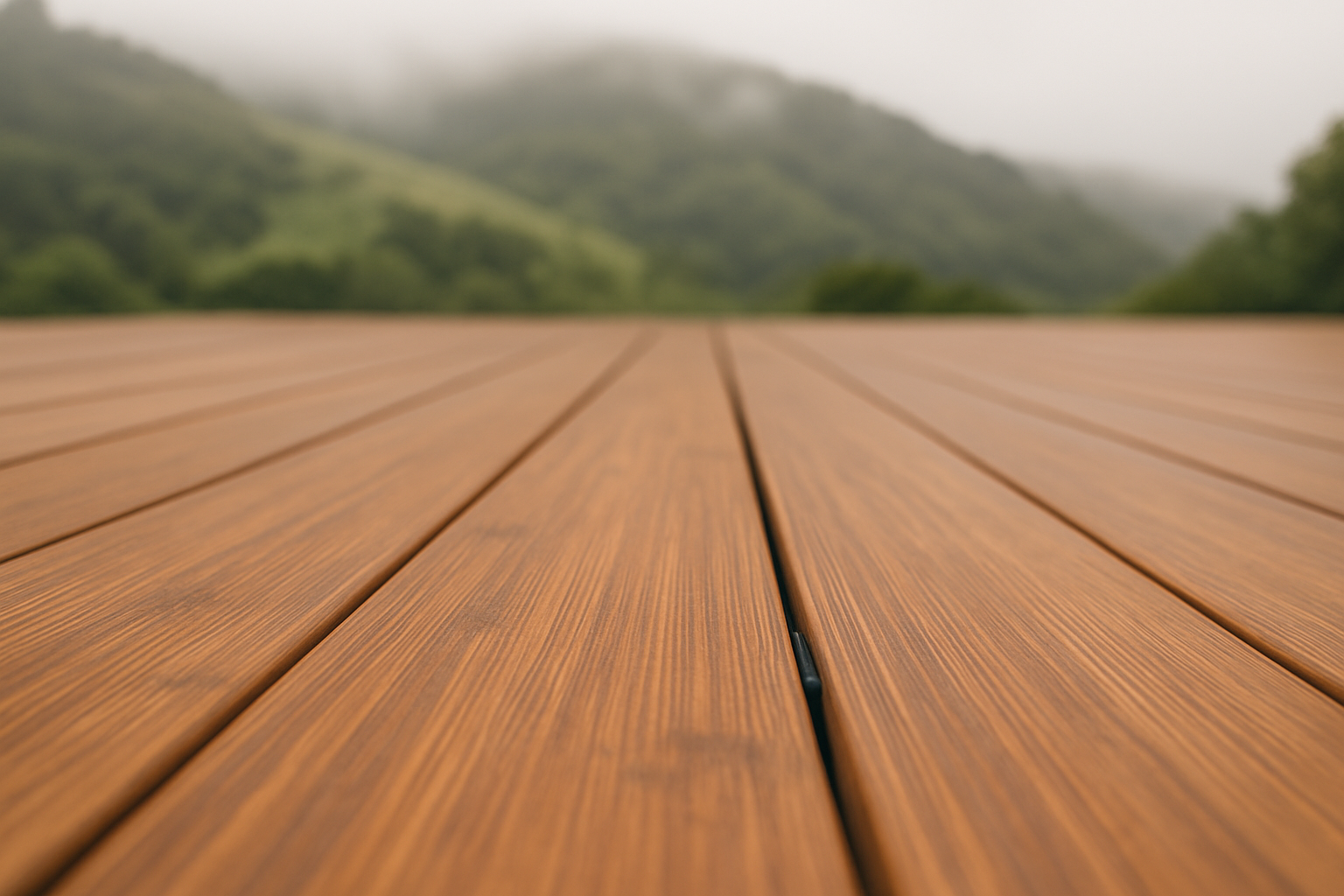
How Does It Hold Up in Bay Area Microclimates?
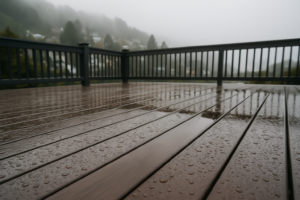
The microclimate question matters more for bamboo than for most other materials, and buyers are right to ask it. A deck in the flatlands of Berkeley faces different conditions than one on a south-facing slope in the Oakland hills or a foggy lot in El Cerrito.
The good news is that the Thermo-Density process directly addresses the two failure modes that Bay Area weather creates for decking materials:
- Moisture and biological attack from wet winters and coastal fog: the sugar and starch removal leaves bacteria and fungi with little to work with.
- Shrinkage and swelling through seasonal humidity swings: the compression dramatically reduces the dimensional movement that causes wood decks to gap, cup, or buckle over a few seasons.
One honest caveat worth sharing: like ipe or thermally modified ash, MOSO Bamboo will naturally shift from its installed warm brown color toward a silver-gray patina if left untreated. That weathering is not structural damage, it is a surface-level change. Applying a compatible decking oil once a year preserves the original color if the client prefers it. If the silver-gray look is acceptable, the maintenance requirement is minimal.
For more on how Bay Area fog and sun affect material decisions generally, our breakdown of how Bay Area fog and sun change the wood vs. composite decision covers that terrain in detail.
Does MOSO Bamboo Meet WUI Fire Zone Requirements in the East Bay Hills?
For any deck project in a Very High Fire Hazard Severity Zone in the Oakland or Berkeley hills, this question is a hard stop before the permit application goes anywhere.
MOSO Bamboo Thermo carries a Class A flame spread rating tested to ASTM E84, achieved without chemical fire retardants. Under California’s standalone Wildland-Urban Interface Code, Title 24 Part 7, which became effective January 2026, that Class A rating meets the ignition-resistant material threshold required for decking in WUI-designated zones.
Two things worth confirming before you submit a permit package:
- Not all bamboo products on the market share this certification. MOSO Bamboo Thermo has it; other bamboo decking products may not. Do not assume the certification transfers to a different brand or product line.
- Verify the current WUI listing status with manufacturer documentation at the time of your permit application. Confirming that at the point of order, with documentation in hand, avoids the scenario where an inspector flags the material mid-project.
If you are working on a hillside project and need to cross-check materials against current East Bay WUI requirements, our article on which decking materials handle a wet El Niño winter best covers the moisture side of hillside deck performance.
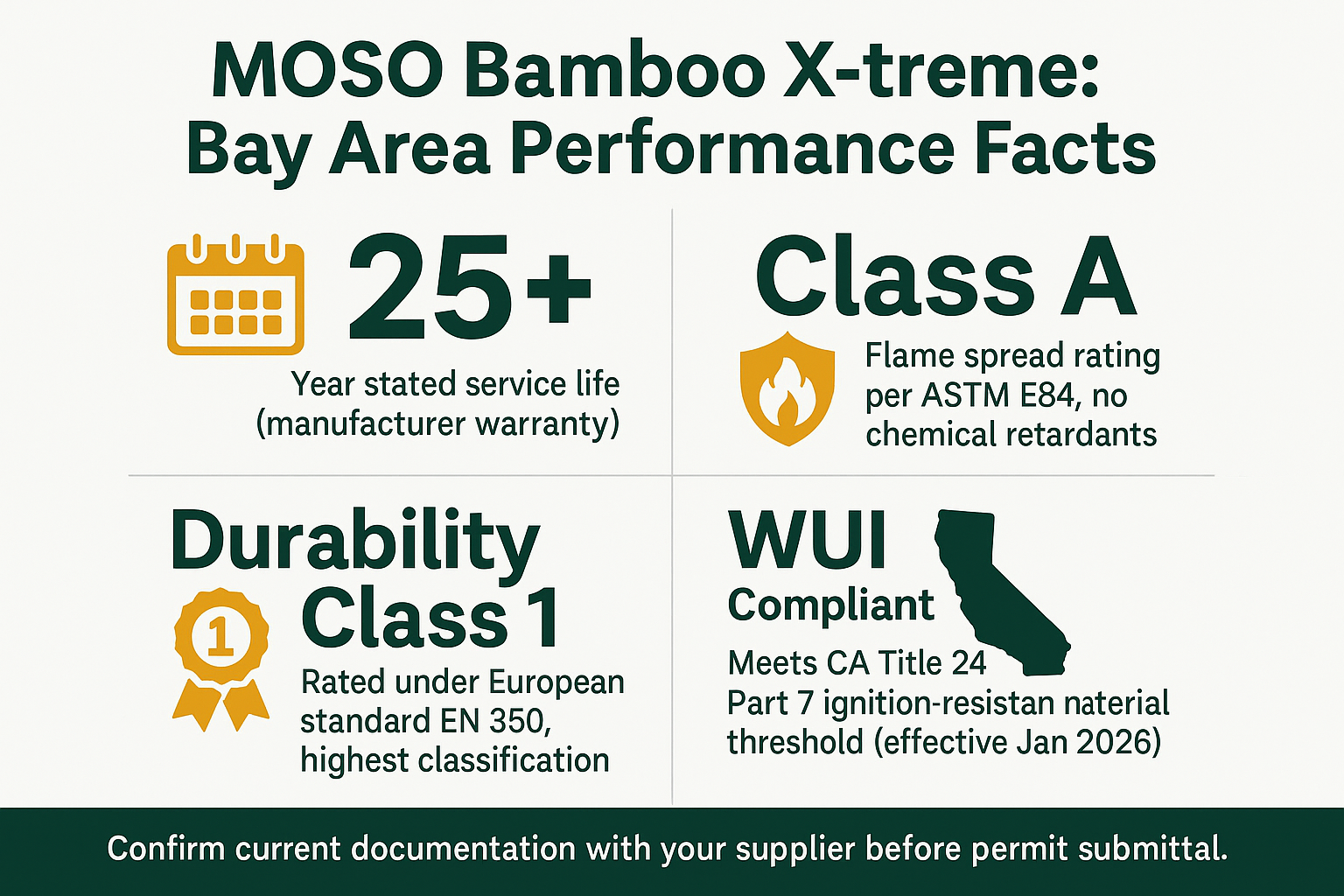
MOSO Bamboo X-treme at a Glance: Key Performance Facts
This infographic summarizes the core performance specs and Bay Area compliance checkpoints for MOSO Bamboo Thermo decking.
How Does MOSO Bamboo Compare to Composite Decking?
Many buyers arrive already comparing MOSO Bamboo to capped composite brands like TimberTech or Trex. The comparison is reasonable, but the two materials are different in ways that matter depending on what the client actually cares about.
A few specific differences worth knowing:
- Material composition: Capped composite is made from plastic and wood fiber blends. MOSO Bamboo Thermo uses less than 10-12 percent phenolic resin binder depending on the product line. The rest is compressed natural bamboo fiber.
- Surface heat retention: This comes up repeatedly with darker composite boards on south-facing decks. Composite can get uncomfortably hot underfoot in summer sun. Bamboo does not exhibit the same surface temperature spikes, which is a real buyer concern for decks used barefoot in warmer months.
- Sustainability: For projects pursuing LEED points or for clients who specifically want to avoid petroleum-based products, MOSO Bamboo’s natural composition is a meaningful difference. Composite boards are a better product than they were ten years ago, but they are still largely plastic.
For a broader look at how composite brands compare for East Bay conditions, see what to know before you buy composite decking in the East Bay.
Quick Comparison: MOSO Bamboo vs. Common Decking Alternatives
This table covers the factors East Bay contractors and architects weigh most often when comparing decking materials for Bay Area projects.
| Factor | MOSO Bamboo X-treme | Capped Composite | Redwood | Ipe |
|---|---|---|---|---|
| WUI Class A Rating | Yes (ASTM E84, no retardants) | Varies by product | No | No |
| Expected Service Life | 25+ years (manufacturer stated) | 25-30 years (capped) | 15-25 years (varies by grade) | 25-40 years |
| Surface Heat in Full Sun | Lower than composite | Can run hot (dark colors) | Moderate | Moderate |
| Moisture/Swelling Risk | Very low (Thermo-Density process) | Very low (capped) | Moderate | Low |
| Natural/Low-Resin Material | Yes (under 12% binder) | No (plastic-wood blend) | Yes | Yes |
| Annual Maintenance Needed | Oil to preserve color (optional) | Minimal | Yes, stain/seal | Yes, oil required |
| LEED / Sustainability Edge | Strong | Moderate (recycled content) | Regional sourcing | Certification varies |
What Should I Confirm About Installation and Accessory Availability Before Ordering?
One frustration contractors flag with specialty decking materials is the accessory timing problem: boards arrive on schedule, but clips, end-sealing products, and fascia boards show up separately or late. That is a real jobsite headache.
MOSO Bamboo X-treme uses an asymmetric hidden fastener system designed to work without pre-drilling, which simplifies installation. The boards also use an end-matched tongue-and-groove system, which means seaming off-joist is structurally sound, useful when your joist layout does not align perfectly with board lengths.
Before ordering, confirm with us that the complete system is available: boards, clips, end-sealant, and fascia. For a Bay Area project where delivery timing matters and crew downtime is expensive, getting all components confirmed at the point of order is the right call. Our lumberyard delivers on flatbeds Monday through Friday, 7:00 a.m. to 3:00 p.m., with deliveries scheduled in two-hour windows, so logistics are manageable once the full order is locked.
For a broader look at how different decking materials stack up for Bay Area conditions, our redwood vs. composite vs. modified wood breakdown covers the full field.
Frequently Asked Questions About MOSO Bamboo Decking in the Bay Area
Is MOSO bamboo decking actually exterior-grade, or is it an indoor product being sold outdoors?
MOSO Bamboo X-treme is a purpose-built exterior product, not a flooring product adapted for outdoor use. The Thermo-Density manufacturing process changes the material at a structural level, removing sugars and starches, compressing the fiber, and producing a board with a Durability Class 1 rating under EN 350. That is the same classification category as the most durable tropical hardwoods.
Will MOSO bamboo hold up through a wet Bay Area winter without warping or gapping?
The compression from the Thermo-Density process significantly reduces the shrinkage and swelling that causes wood decks to gap or cup through seasonal moisture changes. That said, no decking material is completely immune to movement, proper gapping at installation and a compatible decking oil applied annually gives the best long-term result. For more on how Bay Area winter conditions affect different decking materials, see our article on which decking materials handle a wet El Niño winter best.
Does MOSO Bamboo Thermo meet the WUI fire code for Oakland and Berkeley hillside decks?
Yes, MOSO Bamboo Thermo carries a Class A flame spread rating tested to ASTM E84, without chemical fire retardants. That meets the ignition-resistant material threshold under California’s Title 24 Part 7 WUI Code, effective January 2026. But confirm the current listing documentation with your supplier before the permit goes in. Other bamboo products on the market do not necessarily share the same certification, so the product matters, not just the material category.
What does MOSO bamboo decking typically cost compared to composite or ipe?
Pricing for specialty decking varies based on board profile, quantity, and current supply conditions. As a general frame of reference, MOSO Bamboo X-treme typically sits in a range similar to premium composite or entry-level tropical hardwood decking, above standard pressure-treated pine but below top-tier ipe. For an accurate quote on your specific project quantity and profile, talk to our lumberyard team directly.
Can I use MOSO bamboo on a south-facing deck that gets a lot of afternoon sun?
Yes, and it actually performs better in that situation than darker composite boards, which can retain significant surface heat on south-facing exposures. Bamboo does not exhibit the same temperature spikes. If the deck will get heavy direct sun, applying a compatible decking oil with UV-stabilizing properties will slow the natural color shift from warm brown to silver-gray.
Is bamboo decking a good fit for projects pursuing LEED credits?
It can be, particularly for clients who want to minimize petroleum-based products. MOSO Bamboo X-treme uses less than 10-12 percent phenolic resin binder depending on product line, with the rest being natural compressed bamboo fiber. That material composition is meaningfully different from capped composite, which is primarily a plastic-wood blend. Whether it qualifies for specific LEED credits depends on the project’s certification path, an architect or LEED consultant should confirm the applicable credit categories for the specific project.
Have Questions About MOSO Bamboo for Your Next Project?
Whether you are specifying materials for an Oakland hills deck that needs WUI compliance documentation or comparing bamboo to composite for a Berkeley backyard build, our lumberyard team at 642 Hearst Avenue can walk you through the product details, help confirm accessory availability, and make sure your order is complete before delivery day. Stop by during business hours, call us at 510-841-0511, or visit truittandwhite.com to reach us online.