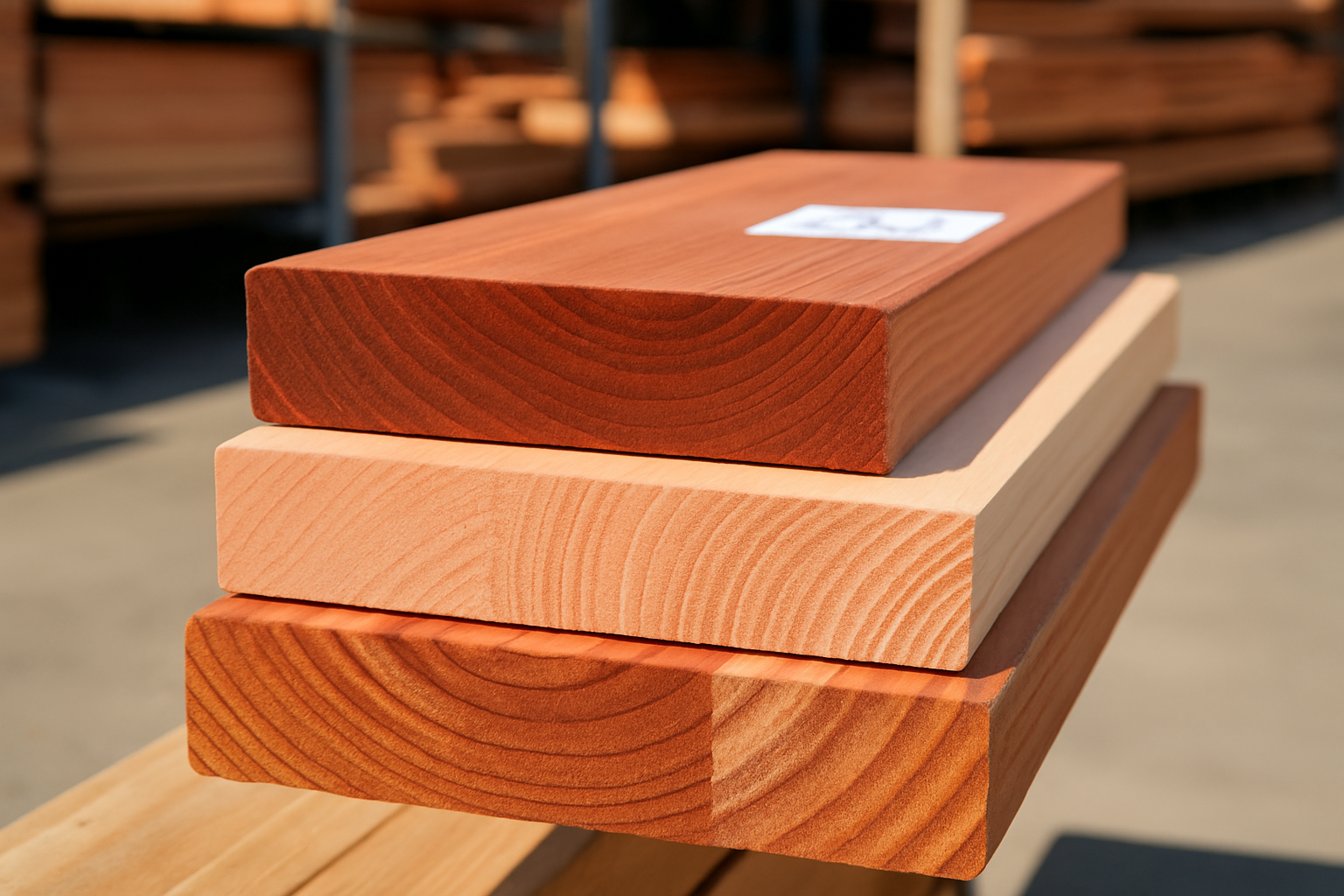
Direct Answer: Redwood grade labels tell you whether a board contains rot-resistant heartwood or weaker sapwood. If the grade name includes the word ‘Heart,’ you have heartwood. If it doesn’t, you don’t.
Most buyers standing at a lumber yard counter know they want redwood. What trips them up is figuring out which redwood. The label on the board looks straightforward until you realize that two boards with similar prices can perform completely differently once they’re exposed to a Bay Area winter.
The difference comes down to one thing: heartwood or sapwood. Heartwood is the dense, tannin-rich core of the tree. Sapwood is the outer growth ring, and it does not carry those natural preservatives at all. A deck surface that stays damp under morning fog for months at a stretch will treat those two materials very differently.
This guide walks through the four grades you will actually encounter at the counter, what each one contains, where each one belongs on a project, and why mixing them up is the kind of mistake that costs real money to fix.
The One Rule That Makes Redwood Grades Make Sense
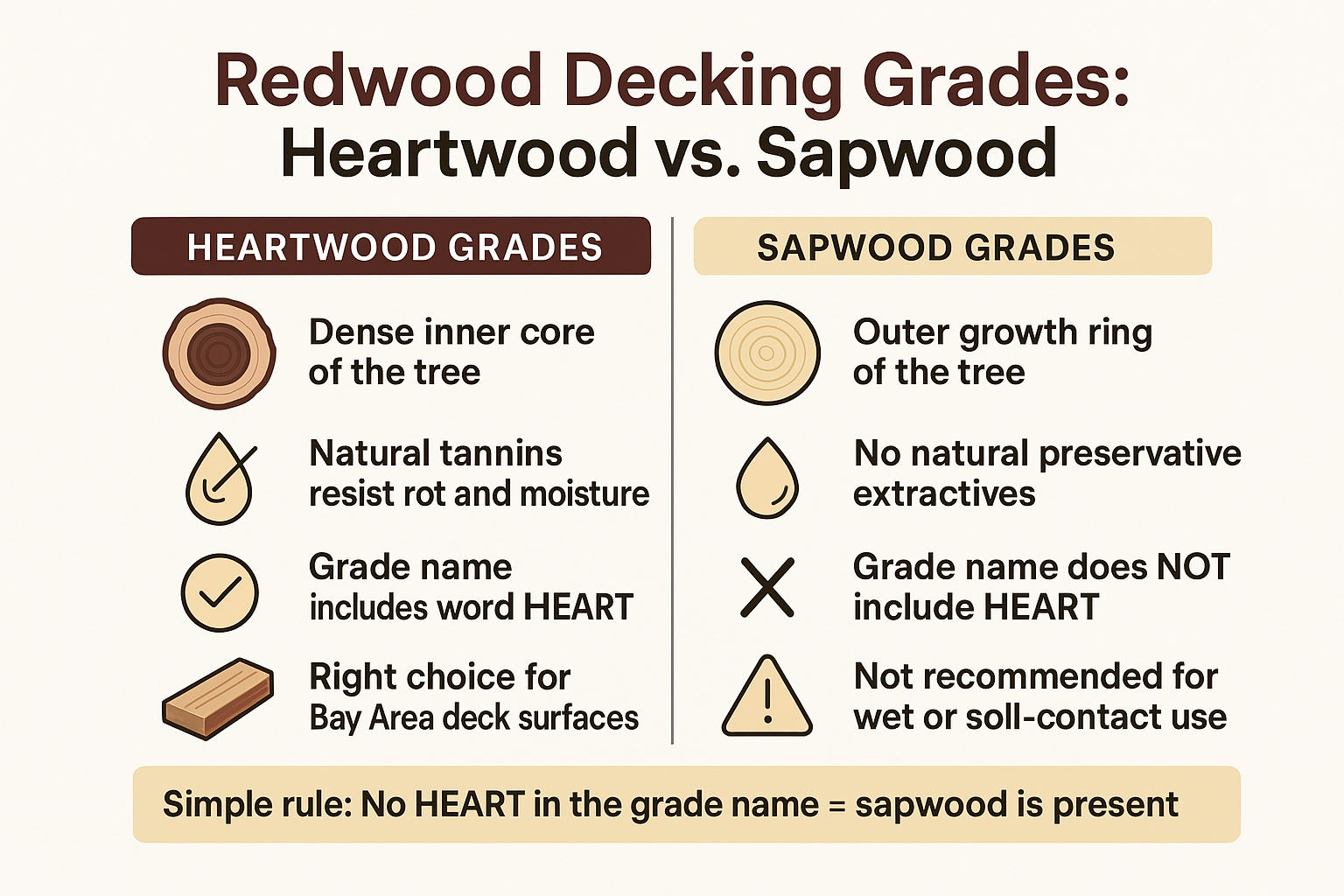
Once you know this rule, the whole grading system clicks into place: if the grade name does not include the word ‘Heart,’ the board contains sapwood.
That is not a fine-print detail. Sapwood redwood has essentially none of the natural extractives that make heartwood resistant to rot, insects, and moisture. On a fog-belt deck in the Oakland hills or a north-facing Berkeley yard, sapwood boards will degrade significantly faster than heartwood boards, regardless of how the rest of the project is built.
The California Redwood Association and industry grading standards confirm this clearly: heartwood grades carry the word ‘Heart’ in their grade name, and sapwood grades are explicitly not recommended for contact with or proximity to soil. That recommendation extends logically to any surface that stays chronically wet.
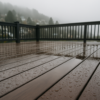
For Bay Area conditions specifically, this is not a subtle distinction. Marine layer fog rolling in from the Bay can keep north-facing deck boards damp well into the afternoon, even on clear summer days. Choosing the wrong grade for that exposure is a structural and aesthetic problem, not just a cosmetic one. If you want to see how moisture affects different decking materials more broadly, this breakdown of decking materials in Bay Area weather covers the full comparison.
The Four Grades You Will Actually See at the Counter
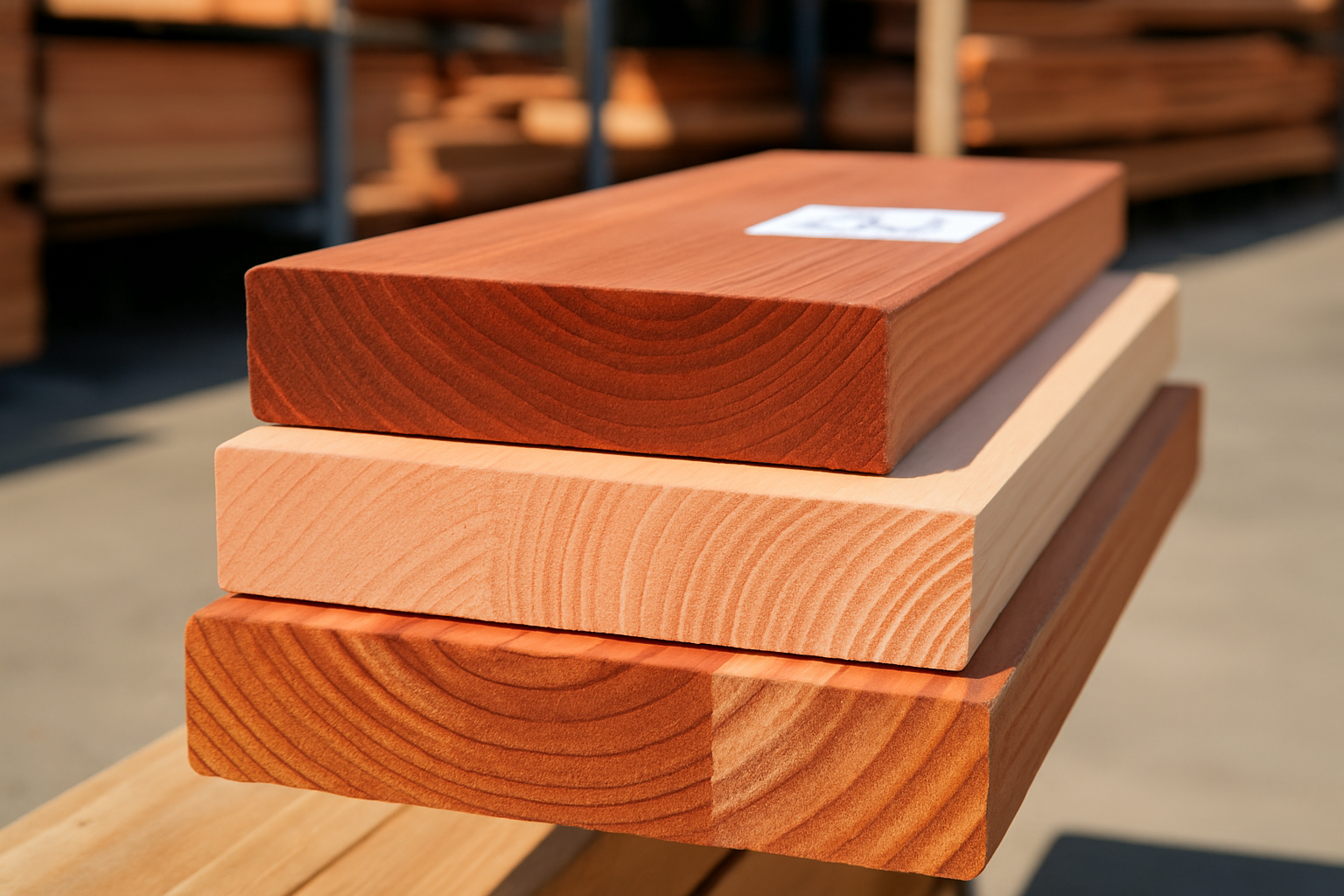
Most buyers encounter four grades in practice. Knowing what each one is made for prevents the most common and costly mix-ups.
Deck Heart is all heartwood, graded for structural strength, and it comes only in 2×4 and 2×6 dimensions, specifically sized for deck boards and railings. This is the grade you want for your primary deck surface on any Bay Area property where moisture is a real factor. The narrower dimensional range is a feature, not a limitation: it tells you the boards were graded specifically for this use.
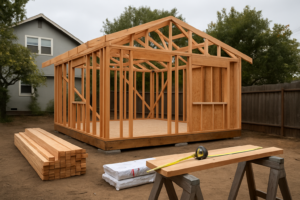
Construction Heart is also all heartwood, but it covers a wider range of sizes and is the right material for posts, ledger boards, beams, and anything that contacts or sits near soil. If you are framing a ground-level deck or setting posts directly into concrete, Construction Heart is what belongs there.
Deck Common and Construction Common are where the confusion usually enters. Both grades mix heartwood and sapwood, which drops their decay resistance considerably. They are suited for above-ground elements that stay reliably dry, fencing, interior trim, garden structures with good drainage and airflow. They are not appropriate for the primary surface of a Bay Area deck.
A quick summary:
– Deck Heart, deck boards and railings, all heartwood, 2×4 and 2×6 only
– Construction Heart, posts, ledgers, framing near soil, wider size range
– Deck Common, mixed heartwood/sapwood, dry above-ground applications only
– Construction Common, mixed heartwood/sapwood, structural framing that stays dry
For anyone considering how redwood stacks up against composite or modified wood options, this Bay Area deck breakdown covers the broader comparison.
Redwood Grade Quick Reference
This table summarizes the four grades buyers most often ask about, what they contain, and where each one is appropriate.
| Grade | Contains | Best Use | Bay Area Deck Surface? |
|---|---|---|---|
| Deck Heart | All heartwood | Deck boards, railings (2×4, 2×6) | Yes |
| Construction Heart | All heartwood | Posts, ledgers, framing near soil | No, structural use |
| Deck Common | Mixed heartwood/sapwood | Dry above-ground elements | Not recommended |
| Construction Common | Mixed heartwood/sapwood | Interior or dry structural framing | No |
Heartwood vs. Sapwood: What the Grade Label Is Really Telling You
This infographic breaks down the key difference between heartwood and sapwood grades and why it matters for Bay Area deck builds.
Second-Growth Redwood and Why Finishing Still Matters
Almost all commercially available redwood today is second-growth, trees harvested in decades rather than centuries. That matters because the extractive content that makes heartwood durable is present at lower concentrations than in old-growth material.
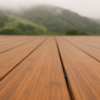
A second-growth Deck Heart board still outperforms any sapwood grade by a wide margin. But it does not carry the near-legendary rot resistance of historical redwood that built porch floors lasting 80 years without a coat of anything. For Bay Area conditions, that means sealing and finishing still matter even for all-heartwood grades.
Left unfinished, redwood weathers to silver-gray in direct sun, a look many people actually like. But in wetter microclimates, unfinished boards can also darken toward black in spots where water pools. That is not rot necessarily, but it is a sign the wood is absorbing more moisture than it should.
The right approach is a semi-transparent penetrating oil stain, reapplied every two to three years. A penetrating finish feeds the wood and keeps moisture out without trapping it the way film-forming paints do. Film formers peel on redwood; penetrating finishes do not.
The grade determines how long the board holds up structurally. The finishing schedule determines how it looks over time. Skipping both conversations is where expensive rework starts. For more on how Bay Area microclimates affect wood decking specifically, this article on fog, sun, and the wood vs. composite decision is worth reading before you finalize a material choice.
Frequently Asked Questions About Redwood Decking Grades
How do I know if a board at the lumber yard is actually all heartwood?
Look at the grade label. If the grade name includes the word ‘Heart’, Deck Heart or Construction Heart, the board is all heartwood by grading standard. If the label says Common, the board is a mix of heartwood and sapwood regardless of how red it looks on the surface. Color alone is not a reliable indicator; the grade stamp is.
Can I use Deck Common for a Bay Area deck if I seal it really well?
We would not recommend it for the primary deck surface. Sealing slows moisture absorption but does not replace the natural extractives that heartwood carries. Over time, in a Bay Area climate where morning fog keeps boards damp for extended periods, sapwood grades will show degradation faster than heartwood grades, regardless of the finish applied. Save Common grades for above-ground elements that stay consistently dry.
What size boards does Deck Heart come in?
2×4 and 2×6 only. The grade was developed specifically for deck board and railing applications, so the dimensional range reflects that. If you need larger heartwood stock for posts or ledger boards, that is Construction Heart territory.
Does second-growth redwood actually hold up, or should I look at a different material?
Second-growth Deck Heart still performs well in Bay Area conditions, better than any sapwood grade and better than many other softwood options. The key is pairing the right grade with a proper finishing schedule. If you want to compare it against composite or thermally modified wood, this comparison guide covers the full picture for Bay Area projects.
How often does redwood decking really need to be refinished?
A semi-transparent penetrating oil stain applied every two to three years is the standard recommendation for Bay Area conditions. Homes in foggier microclimates, north-facing Berkeley yards, the Oakland hills, anything close to the Bay, may need the shorter end of that range. The test is simple: pour a small amount of water on the surface. If it beads, you are fine. If it absorbs, it is time to refinish.
Is redwood a good choice for a deck that gets direct afternoon sun?
Yes, and the finishing choice matters more in that situation. Direct afternoon sun accelerates graying on unfinished redwood and can cause surface checking over time. A penetrating oil finish helps slow both. For south-facing decks that bake in the afternoon, this article on which deck wood holds up in Bay Area sun walks through the performance tradeoffs in detail.
Ready to Pick the Right Grade for Your Project?
If you are sourcing redwood for a Bay Area deck and want to make sure the grade in your hands is actually the grade your project needs, we carry Deck Heart and Construction Heart stock at our Berkeley lumberyard and are glad to walk through the specifics with you in person. Stop by 642 Hearst Avenue in Berkeley or call us at 510-841-0511, our staff can help you pull the right boards for the job before anything gets cut or delivered.