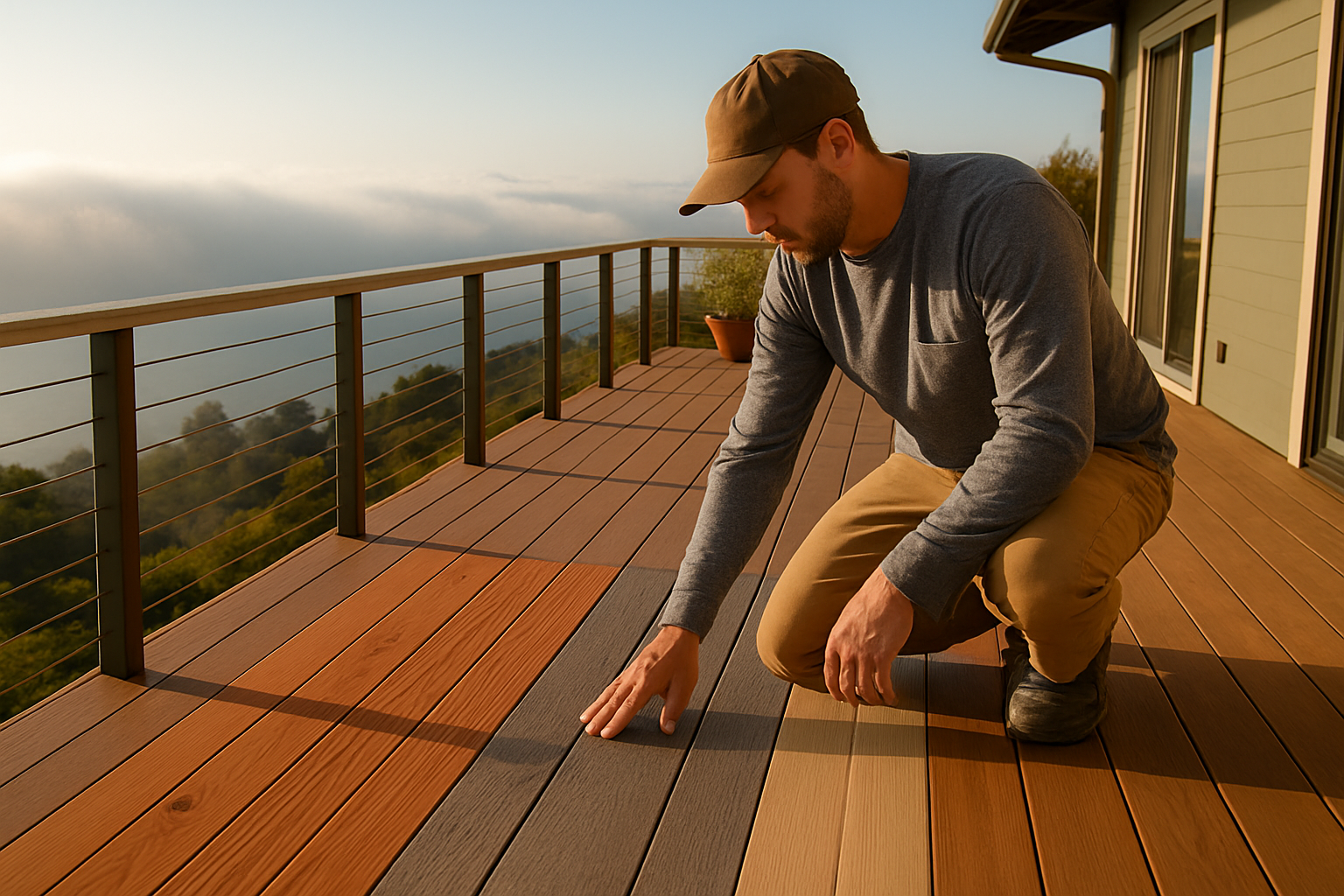
Direct Answer: The best decking material for Bay Area projects depends on your site’s sun exposure, WUI fire zone status, and maintenance tolerance — redwood, composite, and thermally modified wood each perform differently under the fog-and-UV cycle that causes most local deck failures.
Most national buying guides rank decking materials by price, maintenance, and looks. They don’t account for what the Bay Area actually does to a deck: morning fog rolls in off the water, boards absorb moisture, then afternoon UV burns them dry — sometimes within the same six-hour window. In Berkeley and Oakland, that repeated wet-dry cycling is what destroys decks. Boards that can’t handle it check, warp, and crack at the fastener points, usually within two or three seasons.
Chooosing the wrong material for that climate isn’t a cosmetic problem — it’s a structural one. And for a growing share of East Bay projects, there’s a second layer: WUI fire zone compliance that limits which materials you can legally use at all.
This breakdown covers three materials we see specified most often for Bay Area decks — redwood, composite, and thermally modified wood — with honest notes on where each one holds up and where it doesn’t.
Why Redwood Is Still the Regional Standard — and When It Fails
Coast redwood has earned its reputation through chemistry, not marketing. Its high tannin content gives it genuine resistance to fungus, rot, insects, and moisture-related decay. That’s not a claim — it’s why redwood has been the default decking species on Bay Area projects for generations.
But grade selection is where most buyers make a costly mistake. The two grades that matter most for decking are:
- Con-heart (construction heart): The contractor-grade standard. All heartwood, knots allowed. Good rot resistance, appropriate for most structural decking applications.
- Clear heart: Finish-grade, knot-free heartwood. Used for visible applications where appearance matters as much as performance.
The critical distinction is heartwood versus sapwood. Heartwood is the dense, tannin-rich core of the tree — it’s what gives redwood its rot resistance. Sapwood is the lighter outer ring, and it does not share that resistance. Lower-grade redwood often includes sapwood, and those boards will fail in ways that true heartwood boards won’t.
Many buyers discover this difference after boards start to degrade, not before. If you’re ordering redwood for a deck that will see consistent moisture — which describes most of Berkeley and the Oakland flatlands — specifying heartwood grade explicitly is non-negotiable.
On the maintenance side, redwood needs to be cleaned and re-sealed periodically to hold its color and surface integrity. Left untreated, it weathers to a gray that many owners actually like — but it will eventually develop surface checks without some upkeep. For wood vs composite decking decisions, that maintenance question is often the real deciding factor.
The Honest Case for Composite — Including the Heat Problem
Capped composite decking has become the baseline for professional builds in the Bay Area, and for good reason. It doesn’t rot, it doesn’t splinter, and it handles moisture cycling far better than unprotected wood. For shaded or north-facing decks in Oakland and Berkeley, it’s a genuinely low-maintenance option that performs well over time.
But there’s a real performance issue that gets softened in marketing materials: heat retention on south- and west-facing decks.
In sunnier inland East Bay locations — parts of Oakland away from the coast, for example — dark composite boards can reach surface temperatures of 140–160°F on a clear summer afternoon. That’s not an edge case. It’s a documented characteristic of polymer-based materials under direct sun, and manufacturers acknowledge it.
A few things worth knowing before specifying composite on a full-sun site:
- Capped composite is the current standard. An uncapped composite board in a 2026 quote should raise questions — the capping protects against staining, fading, and moisture infiltration.
- Lighter color profiles run cooler. Heat-mitigating product lines from TimberTech and Trex meaningfully reduce surface temperature compared to dark profiles, but even those products carry manufacturer cautions about extended skin contact on hot days.
- Splinter-free is not the same as burn-free. That tradeoff deserves an honest conversation with any homeowner who has kids or pets using the deck barefoot in summer.
For full-sun California decks, color selection and product line matter more than brand alone. The difference between a product marketed as heat-mitigating and a standard dark composite can be 20–30°F at the surface on a clear July afternoon.
Thermally Modified Wood: The Middle Option Most Buyers Haven’t Heard Of
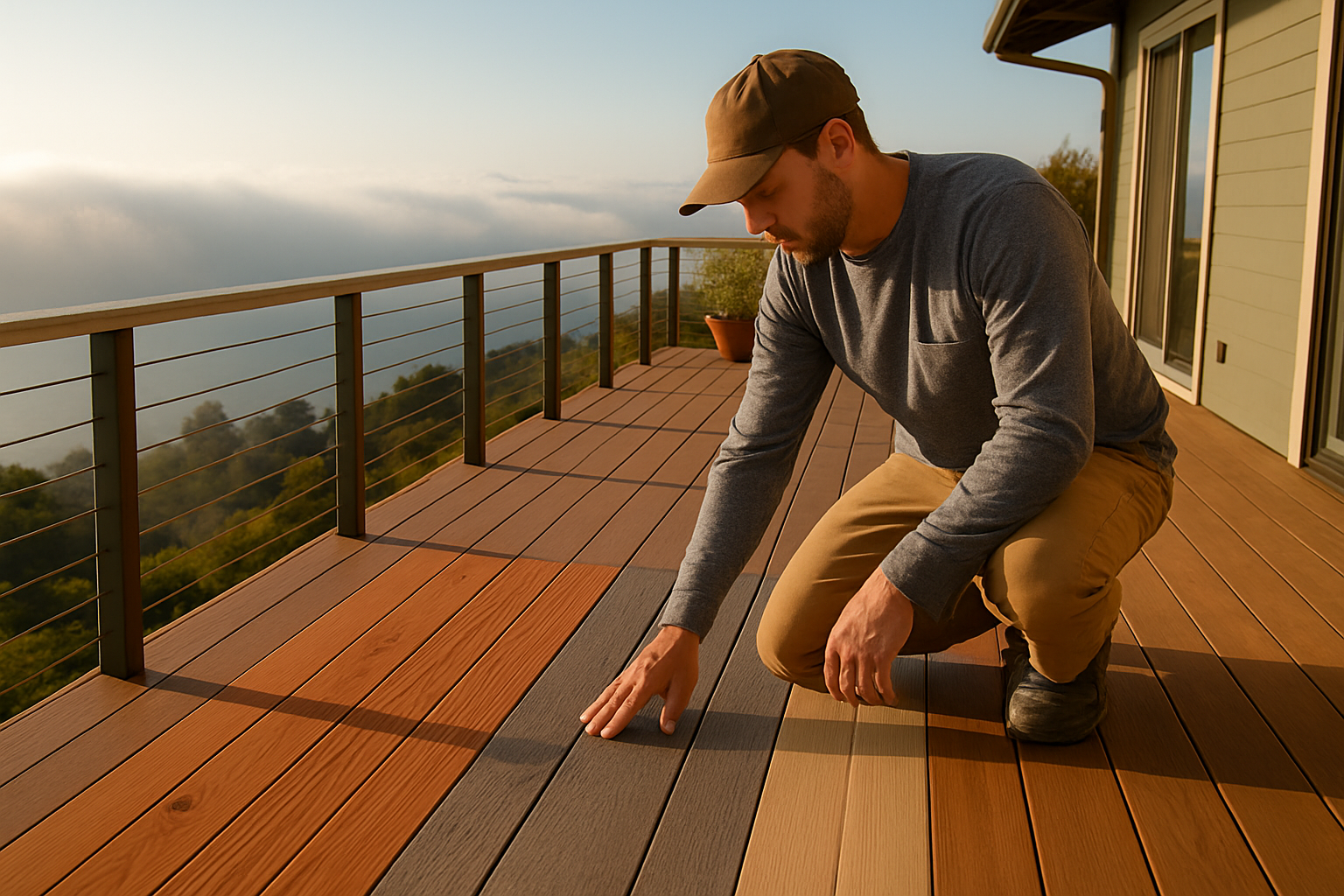
Thermally modified wood — Thermory is the main brand we stock — occupies a position between redwood and composite that a lot of buyers simply don’t know exists. The modification process heats the wood to high temperatures in a controlled, oxygen-limited environment. That process changes the cell structure of the wood in two important ways: it reduces moisture absorption significantly, and it improves dimensional stability.
The result is a board that behaves like a lower-maintenance wood but doesn’t have the same wet-dry cycling vulnerability as untreated species. It won’t check and warp at the fastener points the way unprotected softwood does under Bay Area conditions.
The other advantage that rarely gets enough attention: it stays cooler underfoot than composite. Wood doesn’t absorb and hold radiant heat the way a polymer board does. On a south-facing Oakland deck in August, that’s a meaningful difference in usability.
Thermory isn’t maintenance-free — it still benefits from periodic oiling to maintain its appearance — but the upkeep interval is longer than redwood, and the dimensional stability means fewer structural surprises over time. For homeowners who want natural wood aesthetics but are frustrated by either redwood’s maintenance demands or composite’s heat, this is the decision pivot worth examining in depth. We’ve covered the specifics in more detail in Does Thermory Decking Actually Outperform Cedar and Composite?.
Bay Area Decking Materials at a Glance
This comparison covers the three most-specified decking materials for Berkeley and East Bay projects across the factors that matter most in local conditions.

WUI Compliance Has Changed the Conversation for East Bay Decks
This is the part of the material decision that can override everything else. A large portion of the East Bay — including significant areas of the Oakland and Berkeley hills — falls within High or Very High Fire Hazard Severity Zones. The 2025 California WUI Code (Title 24, Part 7), effective January 1, 2026, sets ignition-resistant material requirements for exterior components including decking.
Under that code, an ignition-resistant material must demonstrate a flame spread of 25 or under per ASTM E84 testing.
For wood decking specifically, the code does allow certain approved species to qualify — but with strict conditions:
- Species must be one of the listed ignition-resistant options, which includes redwood, western red cedar, and incense cedar
- Minimum board dimensions: 5/4-inch thickness and 6-inch width
- Specific edge profiles are required as part of compliance
Composite and modified wood products may also qualify, but only if they have been tested and listed under the appropriate standard. That is not a safe assumption — it requires product-level verification.
The practical implication: a material that’s perfectly appropriate for a flat Berkeley yard may be non-compliant for a hillside Oakland project in a regulated fire area. Confirming your project’s WUI status before ordering material is a hard prerequisite, not something to sort out after lumber is on site. Your local building department can confirm zoning, and Oakland’s permit office has detailed maps of affected parcels. For more background on fire-rated material requirements, The Advanced Guide to Fire Rated Lumber in Berkeley covers the compliance framework in depth.
Decking Material Decision Summary for Bay Area Projects
Use this as a quick reference when matching material to site conditions. WUI compliance must always be confirmed for the specific product and parcel — this table reflects general characteristics, not legal determinations.
| Material | Best Site Conditions | Main Limitation | WUI Eligible (General) |
|---|---|---|---|
| Redwood (con-heart or clear heart) | Shaded, mixed-light, coastal fog zones | Sapwood in lower grades; periodic maintenance needed | Yes — with dimensional and edge profile requirements |
| Capped Composite (TimberTech, Trex) | Shaded or partial sun; low-maintenance priority | High heat retention in full sun; product-specific WUI testing required | Varies — must verify per product listing |
| Thermally Modified Wood (Thermory) | Full sun; wood-look preference; dimensional stability priority | Periodic oiling needed; product WUI status must be confirmed | Varies — must verify per product listing |
What the Material Decision Actually Comes Down To
There’s no universal answer to which decking material is best for a Bay Area project — and any guide that offers one without asking about site conditions and WUI status isn’t giving you useful information.
The decision framework that actually holds up in the field looks like this:
- Confirm WUI status first. If the site is in a regulated fire hazard zone, that filters your material list before anything else.
- Assess sun exposure honestly. A deck that bakes in afternoon sun in Montclair or the Oakmore neighborhood is a fundamentally different problem than one that sits under tree cover in the Berkeley flats.
- Match grade to application. If you’re specifying redwood, heartwood grade matters — confirm it at the time of order, not after delivery.
- Maintenance tolerance is a real variable. Some owners will re-oil or re-seal a deck every two or three years without complaint. Others won’t. That difference should drive material selection.
For contractors managing multiple Bay Area projects with different site profiles, the Decking Material Comparison Guide for Bay Area Pros goes deeper on specification decisions by project type. And if the material question intersects with structural planning, How to Plan and Build a Deck: A 2026 Guide covers the full sequencing from permit to finish.
Frequently Asked Questions About Bay Area Decking Materials
Is redwood still a good choice for a deck in Berkeley or Oakland?
Yes — with the right grade. Con-heart or clear heart redwood (all heartwood, no sapwood) performs well in Bay Area conditions. The rot resistance comes from the heartwood’s tannin content, so specifying the correct grade when you order is critical. Lower grades that include sapwood will not hold up the same way, and many buyers don’t realize the difference until boards start to fail.
How hot does composite decking actually get in the East Bay?
On a clear summer afternoon in a sunny inland East Bay location, dark composite boards can reach 140–160°F. That’s enough to be uncomfortable or painful on bare skin. Heat-mitigating product lines from TimberTech and Trex reduce that meaningfully, and lighter color profiles help as well — but manufacturers themselves caution that even heat-mitigating products get hot in direct sun. For full-sun south- or west-facing decks, color selection and product line matter significantly.
Do I have to use a specific decking material if my project is in a WUI fire zone?
Yes. Under the 2025 California WUI Code effective January 1, 2026, decking on projects in regulated fire hazard zones must meet ignition-resistant material requirements — a flame spread of 25 or under per ASTM E84 testing. Certain wood species (including redwood) can qualify with specific dimensional and edge profile requirements. Composite and modified wood products may qualify if they have been tested and listed under the applicable standard. Confirm your parcel’s WUI status with your local building department before ordering anything.
What’s the main advantage of thermally modified wood over redwood?
Dimensional stability. The thermal modification process changes the wood’s cell structure so it absorbs far less moisture — which means it handles the Bay Area’s wet-dry cycling better than untreated wood. It also stays meaningfully cooler underfoot than composite on sunny decks. The tradeoff is that it still needs periodic oiling, but the maintenance interval is typically longer than untreated redwood.
Does the grade of redwood I order actually matter that much?
Significantly. Sapwood — the lighter outer ring of the log — does not share the rot resistance of heartwood. Lower-grade redwood often contains sapwood, and those boards will fail in ways that heartwood-grade boards won’t, particularly in moisture-heavy Bay Area conditions. When ordering for any exterior decking application, specify heartwood grade explicitly and confirm it before the material ships.
What questions should I ask before finalizing a decking material choice?
The practical checklist: Is the site in a WUI fire hazard zone? What is the sun exposure — shaded, partial, or full south/west-facing sun? What is the owner’s realistic maintenance tolerance? What decking grade is actually being quoted — and does the invoice confirm it? Getting clear answers to those four questions will eliminate most of the costly material mismatches we see on Bay Area projects.
Have a Specific Site or Project to Work Through?
Material selection gets easier when you can describe the actual site — sun exposure, WUI status, framing sequence, and what the owner expects to do for maintenance. Truitt & White’s lumber and decking team at the Hearst Avenue yard in Berkeley works through exactly these questions with contractors and serious homeowners every day. You can reach the lumberyard at 510-841-0511, or stop in at 642 Hearst Avenue to look at actual board samples and talk through what makes sense for your specific project.