Direct Answer: Composite decking and thermally modified wood handle wet Bay Area winters with the least maintenance. Redwood performs well too, but only if sealed before the rains arrive.
Most decking conversations happen in spring and summer, when homeowners are picturing outdoor furniture and evening gatherings. But fall is when the decision actually matters, because a wet El Niño winter will stress-test every material choice you made and expose any prep you skipped.
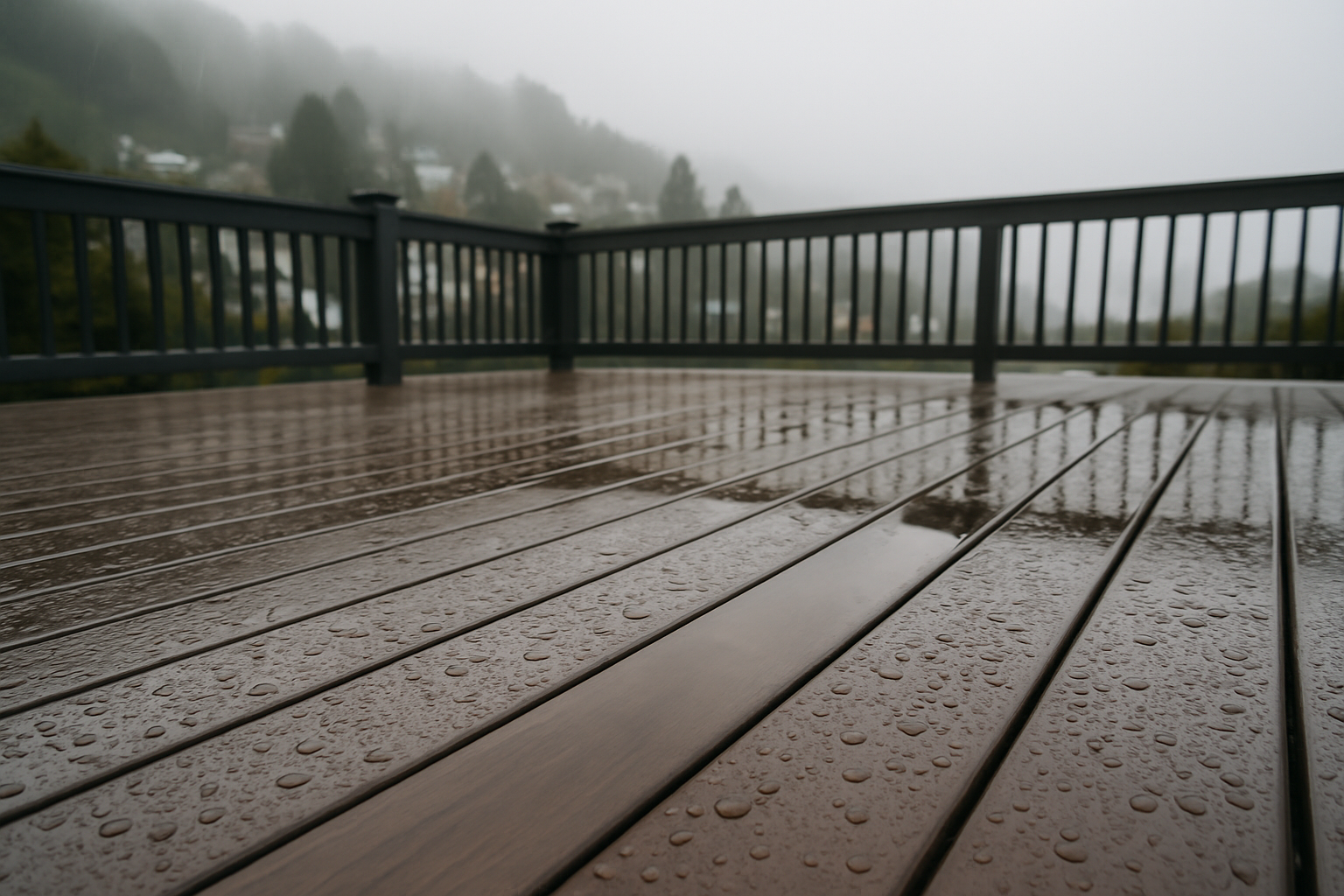
The Bay Area’s marine layer and coastal moisture are relentless even in a normal year. During a strong El Niño cycle, Berkeley and Oakland hills neighborhoods can see sustained rainfall that keeps decks wet for days at a time, and that changes what you should be asking about any material: not just how it looks in July, but whether it will still look decent come March.
This guide looks at the main decking categories through a wet-winter lens, including drainage, slip resistance, maintenance timing, and fire-zone documentation for hillside properties. If you are choosing materials now or prepping an existing deck before the storms, this is the right frame for that decision.
How Each Decking Category Behaves Through a Wet Bay Area Winter
The question is not which material looks best in a showroom. The question is which one causes the fewest problems when it stays wet for a week straight.
Redwood is still a top choice for Bay Area decks, and it earns that reputation. But it is a conditional performer in wet seasons. Redwood that was properly cleaned and sealed before October will shed water well, resist checking, and come out of winter looking solid. Redwood that went into the rains without fresh sealant is a different story, the grain opens, the surface grays fast, and mold finds a foothold in any debris sitting in the board gaps. The window for sealing is a dry stretch in September or early October. If that window is missed, you are managing damage instead of preventing it. For a deeper look at how redwood compares across seasons, the Redwood vs. Composite vs. Modified Wood: A Bay Area Deck Breakdown article covers the full picture.
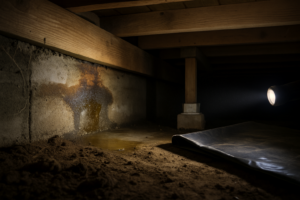
Composite decking, including brands like TimberTech and Trex, skips the refinishing cycle entirely. That is a real advantage when you are heading into a wet winter. Composites do not absorb water the way wood does, so they do not swell, check, or gray from moisture exposure. But they are not entirely passive either. Debris packed into board gaps traps moisture against the decking and the framing underneath, and without clear drainage below the deck surface, composites can hold water against the substructure. The boards themselves may be fine while the joists underneath are rotting. Good drainage design and a clear gap between the decking and any ground surface below it matter as much as the board material.
Thermally modified wood, like Thermory, and dense tropical hardwoods like ipe resist moisture movement in a different way, their cellular structure has been altered by heat or compressed by natural density, which dramatically reduces how much water they absorb and release. These materials do not swell and shrink the way standard softwoods do, which means less checking, less fastener backing out, and less surface movement through a wet season. If you want to read more on how Thermory specifically holds up compared to other options, Does Thermory Decking Actually Outperform Cedar and Composite? has a detailed breakdown.
MOSO bamboo decking is another dense, low-absorption option that handles moisture well when properly installed with adequate ventilation and drainage. Like composite, it does not need seasonal refinishing.
Drainage Is the Variable That Affects Every Material
No matter which decking material you choose, drainage beneath and around the deck is what actually determines how long it lasts.
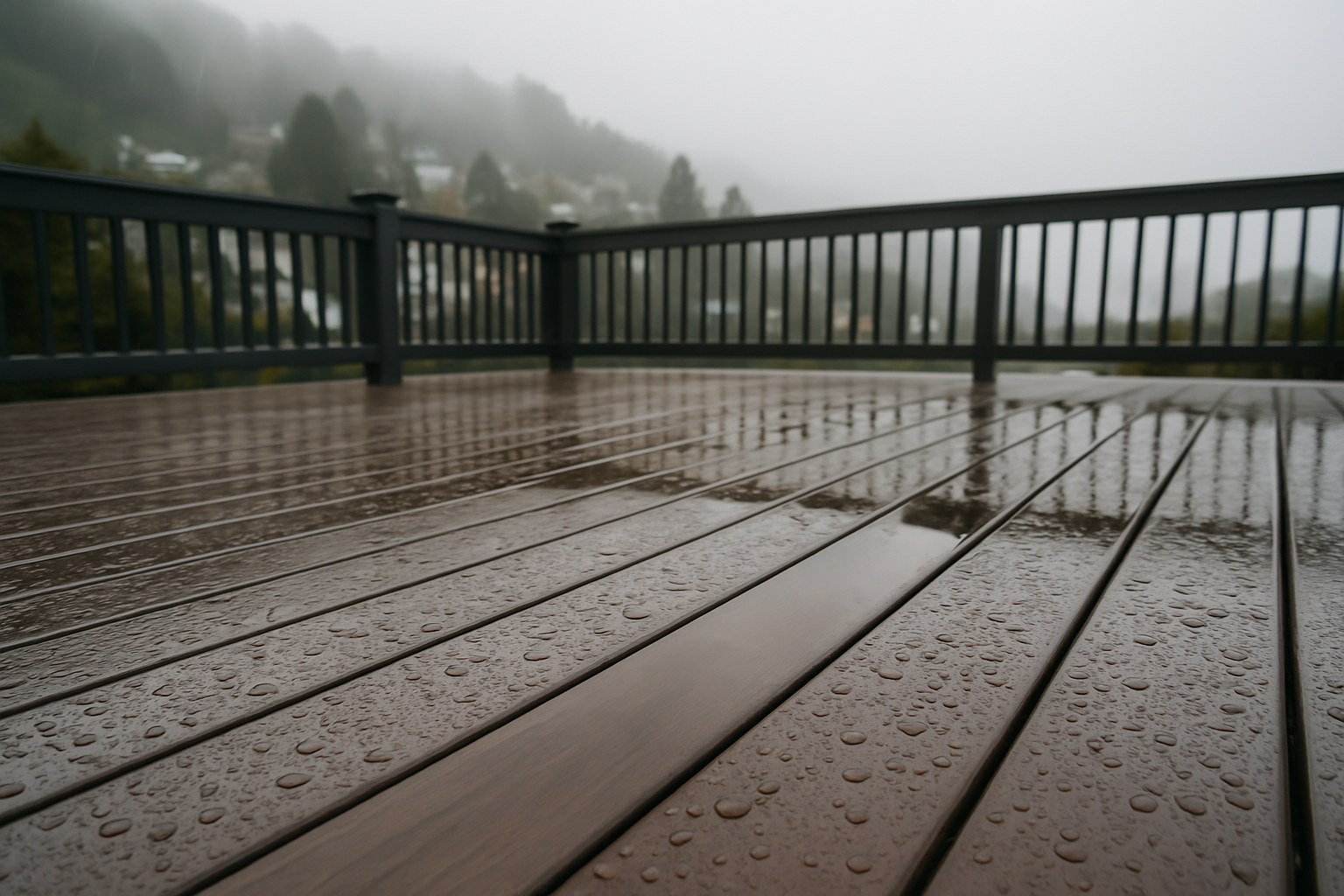
Bay Area storms do not always arrive as steady rain. El Niño events tend to deliver intense, short bursts, enough to overwhelm gutters that are partially blocked and send water sheeting off rooflines onto deck surfaces and ledger connections. That splashback is one of the fastest ways to shorten a deck’s life, and it affects redwood, composite, and modified wood equally.
The areas worth checking before the first storm of the season:
- Gutters and downspouts, confirm they are clear and discharging water away from the deck area, not onto it
- Under-deck clearance, water should be able to move through and away, not pool against the framing
- Ledger flashing, the connection between your deck and the house is where water infiltration causes the most structural damage; flashing should be tight and properly lapped
- Board gaps, packed debris in tight gaps prevents drainage and holds moisture against the boards and joists
For a broader look at how roof drainage connects to deck longevity, Where Does Your Roof Water Go? Drainage Fixes Before the First Storm covers the full drainage picture for Bay Area homes.
Pre-Storm Deck Checklist for Bay Area Homeowners and Contractors
Run through these checks in September or early October, before the rains arrive.
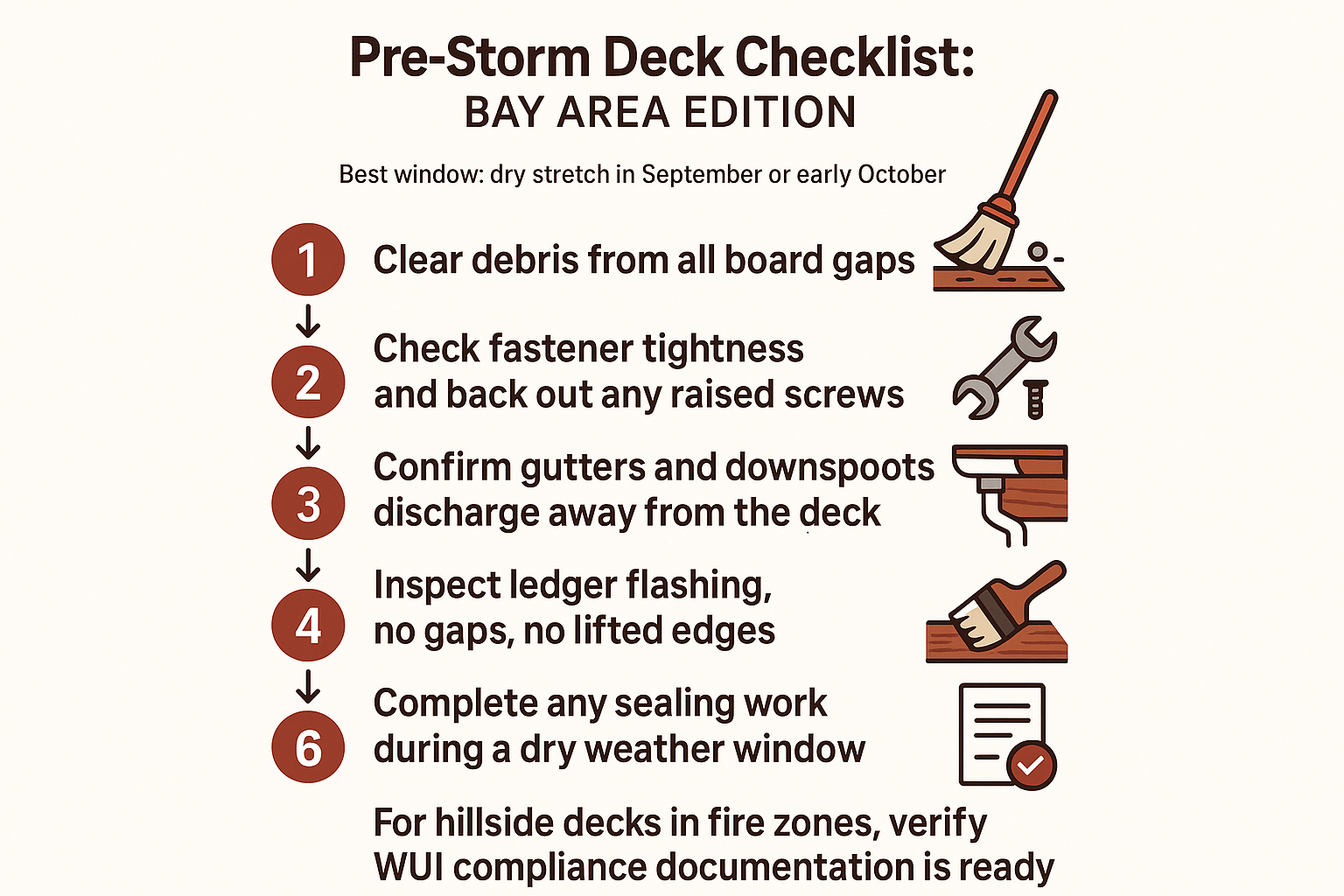
WUI Fire-Zone Decking in Berkeley and Oakland Hills
For anyone building or replacing a deck in the Oakland or Berkeley hills, the fire-zone piece of this conversation is not optional.
A wet El Niño winter brings a specific secondary risk that many people miss: heavy spring growth. When the hills get saturated through January and February, grasses and brush come back thick in March and April. By June that growth is dry, and fire-season fuel loads can be significantly higher than in a low-rainfall year. Deck materials in WUI (Wildland-Urban Interface) zones need to account for that cycle, not just for summer, but as part of a longer-term fire-risk picture.
California’s WUI building code, enforced under Chapter 7A of the California Building Code, requires that decking materials in designated fire-hazard areas meet specific ignition-resistance standards. For new construction or permitted replacement decks, the material you choose needs to be verifiable as WUI-compliant, and documentation for plan check should be in hand before the project starts.
Composite decking brands like TimberTech produce specific product lines rated for WUI conditions. Some thermally modified wood products also carry fire-resistance ratings, but this varies by product and you should confirm the rating for the exact board you are specifying. Redwood has natural fire resistance relative to many other softwoods, but that is not the same as a documented WUI rating for code purposes.
If your project is in a hillside zone and you are not certain about compliance documentation, that question is worth settling before materials are ordered, not after.
Wet-Winter Performance Comparison by Decking Material
This table summarizes how the main decking categories compare on the factors that matter most during a Bay Area rainy season.
| Material | Moisture Resistance | Maintenance Before Winter | WUI Rating Available | Slip Risk When Wet |
|---|---|---|---|---|
| Redwood | Good if sealed | Seal before October rain | Not a rated system | Moderate, texture helps |
| Composite (TimberTech, Trex) | Excellent | Clear debris, check drainage | Yes, product-specific | Low, textured surface |
| Thermory (thermally modified) | Excellent | Minimal, inspect fasteners | Varies by product | Low to moderate |
| MOSO Bamboo | Good, dense structure | Clear gaps, check drainage | Check product specs | Moderate |
| Tropical Hardwood (Ipe) | Excellent, high density | Re-oil if desired, not required | Check product specs | Low to moderate |
Slip Resistance Matters More Than Most People Plan For
A wet deck is a slip hazard, and this is one area where material texture and profile design make a real difference.
Smooth-surfaced boards, whether wood or composite, become slick fast under rain and fog. Composite boards with grooved or embossed textures hold their grip better because water drains off the surface instead of sitting on it. TimberTech’s capped composite products, for example, use a textured face specifically for this reason.
Redwood and other softwoods have natural grain that provides some grip when wet, but weathered or grayed boards can be just as slick as a smooth composite if the surface is not maintained. For hillside decks where the grade falls away from the house, a slip on a wet morning is a real consequence.
If slip resistance is a priority for your project, especially on decks used year-round with elderly family members or children, ask about board profiles with drainage channels built into the face, or consider whether your framing plan allows for a slight slope across the deck to encourage active runoff. For a full comparison of how wood and composite perform across Bay Area conditions, How Bay Area Fog and Sun Change the Wood vs. Composite Decision has specific guidance on this.
Frequently Asked Questions About Decking in a Wet Bay Area Winter
Can I still seal my redwood deck in October if the rains have already started?
The short answer is no, not effectively. Sealant needs the wood surface to be dry, typically for 48-72 hours before application and through the cure period. If the rain has already arrived consistently, you are better off waiting for a real dry stretch than applying over a damp surface and getting poor penetration. In a wet El Niño year, that window might not come until late spring.
Does composite decking actually need any winter prep?
Less than wood, but it is not zero. Clear debris from board gaps before the rains so drainage stays open. Also check that the area below the deck drains freely, composite boards themselves handle moisture well, but the wood framing underneath does not if water is sitting against it all winter.
What decking material is best for an Oakland hills deck in a fire zone?
You need something with a documented WUI fire-resistance rating for plan check, not just a general reputation for fire resistance. Certain composite decking lines from TimberTech and Trex carry explicit WUI ratings. Some thermally modified wood products do as well, but it varies by product. Bring your specific job address and fire-zone designation when you are selecting materials so the documentation question gets answered before the order is placed.
How much does a composite deck cost compared to redwood right now?
Material costs shift with lumber tariffs, supply availability, and product tier. Composite decking generally runs higher on materials than standard redwood, but the maintenance cost differential, no sealing, no refinishing, narrows that gap over time. For a current, accurate comparison based on your square footage and board choice, it is worth talking through the specifics rather than relying on a general estimate.
Does Thermory need to be sealed before winter?
Thermory does not require sealing to protect against moisture damage the way softwood does, the thermal modification process reduces the wood’s ability to absorb water in the first place. You can apply a finish oil to maintain color if you prefer a warmer appearance, but skipping it will not hurt the structural performance of the board.
My deck framing is under my boards, how do I know if winter runoff is damaging it?
After a hard rain, look for standing water near the ledger where the deck meets the house, staining on joists or posts below the deck, and any soft spots on the decking surface near the house connection. Those are early signs that water is sitting against structural wood rather than draining away. Catching this in fall is a lot cheaper than discovering it in spring.
Choosing Materials Before the Next Rainy Season?
We carry redwood, TimberTech composite, Thermory, MOSO bamboo, and tropical hardwoods at our Berkeley lumberyard, all in one place, with staff who know how each one performs in specific Bay Area microclimates and fire zones. If you are making a material decision for a hillside deck, a fog-belt backyard, or a project that needs WUI documentation, we are happy to talk through the specifics with you. Stop by the lumberyard at 642 Hearst Avenue in Berkeley, call us at 510-841-0511, or visit truittandwhite.com to get started.