Direct Answer: As of 12:01 a.m. eastern time on August 22, 2026, a 50 percent additional Section 338 tariff applies to certain Canadian-origin goods, including plywood. Canadian softwood lumber is excluded.
You wrote the bid in July off a panel quote from June. The crew is ready to sheathe in October, and the sheet price that made your number work is gone. That gap comes out of your margin, not the client’s.
On August 22, 2026, a 50 percent additional tariff under Section 338 of the Tariff Act of 1930 took effect on certain Canadian-origin goods, and plywood and veneered wood panels are on the list. It stacks on duties that were already there.
Below is what actually changed, what is excluded, and how East Bay builders are handling panel-heavy scopes before the wet season closes in. We sell these materials every day out of the Hearst Avenue yard, so this is the version without the hand-waving.
The plywood price increase tariff from Canada, in plain terms
Here are the facts, stated the way the source documents state them.
- The duty is a 50% additional ad valorem duty imposed under Section 338 of the Tariff Act of 1930 on certain products of Canada.
- It took effect at 12:01 a.m. eastern time on August 22, 2026.
- The original start date was August 19, 2026. An August 18 proclamation temporarily suspended the effective date for three days.
- The covered list is broad and includes cement, plywood, furniture, cosmetics, textiles, apparel, jewelry, toys, and sporting goods.
- It applies based on country of origin, meaning where the goods are made, not where they ship from.
- It applies even to goods that qualify under USMCA.
That last point catches people. A panel can be fully USMCA-qualifying and still pick up the 50 percent.
The legal summary comes from Troutman Pepper Locke’s write-up on the three-day suspension, with the effective-date detail confirmed in Zonos’s Section 338 country guide. Both are worth reading if you handle your own purchasing.
Canadian softwood lumber is not part of this
This is the piece most jobsite conversations get wrong. Canadian softwood lumber is already subject to Section 232 duties and is excluded from Section 338 coverage.
So your 2x framing stock is not caught up in the August 22 change. Your plywood and veneered wood panels can be, depending on origin.
That split matters when you price a Berkeley or Oakland addition. The stud pack and the sheathing pack move on two different tracks now, and lumping them into one escalation assumption will put you on the wrong side of a bid.
If you want the longer view on how the softwood measures have been working their way into local material costs, we covered that separately in what tariffs on Canadian lumber mean for your Bay Area project budget.
What is caught and what is not
A quick reference for sorting your material list. Origin is what decides it, so confirm before you assume.
| Material | Exposed to the 50% Section 338 duty? | What to confirm before ordering |
|---|---|---|
| Canadian-origin plywood | Yes, plywood is on the covered list | Country of origin on the mill stamp or invoice |
| Canadian-origin veneered wood panels | Yes | Whether the face veneer and core share the same origin |
| Canadian softwood lumber | No, excluded because it is already under Section 232 | Nothing new here, but Section 232 still applies |
| Plywood made in the U.S. or outside Canada | Not under this measure | Other tariff programs may still apply by origin |
| Doors and moulding with Canadian panel or core stock | Possibly, depending on origin and classification | Ask the supplier where the component stock is made |
| Furniture | Yes, furniture is named on the covered list | Relevant for millwork packages that include casegoods |
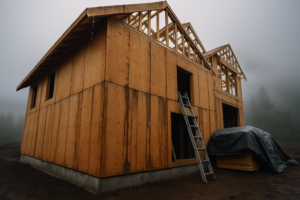
Why this lands hardest on fall sheathing schedules
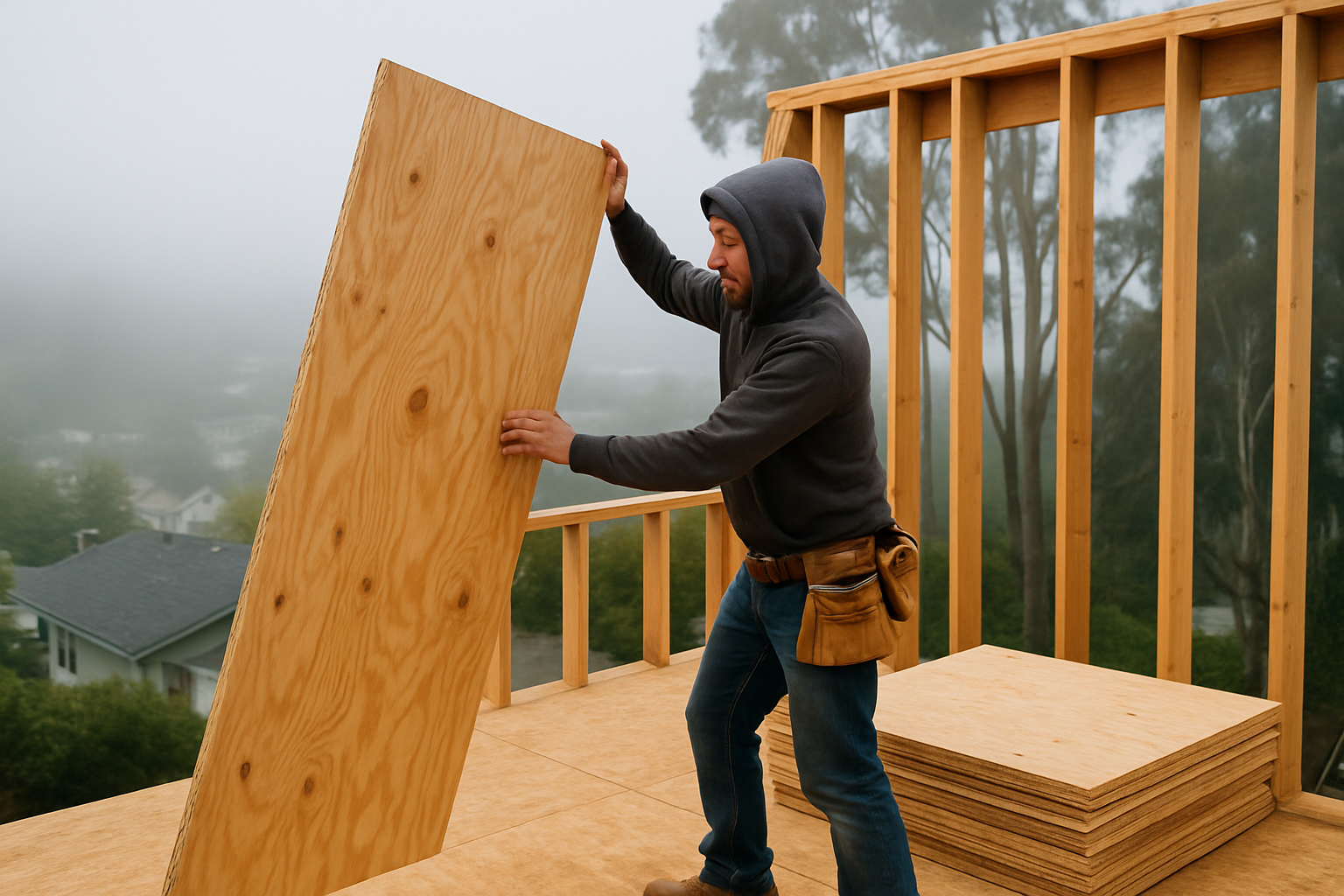
Late August is exactly when East Bay crews start chasing dry-in. Nobody wants open sheathing in December.
And the calendar squeezes you from the other direction. Oakland enforces a wet-weather grading moratorium from October 15 to April 15, which pushes site work earlier and bunches framing and sheathing into a narrow fall window. NOAA’s Climate Prediction Center has El Niño conditions present and strengthening into winter 2026-27, though Northern California rainfall tracks ENSO loosely, so treat it as a reason to protect your schedule rather than a forecast.
The result is a pile of panel orders hitting at once, on jobs that were priced months ago.
A few things we see work:
- Pull the panel count forward and get it on an order instead of leaving it as a line item.
- Separate the sheathing allowance from the framing allowance in your bid so one escalation does not swallow the other.
- Put a material escalation clause in writing on anything you bid before late August that has not been ordered yet.
- Decide your panel spec early, because switching sheathing types midstream changes fastener schedules and inspection notes.
If rain is already pressing on your dry-in date, the tradeoffs are laid out in plywood or OSB for sheathing when rain beats your dry-in date.
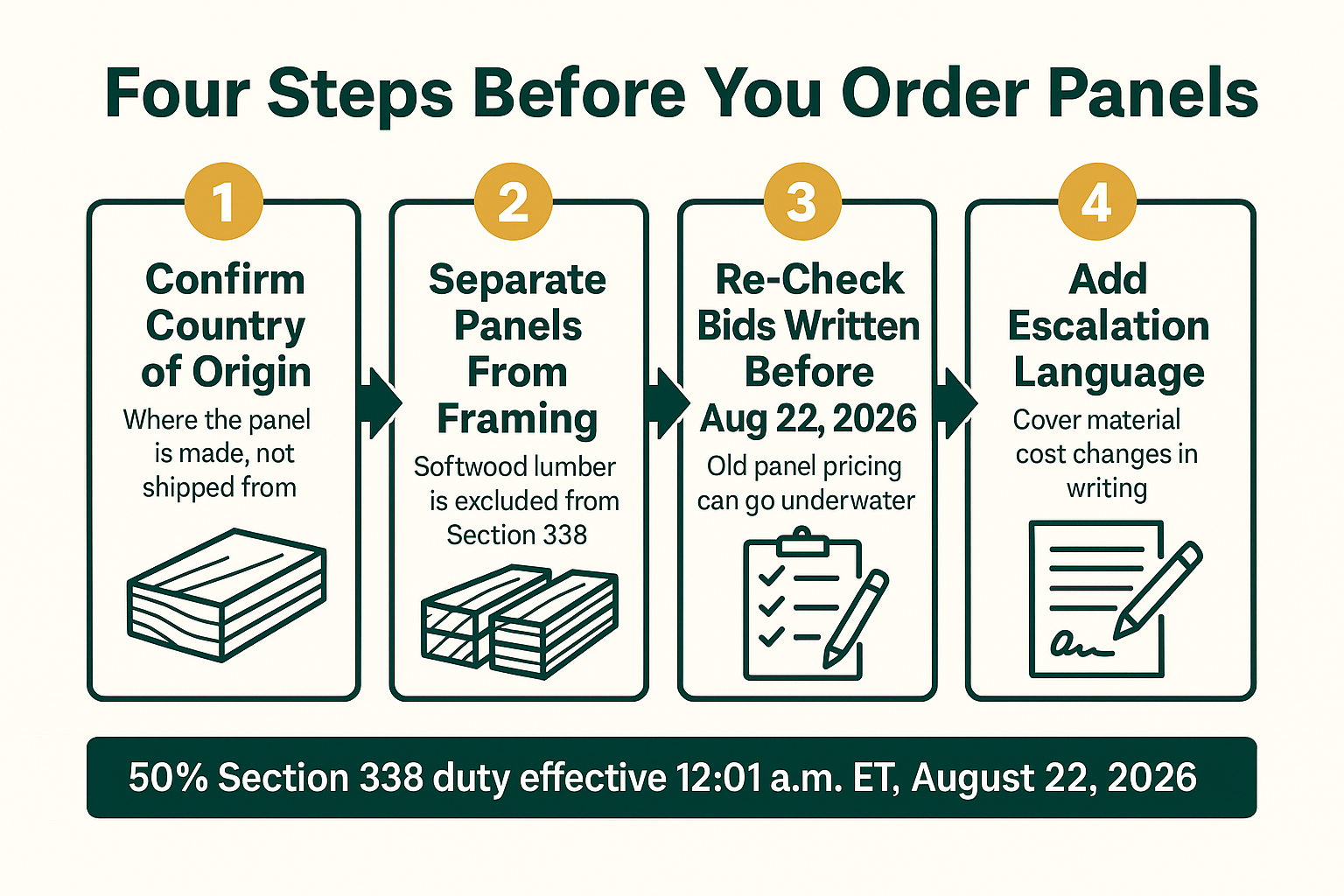
Four steps before you order panels
A short sequence for keeping a panel-heavy bid from going underwater after August 22.
What to ask your supplier before the order goes in
Origin is not always obvious from a product name. A brand you have bought for fifteen years may run panels out of more than one country.
When you call in a panel order, these are the questions that actually change the number:
- Where is this panel manufactured? Not the distributor’s address, the mill.
- Is this item affected by the August 22 duty, and has the price already moved?
- What is current lead time on an unaffected substitute of the same thickness and grade?
- If I order today, what price applies, the quote date or the ship date?
One of the better compliments we get from longtime customers is that they can get a straight read without an appointment. As one review put it, our yard is “the place professionals go to get professional service for professional work.” Tariff questions fall squarely in that bucket.
Hardwood and trim stock sits in its own basket of rules. If you have ipe, hardwood trim, or specialty millwork in the scope, see what to watch in the October 1 hardwood tariff review.
Frequently Asked Questions About the 2026 Canadian Plywood Duty
Does the 50 percent duty apply to every sheet of plywood I buy?
No. It applies to Canadian-origin plywood and veneered wood panels. Panels made in the United States or in other countries are not covered by this particular measure, though other tariff programs can still apply based on where they are made.
My plywood shipped from a Canadian distributor but was made somewhere else. Am I paying it?
The tariff applies based on country of origin, meaning where the goods are made, not where they are shipped from. Shipping point alone does not determine it. Get the manufacturing origin in writing before you build the number into a bid.
I thought USMCA goods were protected. Why does this hit them?
Because this measure specifically applies even to goods that qualify under USMCA. That is the detail catching purchasing people off guard. It also stacks on top of tariffs that were already in place.
Why is softwood lumber exempt when plywood is not?
Canadian softwood lumber is already subject to Section 232 duties and is excluded from Section 338 coverage. It is not getting a break, it is just being handled under a different program.
How much more will a sheet actually cost me?
That depends on the panel’s origin, grade, thickness, how it is classified at entry, and what duties already applied before August 22. Costs move week to week and vary by product line, so the honest answer is to get a current quote on your specific item rather than apply a flat percentage across your whole panel list.
Does this affect interior doors and moulding?
It can, where the panel or core stock is Canadian in origin. Many door and moulding products are not. Ask about the component stock on the specific product you are specifying, especially on custom sizes where the material source may differ from the stock line.
Want a current read on panel origin and pricing?
Tariff rules change faster than published price sheets do, and the only reliable way to price a panel package right now is to check the specific item. Our lumberyard team at 642 Hearst Avenue in Berkeley can tell you where a given panel is made and what the current number looks like for Bay Area projects. The lumberyard and hardware line is 510-841-0511, or browse the moulding, trim, and siding and engineered lumber categories at truittandwhite.com.