
Direct Answer: To order an engineered beam, the yard needs your engineer’s stamped spec: product type, depth, width, ply count, overall length including bearing, connection notes, and whether the beam will be exposed.
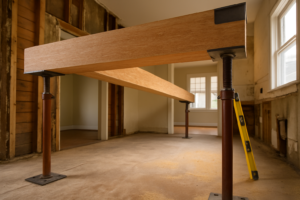
You have a wall coming out in the spring. The client wants the kitchen opened up to the dining room, the demo date is on the calendar, and you need a number for the beam before the bid goes out.
Then the order stalls. The yard calls back asking for the depth, the ply count, and the overall length including bearing, and nobody on the job has gathered that yet. Now you are a week behind on a material that may not be a stocked size.
This happens constantly on pre-1940 East Bay houses, where the framing is never quite what the plans assume. Here is what the order desk actually needs from you, what each piece of information changes, and how to plan the delivery so the beam can physically reach the opening.
The Beam Size Comes From Your Engineer, Not From the Counter
Let’s get this out of the way first, because it shapes everything else.
Nobody at a lumber counter should be sizing your beam. The span, depth, ply count, and bearing requirements come from your project’s structural engineer, or from the manufacturer’s own sizing software run against your actual loads. A blog post cannot do it, and a phone conversation cannot do it either.
That is not us dodging the question. An LVL carrying a point load from a second-floor post is a completely different member than one carrying uniform roof load over the same span, and the only person who knows which one you have is the person running the calcs.
For homeowners reading over their contractor’s shoulder, this is also why the engineer’s fee is not an optional line item. The stamped calc is what makes the rest of the order possible, and it is what the building department in Berkeley or Oakland will want to see.
Everything below assumes that number already exists. Once you have the spec page in hand, ordering is a straightforward conversation.
The Checklist an Engineered Beam Order Runs On
When you call with a beam order, the salesperson is working down a list. You can save a day or two by having all of it ready.
- The engineer’s spec page. A photo or PDF of the page that calls out the member is better than reading numbers over the phone.
- Product type. LVL, PSL, glulam, or an I-joist. These are not interchangeable even at the same depth.
- Depth and width. A 14-inch LVL and an 11-7/8 inch LVL are different orders with different availability.
- Number of plies. Two-ply, three-ply, four-ply. This also determines the fastening schedule.
- Overall length including bearing. Not the clear opening. The full length the beam needs to be, with bearing at each end.
- Connection and ply-fastening notes. Nails, bolts, or screws, and the pattern the engineer specified.
- Point loads and hanger callouts. If joists hang off the beam, the hangers are part of the order.
- Exposed or concealed. Will anyone ever see this beam once the job is done?
That last one gets forgotten more than any other item on the list, and it is the one that decides whether appearance grade matters at all.
If you are still deciding between products, our breakdown of LVL, PSL, or glulam for an East Bay remodel covers where each one tends to land.

What Each Piece of Spec Information Actually Changes
Every item on the checklist affects a different part of the order. Here is why each one matters on the yard side.
| What you give us | What it determines | What happens if it’s missing |
|---|---|---|
| Product type (LVL, PSL, glulam) | Which mill and which supply chain the order goes through | Order cannot be placed at all |
| Depth and width | Stocked item versus special order | Lead time guess instead of a real date |
| Ply count | Quantity, total weight, and fastener package | Short order, missing plies on delivery day |
| Overall length with bearing | Whether it clears a stocked length | Beam arrives too short to set |
| Connection and hanger notes | Hardware ordered alongside the beam | Framing day stops waiting on hangers |
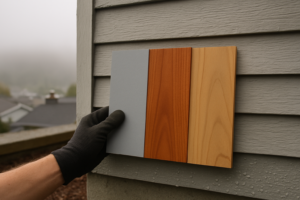
| Exposed or concealed | Appearance grade, wrap, and handling care | Industrial-grade beam under a finished ceiling |
Exposed or Buried: The Question Most People Skip
A beam that disappears inside a wall and a beam that lives under a finished ceiling are two different products, even when the structural spec is identical.
If the beam is concealed, nobody cares what the face looks like. Mill marks, ink stamps, and minor handling scuffs are irrelevant. Standard industrial grade is fine and it is the less expensive path.
If the beam is exposed, that changes several things at once:
- Glulam can be ordered in an architectural or premium appearance grade instead of industrial, with a cleaner face and edges.
- Glulam is usually cambered, meaning it has a built-in upward curve, so it needs to be installed crown up and the finish detail has to account for it.
- An LVL under an open ceiling usually gets wrapped or boxed in finish material, which means your trim order and your beam order are connected.
- Handling and storage matter more. An appearance-grade beam dragged across a gravel yard is a problem.
Tell the order desk this up front. Swapping grades after the order is placed often means starting over on lead time.
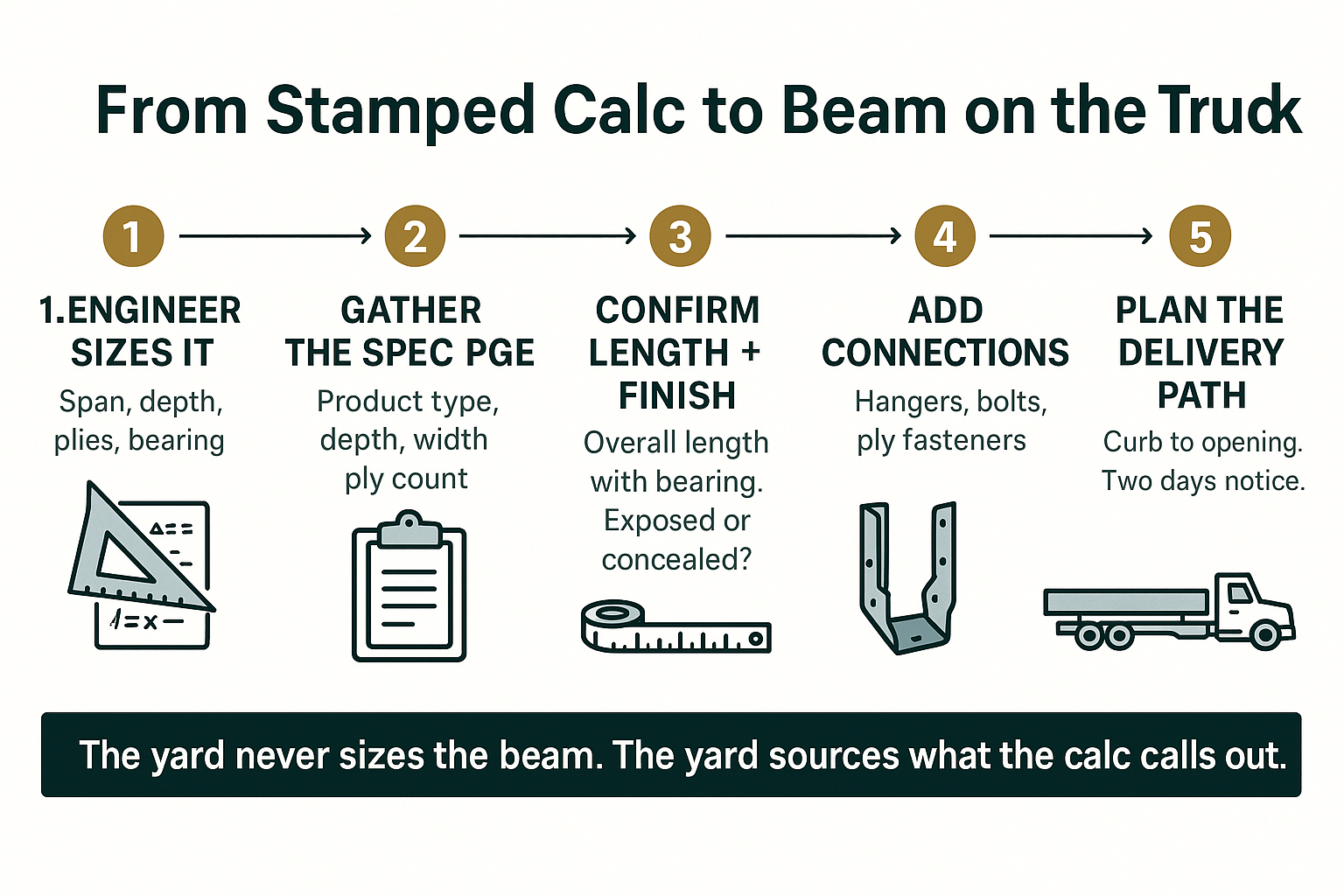
The Engineered Beam Order, Start to Finish
Here is the sequence from stamped calc to beam on the truck, and who owns each step.
What Moves the Price of an Engineered Beam
Contractors ask why the same nominal beam can price so differently from one job to the next. You will also run into clients who found a per-foot number online and think the yard is padding it.
The honest answer is that a published chart price describes a stocked, industrial-grade, untreated beam in a common length. Most real orders differ from that in at least one way.
What pulls the number around:
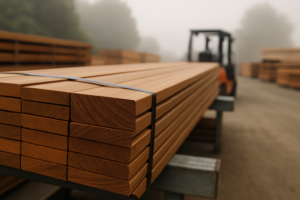
- Length. Price does not climb smoothly. It jumps when you cross out of a stocked length into a mill run.
- Depth and ply count. More material, more weight, more handling.
- Product and species. PSL, LVL, and glulam are built differently and priced differently.
- Appearance grade. Architectural glulam costs more than industrial for the same structural capacity.
- Camber. A specified camber on a glulam is a mill operation.
- Treated versus untreated. Required where the beam sees weather or ground contact.
- Stocked versus special order. A special order carries a lead time and usually a different price basis.
There is also a moving part outside everyone’s control. Duty rates on Canadian softwood have been holding pending a U.S. Commerce Department final administrative review determination, with the next one expected in October 2026, according to the British Columbia government’s softwood lumber trade page. We covered the practical side of that in our piece on what Canadian lumber tariffs mean for a Bay Area project budget.
Can the Beam Physically Reach the Opening?
This is the part national supplier pages never mention, and it is the part we deal with weekly.
Roughly 46 percent of Berkeley’s homes were built before 1940. Narrow flats lots in West Berkeley, downhill lots in the Oakland hills, long side yards with a gate at one end. The beam has to get from the curb to the bearing points, and a 26-foot glulam arrives as one solid piece.
A multi-ply LVL has an advantage here. You can often carry it in one ply at a time through a doorway or up a stair, then fasten the plies together in place per the engineer’s schedule. A glulam cannot be broken down.
Before you order, walk the path the beam will take and tell us what you find:
- Width of the narrowest gate, stair landing, or side passage
- Any turn tight enough to stop a long piece
- Whether the truck can get to the curb or driveway with clear access
- Overhead lines, low branches, or parked-car congestion on the block
Our delivery runs Monday through Friday, 7:00 a.m. to 3:00 p.m., in two-hour windows, and we ask for at least two days of notice. Large loads come off the flatbed at the street or driveway where access allows, so plan for crew and a path on the receiving end.
Spring Demo Means Winter Spec Work
November through February is take-off season for spring starts. If demo is set for March or April, that is when the calcs should be finished and the material confirmed.
Two separate things to keep straight: settle the spec early, and confirm the price late. A beam number pulled from a bid written in January can be stale by the time you order in April, especially on products built from Canadian fiber.
Build a little room into the material line for that. It is the same planning logic behind ordering windows and doors early for a spring Berkeley remodel, and the same reason ADU material lists get built out months ahead.
Why Special Orders Go Smoother at a Yard That Handles Them Daily
Odd lengths, four-ply assemblies, cambered glulams, and cut beam ends are routine at a yard with an order desk that works engineered products and a mill shop on site. They are an exception at a yard that mostly moves stock framing lumber.
That matters most on the details that are easy to miss: a hanger that was never added to the order, a length that needed a mill run, an appearance grade nobody asked about. One builder put it plainly in a review: “Their special order capabilities have saved me countless times on unique projects.”
If you want the background on the products themselves, our explainer on what engineered wood is and when to use it and our comparison of TJI joists versus solid lumber both cover selection logic in more depth.
Frequently Asked Questions About Ordering Engineered Beams
Can you tell me what size beam I need for a 16-foot opening?
No, and neither can any supplier. Beam sizing comes from your structural engineer or from the manufacturer’s sizing software run against your actual loads. Span alone does not determine it. What is above the beam, what bears on it, and where the point loads land all change the answer. Bring the stamped calc and we take it from there.
What is the difference between clear span and overall length?
Clear span is the open distance the beam crosses. Overall length is the full beam, including bearing at each end, and that is the number the order needs. Mixing them up is one of the most common reasons a beam shows up too short to set.
Why does the yard need to know if the beam will be visible?
Because appearance grade is a real product distinction. Glulam comes in industrial and architectural grades with the same structural capacity but very different faces. An exposed beam may also need camber specified and extra care in handling. A concealed beam does not need any of that.
How much lead time should I plan for a special order beam?
It depends entirely on the product, the size, and whether it is a mill run. Stocked sizes move quickly. Non-standard depths, long lengths, and appearance grades take longer. Call with the spec in hand and we can give you a real date instead of a guess.
Can a long glulam be delivered to a hillside Oakland lot?
Delivery is curbside at the street or driveway where access allows. The harder question is usually what happens after the truck leaves. Walk the path from the curb to the opening before you order, and if there is no way to get a one-piece beam through, talk to your engineer about whether a multi-ply assembly works instead.
Have the Calc? Bring It By.
Our lumberyard at 642 Hearst Avenue in Berkeley takes engineered beam orders for projects across Oakland, San Francisco, and the broader East Bay, and the order desk can be reached at 510-841-0511. You can see the engineered lumber lineup at truittandwhite.com/engineered-lumber-beams-san-francisco-bay-area. Come by with the spec page and we will work through the rest of the list with you.