Direct Answer: Pick siding by wall exposure, not brand. Shaded, west-facing fog-belt walls favor fiber cement or heartwood cedar and redwood. Sun-baked hillside walls punish thin finishes. Detailing matters more than species.
You pull the bottom course off a wall in west Berkeley and the sheathing behind it is soft. The paint was fine. The board above it was fine. The bottom eight inches had been damp for most of the last twenty years.
That is the siding problem in this area, and it is not the problem most national siding articles are written about. Those articles are written for places with freeze-thaw cycles and real winters. Here the enemy is slow, patient moisture that never fully dries off a shaded wall.
This guide sorts fiber cement siding, cedar, and redwood by exposure rather than by brand. Because a wall in the fog belt flats and a south-facing wall five miles uphill in the Oakland hills are two completely different jobs.
Start With the Wall, Not the Material
Drive from Second Street in west Berkeley up to Grizzly Peak and you cross at least three microclimates in under five miles. The flats sit under the marine layer for much of the summer. The upper hills burn off by ten in the morning and bake all afternoon.
Same city. Same building code. Very different siding performance.
Before anyone names a material, figure out which of these three walls you are standing in front of:
- West-facing and shaded. Gets the fog, gets the wind-driven rain, dries slowly. Common on the flats and on the north sides of hillside houses. This wall rots from the bottom up.
- South or west-facing and exposed. Full sun most of the day, plus whatever rain arrives sideways. This wall does not rot much, but finishes chalk, boards cup, and dark paint cooks.
- Sheltered and dry. Deep eaves, protected by a neighboring structure, set back from grade. This wall will do fine with almost anything installed correctly.
Most houses here have all three. That is why re-siding decisions go sideways when someone picks one product for the whole building and installs it the same way on every elevation. The same thinking applies to outdoor wood generally, which is why Bay Area fog and sun change the wood versus composite decision on decks too.
What Actually Rots a Wall Here
The marine layer is the mechanism. Rain stops, the sun never really hits that west wall, and the siding stays near saturation for days. Paint film traps what is already in the board. The bottom courses sit closest to wet soil and the longest in shade.
You end up with the same three failures over and over: rotted trim at the base, cupped boards, and paint peeling off the bottom two courses while everything at eye level looks new.
A premium board installed tight to damp grade will still fail. Here is where the job is won or lost:
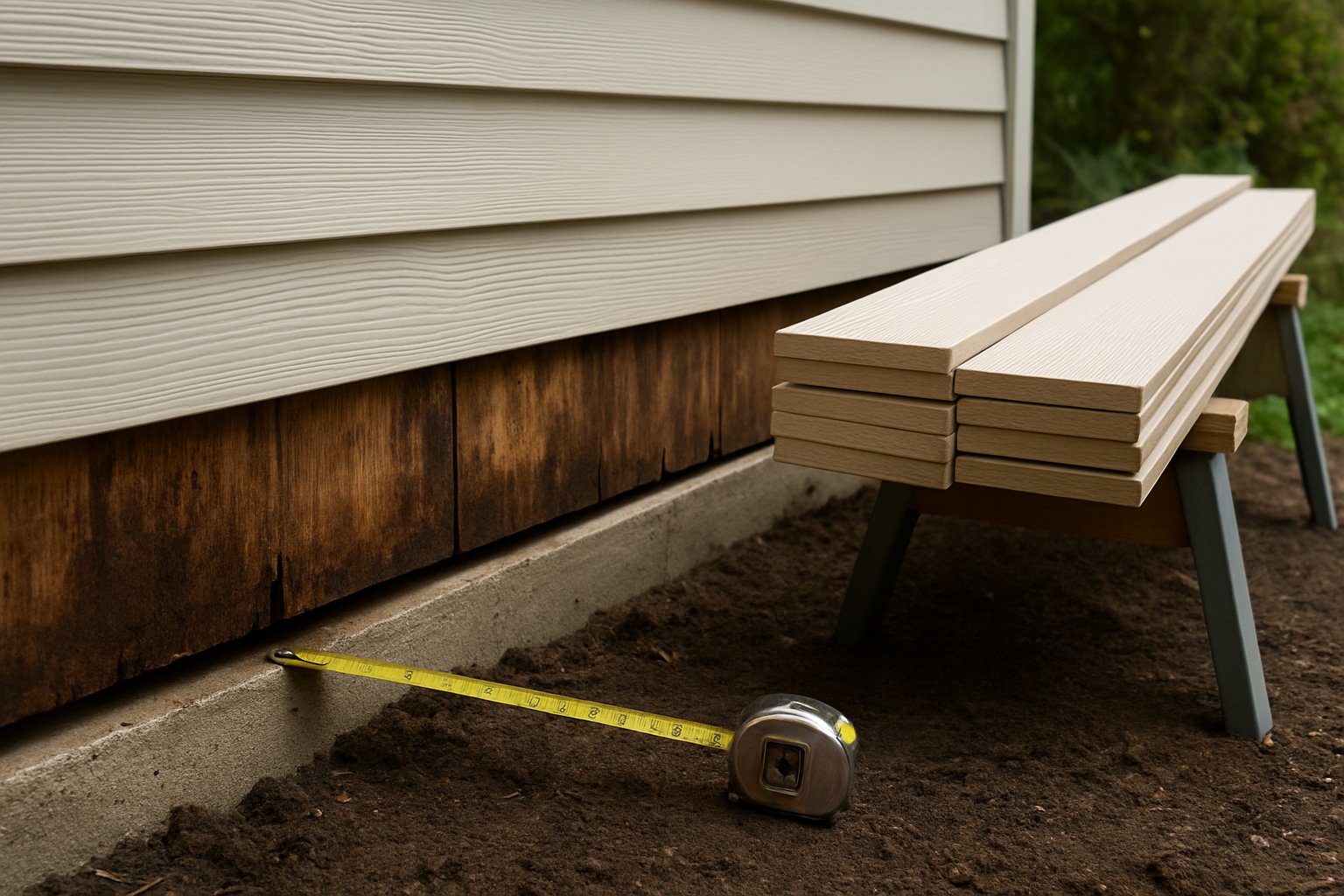
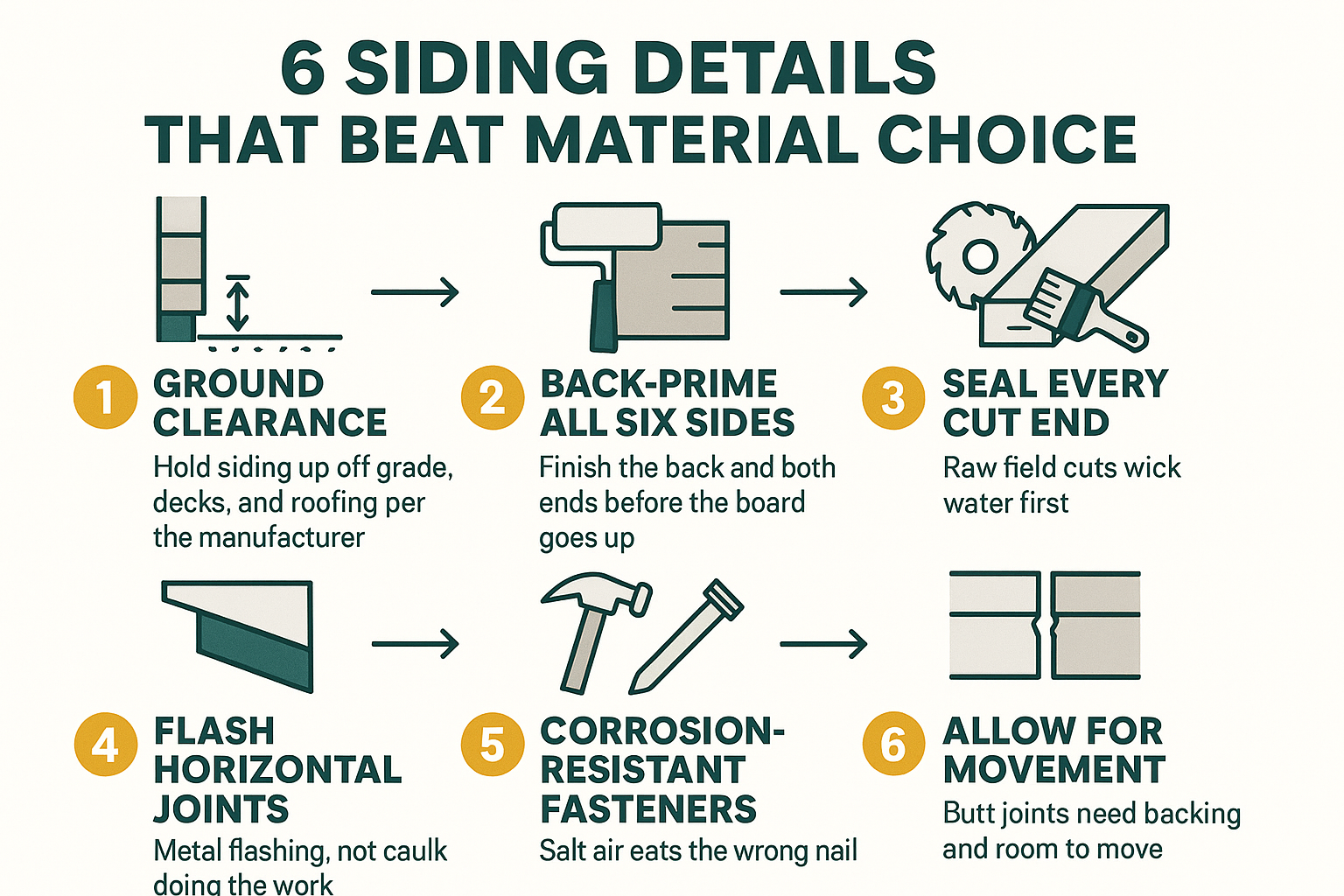
- Ground clearance. Most siding manufacturers call for roughly 6 inches above finished grade and about 2 inches above decks, walks, and roofing. Check the specific installation instructions, because the number varies by product.
- Back-priming. Wood siding should be finished on all six sides before it goes up, including the back face and both ends. Unfinished backs take on moisture from the wall cavity and cup.
- Sealed cut ends. Every field cut exposes raw material. Unsealed ends wick water and are the single most common starting point for failure.
- Flashing at horizontal joints. Butt joints, transitions, and band boards need real flashing, not caulk doing a flashing’s job.
- Fasteners that survive the air. Corrosion-resistant fasteners are not optional near the bay. We cover the tradeoffs in stainless versus hot-dip galvanized for Bay Area salt air.
Get those five right and a mid-grade board outlasts a premium board installed carelessly. We have seen it both ways.
The Honest Downsides of Fiber Cement Siding
People ask us about fiber cement downsides more than any other siding question, so here is the straight version.
It is heavy. A 12-foot plank is a two-person carry, every time. That changes your crew size, your staging, and how long a re-side takes on a narrow Berkeley lot with no driveway.
Cutting it makes respirable silica dust. This is a real occupational hazard, not a nuisance. Cutting calls for the right blade, dust collection or wet methods, and respiratory protection. OSHA’s respirable crystalline silica standard spells out what is required on a jobsite.
Fastening and joint movement are unforgiving. Over-driven nails crack the board. Butt joints need backing and a plan for movement. Caulk at every joint becomes a maintenance item you own forever.
Factory finish versus field paint is the real durability question. A factory-applied finish holds up better and longer than paint rolled onto primed board on a foggy Tuesday. Field-painted fiber cement in the fog belt is still better than field-painted wood, but it is not maintenance-free.
Where fiber cement earns its keep: shaded west-facing walls, bottom courses near grade, rental and multifamily work where repaint cycles are expensive, and hillside parcels where noncombustible exterior material is on the table.
Where it is the wrong tool: a small patch into an existing wood wall, a historic profile you need matched, or any job where the crew is not set up to cut it safely.
Which Material Suits Which Wall
A quick read on how the three materials behave by exposure. Your detailing still matters more than the column you land in.
| Wall exposure | What fails first | What tends to hold up |
|---|---|---|
| West-facing, shaded, fog belt | Bottom courses rot, paint peels low on the wall | Fiber cement, or clear heartwood cedar and redwood with sealed ends and real ground clearance |
| South-facing, sun-exposed hillside | Finish chalks, dark colors fade, boards cup and check | Factory-finished fiber cement, or thicker wood profiles in lighter colors |
| Sheltered with deep eaves | Very little, if flashed correctly | Any of the three, including knotty grades |
| Patch into pre-1940 wood siding | Visible mismatch in profile, exposure, or thickness | Matched wood profile run to the existing pattern |
Six Details That Outrank the Material Choice
These are the installation details we talk through at the counter more than any product spec.
Cedar and Redwood Are Grade Decisions, Not Species Decisions
This is where most siding advice goes wrong. People argue cedar versus redwood when the real variable is grade.
Clear vertical grain heartwood and knotty common grades are not the same product. Heartwood is the decay-resistant part of the tree. Sapwood and knots are not. On a shaded wall that stays damp for weeks, that difference shows up fast.
A few things worth knowing:
- Clear vertical grain heartwood stays flatter, holds paint longer, and resists decay better. It costs more and availability moves around.
- Knotty common grades work fine on sheltered walls and in stain-grade applications. On a wet, shaded elevation they are a shorter-life choice.
- Grade stamps mean specific things. Our redwood grades guide walks through what each label actually tells you about heartwood content.
- Cedar’s decay resistance comes from the heartwood extractives, the same compounds behind the old closet-lining tradition. We got into that in what cedar really does.
Profile matters too, especially on a shaded wall. Bevel siding sheds water well because every course overlaps. Channel rustic has a built-in shadow line and handles movement, but the channel can hold water if the wall never dries. Board and batten puts the battens over vertical joints, which works, but those joints need to be sealed and flashed.
About 46% of Berkeley homes were built before 1940. Most siding work here is a patch into old-growth material that has been repainted and repaired for eighty years. Measuring it rarely gets you a match.
Bring us a piece. Profile, exposure, and thickness all have to line up, and a six-inch sample off the back of the house tells us more than any set of numbers.
Hillside Parcels, Fire Zones, and What Drives Cost
If you are working on a hillside property, check the fire requirements before you order material. Berkeley’s EMBER ordinance put a five-foot Zone 0 into effect on January 1, 2026 in the Panoramic Hill and Grizzly Peak mitigation areas, with wider enforcement across the Very High Fire Hazard Severity Zone required by 2029, and the program encourages home hardening steps including noncombustible exterior siding. What applies depends entirely on your parcel. Confirm it with the City of Berkeley or your local fire department first. We cover a related angle in what changed for East Bay hillside openings.
On cost, we do not publish siding prices, and anyone who gives you a per-square-foot number without seeing the wall is guessing. What we can tell you is what moves the number:
- Grade. Clear heartwood sits well above knotty common in any species.
- Species availability. Clear redwood and clear cedar supply shifts, and that shows up in both price and lead time.
- Finish. Raw, primed, and factory-finished are three different price points, and factory finish usually pays back in labor.
- Profile. Stock profiles are one thing. A custom run to match an existing 1920s pattern is another, and it needs lead time.
The cheapest board on a damp wall is rarely the cheapest wall ten years out. Dry rot repair in this area is expensive precisely because the failures start hidden.
Frequently Asked Questions About Siding in the Bay Area
What is the most common problem with fiber cement siding?
Unsealed field cuts and over-driven fasteners. Both let water in or crack the board, and both are installation issues rather than product issues. The second most common complaint is weight, since 12-foot planks are a two-person handle and that changes how a job gets staged.
Does cedar or redwood last longer on a shaded, foggy wall?
Grade decides this more than species. Clear heartwood in either species will outperform a knotty common grade of the other. If you are siding a west-facing wall that stays damp, spend the money on heartwood and back-prime it.
Can I patch old siding and have the repair actually look right?
Often yes, but not by measuring. Old profiles were run to patterns that are no longer stock, and exposure and thickness have to match or the shadow line gives it away. Bring a piece of the existing siding in and we can tell you whether it matches a stock profile or needs to be run custom.
Is fiber cement siding required if I’m in a fire zone?
That depends on your parcel, your zone designation, and which local requirements have taken effect. Noncombustible siding is encouraged as a home hardening step in Berkeley’s hill areas, but the specifics vary. Check with the City of Berkeley or your fire department before ordering.
Does factory-finished siding really matter, or can we just paint it on site?
In the fog belt it matters. Field painting depends on the board being dry and the weather cooperating, and neither is reliable here from October through spring. Factory finish gives you a controlled application on all faces, which usually means longer intervals between repaints.
How far above grade should siding stop?
Most manufacturers call for about 6 inches above finished grade and roughly 2 inches above decks, walkways, and roofing. Follow the installation instructions for the specific product, because they are not all identical and that clearance is what keeps the bottom course out of trouble.
See All Three Materials on the Same Afternoon
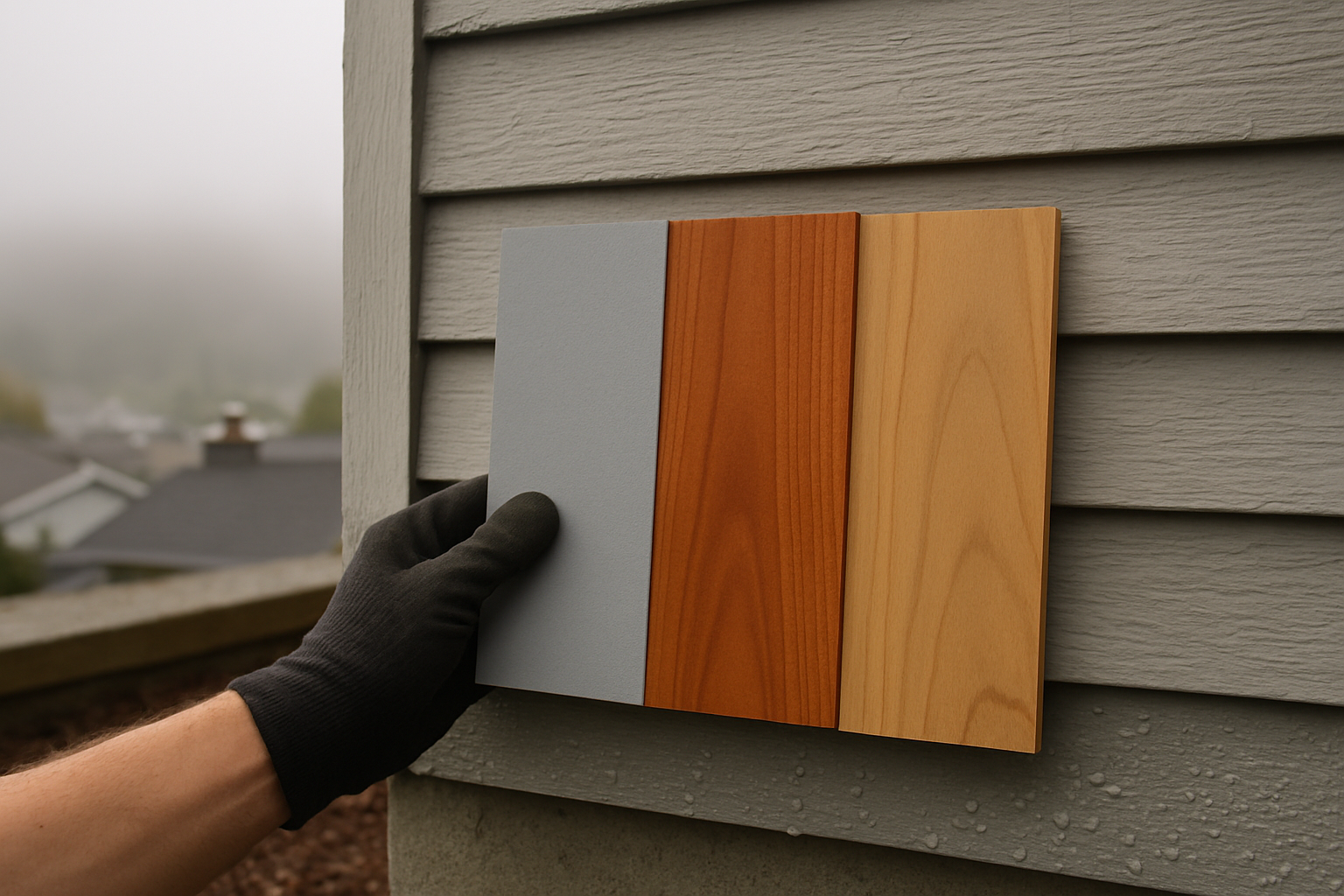
Photos of siding tell you almost nothing about weight, surface texture, or how a profile will throw a shadow line on a shaded Berkeley wall. The lumberyard at 642 Hearst Avenue stocks cedar, redwood, and fiber cement, so you can handle all three in one visit and bring a sample of your existing siding along. Reach the lumberyard at 510-841-0511, or read more about profiles and grades at truittandwhite.com/moulding-trim-and-siding.