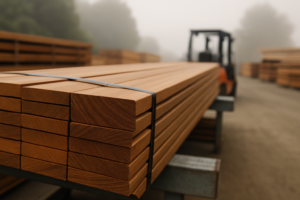
Direct Answer: LVL and glulam beams are sold at Truitt & White, 642 Hearst Ave in Berkeley. Common LVL depths and lengths often come straight from yard stock. Long or appearance-grade glulam usually gets ordered in.
You have the engineer’s drawing in hand. It calls out a beam for a wall you are taking down in a Berkeley bungalow, and the client wants a start date. The question that decides your schedule is not which product is better. It is whether that beam is sitting in a rack right now or three weeks out.
That split is the real answer to where you buy LVL or glulam beams in the East Bay. At our Berkeley lumberyard, part of the answer comes off the rack and part of it gets ordered in, and which side you land on depends on length, depth, and whether the beam will be seen.
This is the buying side of the conversation, not the selection side. We will walk through what usually sits in stock, what triggers a lead time, how a spec turns into a cut beam on a truck, and what moves the number on a quote.
Where Can You Buy LVL or Glulam Beams in the East Bay?
You can buy them at our lumberyard at 642 Hearst Ave in Berkeley, a few blocks off the 80 freeway and an easy run from Oakland, Emeryville, Albany, El Cerrito, and across the bridge from San Francisco. Truitt & White has supplied Bay Area framers since 1946, and the lumber desk reads engineers’ callouts every day.
What the yard covers on the structural side:
- LVL in common depths and lengths, cut to your list
- Glulam in stock sizes, with longer and appearance-grade members ordered in
- PSL columns and beams
- I-joists and rim board for the floor system that ties into the beam
- Hangers, fasteners, and connectors to go with them
The fastest way to find out if your specific member is a pickup or a wait is to call the lumber desk at 510-841-0511 and read the callout straight off the drawing. Depth, width, length, product type, grade, and quantity. That usually gets you an availability answer far quicker than guessing from a span chart online.
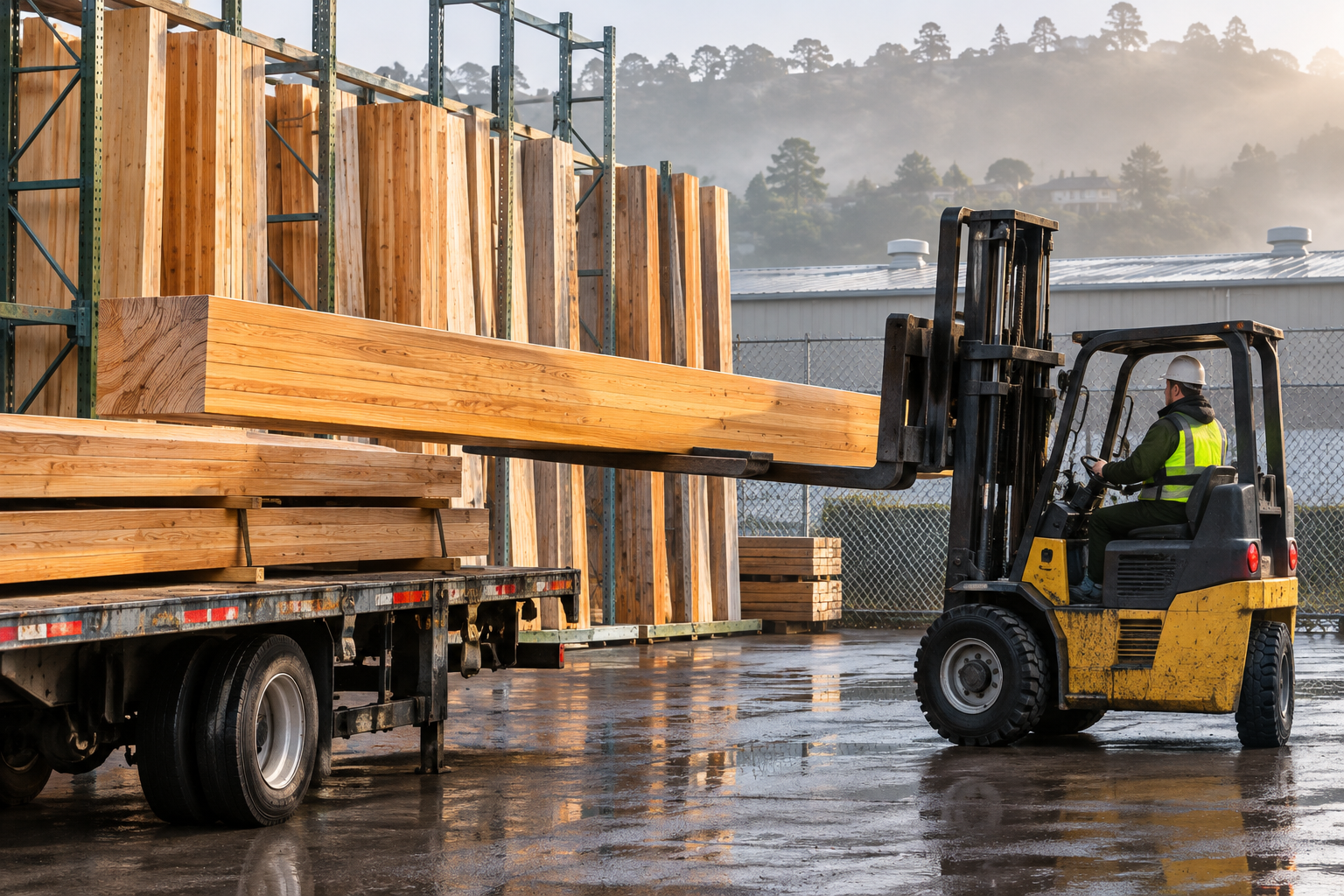
We deliver by flatbed to job sites Monday through Friday, 7:00 a.m. to 3:00 p.m., in two-hour windows, and we ask for at least two days notice. Long beams go out on a 20 foot flatbed with a piggyback forklift. We supply and deliver the material. We do not install it.
What Sits in the Rack and What Comes In on an Order
Stock follows demand. The sizes that move every week on East Bay remodels are the sizes a yard keeps standing in the rack.
Usually available from yard stock:
- Common LVL depths in everyday lengths for headers and garage openings
- Standard glulam sizes that turn over regularly
- PSL posts and columns in typical sections
- I-joists in the depths used for most residential floor systems
Usually a special order:
- Long spans. Once you get past the lengths that fit a standard rack and a standard truck, the beam comes in on an order
- Appearance-grade or architectural glulam
- Anything past standard depth or width
- Treated or specialty-coated structural members
- Camber requests and non-standard end cuts
Lead times move with the mill, the season, and the freight schedule, so the honest answer is a range rather than a promise. A stock LVL cut list can often be ready quickly. A long appearance-grade glulam can take a few weeks. We will tell you which one you are looking at before you commit to a date.
One builder put the yard experience well in a review: the crew will “help you pick through for the good stuff.” On structural material that matters more than people expect, because a beam with a bad crown or a beat-up edge is a problem you only find after it is on site.
Stock or Order: A Quick Field Reference
This is a general guide based on how structural material typically moves through a Bay Area yard. Always confirm your exact member before you build a schedule around it.
| Your situation | Usually stock or ordered in? | What drives the timing |
|---|---|---|
| Standard LVL header over a new kitchen opening | Often stock | Depth and length match common inventory |
| Beam hidden inside a wall or floor, standard depth | Often stock | Grade and finish do not matter, so more material qualifies |
| Glulam in a common size, framed and covered | Sometimes stock | Depends on current turnover and quantity |
| Beam over 20 feet | Usually ordered in | Mill run, freight, and truck length |
| Exposed glulam the client wants to see | Usually ordered in | Appearance grade narrows what can fill the order |
| Non-standard depth, width, or camber | Ordered in | Built to the spec, not pulled from inventory |
How a Spec Becomes a Beam on a Truck
Most ordering mistakes happen in the handoff, not in the selection. The drawing says one thing, the phone call says another, and the beam shows up two inches short.
Here is how the handoff goes when it goes smoothly:
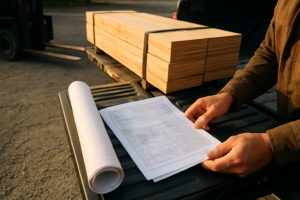
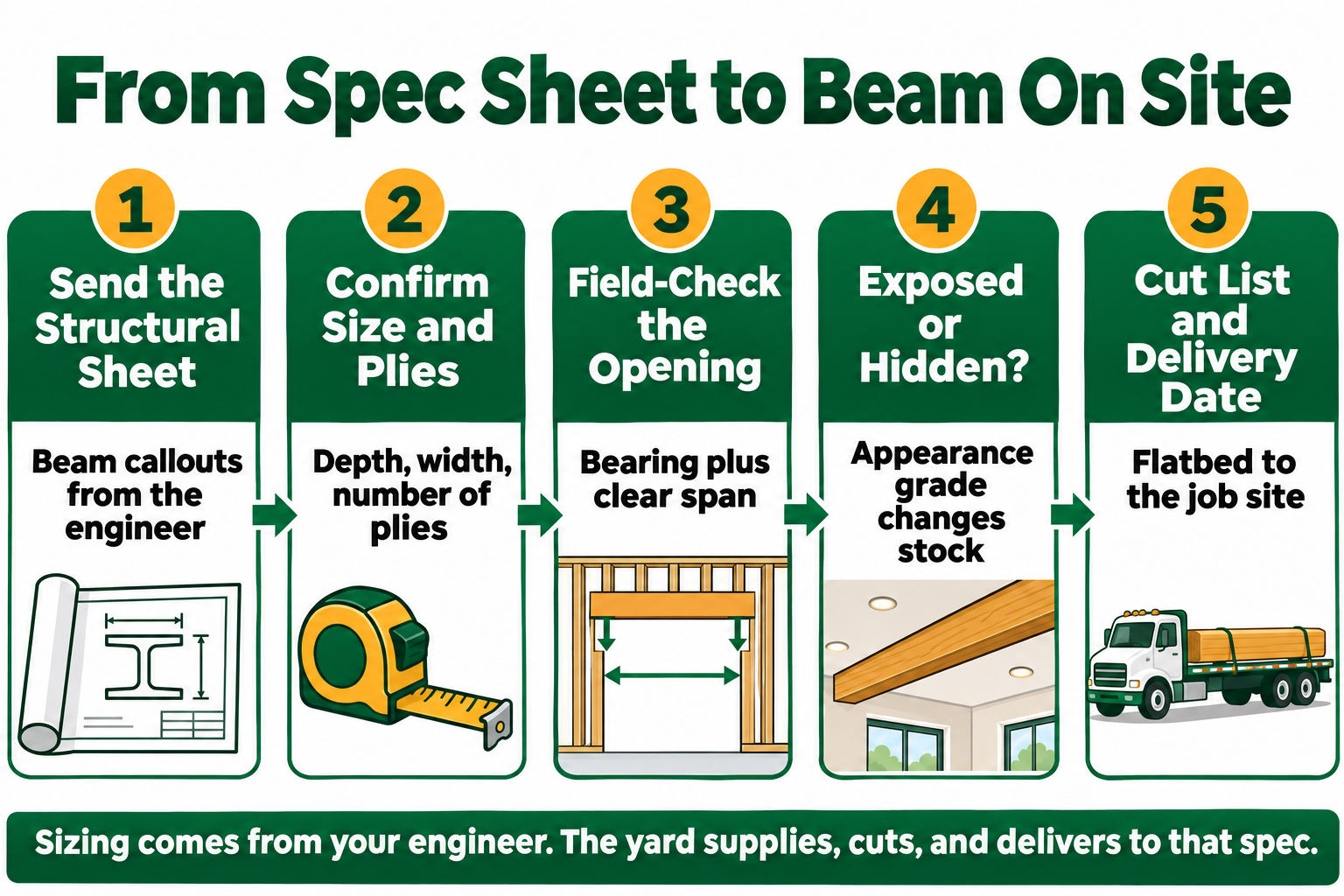
1. Send the structural sheet. Email or bring the page with the beam callouts. A photo of the plan on your phone works too.
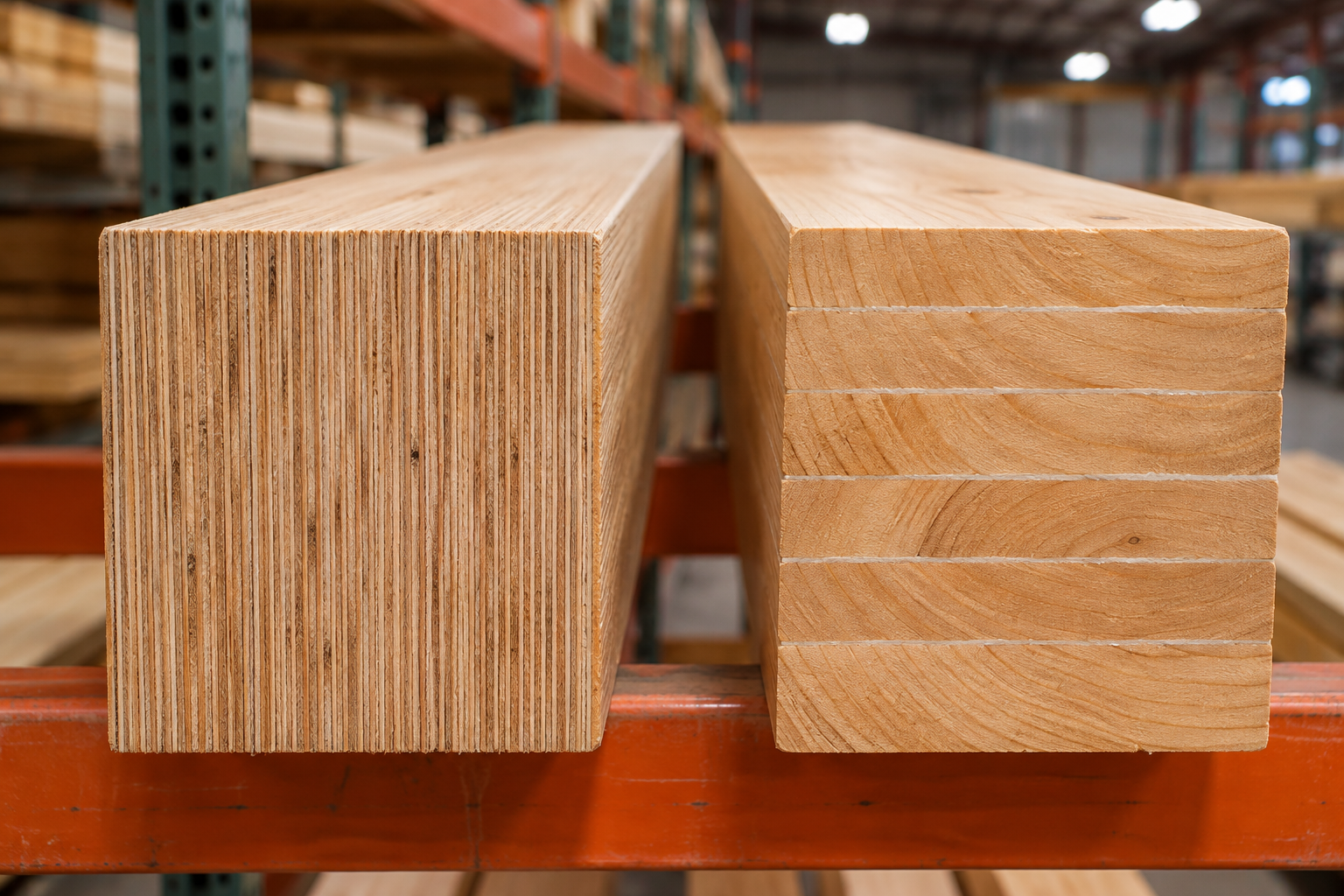
2. Confirm product, depth, width, and plies. A three-ply LVL header is three pieces, not one, and that changes the price and the pickup.
3. Confirm bearing length and total length. Measure the opening on site. Old Berkeley framing rarely matches the plan exactly.
4. Say whether it will be exposed. This changes the material, not just the finish.
5. Approve the cut list and the date. Then we schedule pickup or delivery.
One thing we will not do, and no honest supplier should: we do not size your beam. The project engineer or the manufacturer’s sizing software specifies the member. Span charts you find online do not know your load path, your point loads, or what is sitting above that wall. We supply, cut, and deliver to the spec you bring us.
If you want more detail on the exact information to gather before you call, we laid it out in what the yard needs from you to order an engineered beam.
The Order Path, Start to Finish
Five steps from the engineer’s callout to a beam sitting on your job site.
Exposed Beam? Tell Us Before the Order Goes In
This one costs people money more often than any other detail. A remodeler orders a beam, the wall comes down, the client sees the open ceiling and decides they love the look. Now they want the beam shown instead of wrapped in drywall.
Asking for an exposed beam is a material question, not a finish question. Appearance-grade glulam is manufactured and selected with the visible faces in mind. A framing-grade member is built to carry load, and nobody at the mill was worried about how the edges look.
That matters here more than most places. Roughly 46 percent of Berkeley’s homes were built before 1940, and the open-the-kitchen-wall remodel is the bread and butter of East Bay residential work. Exposed beams in those ceilings are a common ask.
What changes when the beam is going to be seen:
- Fewer stock pieces qualify, so a pickup can become an order
- Lead time usually stretches
- The price moves up before anything is cut
- Glulam is often chosen over LVL, since LVL is usually built to disappear
Raise it at the quote stage and it is a line item. Raise it after the beam is cut and it is a change order. If your client is still deciding between products, LVL, PSL, or glulam for an East Bay remodel covers that side of it.
What Actually Moves the Price
No page on the internet can quote your beam, and you should be skeptical of any that tries. The number depends on the spec, the length, and where the market sits the week you order.
What drives it:
- Length, which moves in steps rather than smoothly. Past a certain point you leave standard manufacturing and standard freight, and the cost jumps
- Depth and width, since more material costs more material
- Plies, because a multi-ply header is several pieces plus the fasteners to connect them
- Grade and appearance, which narrows the pool of qualifying stock
- Stock versus special order, including freight on anything brought in
That length-in-steps point is the one worth explaining to clients. A single 30 foot beam will typically cost far more than two 15 foot beams, because the long one leaves the easy lane for manufacturing, handling, and shipping.
Market conditions move too. Trade policy on imported wood has been shifting, which is one more reason to confirm pricing close to your order date rather than carrying a six-month-old number into a bid. We covered that in what tariffs on Canadian lumber mean for your project budget.
If your floor framing ties into the beam, the APA guide to glulam is a solid technical reference on how these members are built and graded.
Frequently Asked Questions About Buying LVL and Glulam in the East Bay
Where can I buy LVL or glulam beams in the East Bay?
At the lumberyard at 642 Hearst Ave in Berkeley, which serves Berkeley, Oakland, San Francisco, and the greater East Bay. LVL, glulam, PSL, and I-joists all come from the same desk. Common LVL sizes are often available from yard stock, while long spans and appearance-grade glulam usually get ordered in. Call 510-841-0511 with the engineer’s callout and you can find out which one applies to your beam.
Can you tell me what size beam I need?
No, and nobody at a lumberyard should. Your project engineer or the manufacturer’s sizing software specifies the member. We supply, cut, and deliver to that spec, and we can tell you about availability, length limits, appearance grade, and timing.
How long does a special order beam take?
It depends on the product, the size, and what the mill schedule looks like that month. Stock cut lists move fast. Long or appearance-grade glulam commonly runs a few weeks. We will give you a real date before you commit to a framing schedule rather than a guess.
Why does one 30 foot beam cost so much more than two 15 foot beams?
Length does not scale smoothly. Long members step outside standard manufacturing runs, standard handling, and standard freight, so each jump in length can bring a disproportionate jump in cost. It is worth asking your engineer early whether an intermediate post is an option, since that can change the whole budget.
Can you cut the beam to length at the yard?
Yes. The mill shop cuts, rips, and shapes structural and finish material to customer specifications, including details like scrolled beam ends and corbels on exposed work. Bring the cut list with your bearing lengths confirmed from the field, not just from the plan.
Do you deliver to Oakland and San Francisco job sites?
Yes. Flatbed delivery runs Monday through Friday, 7:00 a.m. to 3:00 p.m. in two-hour windows, with at least two days notice requested. Delivery is curbside, so plan for street or driveway access on long beams.
Have the Engineer’s Spec in Hand?
Our lumber desk in Berkeley reads structural callouts every day, and we can usually tell you quickly whether your beam is a pickup or an order. You can reach the lumberyard at 510-841-0511 or look through the engineered lumber and beams page for what we carry. We are at 642 Hearst Ave in Berkeley, with delivery across the East Bay, Oakland, and San Francisco.