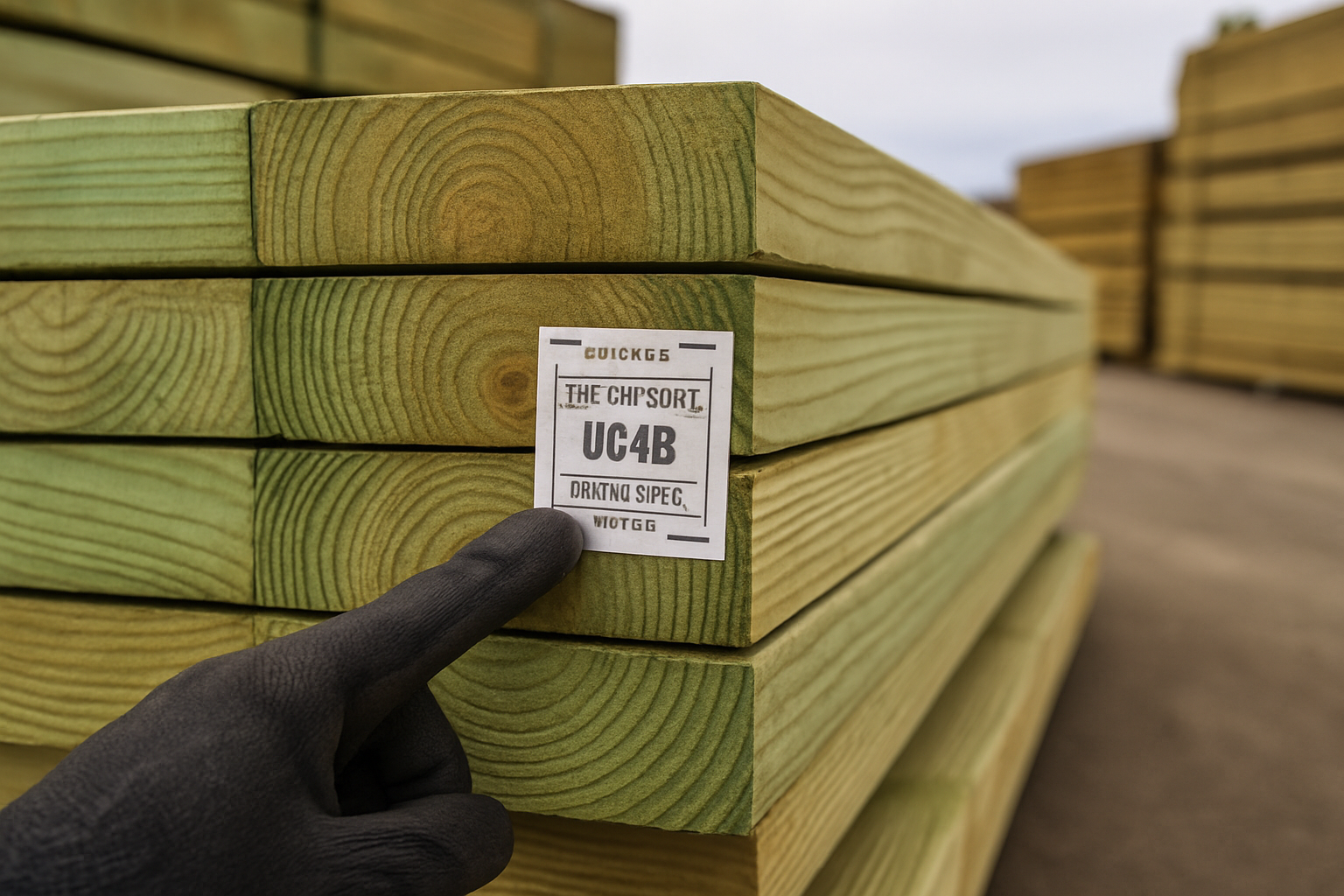
Direct Answer: The end-tag on pressure-treated lumber tells you exactly where that board is safe to use. UC3B covers above-ground deck framing; UC4A is required for ground-contact posts. Getting that wrong causes code failures and premature rot.
Walk into the yard, grab treated lumber, frame the deck. That’s how a lot of projects start, and it works fine until an inspector asks which use category you spec’d for the posts, or until the finish peels off an entire deck surface by late November because the boards were sealed before they dried.
Pressure-treated wood labels carry specific codes that tell you where a board can legally and safely go on a project. In the Bay Area, where coastal moisture, salt air, and Oakland and Berkeley hillside conditions all compound the stakes, reading those tags correctly is not optional.
This article covers the two things that matter most: what the use category codes actually mean in practice, and how the shift to copper-based preservatives changes hardware selection and finishing timelines in ways that older jobsite habits don’t account for.
Use Category Codes: The One Label That Tells You Everything
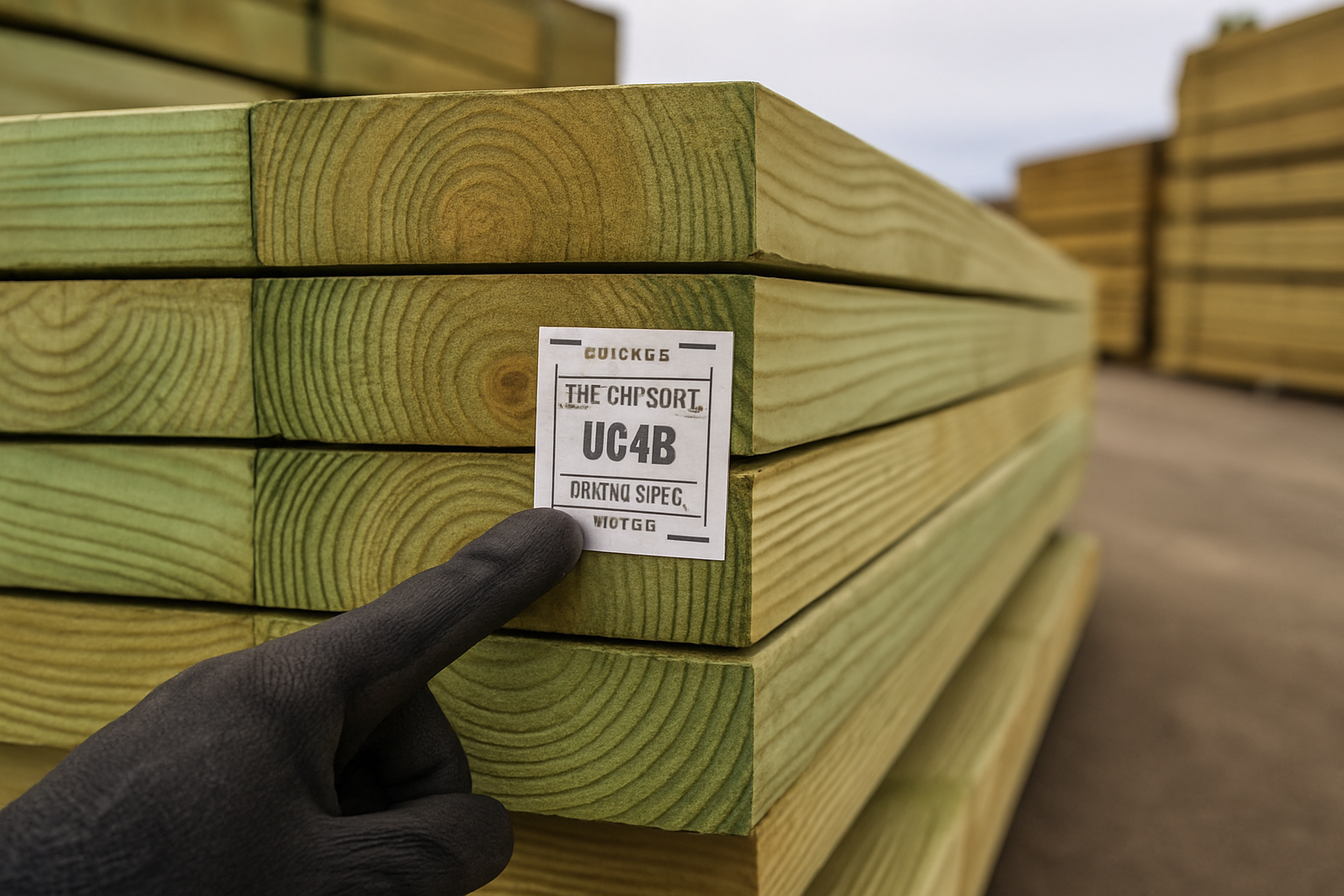
Every piece of pressure-treated lumber sold in the U.S. carries an end-tag. That tag includes the treating company, the preservative used, and a Use Category (UC) code. The UC code is what matters most for deck framing decisions.
For residential deck work in the Bay Area, two codes come up constantly:
- UC3B, Above-ground exterior use, where the wood is exposed to weather but not in contact with the ground. This covers deck boards, railings, joists, and beams that sit above grade.
- UC4A, Ground-contact use, required for any wood that touches soil or is embedded in concrete, including posts and footings.
The mistake we see on demo jobs is contractors pulling UC3B-rated stock for posts because it was on the truck and available. That board may look identical to UC4A material. The preservative retention level is not the same, and neither is the rot resistance in a wet soil environment. In Berkeley and Oakland’s rainy winters, which can deliver 20 to 25 inches of precipitation between November and March, an under-treated post in ground contact will fail years ahead of schedule.
California building inspectors know these codes. A post spec’d with the wrong treatment level is a flag at inspection, not at installation, which means the problem surfaces after the structure is already built. Checking the tag before the board goes in the ground takes about five seconds. Fixing the problem after the fact does not.
For projects in WUI zones on the Berkeley or Oakland hills, there are additional material requirements that can intersect with treated wood decisions, decking in a fire zone follows a separate set of rules worth reviewing before you spec anything for those sites.
Why Modern Copper-Based Preservatives Change Your Hardware and Finishing Decisions
Before 2003, most residential pressure-treated lumber was treated with CCA (chromated copper arsenate). The EPA phased CCA out of residential use that year, and the industry moved to water-based copper alternatives: MCA (Micronized Copper Azole) and ACQ (Alkaline Copper Quaternary).
These treatments are effective. But they have two practical consequences that older jobsite habits don’t account for.
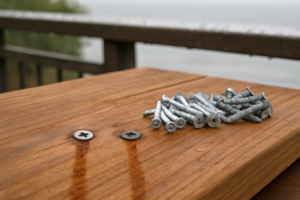
First: fastener corrosion. Copper-based preservatives are significantly more corrosive to standard hardware than CCA was. The California Residential Code requires connection hardware to be corrosion-resistant, specifically hot-dip galvanized or stainless steel, and rated for the specific preservative in the lumber. In coastal Bay Area conditions, salt air adds a second layer of corrosion pressure on top of what the preservative itself is already doing. On a Berkeley hillside or an Oakland waterfront job, stainless-steel fasteners are not just a code-compliant choice, they are the practical long-term answer. Standard electroplated hardware will corrode noticeably faster, and the failure usually shows up as fastener bleed staining the deck surface before the structural connection is actually compromised.
Second: finishing timelines. Modern water-based treatments leave lumber wetter at the point of sale than CCA-era stock did. A freshly treated board pulled from the yard may look ready to stain, but the moisture content is often still high enough that a finish applied too early will peel or blister within one season. We have seen this happen on decks where the contractor sealed the boards the same week they were installed. By the following October, the surface looked like it had been there for a decade.
The fix is straightforward: let green treated lumber dry before finishing, or specify KDAT (kiln-dried after treatment) material from the start.
KDAT boards have already been dried at the mill after the treating process. They arrive more dimensionally stable, accept stain on a faster schedule, and produce less fastener movement, sometimes called “fastener smile”, as the board dries in place. On a project where the deck needs to be finished and stained before fall rains hit the Bay Area, the modest cost premium for KDAT is often recovered in schedule alone. Ask when ordering so you know exactly what you’re getting.
Pressure-Treated Lumber: Use Category Quick Reference
This reference covers the most common UC codes for residential deck framing and where each one applies.
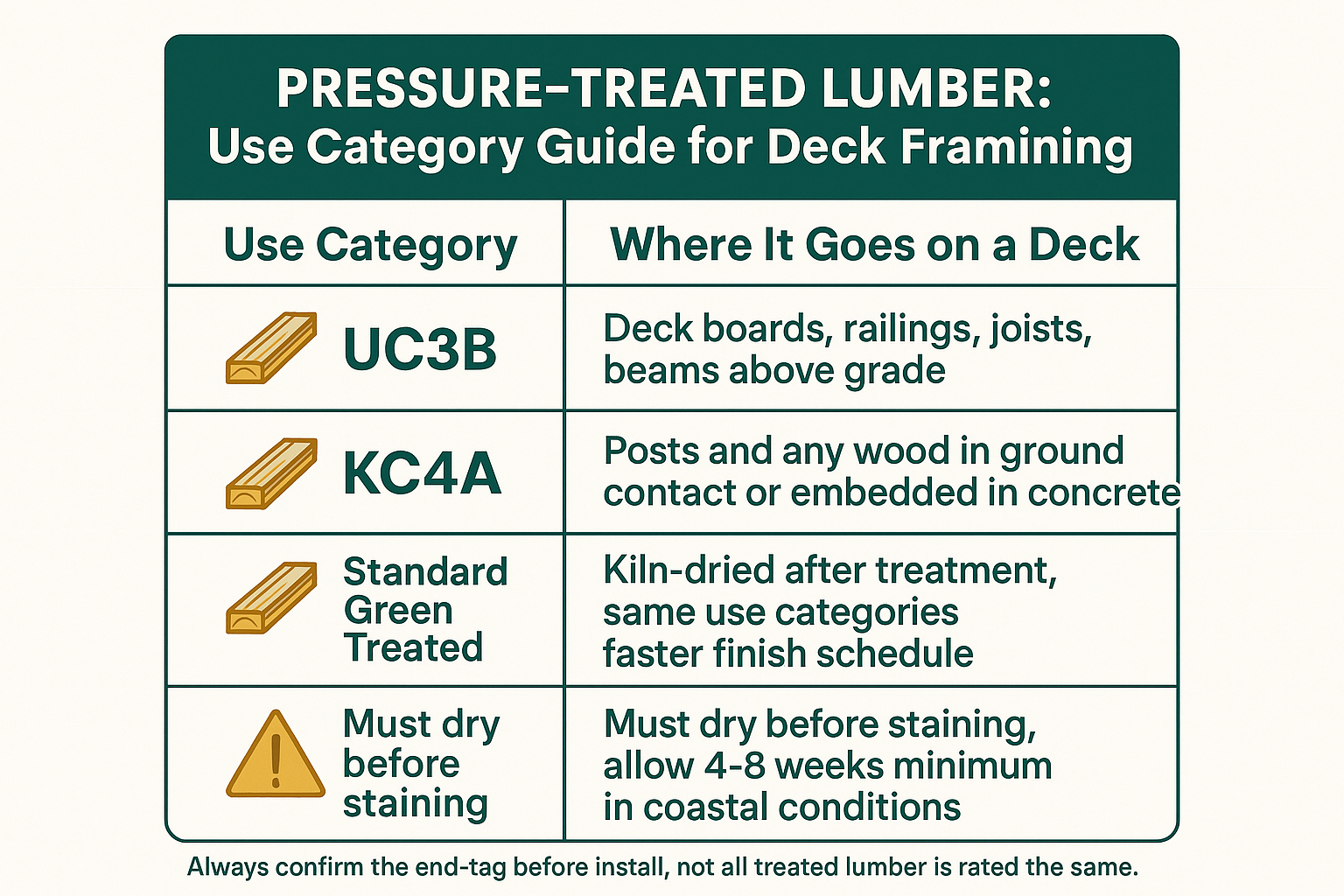
Use Category vs. Application: What the Code Requires
Use this as a quick reference when walking the lumber yard or reviewing a material list before a Bay Area deck project.
| Use Category | Application | Key Requirement |
|---|---|---|
| UC3B | Deck boards, joists, railings, above-grade beams | Above-ground exterior only, not for ground contact |
| UC4A | Posts, any wood touching soil or set in concrete | Required for ground contact in residential applications |
| UC4B | Posts in high-decay-hazard areas or saltwater splash zones | Higher retention level, relevant to waterfront Bay Area sites |
| KDAT | Any above-ground application where faster finishing matters | Pre-dried at mill, confirm with supplier before ordering |
Disposing of Old Treated Lumber: What California Actually Requires
A deck replacement project in Berkeley or Oakland almost always involves demo of the old structure. And old pressure-treated lumber from pre-2003 construction very likely contains CCA, which is classified as a treated wood waste (TWW) hazardous material under California DTSC standards.
That classification has real disposal requirements:
- Households must store TWW for no more than 30 days and transport it to an authorized facility.
- Old treated lumber cannot be burned, chipped, or mulched, those routes are not legal under California state rules.
- Dropping old treated stock in a standard C&D dumpster is not compliant.
Contractors managing a deck demo should factor disposal routing into the project plan before the first board comes off. In the East Bay, Alameda County has authorized disposal sites, and the California DTSC treated wood waste program lists the handling requirements and facility options clearly.
This is one of those details that doesn’t come up until someone asks about it, and it’s better to have the answer before the dumpster is already full.
For homeowners planning a deck rebuild and thinking through material options beyond treated wood, it’s worth reading through what California homeowners often get wrong when choosing decking before committing to a material direction. And if you’re comparing pressure-treated framing to other structural approaches, our breakdown of engineered wood covers where engineered products make sense as an alternative.
Frequently Asked Questions About Pressure-Treated Deck Framing
Can I use UC3B-rated lumber for deck posts if that’s what’s available at the yard?
No. UC4A is required for any wood in ground contact, including posts set in concrete footings. UC3B lumber is not treated to the retention level needed to resist rot in soil conditions. Using it for posts creates a warranty issue and a code problem, inspectors know the difference, and the failure will show up well before the structural warranty period ends.
How long should I wait before staining or sealing freshly pressure-treated lumber?
For standard green treated stock, most finishing manufacturers recommend waiting until the surface moisture content drops to around 19 percent or below. In cool, foggy Bay Area conditions, that can take 6 to 8 weeks or longer depending on the season. A simple pin-type moisture meter takes the guesswork out of it. If your project schedule doesn’t allow that kind of wait, ask about KDAT material, it arrives already dried and is generally ready to finish much sooner.
What hardware do I need to use with modern copper-treated lumber?
The California Residential Code requires hot-dip galvanized or stainless-steel fasteners and connectors with copper-based preservatives like MCA and ACQ. Standard electroplated fasteners corrode faster in contact with these treatments. In coastal Bay Area conditions, especially on exposed hillside sites in Berkeley or Oakland where salt air is a factor, stainless steel is the better long-term choice even where galvanized would technically pass code.
Is KDAT worth the extra cost for a Bay Area deck project?
On projects where the deck needs to be stained or painted before fall rains, KDAT often pays for itself in schedule. You skip the 6-to-8-week drying wait, reduce the risk of fastener movement as boards dry in place, and get a more dimensionally stable board to work with from day one. The cost premium varies depending on species and lumber market conditions at the time, it’s worth asking at the yard what the spread looks like when you’re ordering.
Can I burn old pressure-treated lumber from a deck demo in a fire pit or chiminea?
No. Old pressure-treated lumber, especially anything from before 2003, is likely CCA-treated and is classified as treated wood waste (TWW) under California DTSC rules. Burning it releases toxic compounds. It also cannot be chipped or mulched. It has to go to an authorized disposal facility. The California DTSC website lists the rules and facility options for Bay Area residents and contractors.
Does pressure-treated lumber meet WUI fire zone requirements for Oakland hillside decks?
Pressure-treated wood alone does not automatically qualify for WUI compliance. The 2026 WUI code changes set specific requirements for decking materials on homes in designated fire hazard severity zones, and treatment type is only one factor. If you’re building or replacing a deck on an Oakland or Berkeley hillside, check the WUI requirements separately. We cover those specifics in our article on decking in a fire zone.
Have Questions About Treated Lumber for Your Next Project?
The staff at Truitt & White’s Hearst Avenue lumberyard have been sorting through these decisions with Bay Area contractors and builders since 1946, and they can tell you exactly which use category, preservative type, and hardware combination fits your project’s conditions. Stop by 642 Hearst Avenue in Berkeley, or call the lumberyard directly at 510-841-0511 to talk through what you need before you order.