Direct Answer: Put back the same profile where the trim is decorative, and switch to a rot-resistant material like PVC or fiber cement only at the wet bottom of a wall.
The first real storm of the season does the inspection for you. You walk out the next morning and there is a piece of decorative trim lying in the yard, or you press a thumb into a corner board and it gives like wet cardboard.
One homeowner put it plainly in a review: “The recent December 2022 rain storm blew a few of the decorative trim pieces off my home.” That is the moment most people start searching, and the question is not how to prevent rot anymore. It is what to put back and in what material.
This walks through the three decisions that actually matter: where the damage sits, whether to repair, replace in kind, or switch materials, and how to match a profile no catalog carries.
Start With Where the Trim Failed, Not What Fell Off
The piece on the lawn is usually a symptom. On older Bay Area houses, trim goes soft in the same three places over and over, and a five minute walk-around tells you more than any photo.
Check these spots first:
- The bottom of the wall. Water tables, skirt boards, and base trim sitting close to grade. This is where splash-back and slow drying do their work.
- Horizontal ledges. Belt courses, porch beam caps, and the flat tops of any trim that holds standing water instead of shedding it.
- End grain. Mitered corner board joints, the cut ends of brackets, and the bottom of casing legs. End grain drinks water about ten times faster than face grain.
Soffits under a deep eave almost never fail on the same schedule. If the soffit is soft, you have a roof or gutter problem, not a trim problem.
The microclimate matters more than people expect. A west-facing wall on a flat in west Berkeley or Albany sits in marine layer moisture most mornings and never fully dries, which is why the same corner board gets repainted every few years.
Five miles uphill, a sun-exposed hillside wall usually fails the opposite way: the paint film chalks and cracks from heat and UV, then water gets behind it. Same rot, different starting point.
Repair, Replace in Kind, or Switch Materials
Once you know where the damage is, there are only three honest options.
Repair in place works when the rot is shallow, the piece is sound behind it, and the board is a profile you would hate to lose. Think of a carved bracket with a soft nose. Epoxy consolidant and filler can buy real years on a protected piece.
Replace in kind is the right call for most straight runs and anything still available as stock. Casing, base trim, fascia, and corner boards in cedar or redwood go back up the same way they came off.
Switch materials makes sense at exactly one kind of location: the spots that have now rotted twice. If you have replaced the same skirt board or the same bottom six inches of a corner board more than once, the wood is not the problem. The location is.
A few things that push the decision:
- Is the piece decorative or structural-looking, with a profile that defines the house? Keep the profile.
- Is it hidden behind a gutter, downspout, or porch rail where nobody reads the detail? Durability wins.
- Is the framing behind it wet too? Open it up before you order anything.
Much of Berkeley’s housing stock was built before 1940, and a lot of that original trim is full 1 inch or 5/4 stock, not today’s nominal thickness. Measure the actual board, not the name of it.
How Common Exterior Trim Materials Behave at the Wet Bottom of a Wall
Cost tracks roughly with durability and millability here, but the bigger factor is placement. Here is how each material tends to perform where water collects.
| Material | Where it earns its keep | What to watch |
|---|---|---|
| Clear cedar | Milled profiles, brackets, decorative runs, painted or stained trim | Knotty grades wick water at cut ends; prime all six sides before install |
| Redwood | Trim near grade and skirt boards on older homes, matches original stock | Heartwood resists decay far better than sapwood, so grade matters |
| Primed finger-joint pine | Protected runs under deep eaves and covered porch ceilings | Joints open when water sits on it; keep it off the wet bottom course |
| Fiber cement trim | Water tables, band boards, long straight runs on fog-belt walls | Cut ends need sealing; it will not hold a milled profile |
| PVC trim board | Base trim, skirt boards, bottom sections of corner boards at grade | Moves with heat on sun-exposed hillside walls; follow fastening and gap specs |
The Right Material Can Change Within a Single Wall
This is the part generic national content misses. You do not have to pick one material for the whole house.
On a typical East Bay house, the sensible split looks like this:
- Water table and skirt board: PVC or fiber cement. These are straight, flat, close to the ground, and nobody is admiring the profile.
- Corner boards: wood up high, with a PVC or fiber cement section at the bottom if that is where it keeps failing.
- Brackets, corbels, scrolled ends, and any milled profile: wood. You cannot run a Victorian bracket out of fiber cement, and PVC will not hold a crisp historic detail the same way.
The transition needs a little thought. Keep the thickness consistent so the paint lines and shadow lines read continuously, and treat the joint between two materials as a place water will try to get in.
Paint-grade decisions deserve the same care indoors and out. If you are sorting out paint-grade stock elsewhere on the project, our notes on MDF, finger-joint, or poplar for an old house cover how those behave once the finish is on.
And before you reinstall anything at the bottom of a wall, look at where the roof water is going. A short downspout or a clogged gutter will rot the new board on the same schedule as the old one. Our guide to drainage fixes before the first storm walks through that.
Three Ways Storm-Damaged Trim Goes Back Up
A quick decision flow for the piece in your hand, from shallow damage to repeat failure.
Matching a Profile No Catalog Carries: Bring the Piece
This is where most people stall. The trim on a 1920s Berkeley bungalow or an Oakland Victorian was often run on a local shop’s knives, and no stock profile in any catalog is going to land on it.
A photo will not get you there. Neither will a tape measure reading. A short physical section of the damaged piece will.
From a sample, a mill shop can read things a picture hides:
- The exact curve and depth of every cove, bead, and ogee
- The true thickness and width, which is rarely a modern nominal size
- The back-cut relief on the hidden face, which is why the old piece sat flat on an out-of-square wall
- The species and grain, which tells you what to run the replacement in
Cut a clean piece 8 to 12 inches long from a sound section if the whole board is coming off anyway. If it is the only one left on the house, take it off carefully and bring the whole thing.
The homeowner quoted earlier ended up with new pieces that matched, crediting the person “who reproduced the additional trim pieces exactly from the sample I provided.” That is the normal path for historic profile work, and it is the same approach described in our piece on matching original trim profiles in a 1920s Berkeley home.
Cost on custom profile work depends on the run length, the species, and whether a new knife has to be ground. Short one-off runs carry more setup per foot than a long run, so it is worth measuring every damaged piece on the house before ordering any of them.
Doing It Now Versus Doing It Right in Spring
Paint and sealant need a dry stretch, and in the East Bay that window gets narrow once the storm sequence starts in late fall.
NOAA’s Climate Prediction Center has El Nino conditions in place heading into winter, though the agency is clear that Northern California rainfall tracks ENSO weakly compared to the south state. You can read the current discussion on the NOAA ENSO diagnostic page. The useful read is storm-sequence readiness, not a promise about the season.
So split the work:
Do now, in any weather:
- Cover the open hole and any exposed sheathing with flashing tape or a temporary cap
- Seal end grain on remaining boards, since that is the fastest route for water
- Clear the gutter and extend the downspout above the spot that failed
- Pull soft material off so the framing behind it can dry
Do in a dry stretch:
- The milled replacement and the material switch at grade
- Priming all six sides of every new piece before it goes up
- Topcoat and caulk, which need the temperature and dry time the label calls for
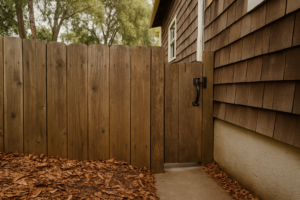
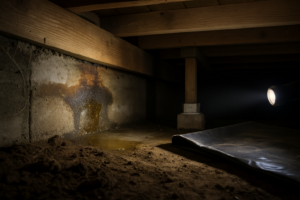
A temporary patch in December is not a failure. It is how you keep a trim problem from becoming a framing problem. If the water already found its way under the house, our crawl space and garage checklist covers what to look at next.
Frequently Asked Questions About Exterior Trim Rot and Replacement
Can I just fill the soft spot with epoxy instead of replacing the board?
Sometimes. Epoxy consolidant and filler work well on shallow damage in a protected location, especially on a carved piece you cannot easily replace. If you can push a screwdriver in more than a quarter inch, or if the rot runs to the back of the board, the piece is done and filler only hides it.
Does PVC trim board hold paint on a sun-exposed hillside wall?
It holds paint fine with the right product, but color choice matters a lot. Dark colors absorb heat and PVC expands more than wood, so follow the manufacturer’s guidance on light reflectance and leave the expansion gaps they specify. On a shaded west Berkeley flat, movement is much less of an issue.
How much of the broken trim do I need to bring in to get a match?
A clean section 8 to 12 inches long from a sound part of the board is usually plenty. It has to show the full profile across the face, with the original thickness intact and any back-cut on the hidden side.
Should I replace the whole run or just the rotted piece?
Replace the whole run when the profile is being custom milled anyway, because the setup is the expensive part and a partial run leaves you a visible joint. Replace just the piece when it is stock trim, the joint falls at a natural break like a corner, and the rest of the run is sound.
Is redwood still a good choice for trim near the ground?
Heartwood redwood holds up well and matches what is already on most older East Bay houses. Sapwood does not, so grade is the whole conversation. At the very bottom course, where water sits after every storm, a PVC or fiber cement piece will simply outlast any wood you put there.
Sorting Out What Goes Back on the Wall
Our Lumberyard and Hardware at 642 Hearst Avenue in Berkeley stocks exterior trim and siding in cedar, redwood, fiber cement, and PVC, and the mill shop can run a profile off a physical sample when nothing off the shelf fits. If you are working through a storm repair anywhere in the East Bay, Oakland, or San Francisco, you can reach the yard at 510-841-0511 or look through the moulding, trim, and siding selection first. Bring the broken piece with you if you have it.