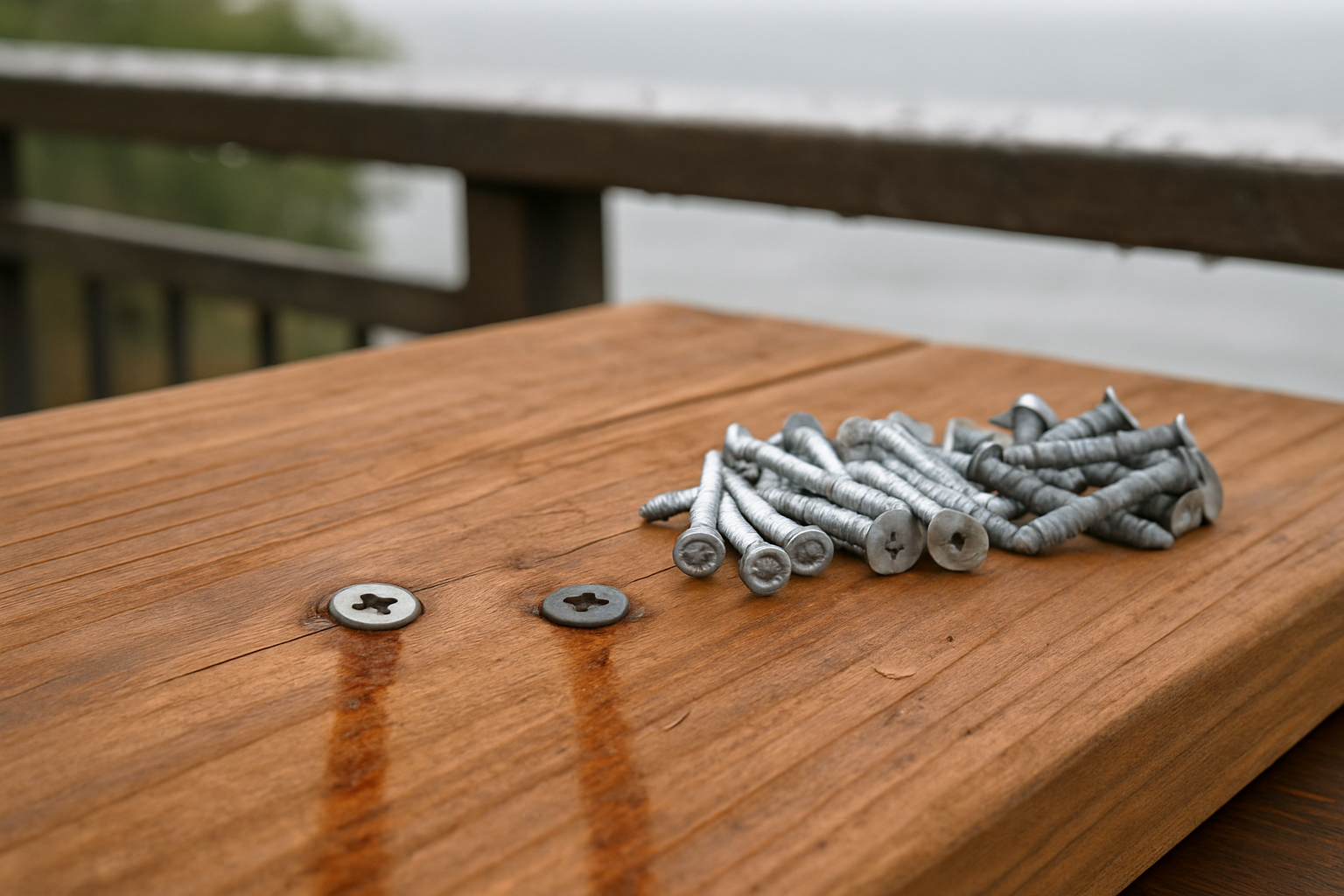
Direct Answer: Hot-dip galvanized fasteners handle most Bay Area decks. Stainless, type 304 for general wet exposure and 316 for real salt exposure, is the better call near the shoreline and on uncoated redwood.
Two winters after the deck goes in, the call comes. There are rust streaks bleeding down the redwood below every screw head, the driver recesses look chewed up, and the joist hangers underneath are streaking orange.
The wood almost never caused it. Modern preservative-treated lumber uses copper-based chemistry (ACQ and CA), and that copper speeds up corrosion of ordinary coated fasteners. That is exactly why building code puts limits on what you are allowed to put in contact with treated wood.
So the real decision is about metal and coating, not screw pattern. This is a separate question from hidden fasteners versus face screws, which is a fastening method choice. Here we are talking about what the fastener is made of, and what East Bay fog and salt air do to it.
Why Treated Lumber Chews Through the Wrong Fastener
Older pressure-treated wood used CCA, an arsenic-based preservative. Fastener coatings were built around that chemistry, and light zinc plating held up reasonably well.
That changed years ago. Today’s residential treated lumber uses copper-based preservatives, and copper sitting against steel in a wet environment accelerates corrosion. A screw that would last decades in dry framing can start failing in a few seasons when it is buried in wet, copper-treated joists.
The damage usually starts where you cannot see it:
- Ledger bolts and hanger nails stay damp long after the deck surface dries
- Joist tops hold water under deck boards with no airflow
- Cut ends of treated lumber expose untreated core where moisture collects
- Stair stringers sit close to soil and splash
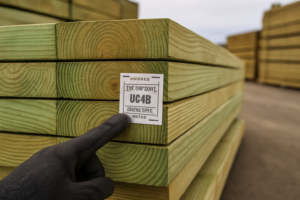
That is why the labels on pressure-treated lumber matter as much as the grade stamp. Retention level, ground contact rating, and fastener compatibility are all printed there for a reason.
If you want the framing to outlast the boards, the fastener spec is not the place to save money. It is the smallest line item holding up the largest one.
What Code Actually Allows, and How to Read the Label
For fasteners in contact with preservative-treated wood, the allowed materials are short and specific. Fasteners including nuts and washers are limited to:
- Hot-dipped zinc-coated galvanized steel
- Stainless steel
- Silicon bronze
- Copper
Staples have to be stainless. No exceptions carved out for convenience.
The trouble is that plenty of fasteners on the shelf look the part and are not compliant. Two label details separate the real thing from a lookalike:
- ASTM A153 is the standard for hot-dip galvanized fasteners. If the box does not say it, treat the fastener as unverified.
- G185 is the minimum zinc coating for connectors when the connector manufacturer has not published its own recommendation. Follow their guidance first when it exists.
And anything marked electro-galvanized, G60, or G90 belongs indoors. Those coatings carry far less zinc, they were built around older CCA chemistry, and they will not hold up against today’s treated lumber, especially in a climate where things stay wet.
One more thing worth checking at the counter: nuts and washers get forgotten constantly. A stainless bolt with a plated washer is still a mixed connection.
The Local Part: Fog, Marine Air, and How Long Wood Stays Wet
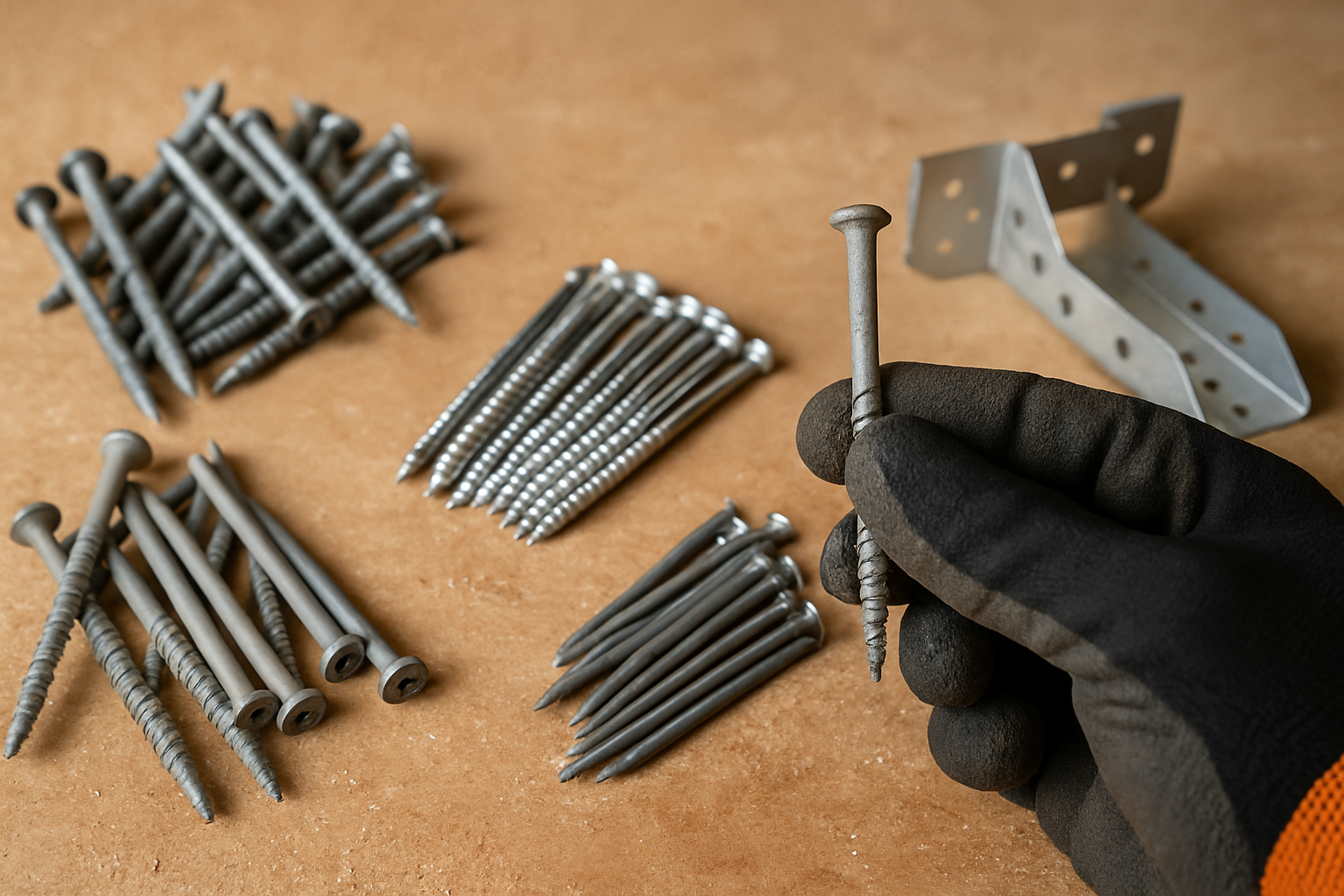
This is where national fastener advice falls apart. A deck in Berkeley or Emeryville near the shoreline, a fence in Alameda, or a west-facing stair stringer on an Oakland lot sits in marine air and stays damp for weeks at a stretch during the fog months.
Zinc corrodes as a function of wet time and salt. A galvanized fastener in a dry inland yard that bakes out by mid-morning has an easy life. The same fastener in the fog belt, on a north-facing deck that never fully dries between May and August, is working much harder.
Within stainless there are two tiers worth knowing:
- Type 304 covers most wet exterior work. It is the standard choice for decks, railings, and trim in humid, damp conditions.
- Type 316 contains molybdenum and is the grade specified for genuine salt exposure. Waterfront railings, dock structures, anything taking direct spray.
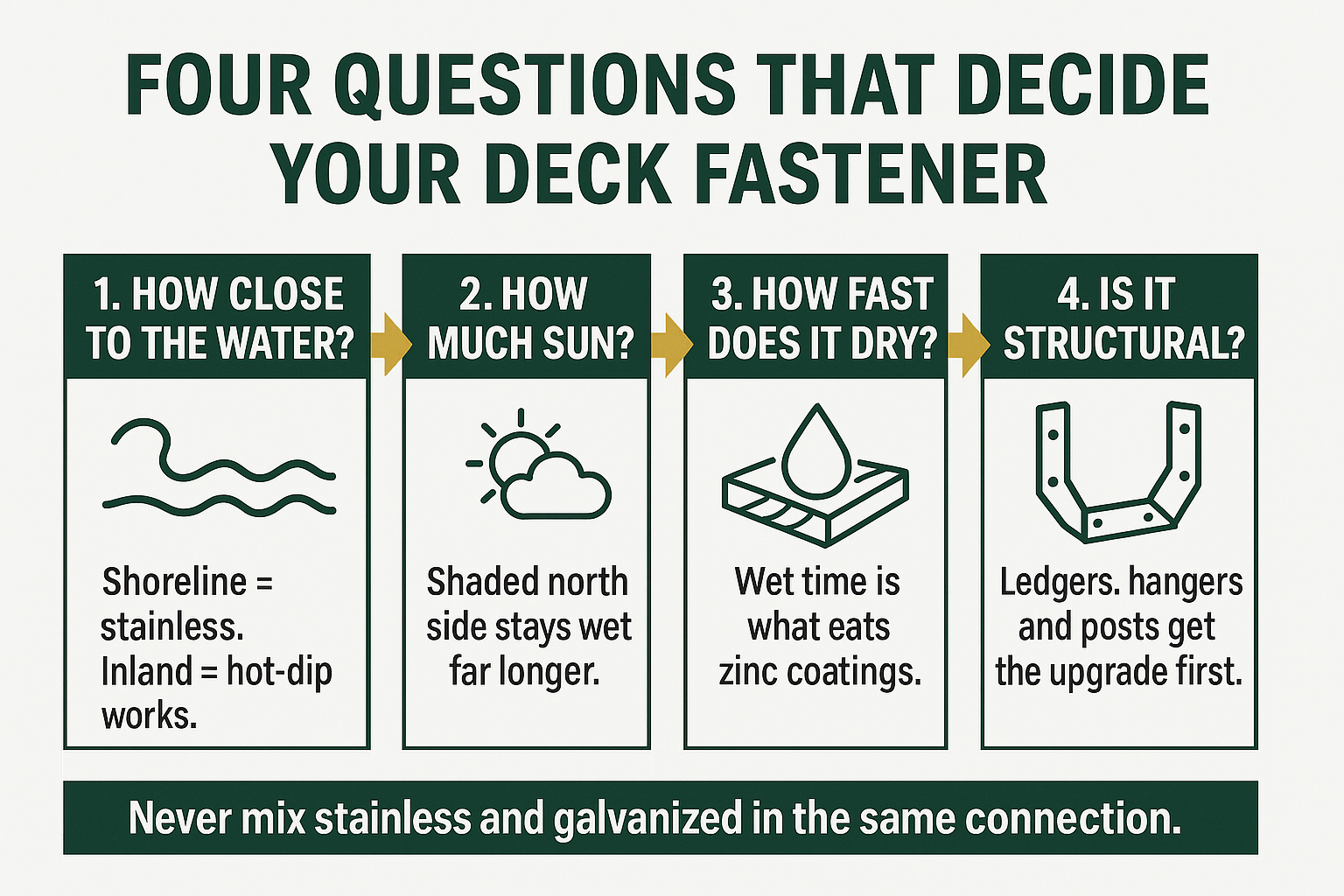
To place your own project, ask four questions: how close to the water, how much sun, how fast does it dry, and is the connection structural. A shaded, structural connection two blocks from the bay is a different problem than a sunny inland surface board.
The same logic applies under the boards. If you have already thought through joist protection and drainage details, the fastener spec should match that same level of care.
Matching Fastener Choice to Bay Area Exposure
Use this as a starting point, then check the connector manufacturer’s guidance for anything structural.
| Project setting | Reasonable choice | Why |
|---|---|---|
| Inland lot, full sun, dries fast between storms | Hot-dip galvanized to ASTM A153 | Zinc lasts a long time when the wood is not staying wet |
| Berkeley or Oakland flats, mixed sun, a few miles from the bay | Hot-dip galvanized, or 304 stainless on visible surfaces | Fog holds moisture on boards longer than the forecast suggests |
| Shoreline lots in Emeryville, Albany, Alameda, Richmond | 304 stainless at minimum | Marine air carries salt inland on the afternoon wind |
| Direct salt spray, waterfront railing or dock structure | 316 stainless | Molybdenum content resists chloride pitting |
| Uncoated redwood or cedar, any location | Stainless | Zinc reacts with wood tannins and leaves black streaks |
| Shaded, structural, slow-drying connection | Stainless, or heavy hot-dip with matched connectors | Wet time is the variable that kills coatings |
A Quick Way to Place Your Own Project
Four questions decide most fastener calls on a Bay Area deck. This breaks them down in order.
The Mistake That Shows Up Most: Mixing Metals
Here is the one that costs nothing to get right and a lot to undo. Stainless screws driven into galvanized hangers. Or galvanized nails into stainless hardware.
When two different metals sit in contact in a wet environment, you get galvanic corrosion. The zinc becomes the sacrificial metal and gives itself up to protect the stainless. The galvanized part then degrades faster than it would have on its own.
The American Wood Council confirms type 304 and 316 stainless for demanding coastal exposures and specifically warns against mixing galvanized steel with stainless steel in the same connection.
The rule is simple:
- Stainless fastener, stainless connector
- Hot-dip fastener, hot-dip connector
- Check the connector manufacturer’s published guidance rather than assuming compatibility
This usually goes wrong mid-job. The crew runs out of the specified screws, grabs a box off the shelf to keep moving, and nobody writes it down. Six years later the hangers are the problem, not the screws.
Black Streaks on Redwood: The Staining Problem
Not every complaint is structural. A lot of them are about how the deck looks.
Redwood and cedar carry natural tannins. When the wood gets wet, those tannins react with zinc and leave dark rings and streaks radiating out from every screw head. On the redwood decking and fencing that is everywhere in the East Bay, it shows up plainly within the first wet season.
If someone plans to leave the deck uncoated so it silvers naturally, stainless is as much a looks decision as a durability one. There is no finish coat hiding those rings.
Two honest tradeoffs to know before you spec it:
- Stainless is softer than coated carbon steel. Heads can cam out or snap if you drive them fast and dry.
- Pre-drilling is worth the time in dense hardwood decking. On ipe and similar species it is not optional if you want clean heads.
That softness surprises crews who are used to running structural screws. Slow the driver down, set the clutch, and drill pilot holes in anything hard. It is a different feel, not a defect. If you are still choosing boards, our breakdown of which wood actually holds up on a Bay Area deck covers how species and fastener choice interact.
What the Upgrade Actually Costs You
Stainless carries a real premium over hot-dip galvanized per pound. There is no way around that, and anyone who tells you otherwise is selling something.
But look at the ratio instead of the sticker. On a whole deck, fasteners are a small slice next to boards, framing lumber, footings, and labor. Moving from hot-dip to stainless usually shifts the total project number by a small percentage, which is why the upgrade often reads as cheap insurance rather than an indulgence.
What actually moves the price:
- Grade (304 versus 316 is a meaningful jump)
- Head style and finish, including color-matched heads for composite
- Collated versus loose fasteners for gun work
- Bulk box versus one-pound carton, which is often the biggest per-piece difference
- Length and diameter, especially in structural sizes
Prices move with the metals market, so price the specific size and grade at the counter for current numbers rather than working from an old quote. If you are budgeting a full build, our guide on how to plan a deck in the Bay Area puts hardware in context with everything else.
Frequently Asked Questions About Deck Fasteners and Salt Air
Can I just use hot-dip galvanized everywhere and be done with it?
On a lot of projects, yes. Hot-dip galvanized to ASTM A153 is code-compliant with treated lumber and holds up well when the structure dries out regularly. The places to step up are shoreline lots, permanently shaded connections, uncoated redwood or cedar where staining matters, and anything taking direct salt spray.
What is the difference between 304 and 316 stainless in plain terms?
316 contains molybdenum, which resists pitting from chlorides. That is the salt in marine air. For general damp exterior work, 304 does the job. Once you are close enough to smell the bay from the deck, 316 is the grade that gets specified.
Are stainless screws stronger than galvanized ones?
Not necessarily. Stainless resists corrosion better but is generally softer, so it can cam out or snap under an aggressive driver. That is a handling issue, not a strength failure. For structural connections, use fasteners the connector manufacturer lists for that hardware and follow their published values.
My deck is composite. Does any of this still apply?
Yes, because the framing underneath is still treated lumber and still needs compliant fasteners. The surface fastener is a separate decision driven by the board manufacturer and whether you are going hidden clip or face screw. Both systems come in stainless and coated versions.
How do I know if a fastener I already have is compliant?
Check the box, not the finish. ASTM A153 on the label means hot-dip galvanized. If it says electro-galvanized, G60, or G90, keep it for interior work. If there is no marking at all, do not gamble on treated lumber with it.
Bring the Details, Not Just the Screw Size
The useful conversation at a fastener counter starts with three questions: what wood, how far from the water, and is the connection structural. Our hardware department on Hearst Avenue in Berkeley is staffed by people who ask those before handing anything over, which is what one customer meant when she wrote that “the gentleman working in the fastener department, I believe his name is Doug, was incredibly knowledgeable, patient, and helpful.”
If you are sorting out a deck, fence, or stair build anywhere in the East Bay and want to talk through the metal and coating spec, the Lumberyard and Hardware store is at 642 Hearst Avenue, reachable at 510-841-0511, or you can look through product details at truittandwhite.com.