Direct Answer: For a spring install in Berkeley, start the window and door conversation in fall and release the order by winter. Custom and special order units are commonly quoted in months, not weeks.
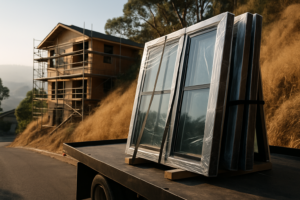
The framing is done, the openings are cut and papered, and the crew is standing around because the windows are still at the factory. It is one of the most expensive ways a Berkeley remodel goes sideways, and it is almost always a calendar problem rather than a product problem.
Most people assume windows and doors are a two-week item. Custom and special order units are built after the order is released, not pulled off a shelf, so the clock does not start when you pick a style. It starts when every open question is closed.
This article walks the schedule backward from install week: what has to be decided first, what to check on the order acknowledgment before production begins, and how receiving and storage can still cost you two weeks at the very end.
Why window and door lead times break schedules in the East Bay
The honest answer about window and door lead times is that nobody can give you a reliable number from a blog post. Lead times move with the product line, the glass package, the finish, and the time of year the order lands in the factory queue.
What we can tell you is the shape of it. On full-house replacement packages, the stretch between order release and install has run six months or more, and that is on units that were specified correctly the first time. Smaller packages of in-stock sizes can move much faster.
Three things stretch a quote beyond what people expect:
- Custom sizes and non-standard shapes. Old Berkeley and Oakland houses rarely have openings that match a catalog size.
- Specialty glass and finish choices. Tempered, laminated, obscure patterns, and custom exterior colors all add production steps.
- Seasonal queue depth. Orders released in the busy stretch sit behind more work than orders released in a slow month.
So treat the number on your current order acknowledgment as the only one worth planning against. A quote from last spring, a figure a neighbor mentioned, or a national average will all put your crew in a driveway with nothing to install.
What has to be settled before the factory clock starts
The delay people create for themselves happens before the order is ever released. A single open question holds the whole package, and most of these questions take a day to answer and a month to ignore.
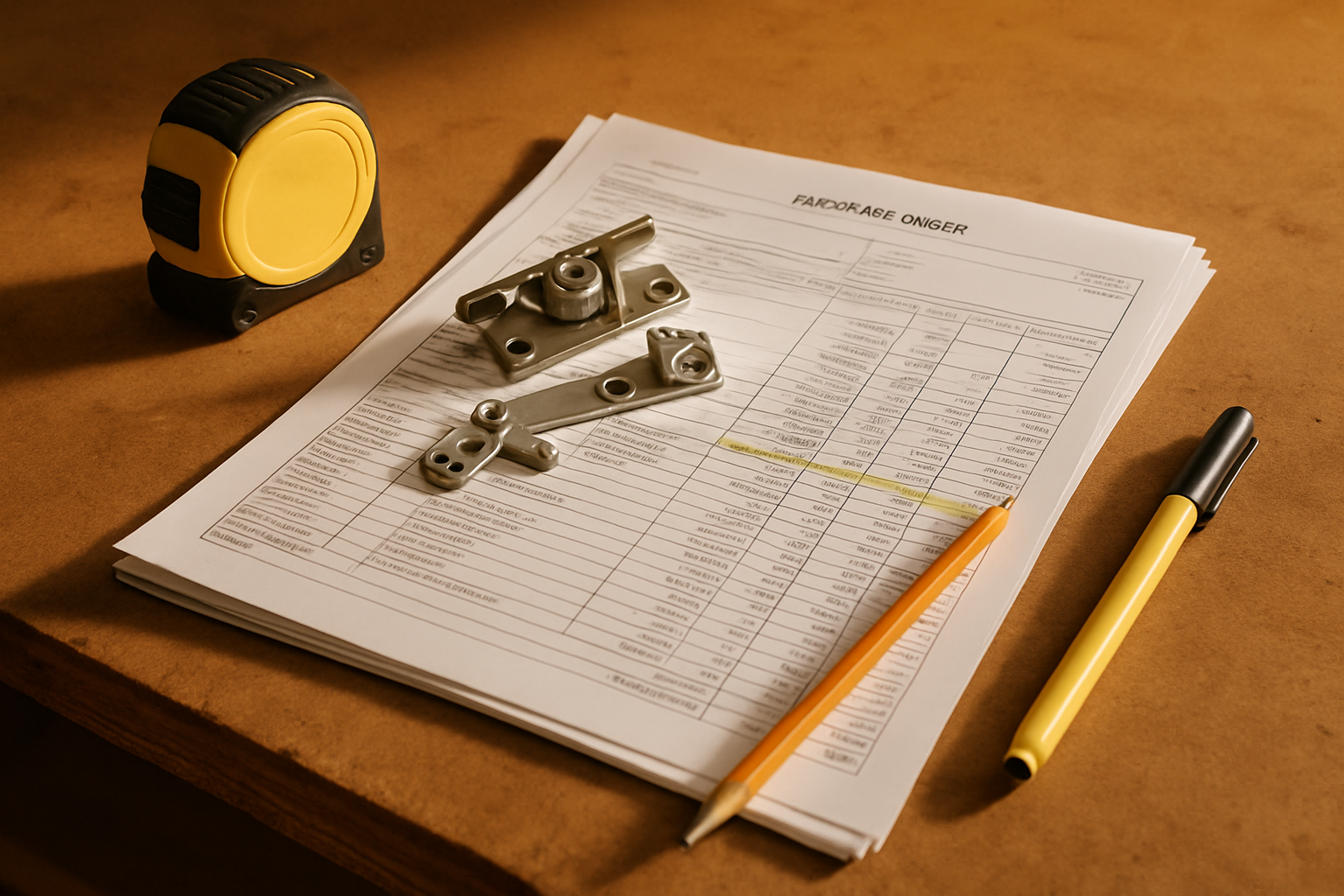
Here is the short pre-order worksheet we see hold up orders most often:
- Rough opening dimensions confirmed on site, not scaled off a plan set or guessed from the old sash.
- Egress requirements for every bedroom window in the scope.
- Handing and swing for each door, including which way it swings and which side the hinges land on.
- Jamb depth matched to the actual wall assembly, including any added insulation or furring.
- Exterior and interior finish, since a color change after release usually means a new lead time.
- Hardware prep, including lock prep, multipoint hardware, and any matching across the house.
- Compliance numbers, settled and written down.
That last one has real teeth here. For residential work in Climate Zone 3, which covers Berkeley, Oakland, and San Francisco, the 2025 energy code calls for a U-Factor of 0.27 or lower, no SHGC requirement, and fenestration limited to 20% of conditioned floor area. You can read the standards directly from the California Energy Commission.
Hillside addresses stack more on top. If your project sits in a fire severity zone, glazing requirements for East Bay hillside homes can change which units you are even allowed to order. An unanswered compliance question is a released order that never actually released.
Measuring technique is its own subject, and we cover it separately. This article stays on sequence.
A Backward Calendar for a Spring Install
Count backward from the week your crew needs the units on site. These windows are planning ranges, not promises, and your acknowledgment governs.
| Milestone | Roughly When | Why It Sits There |
|---|---|---|
| Showroom visit, product line and style narrowed | 8 to 9 months out | Gives you time to compare without the schedule pushing the decision |
| Rough openings verified on site | 6 to 7 months out | Factory sizes cannot be changed after release |
| Compliance settled: U-Factor, fenestration area, fire zone glazing | 6 months out | An open code question holds the entire package |
| Quote reviewed, deposit placed, order released | 5 to 6 months out | This is the moment the production clock actually starts |
| Order acknowledgment checked line by line | Within days of release | Last practical window to catch a substitution |
| Production and transit | Varies by line and season | The acknowledgment date is the number to trust |
| Delivery scheduled | At least 2 days before | Deliveries run in two-hour windows, Monday through Friday |
| Doors finished on all six sides | Before hanging | Unfinished doors move fast in Bay Area humidity |
The Order Sequence at a Glance
This flow shows the five decision points that control how long you wait, in the order they actually happen.
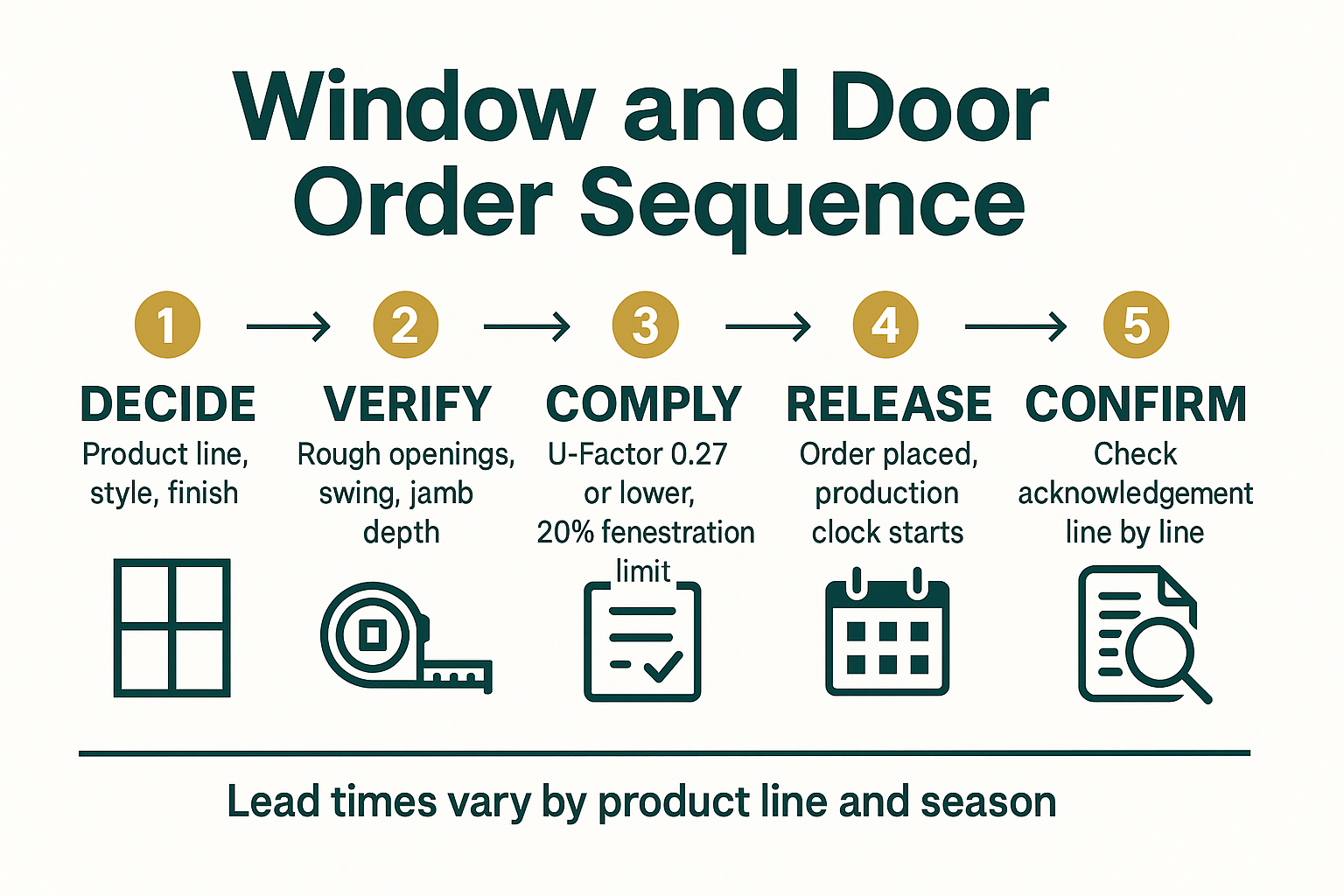
Read the order acknowledgment line by line before production starts
The order acknowledgment is the document the supplier sends back after the order is entered. It is your last clean chance to catch a problem, and plenty of homeowners do not know it exists or that they are allowed to reject one.
Compare it against your quote field by field. The places a substitution slips through are predictable:
- Model number on every unit, not just the big ones
- Glass package, including tempering, low-e type, and any obscure or patterned glass
- Glazing detail, which is where a direct glaze unit can quietly become a glass insert with applied moulding
- Threshold and astragal configuration on French and patio doors
- Swing and handing on each door
- Jamb depth and exterior finish
Substitutions happen in this industry. A size runs outside a line’s range, a glass detail is discontinued, a finish gets dropped. None of that is a scandal on its own.
What matters is that the substitution is explained in writing and approved before production, not discovered on a pallet in your driveway. We have seen what the other version looks like: a glass detail that was not what the customer specified, followed by months of back and forth over the threshold gap that came with it.
Asking for that written confirmation is normal and expected. Any supplier worth buying from will produce it without a fuss. Once a custom unit is built, your options narrow fast and the fix usually costs more than the unit did. If you are still at the quoting stage, our piece on what to ask before buying replacement windows covers the questions that prevent most acknowledgment surprises.
Receiving, storage, and the last two weeks
Schedule risk does not end when the truck shows up. Delivery day has to be planned into the build rather than called in the morning of.
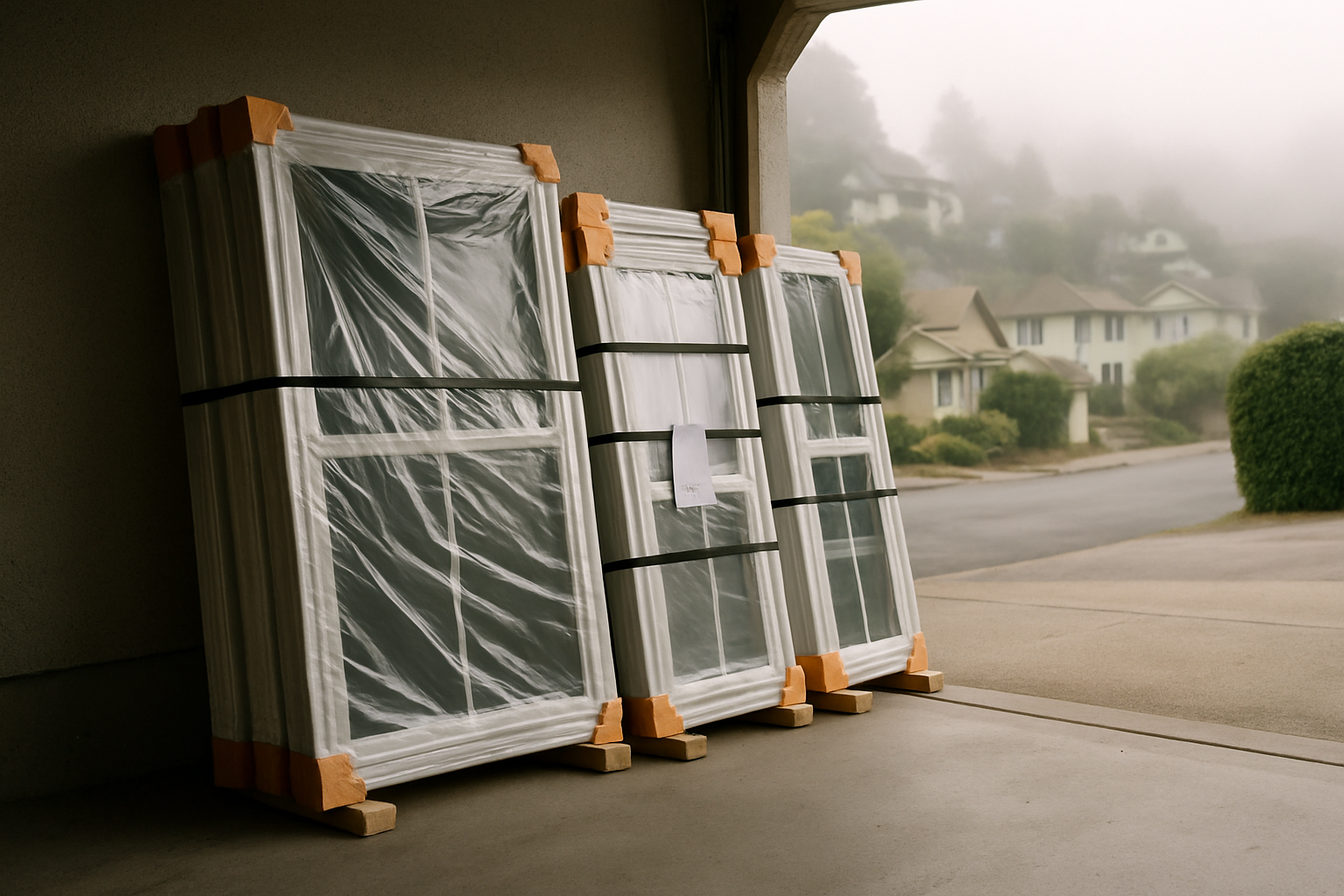
Our window and door deliveries run in enclosed box vans, Monday through Friday between 7:00 a.m. and 3:00 p.m., scheduled in two-hour windows, with at least two days notice requested. Off-loading is curbside to the customer or crew, so somebody has to be there with hands and a plan.
Once the units are on site, storage is where good orders get damaged:
- Store off the ground on blocking, never flat on concrete or dirt
- Keep units dry and out of direct sun, under cover if the forecast is wet
- Stand window units on edge, not stacked flat, and keep them from leaning on glass
- Keep doors flat and fully supported, not propped against a wall
Doors need a quality finish on all six surfaces before hanging, including the top and bottom edges. That is the single most common cause of callbacks we see, and we wrote about why new doors warp and stick in Berkeley because it keeps happening.
If finishing is part of your scope, add that time to the end of the calendar. A door that arrives on Friday and gets hung on Monday has not been finished properly.
A spring start is really a winter decision
Around here, window shopping peaks in January. Searches for energy efficient windows in the San Francisco and Oakland market run roughly nine times higher in January than in June, which makes sense when you are sitting in a cold room listening to rain hit old single pane sash.
The useful part is that those January orders are the ones that land in time for a dry-season install. The research you do in a wet month is the part that shortens the wait later.
NOAA has El Niño conditions holding through the 2026-27 winter, with high confidence in the pattern and much lower confidence in exactly how much rain Northern California gets. Storm timing is the planning variable, not seasonal totals. That is a good argument for having the order released well before you want to be opening up walls, and for understanding how windows and doors hold up in a strong El Niño winter before you choose a product line.
It is also worth knowing that our marine layer and coastal moisture put different demands on Bay Area window specs than inland California.
Frequently Asked Questions About Window and Door Lead Times
It is already March and I want the job done this summer. Am I too late?
Not necessarily, but your product options narrow. Standard sizes and in-stock configurations can still work for a summer install, while a fully custom package with special glass or finish is more likely to land in fall. The faster you close out sizes, swing, and compliance numbers, the more of the calendar you get back.
Does the lead time start when I pay the deposit?
It starts when the order is released to the factory, which happens after every field on the order is final. Deposits placed while a size, color, or glass question is still open do not move you up the queue.
What if the acknowledgment shows something different than my quote?
Say so in writing before production begins. Ask for a written explanation of what changed and why, and do not approve the acknowledgment until you understand the swap. Once a custom unit is built, it is built, and that is a far harder conversation than a two-day delay at the front end.
Do Title 24 requirements change the lead time?
Not directly, but they change the spec, and the spec changes the queue. Hitting a U-Factor of 0.27 or lower in Climate Zone 3 may point you toward a specific glass package, and hillside fire zone glazing can push you into a smaller set of available units. Settle those numbers early so the order can go out clean.
Can I store the units in the garage until the crew is ready?
Yes, as long as it is dry, flat, and the units are off the ground on blocking. Stand windows on edge and keep doors fully supported and flat. And finish doors on all six sides before they get hung, not after.
Planning a spring window and door package in Berkeley or the East Bay?
One longtime contractor customer put it simply in a review: “Their special order capabilities have saved me countless times on unique projects.” Both Berkeley locations handle special orders and acknowledgments in person, which helps if you would rather read the paperwork across a counter than trade email about glass packages. The Windows and Doors showroom at 1831 Second Street can be reached at 510-649-4400, and the Lumberyard and Hardware store on Hearst Avenue at 510-841-0511.