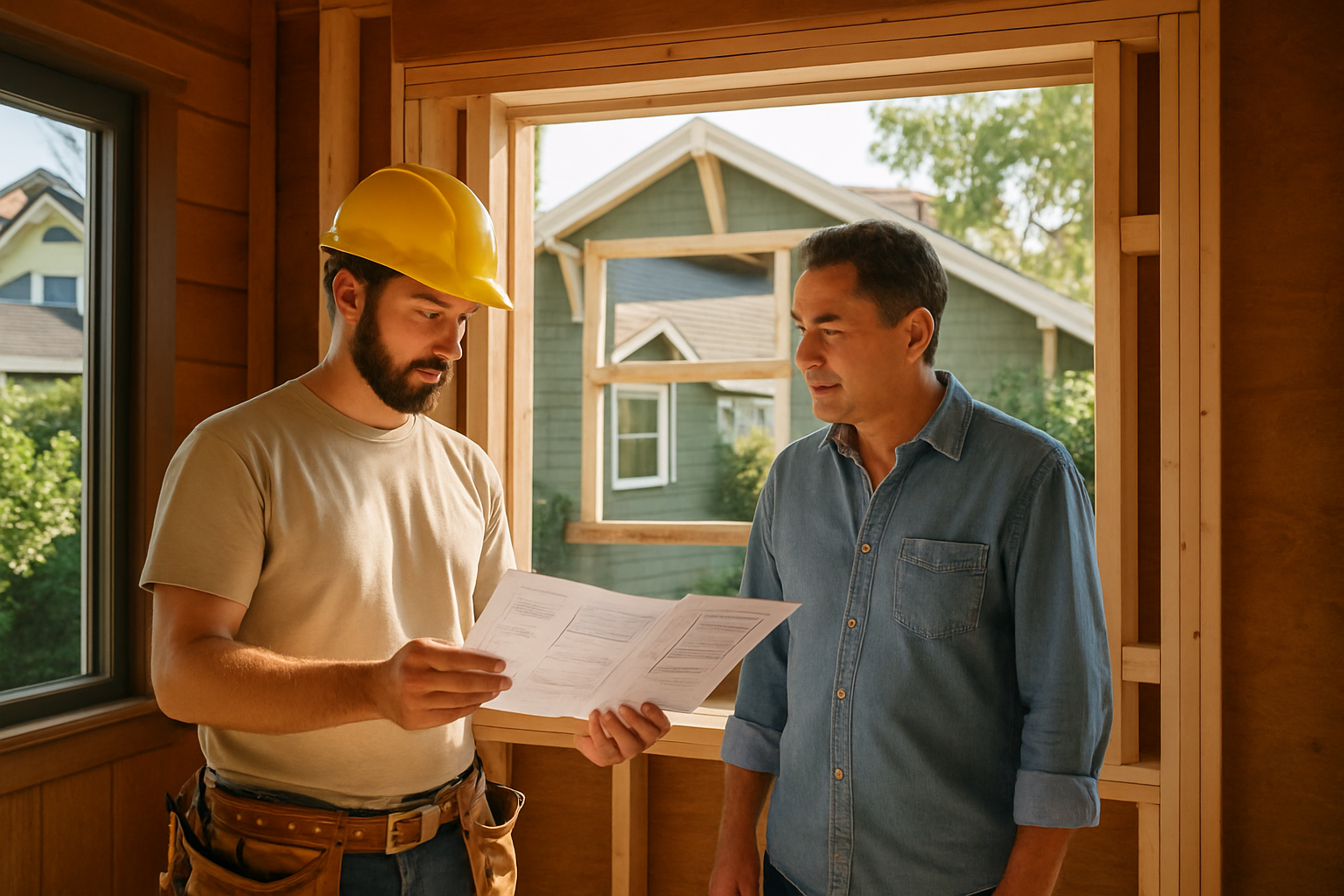
Direct Answer: Ask about U-factor compliance (0.27 or lower for Climate Zone 3), whether the window fits your rough opening without structural changes, and what lead times look like before you commit.
Most people buying replacement windows in Berkeley or Oakland focus on looks first — frame color, grille pattern, whether it matches the house. That’s understandable, but it’s also how you end up with windows that fail a Title 24 inspection or fog up inside within three years.
The Bay Area has specific performance demands that most national window retailers don’t account for. Marine layer moisture, cold fog, and the way Climate Zone 3 energy codes work mean the window that’s fine in Sacramento can be the wrong call here.
This isn’t a product pitch. It’s a list of the questions worth asking — any supplier, any brand — before you sign anything or pull a permit.
Does This Window Meet 2025 Title 24 for Climate Zone 3?
This is the first question, and it’s non-negotiable if you’re pulling a permit in Berkeley or Oakland.
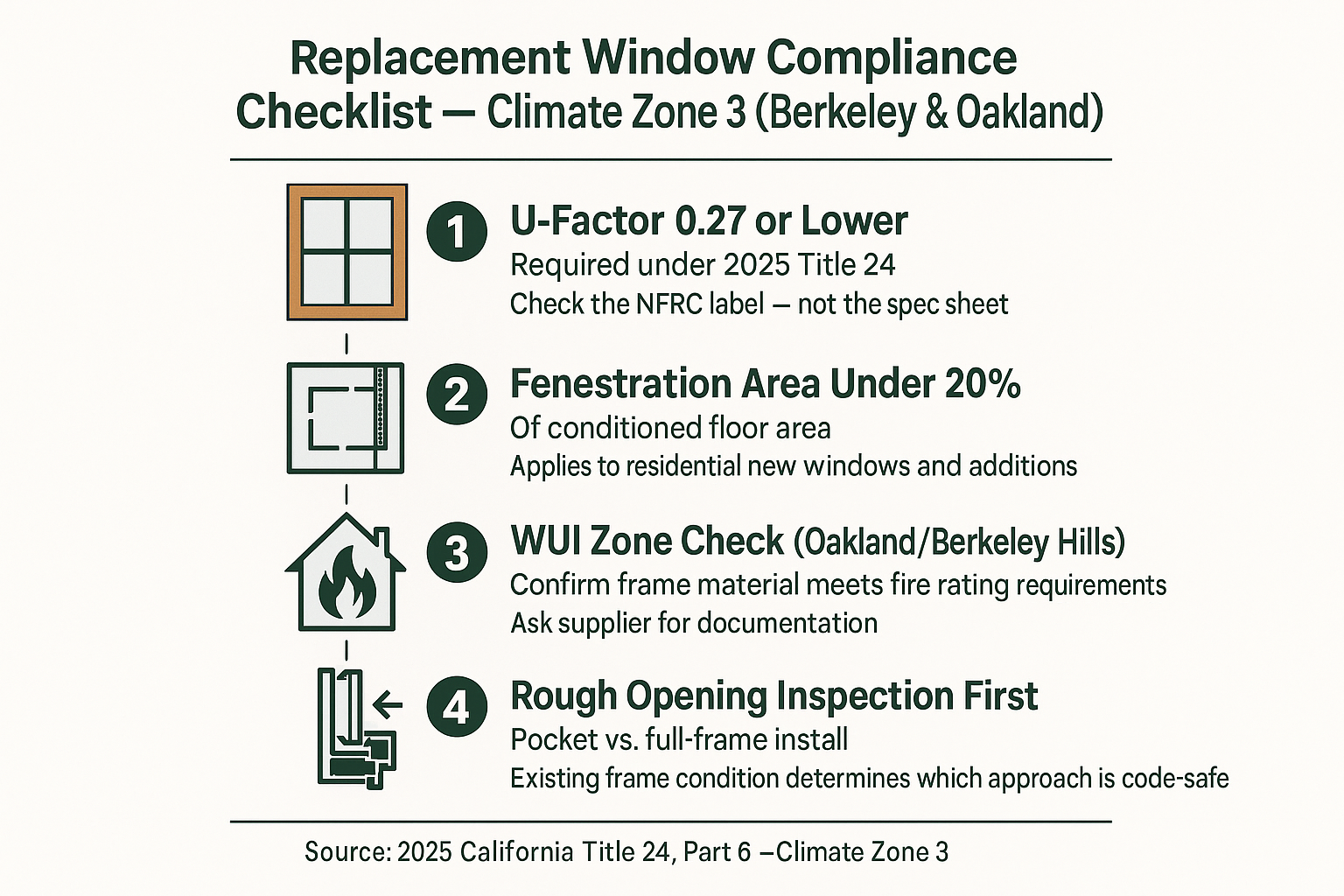
Under the 2025 Title 24 standard for Climate Zone 3, residential replacement windows must meet a U-Factor of 0.27 or lower. There is no Solar Heat Gain Coefficient (SHGC) requirement for this climate zone — which surprises a lot of people used to dealing with inland California specs. What Is Solar Heat Gain Coefficient? explains why that distinction matters depending on where your project sits.
A few other things to confirm:
- Ask for the NFRC label on any window you’re considering — that’s the certified rating, not a marketing claim
- Confirm that fenestration area doesn’t exceed 20% of conditioned floor area on residential projects — this catches people off guard on additions and remodels
- If you’re in an Oakland hillside WUI zone, ask whether the window frame material affects fire rating compliance
A supplier who can’t answer the Title 24 question immediately — with numbers, not vague reassurances — is one worth being cautious about. Why Bay Area Windows Need Different Specs Than the Rest of California goes deeper on why Climate Zone 3 specs diverge from the rest of the state.
Will This Window Actually Fit, or Is There a Rough Opening Problem?
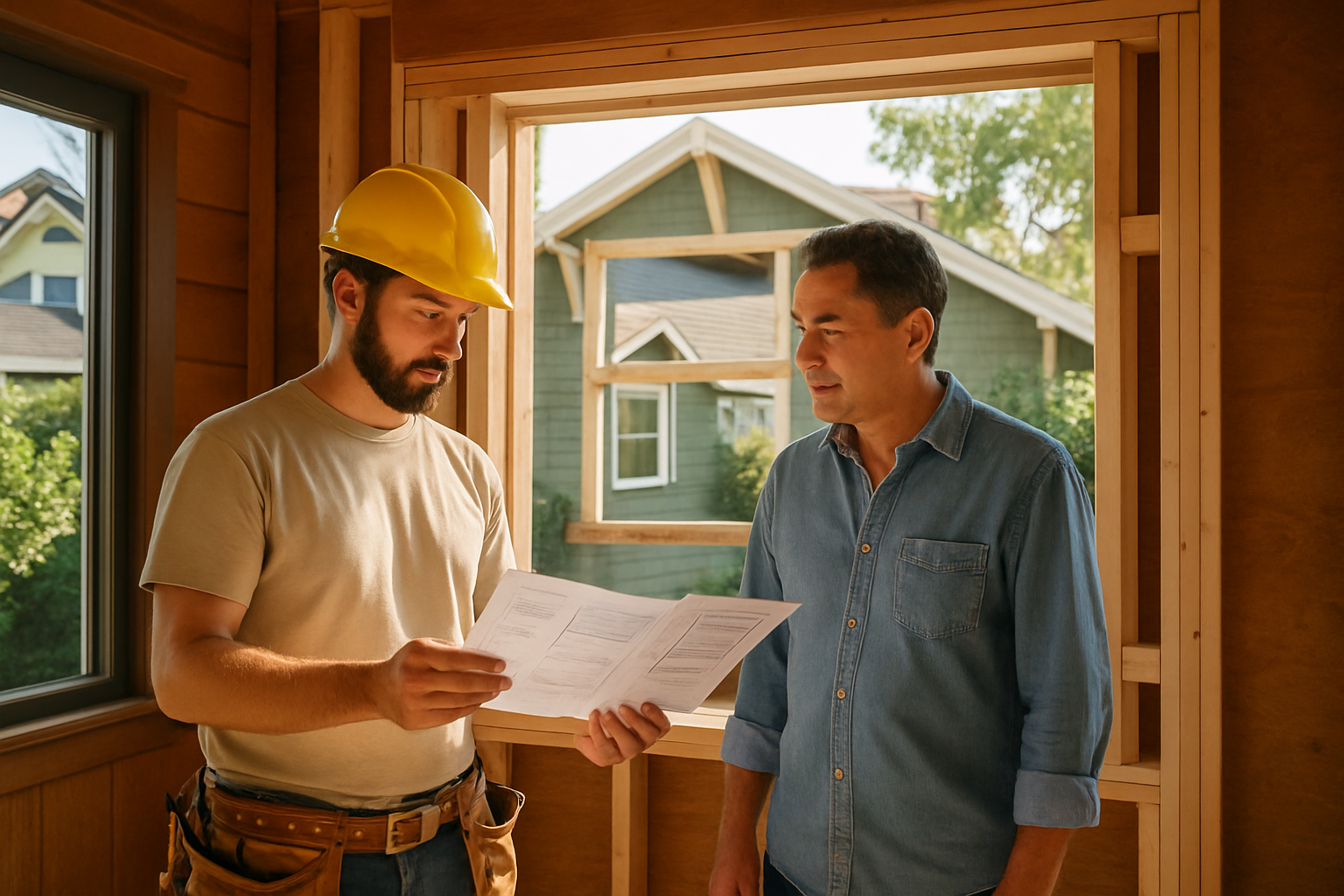
Replacement windows come in two basic installation approaches: pocket replacement (insert) and full-frame replacement. The answer to which one you need changes the cost, the timeline, and sometimes the permit requirements.
A pocket replacement drops a new window unit into the existing frame. It’s faster and cheaper — typically $300–$700 per window installed in the East Bay depending on size and product — but it only works if the existing frame is square, solid, and free of rot. In older Berkeley and Oakland homes, that’s a real question. A lot of the craftsman bungalows and 1950s ranches around here have wood frames with decades of moisture exposure behind them.
Full-frame replacement means removing everything down to the rough opening and starting over. More disruptive, more expensive — but you get a clean install, better air sealing, and no surprises hiding in the existing frame.
Before you get a quote, ask:
- What condition does the existing frame need to be in for a pocket install to be appropriate?
- Will you inspect the rough opening before ordering?
- If rot or damage is found mid-install, how is that scoped and priced?
Knowing how to measure rough opening for windows before you talk to a supplier puts you in a better position to evaluate what you’re being quoted.
Title 24 Replacement Window Checklist for Climate Zone 3
This checklist covers the four compliance questions every Berkeley or Oakland homeowner should verify before ordering replacement windows.
How Does the Frame Material Handle Bay Area Conditions?
Frame material is where the Bay Area’s climate reality separates a good window decision from a regrettable one.
The coastal fog and marine moisture that defines the Berkeley and Oakland experience — especially in the hills and anywhere west of 580 — is hard on materials that aren’t built for it. Here’s how the main options actually behave:
- Vinyl frames: Low maintenance, good thermal performance, budget-friendly. They can expand and contract in temperature swings, and the cheaper options don’t hold up well on south- or west-facing exposures where afternoon heat is a factor.
- Fiberglass frames: Dimensionally stable, handles moisture and heat cycles better than vinyl, and matches the look of painted wood without the upkeep. Generally $200–$400 more per window than equivalent vinyl, but that gap narrows quickly when you factor in longevity.
- Aluminum-clad wood frames: Common in higher-end Berkeley and Oakland remodels. Wood interior, aluminum exterior shell. Performs well in coastal conditions and looks right on craftsman and contemporary architecture. Requires more upfront investment — expect $600–$1,200+ per window depending on size and glazing.
- Bare wood frames: Not recommended for exterior exposure in this climate without excellent maintenance discipline. Historically accurate for some restoration projects, but the moisture cycle here is punishing.
If you’re working near the Oakland or Berkeley hills where fire risk is a factor, ask specifically whether aluminum cladding affects any WUI compliance requirements on your lot. That answer varies by zone.
Window Frame Material Comparison for Bay Area Conditions
These are general performance characteristics for the most common frame types in Berkeley and Oakland residential projects — not brand-specific claims.
| Frame Type | Moisture Resistance | Thermal Performance | Typical Cost Range (per window) | Best For |
|---|---|---|---|---|
| Vinyl | Moderate | Good (U-Factor competitive) | $150–$450 | Budget-conscious remodels, rental properties |
| Fiberglass | Excellent | Excellent (stable in temp swings) | $350–$850 | Long-term installs, coastal exposures |
| Aluminum-Clad Wood | Good (exterior clad) | Moderate (thermal break matters) | $600–$1,200+ | Historic homes, high-end remodels |
| Bare Wood | Poor without maintenance | Good (natural insulator) | Varies widely | Restoration work with maintenance plan |
What Are the Lead Times, and When Do You Need to Order?
This is the question most people forget to ask until they’re three weeks into a remodel with a plywood-covered opening and a sub scheduled for next Tuesday.
Custom and semi-custom windows typically run 4 to 10 weeks from order to delivery in the Bay Area, depending on brand, series, and current shop load. Stock sizes from a local supplier can be available in days, but stock windows only work if your opening matches a standard dimension — and a lot of East Bay homes don’t.
A few things worth confirming upfront:
- What’s the current lead time for the specific window you’re ordering, not the category average?
- Is there a restock or change fee if field measurements after demo reveal a sizing problem?
- What’s the damage and defect policy if something arrives wrong or broken?
Ordering windows before demo is the standard approach on replacement projects, but it assumes your measurements are right. How to measure rough opening for windows walks through how to get accurate numbers before you commit to a product.
For projects in Berkeley, the permit timeline matters too. If your replacement requires a permit — which it does in most cases where structural framing is involved — factor in 2–4 weeks for permit processing on top of the window lead time. The City of Berkeley Building and Safety Division has gotten more predictable in recent years, but it’s still not fast.
Frequently Asked Questions About Replacement Windows in Berkeley and Oakland
Do I need a permit to replace windows in Berkeley or Oakland?
Generally, yes — if you’re changing the size of the opening, replacing the frame down to the rough opening, or adding a window where one didn’t exist. Like-for-like pocket replacements in the same opening sometimes fall under permit exemptions, but both cities have been tightening that interpretation. Call the building department before you assume you’re exempt. Berkeley’s Building and Safety Division is at 510-981-7440.
What U-Factor do I need for replacement windows in the Bay Area?
0.27 or lower under the 2025 Title 24 standard for Climate Zone 3, which covers Berkeley, Oakland, and San Francisco. There’s no SHGC requirement for this zone. Always verify the rating on the NFRC label — that’s the certified number, not what the spec sheet says.
Is fiberglass really worth the extra cost over vinyl for a Bay Area home?
For most Berkeley and Oakland locations — especially anywhere with regular fog exposure, coastal wind, or significant temperature swings between day and night — fiberglass holds up better over time. The upfront gap is real, typically $200–$400 more per window, but vinyl frames can warp or lose their seal faster in these conditions. On a house you’re keeping for 15+ years, fiberglass tends to make financial sense.
Can I order windows without visiting a showroom?
You can, but it’s harder to do accurately. Window specs involve a lot of variables — opening dimensions, glass type, frame depth, hardware finishes, grille patterns — that are easier to get right when you’re looking at physical samples and talking through the project with someone who knows the product line. Do I Need to Visit a Showroom to Buy Architectural Windows in Berkeley? covers when it actually matters.
What happens if my window arrives and the rough opening is out of square?
This is more common than people expect in older East Bay homes. Minor racking — up to about 3/8 inch — can usually be shimmed out. Beyond that, you’re looking at structural corrections before the window can be properly set and sealed. The better suppliers will talk you through tolerance limits before you order, not after delivery.
Does window frame color affect performance in a fire zone?
Frame color doesn’t directly affect fire rating, but frame material does. If your property is in an Oakland or Berkeley WUI (Wildland-Urban Interface) zone, you need to confirm that the window unit — frame and glazing together — meets the required fire resistance rating for that zone classification. Dark-colored frames on south-facing elevations also absorb more heat, which can affect vinyl frame longevity and seal integrity over time.
Talk Through Your Window Project Before You Order
If you’re replacing windows in Berkeley, Oakland, or anywhere in the East Bay and you want straight answers on Title 24 compliance, frame options, and lead times — our Windows and Doors showroom at 1831 Second Street in Berkeley is set up for exactly that kind of conversation. You can reach that team directly at 510-649-4400, or visit truittandwhite.com to get a sense of what we carry before you come in.