Quick Answer
Usually, yes. You can start online, but architectural windows are one of those products where photos and spec sheets miss critical details like sightlines, hardware feel, and code labels. For Berkeley projects, a hybrid approach works best: research first, then confirm in person before ordering. For a fuller look at that decision, see whether you need to meet with a window company or can shop yourself.
If you're asking this, you're probably already far enough into a remodel, addition, or custom build to know the window package isn't a small line item. In Berkeley, it also isn't just a design choice. It's a code, performance, and installation decision that can go wrong in expensive ways.
People rarely ask this question about basic replacement windows. They ask it when they're looking at architectural windows, where proportions, frame depth, glazing, and hardware matter just as much as the rough opening.
Why Online Catalogs Fall Short for Architectural Windows
A catalog is fine for narrowing the field. It's not enough for making the final call on a high-cost window package.
The problem is simple. Architectural windows don't live on a screen. They live in a wall, under real light, beside plaster, siding, trim, and flooring. What looks balanced online can feel heavy, flat, or out of scale once it's installed.

Photos don't tell you what the frame really looks like
Renderings flatten everything. A slim profile can look the same as a thicker one if the image is cropped tightly or lit carefully. That matters when you're trying to match an older Berkeley house, a clean-lined addition, or a modern opening with very little trim.
Finish is another issue. Online color chips and studio photos don't tell you much about sheen, texture, or how the frame reads next to cedar, stucco, painted siding, or interior millwork.
If you're still sorting through forms, proportions, or projecting units, a basic guide to understanding different window styles like bay and bow windows can help before you get into brand-specific decisions.
You can't judge operation from a spec sheet
Online shopping quickly falls short. Casements can look similar on paper and feel completely different in the hand. Locking points, hinge resistance, handle placement, and screen setup all affect whether the window feels solid or fussy.
In Berkeley's coastal and seismic conditions, that physical side matters. According to Marvin dealer information, remote buys spike mismatch errors by 22%, and that can drive install labor up by 15% to 25% when the product isn't right for the opening or wall condition.
Practical rule: If the window is custom, exposed, or central to the architecture, don't approve it from a thumbnail image.
Catalog shopping can create false confidence
Contractors do this too. They assume the schedule is clear, the spec is close enough, and the manufacturer details will carry the job. Then the unit arrives and the jamb depth isn't what they expected, the mullion thickness changes the elevation, or the operating style conflicts with how the room is used.
If you want a clear rundown of those risks before you commit, it's worth reading why buying windows online can be riskier than it looks.
Online research is useful. It saves time at the front end. But it doesn't replace standing in front of a full-size unit and deciding whether you want that window in your house or on your job.
The Critical Details You Can Only Verify in a Showroom
A showroom earns its keep when the project moves from broad preference to exact selection. That's where the mistakes happen. Not because people don't care, but because the details that drive satisfaction and compliance are hard to read from a brochure.

NFRC labels and code data need to be checked, not assumed
In Berkeley, windows have to satisfy energy requirements and carry NFRC certification. The city-aligned requirement cited in Berkeley window permit guidance sets a maximum U-value of 0.40, and non-compliant windows can trigger permit rejections that delay a project by 4 to 8 weeks.
That doesn't mean every buyer needs to become a code specialist. It does mean someone needs to verify the actual label, the actual unit, and the actual performance data before the order is locked.
For serious Berkeley work, especially bedrooms and additions, it's also smart to confirm egress and opening requirements with your contractor, designer, or local building department instead of assuming a standard size will pass.
Full-size operation tells you more than a detail sheet
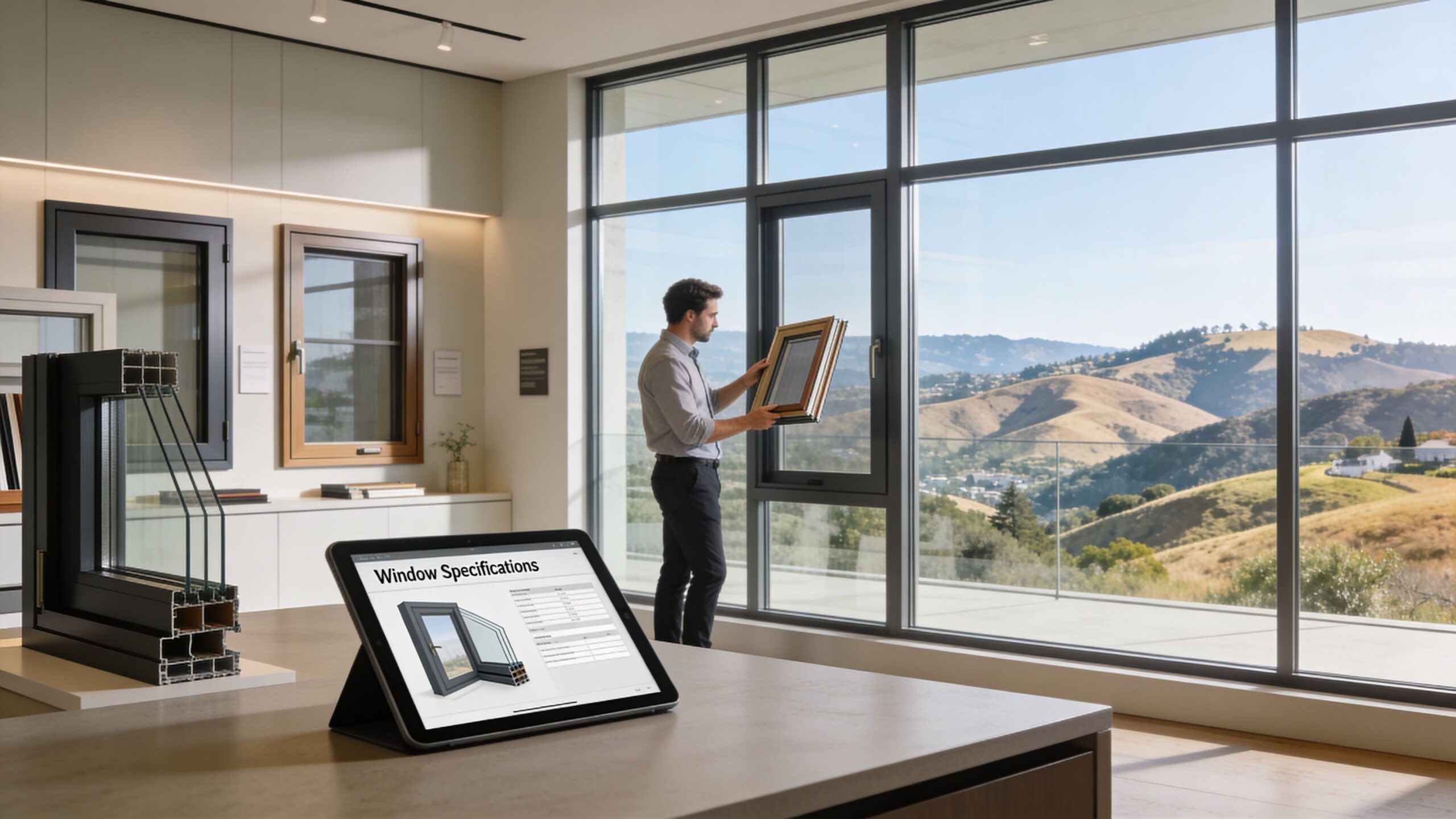
A showroom lets you open the sash, check the hardware, feel the latch engagement, and see how the unit behaves at full size. That's not cosmetic. It affects daily use, cleaning access, screens, and how the window feels years after installation.
This is especially important when a homeowner is comparing aluminum-clad wood, fiberglass, or other premium frame options. On paper, the differences can look minor. In person, they usually don't.
A well-made window should feel predictable when you operate it. If it already feels awkward in the showroom, it won't feel better after installation.
Sightlines, mullions, and glass clarity have to be seen in person
This is one of the biggest reasons people regret buying sight unseen. The eye notices narrow changes in proportion immediately once the unit is installed, especially on front elevations, large openings, and contemporary homes where the frame itself is part of the design.
Glass matters too. Homeowners often focus on frame color and forget that the glazing changes how the outdoors reads from inside the room. Daylight, reflections, and visible light transmission all affect the finished result.
If you're exploring minimalist glazing systems and want design context before comparing practical local options, this overview of Sky Frame Windows: Frameless Glass for Stylish Homes is useful as a reference point for what ultra-clean sightlines are trying to achieve.
Material samples answer questions that specs don't
A small corner sample can tell you more in a minute than ten product pages. You can compare frame thickness, touch the finish, inspect joinery, and hold two products side by side.
That matters when you're trying to answer practical questions like these:
- Will this frame look too heavy for the opening
- Does this finish work with the rest of the house
- Is the hardware style right for a traditional remodel or too contemporary
- Will the interior sightline feel clean enough once casing is installed
Those are not abstract design concerns. They're the things clients stare at every day after the job is done.
Can You Buy Architectural Windows Without a Showroom Visit?
Yes, you can. Sometimes that's the only realistic path, especially if the decision maker is out of area, the architect is leading the package remotely, or the contractor already knows the product line well.
But when people ask do i need to visit a showroom to buy architectural windows in berkeley?, what they're usually asking is whether they can skip the visit without increasing risk. That's a different question.

Remote buying works best in narrow situations
Remote ordering is most defensible when the buyer already knows the exact manufacturer, series, operation type, and finish. It can also work when a repeat contractor is matching an existing project or replacing a unit with little design ambiguity.
Even then, the permit side in Berkeley is technical enough that online-only workflows have limits. As noted in Berkeley Parents Network's discussion of showroom-centered window buying, there's still a real gap in remote workflows because U-values, NFRC ratings, and egress requirements aren't easy to verify online. The practical opening is a hybrid process where research and pre-screening happen digitally before the final confirmation.
A hybrid process is usually the smart compromise
For contractors, that often means the homeowner does early homework online, then the final review happens in person with plans, opening sizes, and product data on the table. For architects, it may mean the design team narrows the package and one person visits to confirm proportions, finishes, and operation.
For serious homeowners, the hybrid route is usually the least frustrating. You can rule out categories you don't want before you spend time in a showroom, then use the visit to settle the decisions that need your eyes and hands.
A practical hybrid workflow usually looks like this:
- Start with scope. New construction, addition, full-frame replacement, or insert replacement all push the decision in different directions.
- Narrow by function. Decide what must open, what is fixed, what needs privacy, and what needs egress.
- Bring real information. Plans, opening sizes, photos, and exterior style references make the in-person visit much more productive.
- Use the visit for final validation. That's when you confirm finish, operation, visible frame, and label data.
If you're tempted to treat architectural windows like an appliance purchase, pause. They're closer to millwork. The details are what you're paying for.
DIY research has limits on architectural work
Some homeowners want to piece the package together themselves first. That can be useful for learning the basics, but it's easy to overestimate what online comparison alone can do. If you're weighing the self-directed route, this article on replacing windows yourself gives a realistic sense of where DIY confidence helps and where it can get expensive.
So yes, you can buy without visiting a showroom. For a simple, repeatable order, that may be fine. For a custom Berkeley project where the window package affects appearance, permit review, and installation, it is often advisable to use online tools for screening and a showroom for confirmation.
Deciding on a Showroom Visit Based on Your Role
The value of a showroom visit changes depending on who's making the decision. The same window package looks different to a homeowner, a contractor, and an architect because each one carries a different kind of risk.
If you're a homeowner
You need to know whether you'll like the window after the novelty wears off. That usually comes down to proportions, finish, hardware feel, and how the glass reads in the room.
Bring photos of the house, a few inspiration images, and anything you're trying to match. If you're torn between two options that seem similar online, that's usually a sign the decision should be made in person.
If you're a contractor
You're protecting the install, the schedule, and the callback list. The showroom visit matters because it lets you verify details that can create jobsite friction later, especially on custom openings and remodel conditions.
Bring the plan set or at least the window schedule, rough opening assumptions, and any wall assembly questions. If the project has unusual conditions, discuss them before ordering instead of trying to solve them after delivery.
If you're an architect or designer
You're trying to preserve intent. Small changes in profile, meeting rail thickness, divided lite pattern, or finish can change the elevation more than clients expect.
A productive visit usually includes material comparisons, hardware review, and a close look at how the product family handles fixed versus operable units. If the design relies on clean glass and minimal visible frame, don't approve it from standard marketing images.
What to bring if you're going
The most useful showroom visits are prepared, not casual. A short checklist helps:
- Plans or sketches if you have them
- Window sizes that are current enough to discuss realistically
- Photos of the interior and exterior
- Material cues like siding, trim, flooring, or paint references
- Questions about code or performance for your contractor, designer, or building department to help confirm
You don't need to know every answer before the visit. You do need enough project information to compare the right products instead of looking at windows in the abstract.
How to Prepare for Your Window Showroom Consultation
People get more value from a showroom when they arrive ready to make real comparisons. If you show up with only a rough idea of style, you'll still learn something. But if you bring project information, you can leave with decisions that hold up.

For professionals in Berkeley, Oakland, and the East Bay, 85% of projects involve custom windows, according to Berkeley permit-related market context. That's the main reason a showroom appointment tends to be worth the time. You're rarely picking a pure off-the-shelf unit.
Bring the documents that answer the first round of questions
A good consultation starts with the basics. If you're a homeowner, bring photos, rough sizes, and any plans you have. If you're a contractor or designer, bring the current drawings and note anything still in flux.
The more useful items are usually these:
- Existing conditions photos from inside and outside
- Plans or elevations that show scale and operation
- A shortlist of styles you already like
- Notes on priorities such as energy performance, appearance, ventilation, or matching existing work
Be ready to compare, not just browse
A showroom visit works best when you're evaluating trade-offs. That means asking direct questions and operating multiple products, not just picking a finish and moving on.
Ask things like:
- What changes visually between this series and the next one up
- How does the hardware feel across product lines
- Which options are most likely to fit the design without overcomplicating installation
- What performance documentation should I keep for permit review
If you want a better sense of what a dedicated visit looks like before scheduling one, take a look at this overview of a quality windows and door showroom.
Bring the unresolved questions with you. A showroom is most useful before the order is final, not after.
Know what you probably won't settle in one visit
Not every issue gets solved on the spot. Final sizing may still depend on field measure. Code questions may still need confirmation from your contractor, architect, or local building department. Lead times can also vary based on product line and customization.
That's normal. The goal of the visit is to eliminate the big mistakes and narrow the choices to the right product for the opening, the design, and the project scope.
Frequently Asked Questions About Buying Architectural Windows
Can I get a price without visiting a showroom?
You can usually start the conversation with plans, sizes, and product preferences. Final pricing often depends on exact configuration, material, glass package, and custom details, so an in-person review is often the cleaner way to compare options accurately.
Is a showroom visit really necessary for replacement windows?
Sometimes no, especially if you're replacing a like-for-like unit and already know the product line. For custom replacements, design-driven remodels, or openings where egress and performance matter, seeing the product in person is still the safer move.
How long should a window showroom consultation take?
That depends on the project. A straightforward replacement discussion may be fairly quick, while a whole-house package or architectural remodel usually takes longer because there are more finish, operation, and performance decisions to sort out.
What should I bring to a showroom appointment?
Bring whatever helps define the opening and the design intent. Plans, rough sizes, site photos, and a few reference images are usually enough to make the conversation useful.
Can my contractor or architect visit for me?
Yes, and that often happens. If they know your priorities and the project well, they can narrow the package effectively. For major architectural decisions, it's still smart for the homeowner to see the final choices in person before approval.
Will a showroom help me with Berkeley code questions?
A showroom can help you review product information and performance labels, but it isn't a substitute for project-specific code review. For permit and compliance questions, confirm details with your contractor, design professional, or the local building department.
Discuss Your Project with a Berkeley Window Specialist
If you're still asking do i need to visit a showroom to buy architectural windows in berkeley?, the practical answer is this: start online if you want, but make the final decision in person when the project is custom, design-sensitive, or headed into permit review. For a closer look at what that process can feel like, you can discover Berkeley's leading window store for every project.
If you'd like to talk through a window package, visit the Truitt and White Windows and Doors Showroom at 1831 Second Street, Berkeley, CA 94710, call (510) 649-4400, or reach out through info@truittandwhite.com. For lumber, hardware, and general building materials, the lumberyard and hardware store is at 642 Hearst Ave, Berkeley, CA 94710, phone (510) 841-0511.