Direct Answer: Thermally modified wood is lumber that’s been heat-treated at 350–430°F to permanently change its cellular structure, making it more stable, rot-resistant, and dimensionally consistent — without any chemicals.
Architects and specifiers in the Bay Area are increasingly calling out thermally modified wood on project drawings — and contractors who haven’t worked with it yet are starting to ask questions. What is it, how is it different from standard lumber, and why is it showing up on more residential and light commercial jobs?
The answer has a lot to do with where these projects are built. Berkeley hillsides, Oakland flatlands, and properties close to the Bay all share exposure to coastal moisture, fog cycles, and temperature swings that eat through lesser exterior materials faster than most clients expect. Thermally modified wood was specifically engineered for environments like these.
This article covers what the process actually does to wood at a cellular level, how the material behaves on real Bay Area jobsites, and which situations it’s genuinely better suited for — versus where it’s overkill or the wrong call entirely.
What the Thermal Modification Process Actually Does
Thermal modification is not a coating or a chemical treatment. It’s a kiln process that exposes wood to temperatures between 350°F and 430°F in a low-oxygen, steam-controlled environment. The absence of oxygen prevents combustion; the steam controls moisture release and prevents cracking.
At those temperatures, the wood’s cellular structure changes permanently. Specifically:
- The hemicellulose in the cell walls breaks down — this is the sugary compound that fungi and rot organisms feed on
- Moisture absorption capacity drops by 30–50%, depending on species and treatment intensity
- The wood becomes dimensionally more stable, meaning less swelling, shrinking, and cupping across seasons
- The natural color shifts to a warm, consistent brown that weathers to silver-gray over time without staining
The result is a piece of wood that behaves more like a tropical hardwood — but comes from fast-growing, often domestically sourced species like ash, pine, or radiata. Brands like Thermory (which we stock at the Hearst Avenue location) use Scandinavian pine and ash that’s been modified to achieve durability ratings well beyond what the green lumber would offer.
One thing to understand: thermal modification does reduce some bending strength compared to unmodified wood. That matters in structural framing applications, which is why thermally modified products are predominantly specified for decking, cladding, and non-structural exterior applications — not joists or beams.
Why Bay Area Conditions Make This Material Worth a Second Look
The Bay Area is not a single climate. A project in the Berkeley Hills sits in WUI fire territory with dry summer winds and ember exposure. A deck three miles downhill in the flats faces a completely different problem — persistent marine moisture, fog drip, and the kind of slow dampness that promotes fungal growth in wood that hasn’t fully dried between wet seasons.
Standard redwood handles both reasonably well, which is why it’s been the go-to for Bay Area decks for decades. But old-growth redwood is gone, and the second-growth redwood available today has significantly more sapwood — the lighter, outer wood that’s far less rot-resistant than the dense heartwood people remember. You’re not buying the same material your clients’ parents built with.
Thermally modified wood addresses this gap directly. Because the hemicellulose is gone, fungi have nothing to colonize. Field performance in Class 1 durability ratings (the European standard) places Thermory and similar products on par with teak and ipe for biological resistance — without the weight, the hardness that cracks tools, or the tropical sourcing questions that come with those species.
For projects near the Bay, in Berkeley’s hillside fog belt, or on north-facing exposures that never fully dry out, thermally modified wood is worth pricing in early. For a full-sun south-facing deck in the flatlands, composite may still win on heat retention and low maintenance — but that’s a different conversation.
How Thermal Modification Changes Wood Performance
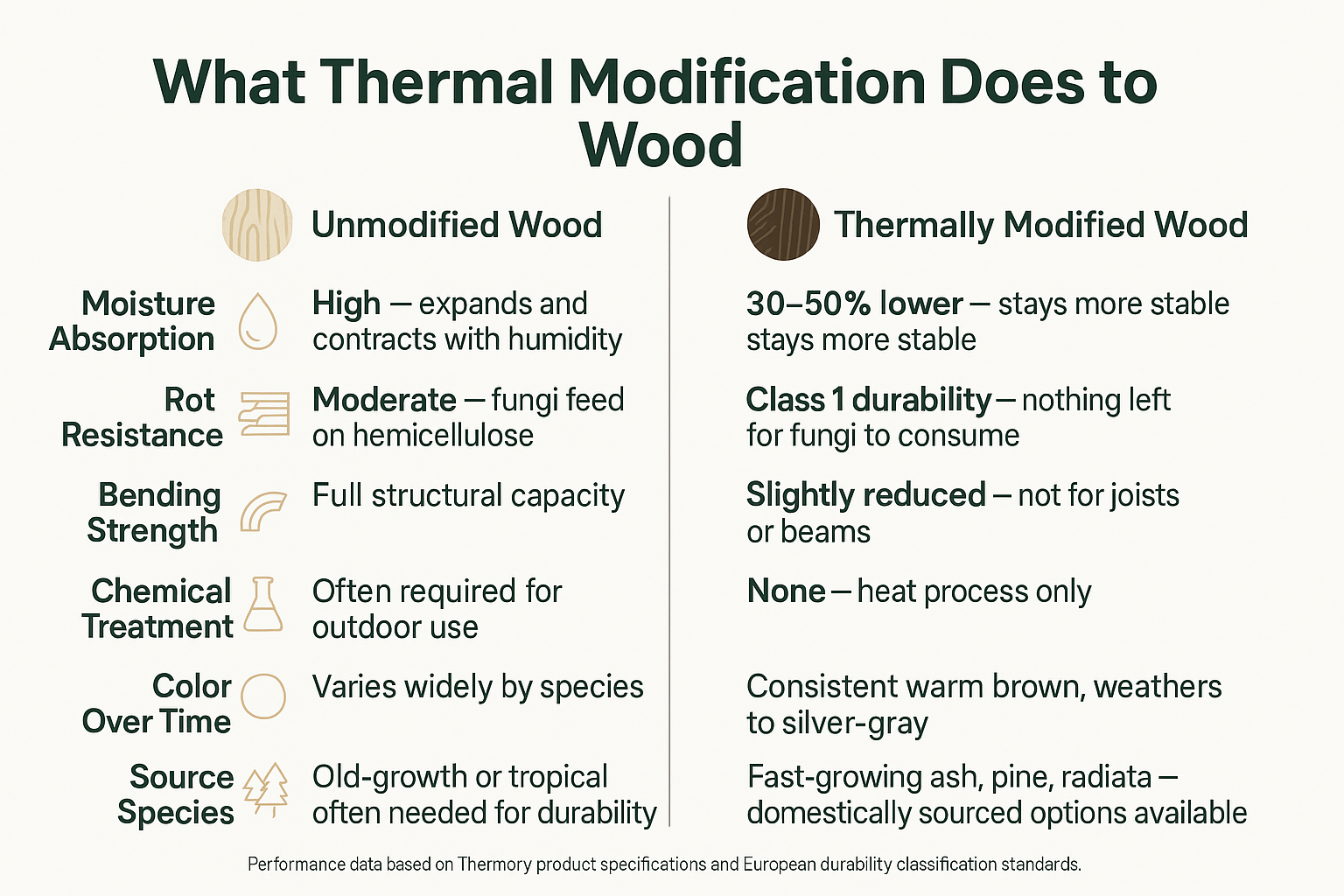
This infographic shows the key property changes that occur during thermal modification — what gets better, what changes, and what trade-offs to expect.
What Architects Are Actually Specifying It For
Thermally modified wood is showing up most often in three specific application categories on Bay Area projects.
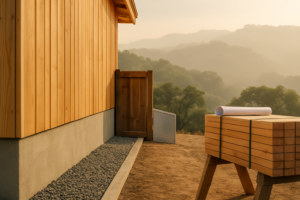
Exterior cladding and rainscreen assemblies. Architects working on contemporary homes in the hills are specifying thermally modified ash and pine as rainscreen cladding — the material sits off the sheathing with an air gap, and its dimensional stability means fewer gaps opening up at joints as the season changes. On a project near Grizzly Peak or in the Oakland hills, where you might have 15+ inches of rainfall between November and March, that stability matters.
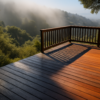
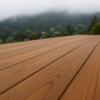
Decking on moisture-exposed exposures. North-facing decks, covered decks with limited sun drying, and decks built over crawl spaces with poor ventilation are where thermally modified products outperform standard softwoods most clearly. If you’re weighing wood options against composite for a Bay Area deck, thermally modified is the wood option that actually closes the durability gap.
Soffits and detail work on WUI-adjacent projects. In Oakland and Berkeley’s Wildland-Urban Interface zones, exterior material selection intersects with fire code requirements. Thermally modified wood is not a fire-rated product on its own — that’s a separate discussion — but some architects specify it in areas where fire-rated lumber requirements don’t directly apply and where they want durable, low-maintenance natural wood without chemical preservatives.
Pricing typically runs $6–$12 per linear foot for Thermory decking profiles, depending on profile width and species. That puts it above most composite entry-level products and comparable to mid-range Trex or TimberTech — but below ipe or teak. For the right project, that price lands in a reasonable place.
Thermally Modified Wood vs. Common Bay Area Decking Alternatives
Here’s a direct look at how thermally modified wood compares to the materials most commonly used on Bay Area decks. These are general field benchmarks, not manufacturer claims.
| Material | Rot/Moisture Resistance | Dimensional Stability | Typical Cost ($/LF) | Maintenance Need |
|---|---|---|---|---|
| Thermally Modified Wood (e.g. Thermory) | Class 1 — very high | High — low movement | $6–$12 | Low — periodic oil optional |
| Second-Growth Redwood | Moderate — depends on heartwood content | Moderate | $4–$8 | Moderate — seal regularly |
| Ipe (tropical hardwood) | Class 1 — very high | High but dense/heavy | $10–$18 | Low-moderate — annual oiling |
| Composite (Trex/TimberTech) | Excellent — impervious to moisture | High — minimal movement | $7–$14 | Very low — wash annually |
| MOSO Bamboo Decking | Good with proper treatment | Moderate | $6–$10 | Moderate — follow brand guidelines |
What to Watch Out For When Working With Thermally Modified Wood
Thermally modified wood has real advantages, but there are a few things contractors and specifiers should know before committing to it on a job.
It’s more brittle than standard lumber. Pre-drilling for fasteners is not optional — it’s required. The modification process reduces flexibility slightly, and driving screws without pilot holes will split boards, especially near ends. Use stainless steel screws — the same marine-grade hardware you’d spec for ipe or redwood.
Surface finishing is optional but changes the outcome. Unfinished thermally modified wood weathers to silver-gray naturally, similar to teak. Many architects spec it this way intentionally. But if a client wants to maintain the warm brown color, they’ll need to apply a penetrating oil — not a film-forming finish — every 1–2 years in a Bay Area climate. That’s a reasonable maintenance ask, but clients should understand it upfront.
Not all products are equivalent. The thermal modification industry doesn’t have a single universal standard. Brands like Thermory publish specific treatment temperatures, moisture content post-treatment, and durability class certifications. Verify these before specifying. A product marketed as “heat-treated” without clear certification data is not necessarily the same thing.
For a broader view of how different wood species and processing methods affect exterior performance, the difference between hardwood and softwood is useful context — especially when explaining material trade-offs to clients who are less familiar with wood biology.
Frequently Asked Questions About Thermally Modified Wood
Is thermally modified wood safe — does the heat process release any chemicals?
Yes, it’s safe. The process uses only heat and steam — no preservatives, no chemical additives. The wood off-gases some organic compounds during treatment, but the finished product is chemically inert and safe for residential use, including around children or food gardens. It’s actually one of the reasons specifiers choose it over pressure-treated alternatives for visible exterior applications.
Can I use thermally modified wood for deck framing, not just decking boards?
Generally, no. Thermal modification reduces bending strength, which matters in structural applications. For joists, beams, and posts, stick with code-compliant structural lumber or engineered wood products. Thermally modified wood is best used for non-structural decking boards, cladding, and trim where its stability and rot resistance are the valuable properties.
How does thermally modified wood hold up in Oakland’s WUI fire zones?
Thermally modified wood is not a fire-rated product and won’t satisfy requirements for ignition-resistant or fire-rated materials in California WUI zones on its own. If your project requires fire-rated assemblies — which is common in Oakland Hills and Berkeley Hills — those requirements apply regardless of the decking material. Check with your building department and cross-reference WUI fire zone lumber requirements before specifying any exterior wood on a hillside job.
What’s the lead time on Thermory products at Truitt & White?
Lead times vary by profile and quantity. For standard Thermory decking profiles, we generally have stock on hand or can get product within 1–2 weeks. Custom profiles or large volumes may take longer. Call the Hearst Avenue location at 510-841-0511 before scheduling — especially for jobs where material timing is critical to the framing sequence.
How does thermally modified wood compare to composite decking in terms of feel underfoot?
It feels like wood, because it is wood. Composite decking has a consistent, slightly hollow feel underfoot — most people can tell the difference. Thermally modified wood has the same weight and resonance of natural wood, which many clients prefer. The wood vs. composite decking comparison goes deeper on this if the client is still deciding between the two.
Does thermally modified wood need to acclimate before installation?
Yes — standard practice is to let it acclimate on-site for 5–7 days before installation, especially if it’s moving from a dry storage environment to a coastal or high-humidity exposure. Because the modification process reduces but does not eliminate moisture movement entirely, some acclimation still helps minimize board movement after installation.
Have Questions About Thermory or Other Exterior Wood Options?
We stock Thermory thermally modified wood at our Berkeley lumberyard on Hearst Avenue, and our staff can help you compare it against redwood, MOSO bamboo, and composite options based on the actual exposure conditions of your project. Reach the lumberyard at 510-841-0511, or stop in at 642 Hearst Avenue in Berkeley — no appointment needed. You can also browse available products at truittandwhite.com.