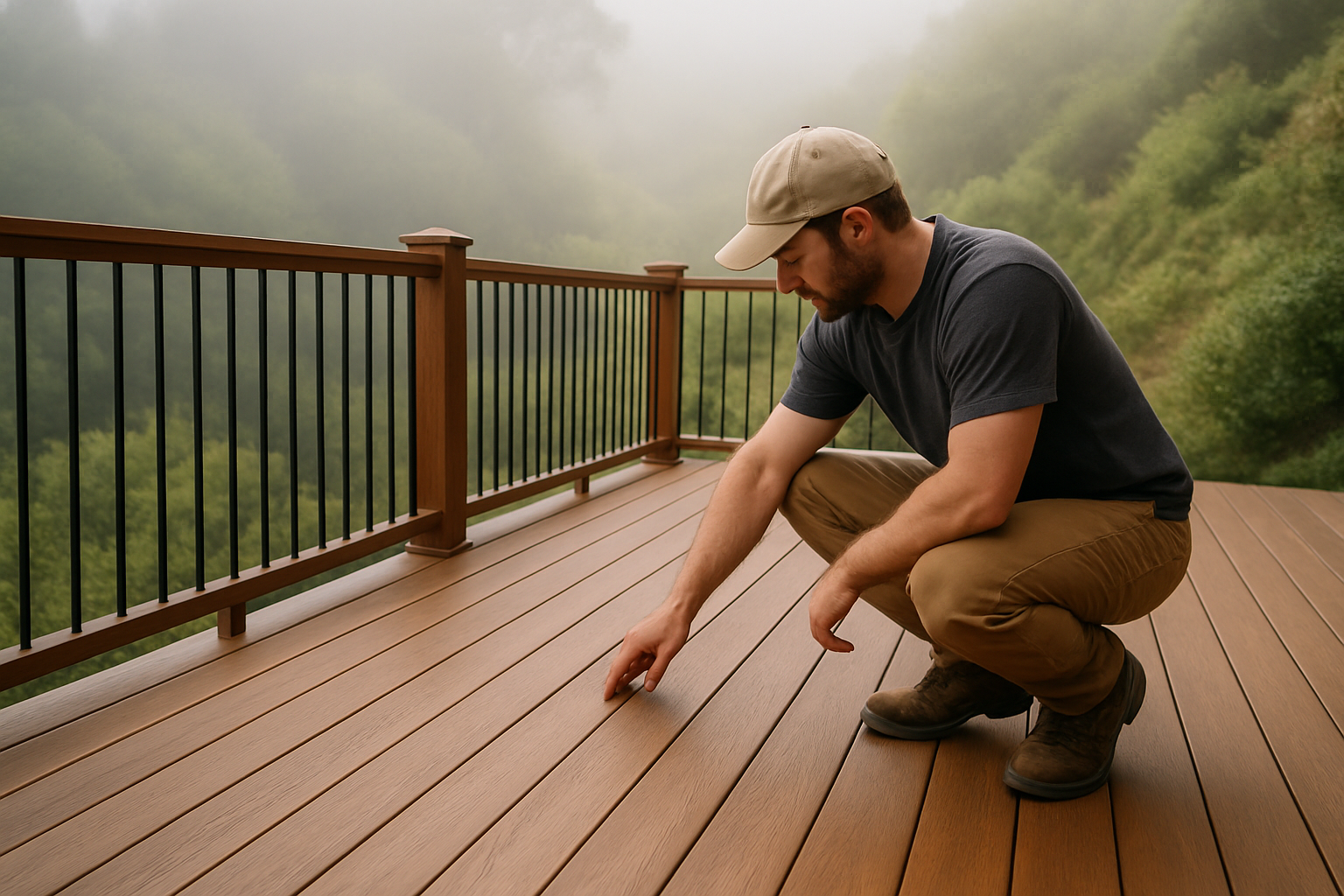
Direct Answer: Composite decking and thermally modified wood perform best in Bay Area conditions. Both resist moisture cycling, resist mold, and don’t require the annual maintenance that raw softwoods demand.
Bay Area weather looks mild from the outside. But if you’ve built a deck in the East Bay or watched one deteriorate over a few years, you know the truth: marine layer moisture, fog drip, and the cycle of wet winters into dry summers is genuinely hard on exterior wood. Materials that hold up fine in Sacramento or Los Angeles start checking, graying, and cupping here in ways that catch people off guard.
The question most contractors and homeowners get wrong isn’t which material looks best — it’s which material keeps performing after year three without turning into a maintenance burden. That’s a different question, and the answer depends a lot on which microclimate the deck sits in.
This guide focuses on the two material categories that consistently outperform the rest in real Bay Area conditions: composite decking and thermally modified wood. We’ll also cover where California redwood still makes sense and where it doesn’t — because it’s still a legitimate option when people use it correctly.
Why Bay Area Weather Is Harder on Decking Than It Looks
Climate Zone 3 runs from the coast through Berkeley, Oakland, and San Francisco — and it creates a specific stress pattern for exterior wood. You’re not dealing with extreme heat or sustained freezing. What you’re dealing with is repeated wet-dry cycling: months of fog and rain followed by a dry summer that pulls moisture back out of boards fast.
That cycling is what causes most decking failures here. Boards absorb moisture in winter and release it in summer. Wood that isn’t dimensionally stable — or that hasn’t been properly treated or modified — responds by checking, warping, and eventually cracking at the fastener points.
A few specific conditions worth accounting for on Bay Area projects:
- Fog drip zones — hillside decks in the Oakland and Berkeley hills often see more effective moisture than rainfall data suggests, because fog condenses directly onto horizontal surfaces
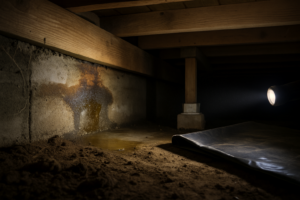
- Low-light undersides — decks with limited airflow underneath stay wet longer, accelerating rot in softwoods
- South-facing boards — full-sun decks in less foggy parts of the East Bay get much hotter than people expect, which matters for composite heat retention
- WUI zone exposure — hillside decks in Berkeley and Oakland fire zones also have to account for ember resistance, which limits some material choices
Understanding which of these conditions applies to your specific project is the first step toward picking the right material. The wrong call at the material selection stage usually costs $8,000–$18,000 to fix when a deck has to come out early.
Composite Decking: The Case For and the Honest Caveats
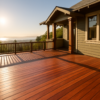
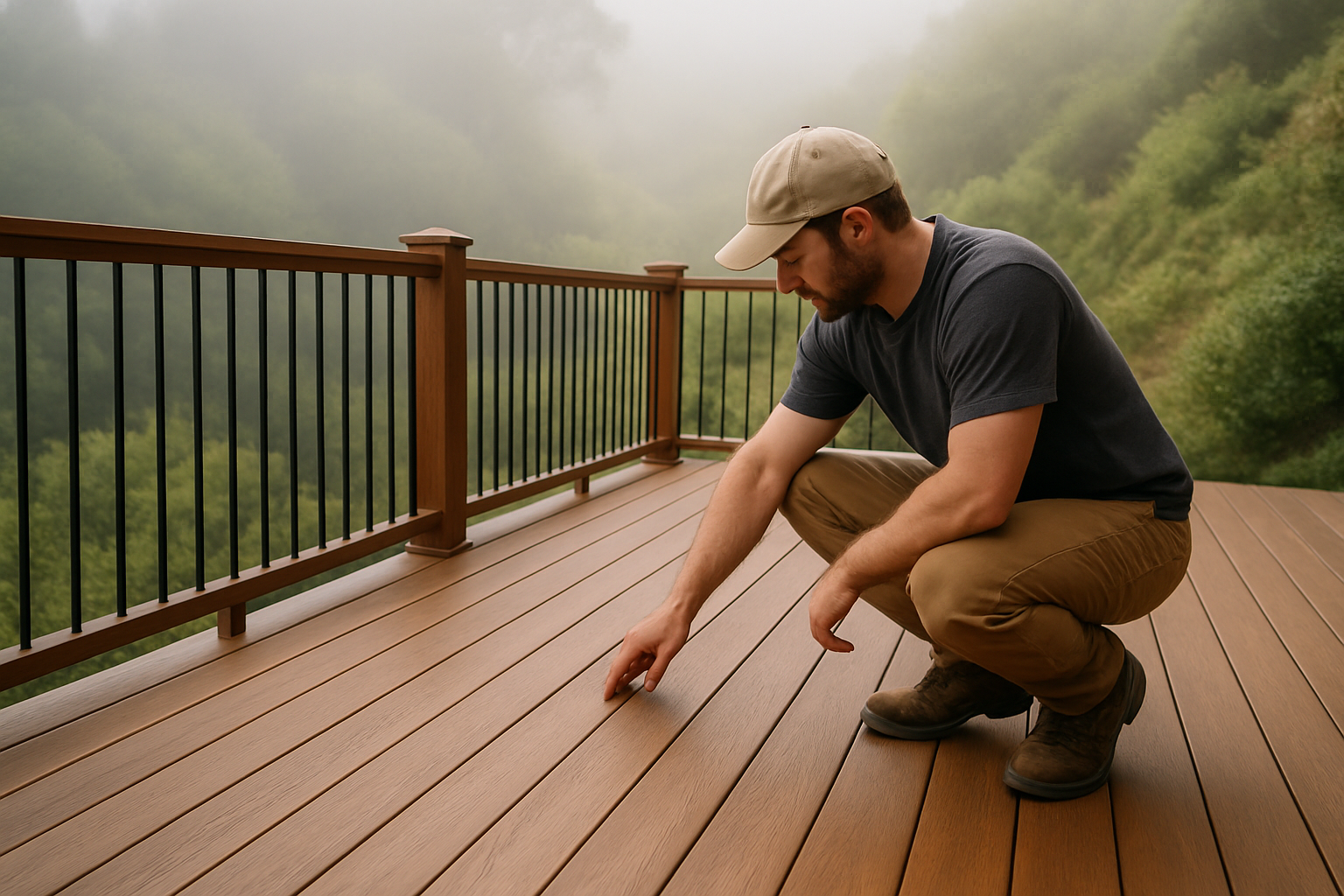
Capped composite decking — brands like TimberTech and Trex — has become the default recommendation for fog-zone and high-maintenance-concern projects in the Bay Area, and for good reason. The cap layer seals the board against moisture absorption, which eliminates the wet-dry cycling problem almost entirely.
In practice, a capped composite deck in Berkeley or Oakland requires almost no annual maintenance beyond cleaning. No sealing, no staining, no checking for cracks every spring. For homeowners who don’t want to think about their deck after it’s built, that’s a real value that shows up over a 25–30 year product lifespan.
But composite isn’t the right answer for every situation. A few honest limitations:
- Heat retention on south-facing decks — in sunnier East Bay locations (think Walnut Creek, parts of Oakland away from the coast), dark composite boards can get hot enough to be uncomfortable barefoot in summer. Lighter color profiles and ventilated footwear help, but it’s worth discussing with the homeowner.
- Cost — capped composite runs $8–$14 per linear foot for materials depending on the profile and brand, which is meaningfully higher than dimensional redwood
- Repair appearance — if a board gets damaged, matching color exactly years later can be tricky, especially if a product line has been updated
For a full side-by-side look at how composite stacks up against wood options, the wood vs composite decking guide covers the performance and cost differences in more detail.
For TimberTech specifically, we stock multiple product lines at the Berkeley lumberyard and can help contractors spec the right profile for fog-zone versus sun-exposed applications.
Thermally Modified Wood: The Option Most Contractors Don’t Know Well Enough
Thermally modified wood — Thermory is the brand we carry — doesn’t get nearly as much attention as it deserves on Bay Area projects. The modification process heats wood to temperatures above 400°F in a controlled, oxygen-free environment. That process drives out the sugars and moisture that fungi feed on, and it dramatically improves the wood’s dimensional stability.
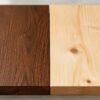
The result is a board that performs closer to a tropical hardwood in moisture resistance, but without the sourcing complications or the extreme weight. Thermory ash and pine profiles are both lighter and easier to work with on a job site than ipe or other dense exotics. And the material takes on a warm, dark tone that looks genuinely good in the Berkeley and Oakland hillside aesthetic.
For Bay Area projects, the practical advantages are real:
- Stable across wet-dry cycles — the modification process reduces equilibrium moisture content, so boards don’t swell and shrink the way untreated softwoods do
- Rot resistance without chemical treatment — relevant for decks near gardens or in fog drip zones where chemical treatments raise concerns
- Workable with standard tools — unlike ipe, which is hard on blades and bits, thermally modified wood cuts and fastens without requiring carbide-tipped everything
Pricing sits between composite and high-end tropical hardwoods — typically $6–$11 per linear foot for materials, depending on species and profile. It’s not an inexpensive option, but it’s often the right one for contractors who want natural wood performance without the maintenance commitment of redwood.
If you’re comparing thermally modified wood against tropical hardwood options, the tropical hardwood decking guide is worth a read for the full performance context.
Bay Area Decking Materials at a Glance
This comparison covers the four most common decking materials used on Bay Area projects — how they handle local conditions, rough cost ranges, and maintenance expectations.
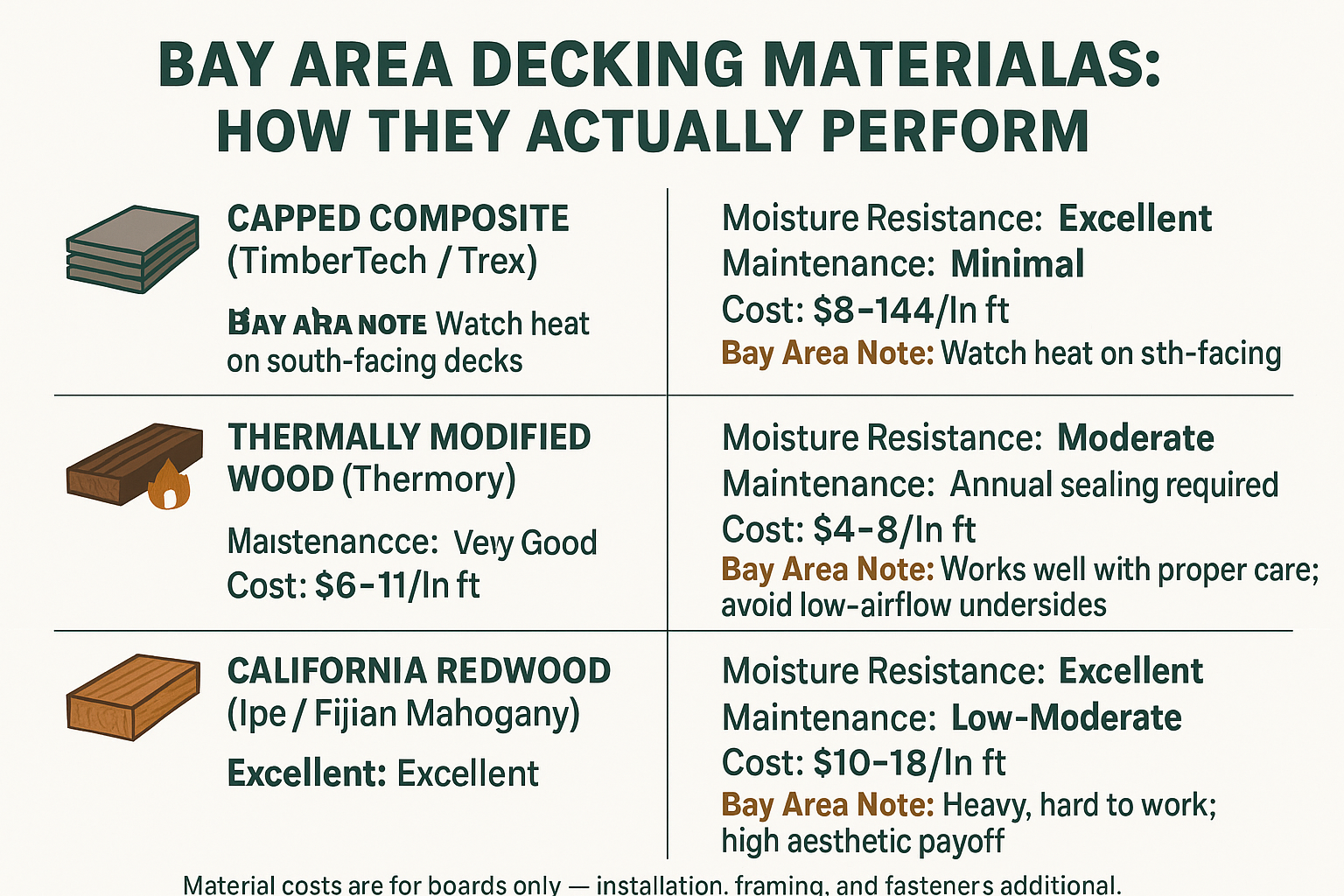
Decking Material Comparison for Bay Area Conditions
A quick reference for the materials most commonly specified on residential and light commercial decks in Berkeley, Oakland, and the broader East Bay.
| Material | Moisture Performance | Maintenance Level | Approx. Material Cost | Best Use Case |
|---|---|---|---|---|
| Capped Composite (TimberTech / Trex) | Excellent | Minimal — clean as needed | $8–$14/ln ft | Fog zones, rental properties, low-maintenance priority |
| Thermally Modified Wood (Thermory) | Very Good | Low — occasional oiling optional | $6–$11/ln ft | Hillside decks, natural wood aesthetic, fog drip exposure |
| California Redwood | Moderate | Annual sealing required | $4–$8/ln ft | Budget-conscious builds with committed owners |
| Tropical Hardwood (Ipe / Fijian Mahogany) | Excellent | Periodic oiling | $10–$18/ln ft | High-end projects, dense wood aesthetic |
| MOSO Bamboo Decking | Good | Low-Moderate | $5–$9/ln ft | Sustainability-focused projects, moderate-exposure sites |
Where California Redwood Still Makes Sense
Redwood hasn’t fallen out of favor entirely — it just requires honest expectations. Clear vertical grain redwood performs significantly better than common grades in moisture cycling conditions, because the tighter grain absorbs and releases water more evenly. The problem most people run into is buying lower grades and expecting premium results.
For projects where the homeowner genuinely commits to annual sealing and maintenance, redwood is still a reasonable choice — and the material cost of $4–$8 per linear foot is lower than most alternatives. But ‘I’ll seal it every year’ is a commitment that often lasts two years and then stops. When sealing stops and the wood dries out in a Berkeley summer after a wet winter, you start to see checking and surface cracking within a few seasons.
Redwood works best on decks with good airflow underneath, reasonable drainage, and an owner who understands what they’re signing up for. For a detailed look at how the material performs compared to composite over a longer timeline, the redwood vs composite decking guide breaks down the full cost-of-ownership picture.
One more relevant factor: if the project sits in a WUI fire zone in the Oakland or Berkeley hills, redwood is not a code-compliant deck surface option without additional fire treatment. That’s a conversation to have before specifying materials, not after the permit review.
Frequently Asked Questions About Decking in Bay Area Weather
Does composite decking get too hot to walk on in the Bay Area?
In fog belt locations — most of Berkeley, the Oakland hills, and coastal San Francisco — heat buildup on composite boards is rarely a serious problem. The marine layer moderates surface temperatures most of the year. Where it does become an issue is on south-facing, sun-exposed decks further inland, like parts of Oakland away from the hills or into the warmer East Bay. In those spots, darker composite profiles can reach uncomfortable temperatures. Lighter color profiles and ventilated deck shoes solve most of it, but it’s worth the conversation during product selection.
How long does composite decking actually last in Bay Area conditions?
Quality capped composite from brands like TimberTech typically carries a 25–30 year warranty on fade and stain. In Bay Area conditions, where the climate is moderate and UV exposure is lower than inland California, those boards routinely hit their warranty life without significant surface degradation. The substructure — joists, posts, and beams — is a separate question. Pressure-treated framing is standard, but composite decking can outlast an inadequately specified frame by years.
Is redwood still worth using, or is it outdated?
Redwood is not outdated — it’s just been misapplied on a lot of projects where low maintenance was the real priority. Clear heart redwood with consistent annual sealing still builds a beautiful, durable deck. The honest challenge is that most homeowners stop sealing after a couple of years. If your client has a track record of maintaining exterior wood, redwood is a legitimate choice. If not, steer them toward composite or thermally modified wood and skip the callbacks.
What decking material works best in the Oakland hills WUI zones?
This is an area where material selection intersects with fire code. In WUI fire zones, decking materials are subject to Chapter 7A requirements under the California Building Code. Composite decking products with Class A fire ratings are generally the most straightforward path to compliance. Not all composite products carry that rating, so verify before specifying. Untreated wood decking — including redwood — typically does not meet Chapter 7A requirements for deck surfaces in designated WUI zones.
What’s the difference between MOSO bamboo and the other natural options?
MOSO bamboo decking is a strand-woven bamboo product that performs well in moderate-exposure Bay Area conditions. It’s dimensionally stable and handles moisture better than most untreated softwoods. It’s a reasonable option for sustainability-focused projects. Where it’s less ideal is in high fog drip zones or on decks with limited drainage — extended standing moisture can affect the surface over time. It’s worth considering as a mid-range natural option when composite doesn’t fit the aesthetic and tropical hardwood is over budget.
Should I frame the deck differently depending on which decking material I use?
Yes. Composite decking generally requires closer joist spacing — 12 inches on center is common for diagonal installations — than dimensional lumber, which is typically fine at 16 inches. Thermally modified wood and tropical hardwoods may also have specific fastener and spacing requirements from the manufacturer. Getting the framing spec from the product documentation before you pull the permit saves expensive corrections later. If you’re early in the planning stage, the deck planning guide covers framing considerations in more detail.
Ready to Spec the Right Decking for Your Next Project?
If you’re building or replacing a deck anywhere in the East Bay — Berkeley, Oakland, Albany, or into Marin — the material decision is worth talking through before you’re on the job site. Truitt & White carries composite, thermally modified wood, redwood, and bamboo decking at the Berkeley lumberyard on Hearst Avenue, and the staff there can help you match the right product to the specific conditions of your project. Stop by, or call the lumberyard at 510-841-0511 — or browse what’s available at truittandwhite.com.