Direct Answer: Seal a redwood deck when the boards are dry and dry weather is ahead. In the East Bay that usually means late spring through mid-October, before overnight dew and the first storms.
Every August, the same question comes across the counter at the Berkeley yard. Is there still time to seal the deck this year, or should it wait until spring?
The honest answer is that the calendar matters less than the weather in front of you. What decides the job is whether the boards can dry out and stay dry through a full application and cure cycle.
This guide covers three things that actually change the outcome on an East Bay deck: the real local timing window, the microclimate split between the flats and the hills, and what a finish can and cannot do for you once the rains start.
When to Seal a Redwood Deck on an East Bay Calendar
Most local crews treat mid-October as the practical cutoff for exterior finish work. That lines up with Oakland’s wet-weather grading moratorium, which runs October 15 through April 15, and it is not a coincidence. It is the point where the ground stops drying out between storms.
But the squeeze starts earlier than that. By late September you are losing daylight on both ends, and overnight dew is landing on horizontal surfaces well before the first real storm shows up.
A workable window looks like this:
- Late spring through early fall is the reliable stretch for most Berkeley, Oakland, and Emeryville decks
- Two to three dry days ahead of you, not one, so the finish has time to cure before dew or rain hits
- Daytime temperatures in the 50s to 80s, following the label on whatever product you are using
- No fog rolling back in overnight during the cure window
If you are staring down an incoming system and thinking you can beat it, that is usually the moment to wait. A finish that gets rained on before it cures will look blotchy, and you will be sanding instead of maintaining. Waiting until spring costs you one winter of gray. Rushing it costs you a redo.
The Microclimate Split Generic Advice Ignores
National deck-finishing advice assumes a yard is a yard. Around here, two decks four miles apart behave nothing alike.
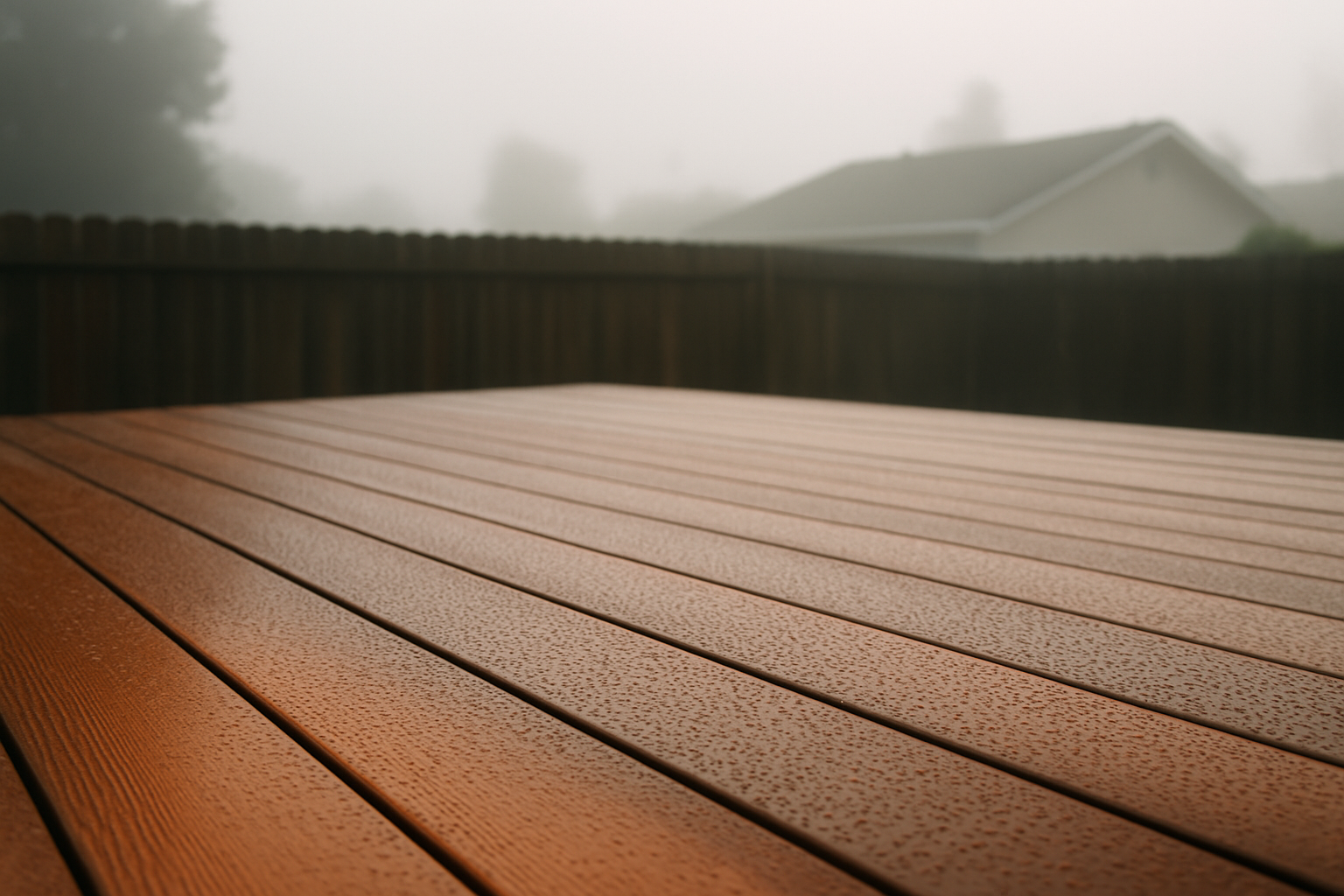
A deck in West Berkeley or out on the Emeryville flats sits under the marine layer well into the morning. Boards that look dry at 8 a.m. can still be carrying surface moisture, and finish applied on top of that will not soak in the way it should.
A deck up in the Berkeley or Oakland hills above the fog is a different problem. It can be dry by mid-morning and baking by early afternoon, and a hot board flashes off the solvent before the finish penetrates.
What this means in practice:
- Work the sunny side of the day, not the first hour of it
- Never finish a surface that is hot to the touch, especially on a south or west exposure
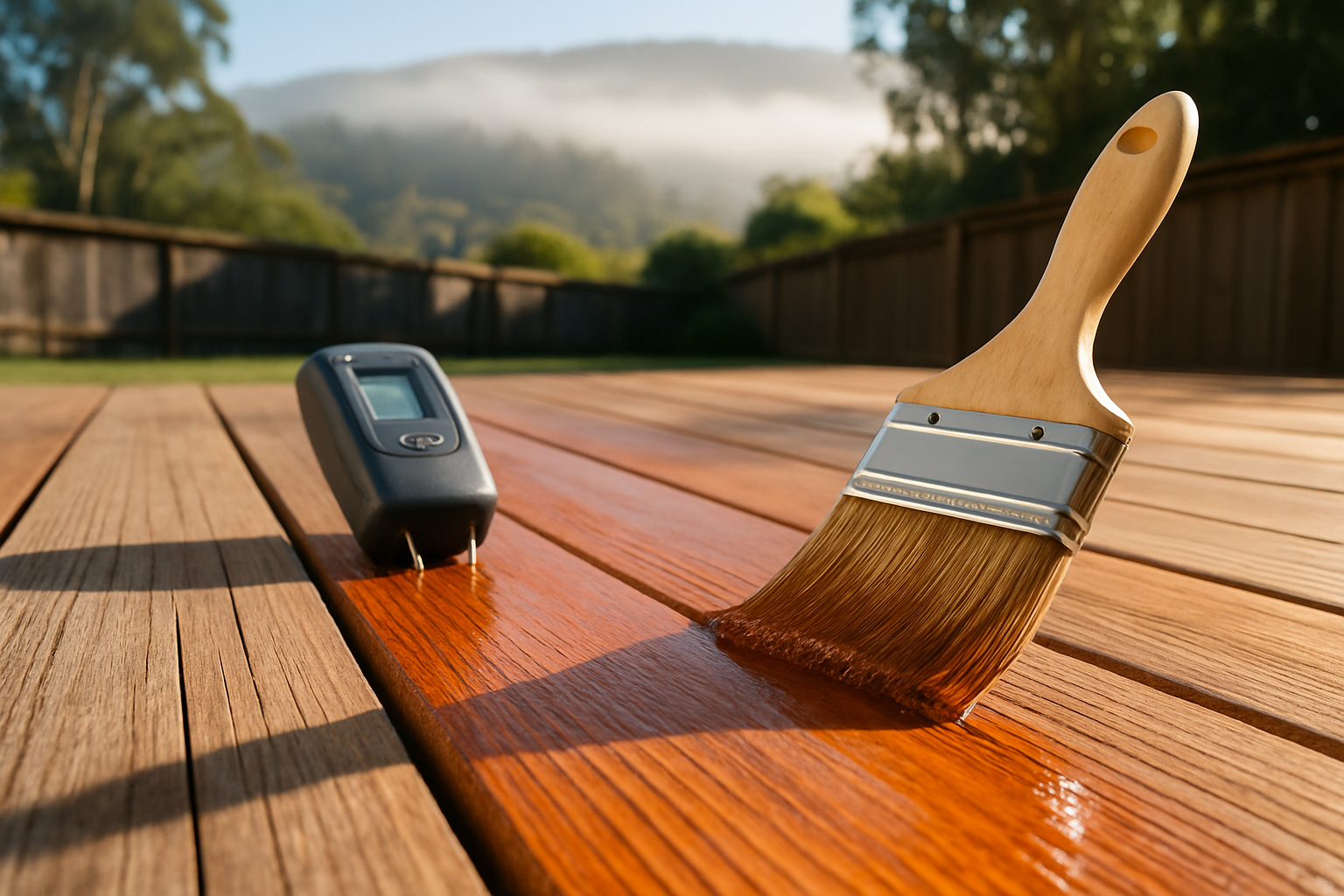
- Check with a moisture meter rather than trusting your eyes; readings in the low teens are the honest test after a foggy night
- North-facing and tree-shaded sections may need an extra dry day before the rest of the deck does
The sun exposure that drives your drying time also drives how fast the finish wears off. That is the same reason which deck wood holds up in the Bay Area sun is worth thinking about before you ever pick a stain.
Drying Windows by Deck Location
These are field patterns, not guarantees. Verify with a moisture meter before you open a can.
| Deck Location | Typical Usable Window on a Clear Day | What to Watch |
|---|---|---|
| West Berkeley, Emeryville, Albany flats | Often not until late morning, after the marine layer lifts | Boards can read damp at 8 a.m. even in July |
| Berkeley and Oakland hills above the fog | Dry by mid-morning, often too hot by early afternoon | Hot boards flash off finish before it soaks in |
| North-facing or tree-shaded decks | May not fully dry in a single day during fog season | Debris packed in joints holds moisture underneath |
| Any deck after rain or heavy dew | Plan on two to three dry days first | Moisture meter in the low teens is the check |
New Redwood vs Weathered Redwood: Two Different Jobs
Buyers conflate these constantly, and they are not the same project.
Freshly milled redwood can carry a slick, burnished surface off the planer. That mill glaze repels finish, so a product that should soak in instead sits on top and wears off in a season. Kiln-dried stock also behaves differently from boards that have been sitting outside in humid air, so a moisture reading matters even on brand new material. If you are still selecting boards, redwood decking grades change how much heartwood you are getting and how the deck ages.
On a deck that is already built, sequence matters more than which product you buy:
- Clear all debris, including leaves and needles packed down into the gaps between boards
- Clean the surface, then let it dry completely, which can take longer than the label suggests here
- Check moisture before you start, not after
- Finish, working with the sun rather than against it
Here is the detail most homeowners skip: seal the cut ends. End grain drinks water many times faster than the face of a board, and that is where checking and rot usually start. Every field cut, every board end at the stair stringers, every notch around a post. If you are cutting on site, hit the ends before the piece goes down.
The Timing Check, Step by Step
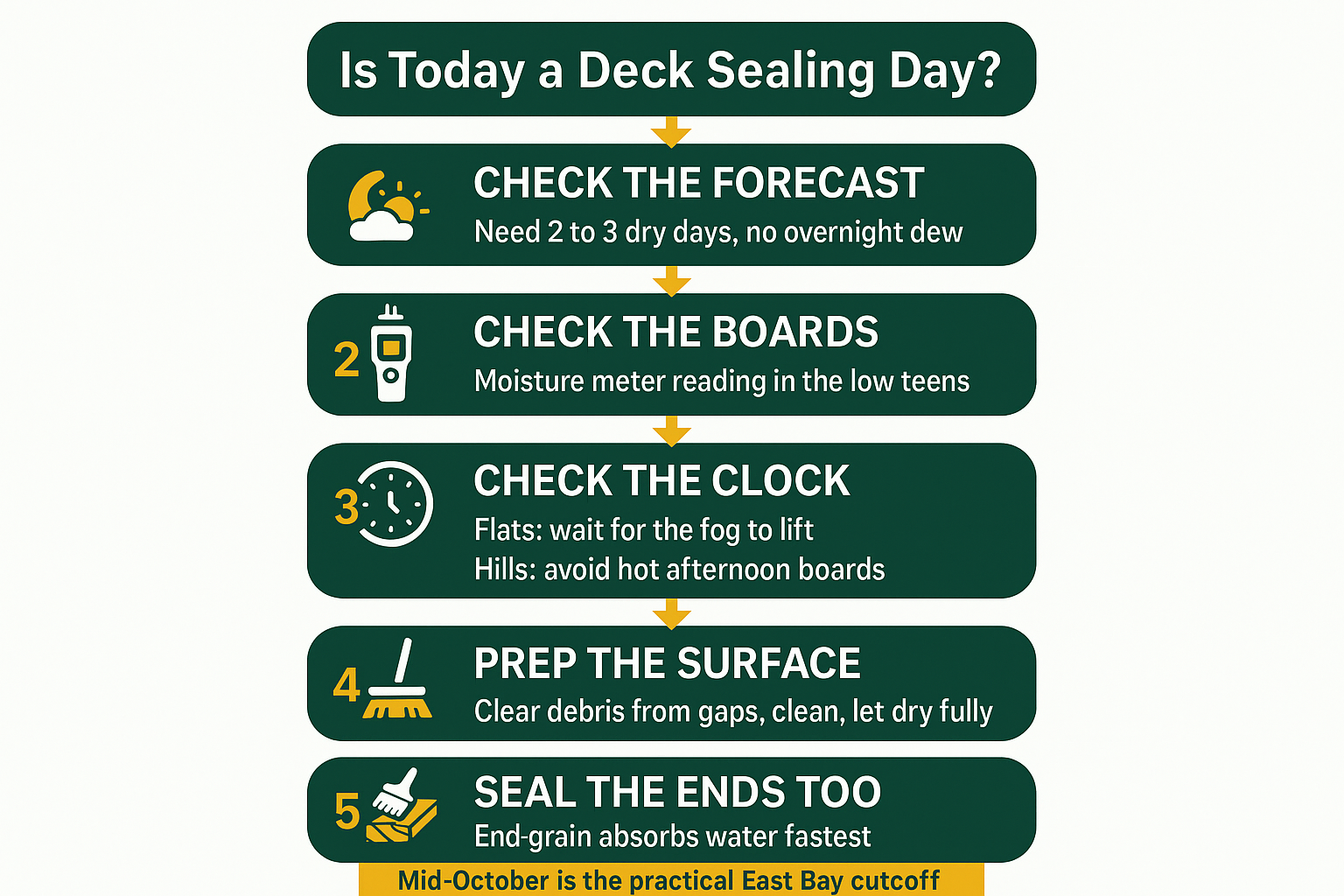
A short decision sequence for deciding whether today is actually a sealing day.
Why Film-Forming Coatings Are a Bad Bet on a Deck
Finishes split into two camps, and the difference decides how your next five years go.
Penetrating finishes soak into the wood. Water repellents, water-repellent preservatives, and semi-transparent stains all fall here. They wear thin rather than failing in sheets, which means the next maintenance coat is a cleaning and a recoat.
Film-forming coatings sit on top. Deck paints and clear film finishes look sharp for one season, then crack under foot traffic, trap moisture underneath, and peel. On a horizontal surface in a damp climate, that is a sanding project waiting for you.
The USDA Forest Products Laboratory makes the same recommendation: penetrating water repellents and semi-transparent stains for wood decks, not film-forming coatings.
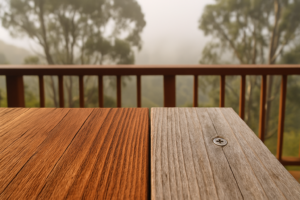
Pigment is the other lever. A clear water repellent lets redwood gray out on schedule, while a semi-transparent stain adds pigment that blocks UV and slows the color change. More pigment generally means more UV protection and a longer interval between coats.
Set expectations honestly on that interval:
- Walking surfaces wear first and need attention soonest
- Railings and vertical faces hold a finish considerably longer
- Shaded edges and stair treads can go their own way entirely
Spot-recoating the traffic lanes is normal. It is not a sign you bought the wrong product.
What Sealing Will Not Do for You This Winter
This is where the disappointment usually comes from, so it is worth being blunt.
A finish will not fix water that is sitting on the deck. If the gaps between boards are packed with debris from a big oak or coast redwood overhead, or the deck drains toward the house instead of away from it, no can of stain solves that. Sweeping the joints out before the rains does more for the deck than the finish does.
It also does nothing for the structure below. Joists, ledger connections, flashing, and post bases are the parts that actually fail, and none of them are protected by what you brush on the walking surface. A deck with no airflow underneath will stay damp regardless. That is one of the things California homeowners get wrong when choosing decking in the first place.
As for the coming winter: NOAA expects El Nino to strengthen into the 2026-27 season, but Northern California rainfall has never tracked ENSO closely the way Southern California does. So the defensible move is preparing for a few hard storm sequences rather than betting on a seasonal total. The same logic applies to where your roof water goes, which is often the real culprit behind a deck that never dries out.
Frequently Asked Questions About Sealing a Redwood Deck
How long should I wait before sealing a brand new redwood deck?
It depends on the boards, not a set number of weeks. Kiln-dried redwood can often be finished soon after installation once moisture readings check out. Air-dried or damp stock needs time. The bigger issue on new material is mill glaze, that slick planed surface that repels finish, so a light cleaning or scuff first helps the product actually soak in.
Can I seal a deck in November if we get a dry stretch?
Sometimes, but the odds are against you. Even in a dry week, overnight dew lands on horizontal surfaces and daytime temperatures may fall below what the product needs to cure. If a meter reads in the low teens and you have several genuinely dry days ahead, it can work. Otherwise, waiting for spring is the safer call.
How often does a redwood deck need to be resealed around here?
Expect the walking surface to need attention before the railings do, sometimes by a wide margin. Sun exposure, foot traffic, and how much pigment is in the product all move that number. A deck in full afternoon sun in the Oakland hills is on a very different schedule than a shaded deck in West Berkeley.
Do I need to strip the old finish before recoating?
If you used a penetrating water repellent or semi-transparent stain, usually no. Clean it, let it dry fully, and recoat. If someone put a film-forming coating on it and that film is cracking or peeling, then yes, you are looking at stripping or sanding first.
Does sealing help with a deck that already feels slippery in winter?
Not directly. Slippery decks in the East Bay are usually algae and mildew growing on a surface that stays damp, which points back to drainage, debris in the joints, and airflow underneath. Clean the growth off first, fix the moisture source, then finish.
Sorting Out a Stain Before the Season Turns
What customers tell us they value most is getting a straight answer from someone who has seen the same project a hundred times, whether that is picking a stain, matching fasteners, or sorting through boards. As one reviewer put it, “Doug was super helpful and knowledgeable, gave great suggestions to a problem I was facing with my project.” The stain and paint department and the lumber yard sit at the same Berkeley address on Hearst Avenue, so you can look at boards and finishes in one stop. Questions are welcome without an appointment, or you can reach the yard at 510-841-0511.