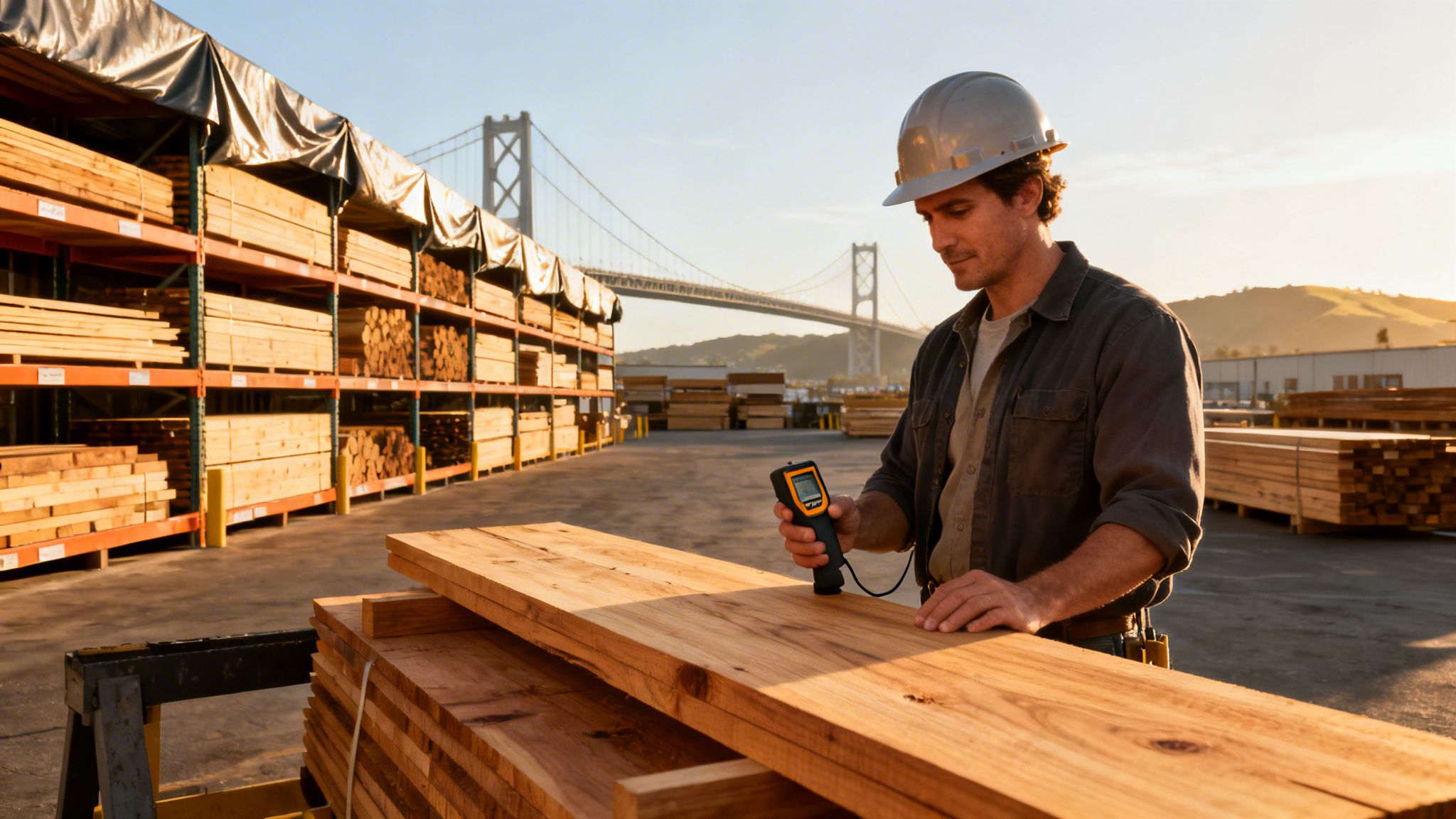
When you search "where can i find quality lumber in the east bay," you are asking a deeper question. You want to know where to find straight, usable lumber that won’t slow down your project or waste your budget. The answer isn’t just one store, but a certain type of supplier: a dedicated local lumberyard that focuses on quality.
Why Finding Quality Lumber Is More Than a Grade Stamp
For builders in Berkeley, Oakland, and across the East Bay, sourcing lumber can be frustrating. You know the feeling of unwrapping a delivery only to find warped studs, excessive knots, or boards that are still wet. The real problem isn't just finding wood—it's finding reliable material that keeps your project moving.
A common misstep is assuming all lumber with the same grade stamp is equal. While a stamp indicates structural strength, it doesn't tell you if the board is straight, dry, or stored properly. If you get twisted boards, your crew wastes time sorting, returning, or replacing them. That lost time often costs more than any initial price difference.
The Hidden Costs of Low-Quality Materials
Job profitability is directly linked to material quality. Some contractors report extremely high "cull rates," with one case showing 60% of delivered boards were unusable. When lumber is expensive, waste becomes even more costly. Quality isn’t optional—it directly impacts your bottom line.
A board's journey from the mill to your job site is critical.
- Improper Storage: Lumber left uncovered absorbs moisture, which leads to bowing and twisting.
- Poor Inventory Rotation: Old, brittle stock is more likely to split during installation.
- Lack of Culling: When a supplier doesn't sort inventory, they pass the problem to you.
To learn more about why lumber from big-box stores is often lower quality, it's important to understand how dedicated yards operate differently. For finish work, understanding the right hardwood for longevity and style is also key.
How to Spot a High-Value Lumberyard in the East Bay
Searching for quality lumber is really about finding a partner who understands that your time is money. A low price can hide the true costs of culling twisted boards and losing productivity.
Learning to identify a high-value lumberyard is a crucial skill. A professional supplier protects their inventory because they know it is critical to your project's success. You can spot a solid partner before you even place an order.
Beyond the Grade Stamp: A Practical Checklist for Your Lumberyard
Your next visit to a lumberyard in Berkeley or Oakland should be a quick inspection. A visual check can tell you almost everything about the quality you can expect. This is a smart sourcing decision that protects your project.
Use this checklist to evaluate any potential supplier:
- Is the lumber covered? Quality yards store lumber under cover to protect it from rain and sun. This prevents moisture absorption, which causes warping and cupping.
- Is it stored off the ground? Lumber should be stacked on blocks, never directly on the ground. This keeps the bottom layers dry and stable.
- How organized is the yard? A clean, well-organized yard shows respect for the inventory. It suggests proper stock rotation, so you aren’t getting old, brittle material.
This flowchart shows how your lumber decision impacts your project.

Chasing the lowest price often leads to wasted time, while prioritizing quality protects your profitability.
Questions to Ask Your Lumber Supplier
Asking direct questions can reveal a supplier's commitment to quality. Their answers show their standards and what kind of partner they will be. A fair return policy shows they stand behind their product.
Ask these key questions to get a read on a potential partner:
- What are your sourcing standards? A good supplier has strong relationships with reputable mills. They can speak confidently about their sources.
- How do you handle unusable material? Ask about their return or credit policy for warped or split boards.
- Can your staff pre-select material before delivery? The best lumberyards have experienced staff who can pull straight boards for your order. This service saves valuable time on-site.
For more tips, read our guide on how to find a reliable lumber supplier near you.
Navigating Lumber Supply and Pricing in the Bay Area
For any builder in the East Bay, the price of lumber is a critical factor. The cost and availability of wood for your Berkeley or Oakland project are tied to large market forces.
Keeping an eye on these trends helps manage risk. Market forecasters predict a significant drop in softwood lumber capacity in 2026. This will likely tighten supply and drive up prices, especially with ongoing duties on Canadian imports.
How a Local Supplier Buffers Market Volatility
This is where a dedicated local lumberyard near Oakland proves its value. While you can't control global supply chains, you can choose a supplier who helps shield you from volatility. A partner with deep inventory and strong mill relationships is better equipped to keep pricing stable and stock reliable.
A trusted lumberyard doesn’t just sell wood; they sell stability. Their ability to forecast needs and secure inventory helps protect your projects from sudden price spikes and material shortages.
This stability is vital as you plan projects. A quality supplier does more than take your order. Their team can recommend smart alternatives, like engineered wood products, if a material becomes scarce or its price increases. You can read more about why local yards may have different pricing structures to understand their value.
The Hidden Value of a Lumberyard Partnership
Your lumber supplier should be more than just a place to buy wood. When you find the right lumberyard, you are forming a partnership. This is where real value lies—in expertise that saves you time, headaches, and money.

A knowledgeable yard crew can help you find the right framing for an ADU or decking that can handle the Bay Area climate. This support solves real-world problems that can delay a project.
Beyond the Boards: Expertise You Can Count On
Finding quality lumber in the East Bay is really about finding people who know wood. The staff at a dedicated lumberyard understand the differences between species and grades. They can recommend a cost-effective alternative or an engineered product for a tricky design.
A true lumberyard partner is a consultant for your project. Their advice means fewer mistakes and less waste on site.
For builders and remodelers in Berkeley and Oakland, having an expert to call is a resource that protects your schedule and bottom line.
The Power of Reliable Delivery
In construction, timing is everything. A single delayed delivery can stop a job site, costing you money and time. A key benefit of a lumberyard partnership is a reliable delivery service in the Bay Area.
This service includes:
- Order Accuracy: Getting exactly what you ordered the first time.
- Careful Handling: Materials arrive straight and undamaged.
- Smart Placement: Materials are dropped right where your crew needs them.
This dependable support prevents costly downtime and helps your projects run smoothly.
Sourcing Sustainable and Green Building Materials

In the East Bay, "green" building is a core principle. For sustainable projects, the search for quality lumber includes environmental responsibility. It’s about asking where the wood came from.
This is why certifications like the Forest Stewardship Council (FSC) are important. FSC-certified lumber comes from forests managed to protect biodiversity and support local workers. A quality lumberyard in Berkeley should guide you to products that meet green building standards like LEED.
The Rise of Reclaimed and Eco-Friendly Options
Reclaimed lumber offers character and sustainability. Old-growth timber from demolished buildings keeps valuable material out of landfills. The market for reclaimed lumber is growing, with projections showing a significant increase by 2030, according to industry reports. You can explore projections for the lumber market and its shift toward sustainability for more data.
Making smart green choices means understanding details, like choosing between cedar and pressure-treated wood. A knowledgeable supplier is your most valuable partner in navigating these options.
Choosing a supplier that understands green building is essential. They connect you to materials that perform well and align with Bay Area environmental values.
For more on sustainable choices, see our expert guide to eco-friendly lumber in the East Bay.
Your Partner for Quality Building Materials in Berkeley
Finding the right lumber isn’t about driving all over the East Bay—it’s about finding the right partner. An ally who stakes their reputation on quality means fewer headaches and less wasted material.
For nearly 80 years, Truitt & White has been the trusted source for Bay Area builders. Our business is built on providing high-grade stock and having an expert team that understands your needs. Our focus is on usable lumber that saves time on-site.
Expert Guidance for Bay Area Projects
Our team is here to help you protect your bottom line. We can help you navigate the upcoming 2026 Title 24 requirements or recommend the best materials for our unique Climate Zone 3. That is why contractors in Berkeley, Oakland, and beyond see us as more than a supplier.
A partnership with a knowledgeable supplier is an investment in your project's efficiency. It turns sourcing into a strategic advantage.
We invite you to experience this difference. When you stop searching for lumber and start building a relationship with a trusted partner, everything changes. Visit our professional builders supply store in Berkeley to get the dependable materials and expert guidance your project deserves.
Frequently Asked Questions About East Bay Building Materials & Title 24
Building in the East Bay comes with unique codes and challenges. Here are answers to common questions we get from builders, contractors, and architects in Berkeley, Oakland, and San Francisco.
How will the 2026 California Energy Code affect my projects?
The 2026 California Energy Code, effective January 1, 2026, increases energy efficiency requirements. While it doesn't specify lumber types, it demands a tighter building envelope. Warped, low-quality lumber creates air gaps that undermine insulation, making it harder to meet these strict new standards.
What are the new Title 24 window requirements for the Bay Area?
For projects in Climate Zone 3, the 2026 Title 24 energy code requires a much lower window U-Factor ≤ 0.27. This rule applies to both new construction and major remodels. Working with a knowledgeable Bay Area windows and doors supplier is critical to ensure compliance and avoid costly inspection failures.
Are there specific lumber requirements for Climate Zone 3?
No, the code for Climate Zone 3 does not mandate a specific lumber grade. However, the code’s strict energy performance and air sealing targets indirectly demand high-quality, stable lumber. A warped frame can lead to air leaks that compromise the performance of your high-efficiency windows and insulation.
How do I meet Title 24 compliance with large window designs?
The prescriptive path for the 2026 code often limits glazing (window area) to 20% of the floor area. To use more glass, you must use the performance path, which requires advanced energy modeling. An expert window supplier can help you select products with the right U-Factor and SHGC to meet these complex calculations.
Where is the best place to source all Bay Area building materials?
Consolidating your orders with a single, full-service supplier saves significant time and streamlines logistics. A professional lumberyard that also offers a dedicated window and door showroom ensures you get compatible, high-quality materials from one trusted partner. This is a key strategy for keeping projects on schedule in the competitive Bay Area.
Visit our Berkeley showroom for expert guidance.