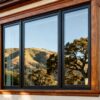
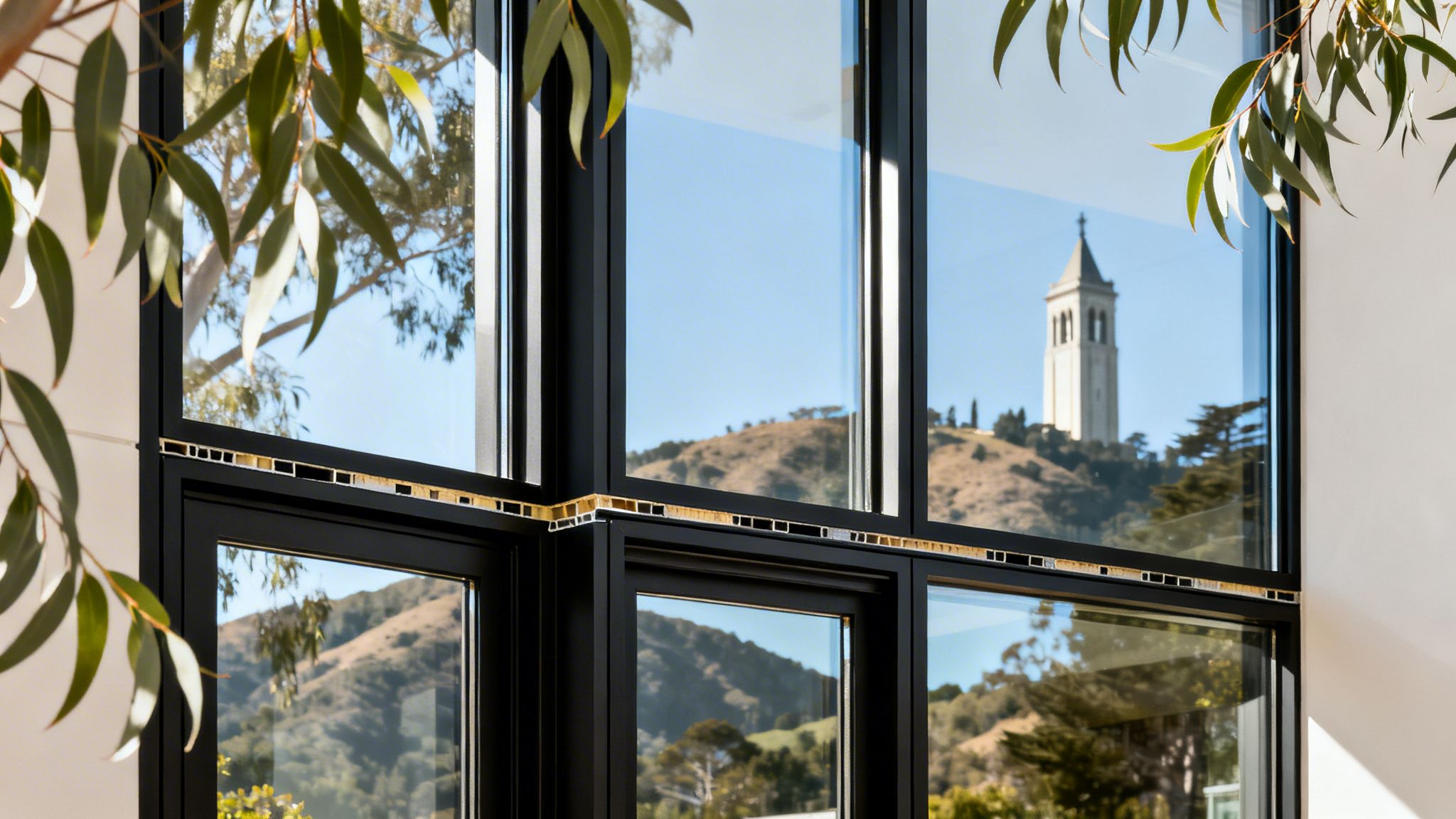
When selecting modern windows for a project in Berkeley, it's easy to focus on sleek black frames and massive panes of glass. But great modern design is about more than just looks. It’s a smart approach that blends aesthetics with high-performance engineering, all while navigating California's strict Title 24 energy codes.
Rethinking Modern Windows for Berkeley Homes
For many builders and architects, the conversation about modern windows often starts and stops with the visual. Minimal sightlines and large, clean panels of glass are the hallmarks of contemporary style. The problem is, this focus on aesthetics often misses the performance realities of building in the Bay Area.
Most suppliers will showcase stunning window systems but say little about the performance tradeoffs. They rarely explain how a design will hold up in Berkeley’s microclimates or if it will meet California's tough energy codes, including the new 2025 Title 24 Energy Code (effective January 1, 2026). This leaves contractors specifying windows that look great but fail to deliver on comfort or compliance.
The Problem with Style-Only Decisions
Choosing a modern window based on looks alone can create major headaches. For example, ultra-thin aluminum frames are popular for their minimalist appeal, but they can sacrifice insulation performance without a proper thermal break. This can make it nearly impossible to meet updated Title 24 standards.
A smarter approach pairs design intent with technical validation from day one. Instead of just picking a style, dig into performance numbers like U-Factor and Solar Heat Gain Coefficient (SHGC) before you commit. Seeing the options side-by-side in a Berkeley window showroom allows you to compare frame materials and glazing packages while reviewing compliance details. Learn more about windows built to withstand the Bay Area climate.
Balancing How It Looks with How It Works
The conversation around windows is shifting. According to recent remodeling trend reports, Bay Area homeowners and builders are prioritizing energy efficiency and long-term durability. In fact, some of the most important work in this field has happened right here at Lawrence Berkeley National Laboratory (LBNL), which pioneered pioneering window technologies like low-emissivity (low-E) coatings.
This means that for any project in Berkeley, Oakland, or San Francisco, a modern window has to do two jobs at once:
- Meet the aesthetic demand with clean lines and high-end finishes.
- Satisfy the technical standards with low U-Factors and proven durability.
For contemporary remodels, ADUs, and custom homes, modern window design isn’t just about style. Working with a local, code-aware showroom ensures the final selection fits both the architecture and the inspection checklist. This proactive approach reduces change orders, helps you pass inspections, and results in homes that justify their value with real comfort and efficiency. It's also worth seeing how new innovations like smart glass technology are redefining modern windows.
The Performance Numbers That Matter in the Bay Area
In Berkeley, a modern window's good looks are only half the story. The real test lies in its performance specs. These numbers determine a home's comfort, its energy use, and whether it will pass a final inspection.
For any builder or architect in the Bay Area, two metrics are critical: U-Factor and Solar Heat Gain Coefficient (SHGC). Think of U-Factor as a window's ability to insulate—a lower number means less heated air escapes during our chilly winters. You can find excellent guides on understanding the U-factor in windows.
SHGC measures how much solar heat a window lets in. In our climate, a lower SHGC is key to keeping a house from overheating on sunny afternoons, reducing the need for air conditioning. Getting these two numbers right is the first step toward choosing windows that perform as beautifully as they look.
Why the U-Factor is a Game-Changer in Climate Zone 3
The Bay Area sits in Climate Zone 3, a region with specific energy requirements. For builders, one number is essential: 0.27. Effective January 1, 2026, California’s 2025 Title 24 Energy Code mandates that all new windows in Climate Zone 3 must have a U-Factor of 0.27 or lower under the prescriptive path.
Failing to meet this standard will result in failed inspections, project delays, and costly change orders. A window's U-Factor is a direct indicator of its ability to provide thermal comfort and pass inspection. In Berkeley, specifying windows with a U-Factor ≤ 0.27 is now a requirement.

As you can see, the sweet spot for any project is where striking aesthetics, measurable performance, and strict code compliance all meet.
Balancing Glazing, Frames, and Code Requirements
Hitting the 0.27 U-Factor target is increasingly difficult with standard double-pane windows. This is why triple-pane glazing is becoming the default solution for forward-thinking builders who want to guarantee compliance and deliver superior comfort.
The frame material you choose is just as important as the glass. The wrong frame can undo the benefits of high-performance glazing. This table breaks down how common materials stack up for projects in our climate.
Window Material Performance Comparison for Bay Area Climate Zone 3
| Material | Typical U-Factor Range | Durability & Maintenance | Aesthetic & Style | Best For |
|---|---|---|---|---|
| Fiberglass | 0.17 – 0.30 | Excellent; minimal expansion/contraction. Low maintenance. | Highly versatile; can be painted, clean lines. | High-performance homes where energy efficiency and durability are paramount. |
| Vinyl | 0.16 – 0.35 | Good; can expand/contract with heat. Virtually no maintenance. | Good, but often bulkier frames and limited color choices. | Budget-conscious projects and rental properties where low cost is key. |
| Thermally Broken Aluminum | 0.25 – 0.45 | Excellent; very strong and durable. Low maintenance. | Slim, modern sightlines; minimalist aesthetic. | Modern designs where sleek aesthetics are critical, but requires a good thermal break. |
| Wood | 0.25 – 0.50 | Good, but requires regular maintenance (painting/staining). | Classic, warm aesthetic; highly customizable. | Historic restorations and high-end custom homes where traditional style is desired. |
Fiberglass and thermally broken aluminum are often top contenders for modern Berkeley projects, delivering both efficiency and clean lines. Selecting the right window requires a deep understanding of how glazing and frame materials work together to meet Title 24. For a deeper look, check out our guide on finding the best windows for energy efficiency.
Navigating Title 24 and Berkeley Window Requirements
In the East Bay, building codes are a fundamental part of every successful project. California’s Title 24 Energy Code is the rulebook, and windows are a critical chapter. Getting this wrong means failed inspections, expensive change orders, and painful project delays.
Anyone designing modern window systems in Berkeley or Oakland has to grasp Title 24. The code ensures new and remodeled homes are energy-efficient, comfortable, and sustainable—all things Bay Area homeowners care about. Staying ahead of the curve is the best way to keep projects on schedule.
The 2026 Energy Code Update for Climate Zone 3
The California Energy Commission regularly updates Title 24. The 2025 Energy Code, which becomes effective on January 1, 2026, introduces stricter window performance requirements for Climate Zone 3. This is a major shift every builder needs to plan for now.
The single biggest change for Bay Area windows and doors is the new mandatory U-Factor. Under the standard prescriptive path, windows will need a U-Factor of 0.27 or lower. This new benchmark makes many standard double-pane windows obsolete for new projects, pushing high-performance options like triple-pane glazing from a luxury to a necessity.
Prescriptive vs. Performance Compliance Paths
To meet Title 24 standards, you have two main routes: the prescriptive path and the performance path. Knowing the difference is key to design flexibility while staying compliant.
- The Prescriptive Path is a straightforward, checklist approach. It sets specific requirements, including the maximum window U-Factor and a rule that the total window area cannot exceed 20% of the home's floor area. It's simple but limits design freedom.
- The Performance Path is a holistic, whole-building approach. It uses energy modeling software to prove the home's total energy use meets or beats the code's standard. This method allows for more glazing area—perfect for modern designs with large walls of glass—but requires trade-offs, like better insulation or a more efficient HVAC system.
Choosing the right path is a strategic call. The performance path gives you creative freedom for ambitious modern designs, as long as you use high-performance windows to offset the larger glass area. For a detailed guide, read more about what Bay Area homeowners should know about Title 24 and comfort.
How to Read an NFRC Label for Compliance
Every reputable window sold today comes with a label from the National Fenestration Rating Council (NFRC). This sticker provides the verified performance data you need to prove Title 24 compliance. A building inspector will look for this label on every window.
When you look at an NFRC label, zero in on two key numbers:
- U-Factor: This number must be at or below the code’s mandate (e.g., ≤ 0.27 for the 2026 code).
- Solar Heat Gain Coefficient (SHGC): This tells you how much solar heat the window blocks. For our climate, a lower SHGC is usually best.
Reading an NFRC label is a simple but critical skill. It’s your proof of compliance and helps you avoid surprises during final inspection. Working with a knowledgeable local partner like a lumberyard near Oakland ensures the windows you specify will have the right ratings from the start.
Choosing the Right Modern Window System for Your Project
A successful Berkeley project blends a stunning design vision with the technical reality of construction. We all love the indoor-outdoor feel that modern window systems—like bifold doors and multi-slide systems—bring to a home. But choosing the right system is about much more than the look.
It’s easy to be drawn to ultra-thin aluminum frames for their clean, minimalist aesthetic. However, many of these systems cannot pass Title 24’s tough thermal requirements without expensive thermal breaks. That oversight can lead straight to a failed inspection, forcing last-minute changes that blow up timelines and budgets.

The smart move is to pair design intent with technical validation from day one. For any Berkeley home, the right modern window system must satisfy both the architectural style and the energy code.
Balancing Sightlines and Performance
Modern design is all about maximizing glass and minimizing the frame. Yet, as the area of glass increases, the performance rating becomes exponentially more important. A common pitfall is falling for a sleek aluminum system while ignoring its U-Factor.
A standard aluminum frame is a fantastic conductor of heat and cold—the opposite of what you want. It will have a tough time meeting the U-Factor ≤ 0.27 required for our Climate Zone 3. This is why materials like fiberglass or thermally broken aluminum have become go-to choices for high-performance modern designs across the Bay Area. For a closer look at brands, explore our guide to choosing the right window brand for your remodel.
Real-World Scenarios in Berkeley
Let's get practical. Imagine you're specifying windows for a new Accessory Dwelling Unit (ADU) in a Berkeley backyard. Under Title 24's prescriptive path, you're limited to 20% total glazing. Opting for high-performance windows, however, can let you use the performance compliance path to exceed that limit without an energy penalty.
Now, think about a historic remodel. The project demands modern performance but must respect a traditional aesthetic. In this case, you might lean toward a high-performance wood or fiberglass window that gives you a contemporary interior finish with a classic exterior profile.
The Showroom Advantage: Making a Confident Choice
This is where visiting a dedicated Bay Area window and door showroom becomes a game-changer. Reading spec sheets online is one thing; seeing, touching, and operating windows in person is another. In a showroom, you can:
- Physically Compare Sightlines: See how a Marvin Modern frame stacks up against an Andersen E-Series.
- Feel the Hardware: Open and close a bifold door to assess its quality.
- Examine Finishes: Compare frame materials under real-world lighting.
Most importantly, a knowledgeable showroom partner can walk you through the NFRC labels for each product. At our Berkeley window showroom, we help you review performance data next to the physical product. This ensures you select a system that is beautiful and fully compliant with Title 24 window requirements.
The ROI of High-Performance Windows
When you’re building in the Bay Area, choosing windows isn't just about meeting the bare minimum of Title 24 window requirements. For a contractor, architect, or builder, specifying superior windows is a strategic move that pays for itself. It justifies your pricing, eliminates client callbacks, and builds a reputation for quality.
Smart window choices translate directly into real financial benefits—for your clients and for your bottom line.
Commanding a Premium in the Berkeley Market
The link between high-end building materials and a property's sale price is clear in the East Bay. Berkeley's real estate market consistently rewards homes with modern, energy-efficient features. According to recent local real estate trends, these properties stand out, selling faster and for top dollar.
Data shows that buyers are willing to pay for quality, comfort, and long-term energy savings. By specifying windows that exceed code, you aren't just selling a feature. You're selling a story of superior comfort and thoughtful, sustainable design. That narrative supports premium pricing in markets like Berkeley and Oakland.
Reducing Callbacks and Building Your Reputation
For any contractor, nothing eats into profit margins like callbacks. Complaints about drafts or condensation are costly headaches. Investing in high-quality, energy-efficient windows in the Bay Area from trusted brands is the best way to avoid these problems.
A well-made window system means:
- Proven Durability: Fewer service calls for hardware or seal failures.
- Superior Comfort: Consistent indoor temperatures mean happier clients.
- Guaranteed Compliance: Passing inspections the first time avoids costly delays.
Your choice of Berkeley building materials reflects your work. Partnering with a knowledgeable supplier like Truitt & White ensures every window you install contributes to a final product that looks great, performs flawlessly, and is built to last. Learn more about understanding the true cost of energy-efficient windows.
Partnering With Your Local Berkeley Window Experts
Achieving a modern look in Berkeley is about more than picking a window from a catalog. It’s a balance between clean aesthetics, real-world performance, and tough building codes. The gap between a beautiful drawing and a compliant, high-performing building is where projects get bogged down.
For any remodel, ADU, or custom home in Berkeley, Oakland, or San Francisco, modern window design isn't just a style choice. Working with a local, code-savvy showroom from day one ensures the windows you select fit both the architecture and the inspection checklist. This heads off problems before they start, saving time and money.
From Showroom To Job Site
A smarter process starts by pairing design ideas with technical facts. Our Berkeley window showroom is a hands-on workshop for contractors, architects, and homeowners.

Here, you can physically compare frame materials, feel different glazing packages, and see sightlines side-by-side. Our specialists will help you check U-Factor ratings and confirm compliance with Title 24 window requirements before you specify. This connects your vision to the technical realities of building in Climate Zone 3.
The Benefits Of a Local, Knowledgeable Partner
Working with a local expert who knows the products and the local rules gives you a clear edge. When contractors select modern window systems with both style and performance in mind, they see fewer change orders and sail through inspections.
Our operation is built to support your project:
- Expert Guidance: Our team helps you navigate the complexities of Bay Area windows and doors, ensuring your choices meet the U-Factor ≤ 0.27 requirement.
- Reliable Logistics: Our full-service lumberyard near Oakland means your windows and materials arrive on schedule.
- Decades of Experience: We’ve been supplying Berkeley building materials and helping local builders succeed for over 75 years.
Don't go it alone. Let our experts help you bridge the gap between ambitious design and a compliant, high-performance build. Visit our Berkeley showroom for expert guidance.
Frequently Asked Questions (FAQs) About Modern Windows
Here are straightforward answers to the most common questions from builders, contractors, and architects in the Bay Area.
1. What are the key changes in the 2026 California Energy Code for windows?
The 2025 California Energy Code, effective January 1, 2026, significantly tightens window performance standards. For projects in Climate Zone 3, which includes most of the Bay Area, new windows must have a U-Factor of 0.27 or lower under the prescriptive path. This new benchmark makes high-performance glazing, such as triple-pane windows, a standard requirement for compliance.
2. How do I ensure my windows meet Title 24 compliance?
The NFRC label on every window is your proof of certified U-Factor and SHGC ratings. Always verify this label before installation. The best approach is to partner with a knowledgeable local supplier, like a Berkeley lumberyard, who can confirm that your specified products meet current Title 24 window requirements from the start.
3. What does a U-Factor of 0.27 mean for my projects in Climate Zone 3?
A U-Factor of 0.27 means your windows must be extremely well-insulated. For most projects, this requirement pushes standard double-pane windows out of consideration, especially for designs with large glass areas. To achieve this rating, you will likely need to specify windows with advanced low-E coatings, argon gas fills, and often triple-pane glazing.
4. Where can I find Bay Area building materials that meet these new codes?
Your best source is a local supplier who specializes in the region. A trusted lumberyard near Oakland or a dedicated Bay Area window and door showroom will stock products from top brands engineered to meet or exceed California’s energy codes. These experts can guide you directly to compliant Berkeley building materials and ensure your documentation is correct.
5. Why is triple-pane becoming more common for modern Berkeley homes?
Triple-pane windows are growing in popularity because they solve problems for both homeowners and builders. They provide superior insulation for a lower U-Factor, which means a quieter and more comfortable home for your client. For builders, they offer a reliable path to meeting the strict new Title 24 window requirements, especially for projects with large glass walls where hitting energy targets is critical.
Ready to specify modern windows that are both beautiful and compliant? The experts at Truitt & White can help you navigate Title 24 and find the perfect energy-efficient windows in the Bay Area for your next project. Visit our Berkeley showroom for expert guidance.