If you’re a builder in the Bay Area, you have probably seen it. A quote from a local lumberyard looks much higher than one from a big-box store.
When you’re trying to keep a project in Oakland or San Francisco on budget, that price difference can be frustrating and confusing. The short answer is you’re not comparing apples to apples. A higher sticker price from a local yard almost always reflects better quality lumber, essential services, and reliability you don't get elsewhere.
The Real Reason Your Lumber Quote Seems High
Getting two very different quotes for what seems like the same lumber order is confusing. You might wonder if the local yard is overcharging you, especially when trying to stay on budget.
While material pricing has been volatile, the initial quote doesn't tell the full story. Smart builders and contractors across Berkeley and the Bay Area are learning to look past the sticker price. They are asking a better question: what am I actually getting for my money?
It’s About More Than Just the Sticker Price
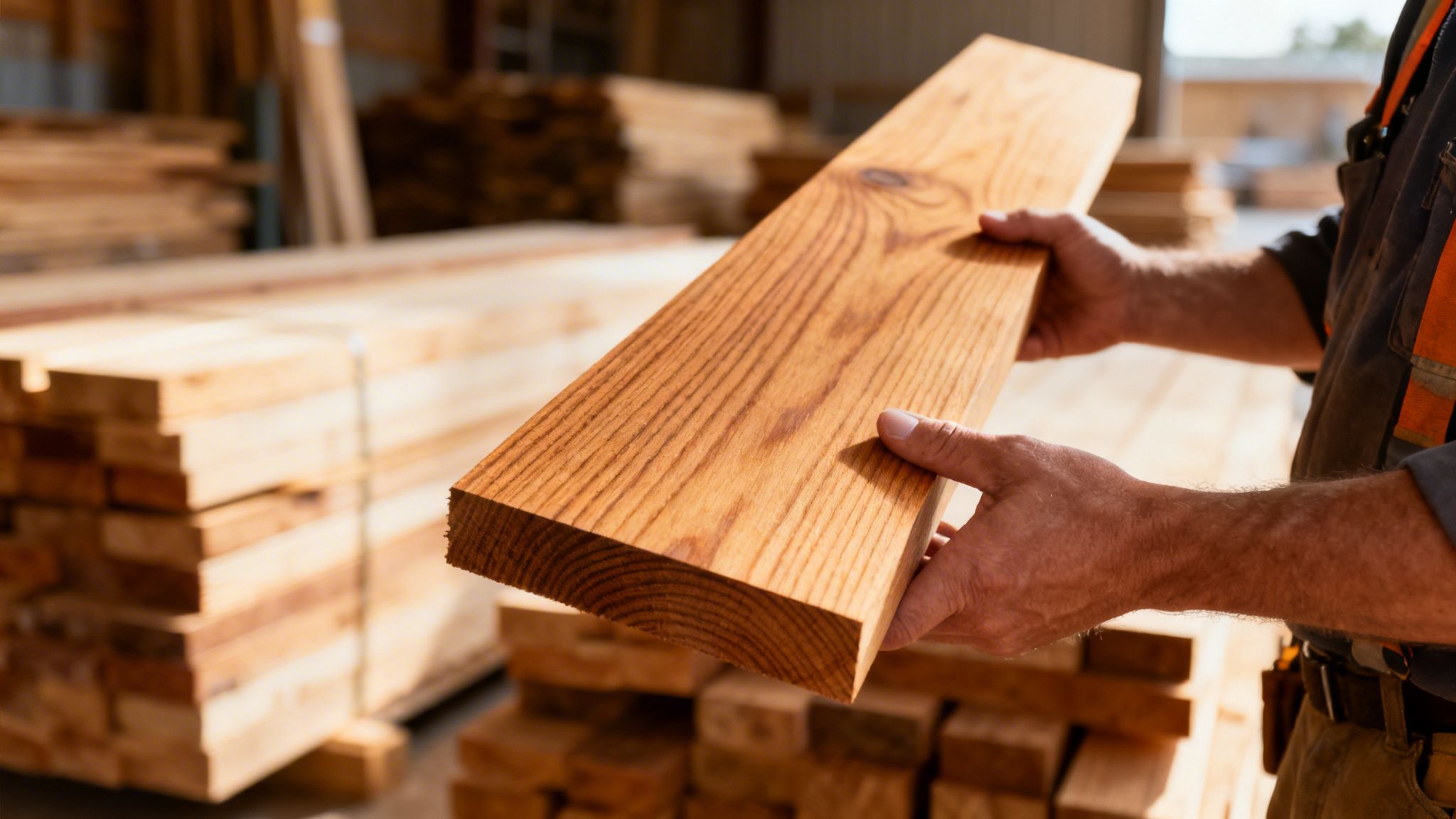
A common misstep is assuming that “same grade” lumber from two suppliers is identical. The reality is that not all wood is stored, sorted, or even measured equally.
A lower quote might not include delivery, professional grading, or a simple return policy. In some cases, “cheap” lumber means more culling, waste, and rework for your crew, which adds hidden costs that eat up your initial savings.
- Higher Waste: Cheaper lumber often has more defects like crowns, twists, and wanes. Your crew wastes time culling bad boards, which increases material waste and labor costs.
- Missing Services: The lower price likely doesn't include reliable job site delivery, professional grading, or a no-hassle return process for unusable wood.
- Costly Delays: Sorting bad lumber or waiting on a late delivery can stop your project, wrecking your timeline and your bottom line.
This diagram shows how the true value you get from a local lumberyard combines better quality, service, and reliability—not just a number on an invoice.
A slightly higher initial investment often pays for itself by reducing waste, preventing rework, and keeping your project on schedule. The way a contractor markup on materials is calculated can be complex, and it’s important to understand what contributes to the final number.
The table below breaks down the difference between what's typically included in the price from a big-box store versus a dedicated lumberyard.
Comparing Sticker Price vs True Cost of Lumber
| Factor | Big-Box Retailer | Local Lumberyard (e.g., Truitt & White) |
|---|---|---|
| Lumber Quality | Often lower-grade, higher percentage of defects (twists, wanes, crowns). | Higher-grade, professionally culled lumber with minimal waste. |
| Material Handling | Stored outdoors, exposed to elements, leading to warping and damage. | Stored properly to maintain straightness and structural integrity. |
| Expertise & Advice | General staff with limited specialized lumber knowledge. | Experienced yard staff who can advise on grades, species, and applications. |
| Delivery Service | Limited availability, often outsourced, less reliable scheduling. | In-house, reliable delivery fleet that understands job site logistics. |
| Value-Added Services | Minimal. Basic cutting may be available. | Custom milling, job site take-offs, and straightforward returns. |
| Returns & Support | Can be cumbersome, especially for bulk material. | Hassle-free returns for unusable material; dedicated account reps. |
| True Cost | Lower sticker price, but higher potential costs from waste, delays, and labor. | Higher sticker price, but lower total project cost due to quality and efficiency. |
A local yard's price reflects a complete solution designed to make your job easier and more profitable. If you're building in the Bay Area, visit Truitt & White in Berkeley. Bring your quote—they’ll help you compare apples to apples and find the right solution for your project.
Why Not All Lumber Is Created Equal
Many contractors assume a “No. 2 grade” 2×4 is the same board no matter where you buy it. This can be a costly mistake.
Lumber grading only sets a minimum standard for things like knots and wane. Two boards with the same grade stamp can have very different qualities depending on how they’re sourced, stored, and handled. This is where a local yard like Truitt & White provides real value for builders in Berkeley and Oakland.
The True Cost of Culling Boards
Think of it like buying produce. You can buy a cheap tomato at a big-chain store, but it might be bruised or flavorless. Or you can invest in a high-quality, local one that’s perfect. Lumber is no different.
Local yards invest in higher-quality stock with fewer defects. This means your crew spends less time on the job site culling boards—the process of sorting through lumber to discard twisted or warped pieces.
Key Takeaway: Every minute your crew spends sorting bad lumber is a direct hit to your labor budget. Paying slightly more upfront for better material reduces waste and keeps your team focused on building.
Less culling leads to a more efficient project. You get a higher yield from each delivery, which minimizes waste and prevents costly re-orders. To learn more, read about framing lumber grades and what they mean for your build.
Why Proper Storage Is Critical in the Bay Area
How lumber is stored makes a huge difference. In the Bay Area, with our foggy mornings and dry afternoons, proper storage is non-negotiable.
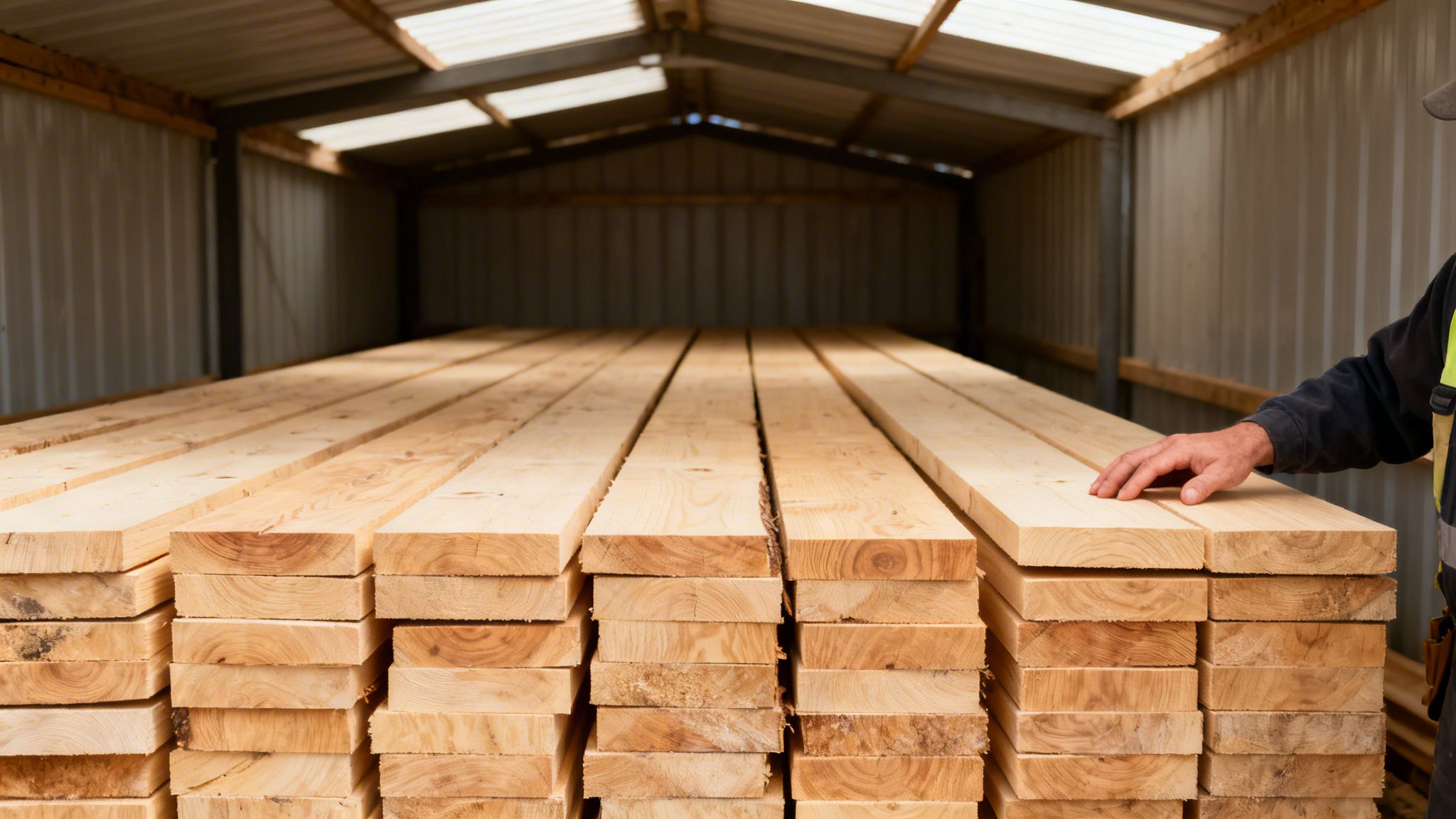
Big-box stores often keep lumber outside, where exposure to moisture and temperature swings causes it to warp, swell, or twist. A professional lumberyard understands that protecting its inventory is critical.
- Covered Facilities: At Truitt & White, our lumber is kept in covered, dry facilities to maintain its structural integrity.
- Climate Control: Proper storage protects wood from moisture that causes warping and other defects.
- Reduced Damage: Careful handling with the right equipment minimizes cracks, splits, and other physical damage.
The higher price at a local yard reflects an investment in quality control from the mill to your job site in San Francisco or the East Bay. This attention to detail ensures you receive reliable materials that reduce waste and save labor.
Understanding the Bay Area Supply Chain
Ever wonder why a 2×4 costs more in Berkeley than in a rural town? The answer is in the complex journey lumber takes to reach your job site. Local yards aren't just inflating prices; they're navigating a tough regional market to provide reliable access to quality materials.
Think of it like a farm-to-table restaurant in downtown Oakland. The menu price includes more than just the cost of the carrots; it covers trucking, the chef's skill, and high rent. Lumber works the same way.
From Pacific Northwest Mills to Bay Area Job Sites
Most structural lumber used in California comes from the Pacific Northwest. Getting it from a mill in Oregon to a yard like Truitt & White involves a long chain of logistical hurdles.
According to industry analysis, transportation can add 20-30% to the base mill price, a number that fluctuates with fuel costs. Efficient route optimization helps, but the distance is a cost that can't be avoided.
The High Cost of Doing Business in the Bay Area
Once lumber arrives, local economic realities hit hard. Running a business in the Bay Area is expensive, and those costs affect product pricing.
These regional cost drivers are significant:
- High Real Estate Costs: Leasing or owning the large space needed for a lumberyard in Berkeley is exceptionally expensive.
- Competitive Labor Market: To attract and keep skilled staff, we offer competitive wages and benefits.
- Insurance and Regulations: California’s strict regulatory landscape adds another layer of operational cost.
This creates a higher baseline cost for local suppliers. It’s about the fundamental economics of providing a specialized service in one of the country's most expensive markets.
The Power of Strong Mill Relationships
Here’s something the price tag doesn't show: the power of relationships. An established local yard like Truitt & White has spent decades building connections with the best mills. This isn't just about getting a better price; it’s about securing a consistent supply of high-quality lumber, even when the market is volatile.
Key Insight: Strong, long-term relationships with mills give local yards priority access to the best lumber. When supply gets tight, a yard like ours can still get the materials your project needs, preventing costly delays.
These connections allow us to be selective about our inventory, ensuring the framing lumber and finish materials we stock are straighter and more reliable. This focus on quality is a core part of the value we provide. You can learn more in our guide to construction supply chain management.
The Value-Added Services You Are Paying For
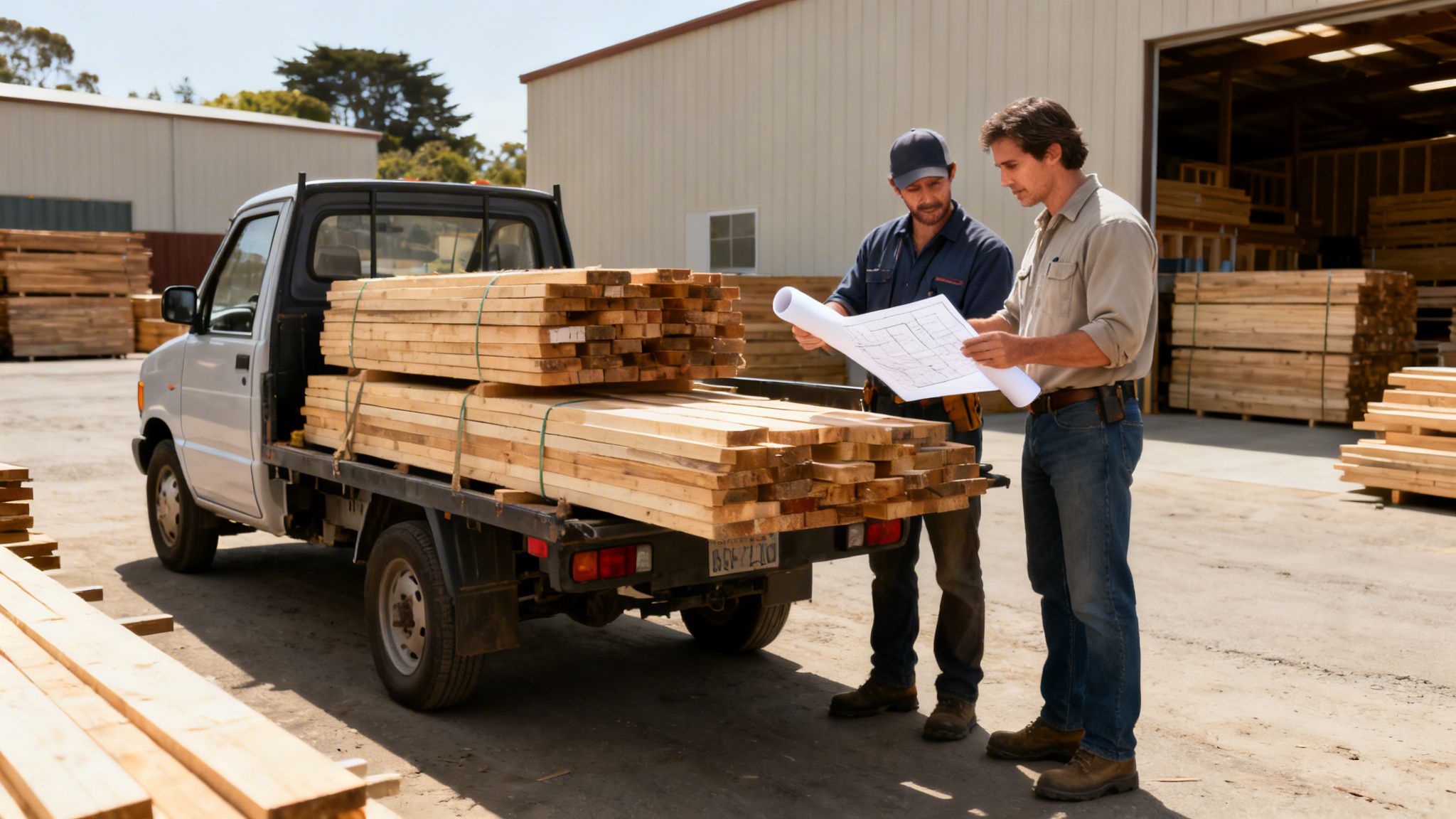
A quote from a local lumberyard includes more than just a stack of boards. It’s a complete package of services designed to save you time, prevent headaches, and protect your bottom line.
A big-box store sells materials. A local yard like Truitt & White provides a partnership. These value-adds are a huge reason why lumber is so much more expensive at local yards—and why it’s often a smarter investment.
Expert Advice That Prevents Costly Mistakes
Walk into a local yard, and you'll find staff with decades of hands-on experience. This isn't just a "nice-to-have" feature; it's a powerful tool for your business.
Imagine you need a specific engineered wood product for a seismic retrofit in Oakland. A local yard team won’t just find the product; they’ll offer advice on installation and may suggest a more cost-effective alternative that meets code.
This level of expertise helps you:
- Navigate Complex Building Codes: Ensure materials comply with regulations in Berkeley, San Francisco, and other Bay Area cities.
- Solve On-the-Fly Problems: Get immediate solutions for unexpected framing or structural challenges.
- Make Smart Substitutions: Discover materials that can cut costs without sacrificing quality.
This guidance prevents mistakes and saves labor hours. To learn about material options that align with Bay Area values, check out our guide to eco-friendly lumber in the East Bay.
Logistical Support That Keeps Your Project Moving
Time is money on a job site, and nothing drains a budget faster than delays. Local yards provide logistical support that addresses this reality.
Scenario: A delivery from a big-box store arrives three hours late, leaving your crew idle. Half the boards are warped. You've now lost half a day of labor and have to return unusable materials.
Local yards like Truitt & White prevent this nightmare. Our reliable, on-time job site delivery is just the beginning. We offer flexible scheduling and understand the complexities of Bay Area traffic.
Custom Milling and Specialized Services
Not every project works with off-the-shelf dimensions. Local yards often offer custom milling services unavailable at larger retail chains. Need a specific profile for a historic restoration or custom-sized beams? A local yard is your resource.
This in-house capability saves you time and expense. It ensures every piece of wood is perfectly suited to your project's specs, reducing on-site labor and improving the final build quality.
How Market Volatility Affects Your Local Yard
You have seen the headlines about lumber prices soaring and crashing. It can be confusing when the quote from your local yard in Berkeley doesn’t seem to budge. What gives?
The news almost always reports on the speculative lumber futures market. This is different from the “street price” you pay for actual 2x4s. Understanding this difference is key to seeing why your local yard’s pricing is more stable.
The Lag Between Futures and Street Prices
When supply chains are disrupted, the effects last a long time. Local yards buy lumber months in advance to ensure a reliable supply for contractors in Oakland and across the Bay Area.
This means when futures prices drop, we are often still holding higher-cost lumber bought during a market peak. For example, recent NAHB data shows that despite some stabilization, inflated material costs still add over $11,000 to the price of a new home. You can get more details by reviewing insights on builder lumber prices.
This lag works both ways. While prices at your local yard fall more slowly, they also rise more slowly. Our inventory strategy acts as a buffer, protecting your business from sudden price spikes.
Why Price Stability Is Your Best Friend
In a chaotic market, predictability is a huge advantage. A local yard's slower-moving pricing gives you stability that big-box stores can't often match.
- Bid with Confidence: When material prices are stable, you can bid new jobs with greater accuracy.
- Protect Your Budget: You're shielded from sudden cost hikes that can wipe out your profit margin.
- Count on Supply: Deep inventory means the materials you need will be there when you need them.
Key Takeaway: The "sticker shock" at a local yard often includes the hidden benefit of price stability. It allows for predictable budgeting and scheduling—a critical edge in the competitive Bay Area construction market.
At Truitt & White, we manage our inventory to provide a predictable supply line. We help ensure your projects in San Francisco and beyond stay on track and on budget.
Smart Strategies for Purchasing Lumber
Knowing why lumber prices are what they are is one thing. Turning that knowledge into smarter purchasing decisions is what really matters. For builders in the Bay Area, getting the most value is about cutting waste, saving time, and building a solid relationship with a reliable supplier.
Start with a solid plan. Before getting quotes, know exactly what you need. Using tools like Exayard construction takeoff software to nail down quantities is a great first step. When you walk into a yard like Truitt & White with a clear list, you can have a productive conversation about getting the best total value.
Ask the Right Questions Before You Buy
When comparing quotes, you have to look past the final number. Ask for an itemized breakdown so you understand what is included.
Before you lock in an order, get clear answers to these key questions:
- Is delivery included? Ask about delivery costs, scheduling flexibility, and potential fuel surcharges.
- What’s your return policy? Know how they handle returns for warped, damaged, or excess lumber.
- Are these boards pre-graded and dry? Make sure you’re getting straight, properly stored lumber that won’t waste your crew’s time.
- Will you match a competitor’s price? For a comparable order, don’t hesitate to ask if a yard will match or beat competitor pricing. The best suppliers are transparent.
Factor in the time your crew spends sorting or replacing bad boards. A higher-quality purchase upfront almost always leads to a more efficient and profitable project.
Partner with Experts to Find Smart Solutions
Tap into the expertise of your local lumberyard staff. The pros at Truitt & White can offer solutions a big-box store employee can't. We can help you find cost-effective substitutions, like engineered wood or different species, that don’t sacrifice quality.
We help you make smart substitutions to reduce costs without sacrificing quality. When you build a real partnership with your supplier, they become a valuable part of your team. Check out our quality lumber options in the East Bay to see how we can support your next build.
Frequently Asked Questions About Lumber Pricing
1. Why does lumber seem so much cheaper at big-box stores?
The sticker price is often lower, but it doesn't account for hidden costs. Lower-grade lumber from big-box stores can lead to more waste from warped or twisted boards, which increases your labor and material expenses. Local yards provide higher-quality, pre-culled lumber that saves your crew time and reduces overall project costs.
2. Can I negotiate lumber prices with a local Bay Area lumberyard?
Yes, professional builders are encouraged to discuss pricing with us. We are happy to review a competitor's quote to ensure it's an apples-to-apples comparison of both quality and services. For repeat customers and large projects in the Berkeley or Oakland area, we often offer volume pricing and flexible account terms.
3. What are the main benefits of buying from a local yard instead of a national chain?
Partnering with a local yard like Truitt & White gives you access to deep industry expertise and personalized service. You get advice tailored to Bay Area building codes and climate conditions, plus reliable, on-time job site delivery that national chains can't always match. This support helps your projects run more smoothly and profitably.
4. If lumber market prices fall, why doesn't my local yard’s price drop immediately?
News reports typically refer to lumber "futures" prices, which are speculative and don't reflect the cost of current inventory. Local yards purchase lumber months in advance to ensure a steady supply. This creates a price lag but also protects you from the sudden, sharp price increases common in the volatile futures market.
5. What should I look for in a lumber quote besides the final price?
A good quote should be transparent and detailed. Look for the specific lumber grade, moisture content, and precise dimensions. It should also itemize all additional costs, including delivery fees, potential fuel surcharges, and the yard's return policy, so you know exactly what you're paying for.
At Truitt & White, we offer honest, transparent pricing and will walk you through what’s included—whether that’s higher-grade lumber, faster delivery, or expert selection. If you're building in the Bay Area and want pricing that matches the real value of what you're getting, visit us in Berkeley. For expert advice and a reliable supply partner, connect with our team today.