For any Bay Area builder, a warped stud is more than just a piece of bad lumber. It’s a direct hit to your timeline, your budget, and the reputation you’ve worked so hard to build. Builders and homeowners alike fear getting bad lumber—warped, split, or twisted boards that waste time and money.
So, why does so much of the lumber from big-box stores feel like a roll of the dice? It all comes down to a business model built for high volume and low prices. This philosophy affects every part of the supply chain, from the forest to the store aisle, resulting in inconsistent material that can compromise your work.
The True Price of a "Bargain" Board
Every contractor from San Francisco to Berkeley knows the feeling. You’re standing in front of a giant stack of 2x4s, spending the next twenty minutes picking through twisted, cupped, and crowned boards just to find a handful of straight ones.
This isn't just bad luck—it's a direct consequence of where you're shopping. The percentage of wood you have to toss aside is called the “cull rate,” and many pros report it’s consistently higher at chain stores. Assuming all lumber is the same is a common misstep; cheap wood might save you money upfront, but it often causes delays and do-overs.
- Wasted Material: Every warped stud or split board you discard is money thrown away.
- Wasted Time: Sorting through bad lumber on-site burns expensive labor hours that should be spent building.
- Project Delays: Finding yourself short on usable wood means another trip to the store, throwing your schedule off.
- Structural Risks: Subpar lumber isn’t just an aesthetic problem; it can lead to serious issues like drywall cracks or doors that won't close properly.
So, Why is the Quality So Different?
Understanding what a warped board can do to a project is critical, especially when you think about the importance of quality framing in construction. Big-box stores often fill their racks with #2 and #3 grade lumber, typically from fast-growth trees. This wood is less dense, holds more moisture, and is more likely to shrink and twist as it dries on your job site.
Contractors often report that this can lead to up to 25% more waste and rework. That's a huge hit to the bottom line, especially when building to California's strict seismic codes.
It's a simple business calculation: big-box retailers have massive buying power and can pressure suppliers into providing lower-grade products they can sell cheap while still making a profit.
This guide will explain why this quality gap exists. More importantly, we'll show you how to find reliable, high-quality materials for your next Bay Area project.
Quick Comparison: Big-Box Versus Lumberyard
When you're deciding where to source your materials, it helps to see the differences side-by-side. The choice isn't just about the price per board; it's about the total value for your project.
| Factor | Big-Box Stores | Truitt & White Lumberyard |
|---|---|---|
| Typical Grade | #2 & #3 grade, often from fast-growth, less stable trees. | Higher-grade #1 & #2, select structural, sourced for stability. |
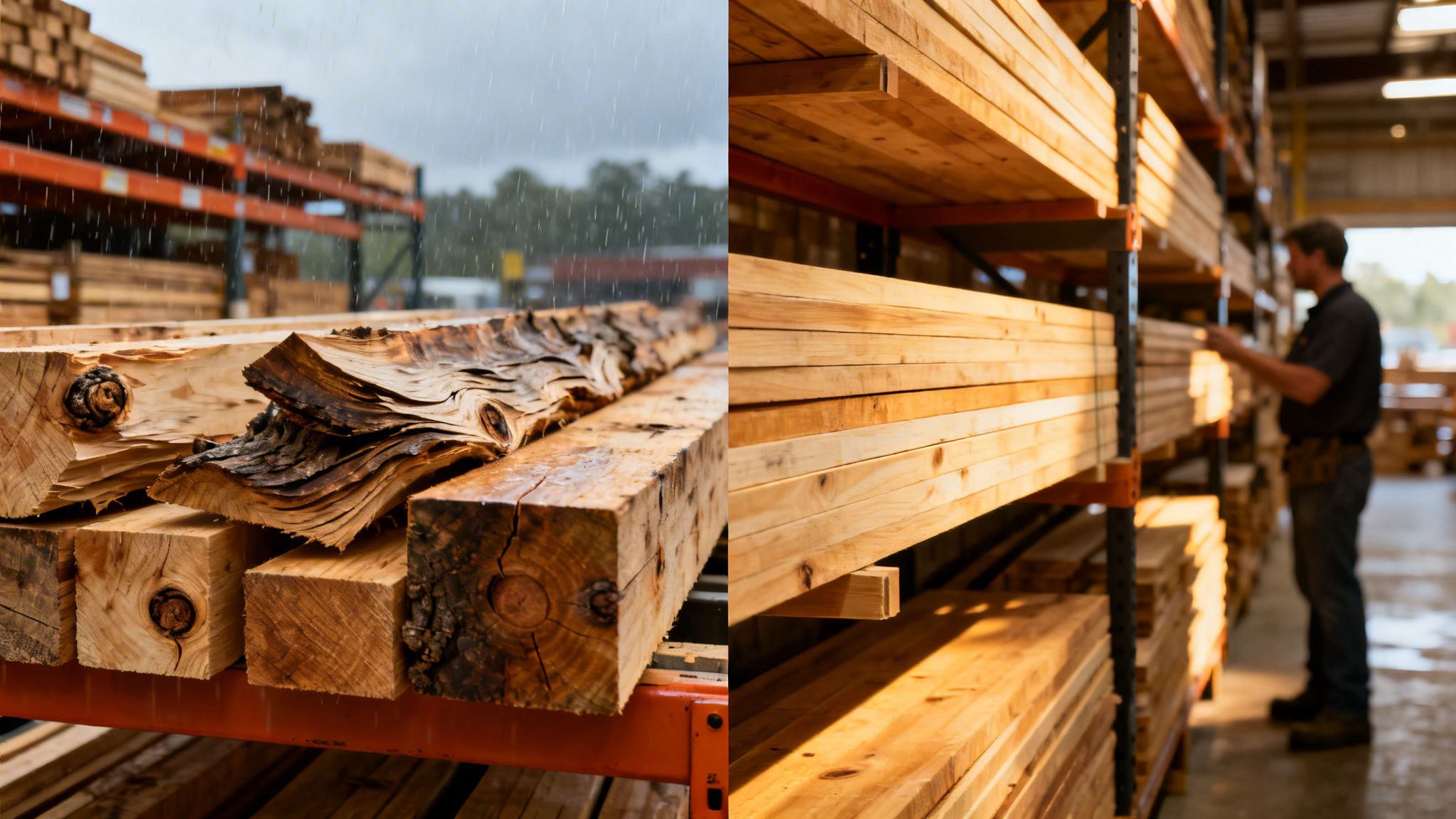
| Storage & Handling | Often stored outdoors, exposed to sun and rain, leading to warping. | Stored in covered, climate-controlled environments to maintain moisture content. |
| Expertise & Service | General retail staff with limited specialized lumber knowledge. | Seasoned experts who understand Berkeley building codes and project needs. |
| "Cull Rate" | High. Builders report discarding a significant portion of each load. | Very low. Lumber is pre-sorted for quality, minimizing waste. |
| Custom Options | Limited to standard dimensions and lengths. | Custom milling, cutting, and special orders are standard services. |
This table makes it clear: a dedicated lumberyard like Truitt & White is a true partner, prioritizing the quality and reliability that professionals in Berkeley and Oakland depend on.
Where Lumber Quality Issues Begin
The warped studs and crowned 2x4s you find at the big-box store didn’t just appear out of nowhere. The problem starts way back in a supply chain that’s fine-tuned for volume and speed, not the kind of quality a Bay Area contractor can stake their reputation on.
The big-box supply chain often starts with lumber from massive, fast-growth tree plantations. While the trees grow quickly, the wood itself is less dense and has wider growth rings. Right from the start, you’re dealing with material that’s inherently weaker and more likely to warp.
From High-Speed Mill to Store Aisle
After the harvest, that wood is shoved through high-speed mills and giant distribution centers where quantity is king. Every step is about cutting costs, not taking care. Slow, careful kiln-drying and precision milling take time and money, so they’re often compromised.
It's this "get it done cheap and fast" approach that creates the headaches builders know all too well:
- Excessive Knots: Fast-growth trees are branchy, which means more knots that create weak spots in the board.
- Inherent Weakness: Low-density wood can't handle the same loads and is more prone to splitting when you nail or screw into it.
- Wide Growth Rings: Wide rings are a dead giveaway for a fast-growing tree, signaling a board that’s less stable than its slow-growth counterpart.
This whole journey, from forest to frustratingly warped stud, is a story of compromises made at every turn.

The takeaway here is simple: the flaws you fight on the job site were baked into the material from the very beginning.
The Real Cost of a Volume-Based Model
At the end of the day, this entire system is engineered to hit a rock-bottom price point, not a high-quality standard. With their massive buying power, corporate chains can lean on mills, pushing them to churn out lower-grade product lines that fatten up profit margins.
The sticker price might look good, but the real cost shows up later in wasted material, blown labor hours, and the risk of a callback.
For contractors who care about where their materials come from, it's an even bigger issue. You can learn more about how sourcing impacts more than just quality in our expert guide to eco-friendly lumber in the East Bay. Ultimately, the problems you’re dealing with started long before that lumber ever hit the shelf.
How Improper Drying Leads to Warps and Twists
One of the biggest culprits behind shoddy lumber is something you can’t even see on the shelf: moisture. The way a board is dried will determine whether it stays straight or starts to warp and twist the second it arrives on your job site.

Freshly cut lumber is saturated with water. To make it usable for construction, that moisture has to be removed through air-drying or kiln-drying. The speed and control of this process make all the difference.
The Problem with Rushed Drying
To keep up with massive demand, big-box suppliers often push their lumber through accelerated kiln cycles. This high-heat, high-speed approach can cause “case hardening,” where the outside of the board dries too fast, trapping moisture inside.
A case-hardened board might look fine at the store, but it’s a ticking time bomb. As the board adjusts to the Bay Area’s humidity, the trapped moisture escapes, forcing the wood to contort. This isn't just a problem with framing; you can see the same principles in the causes of cupping in hardwood floors.
What the Numbers Say
Lumber from mass-production mills often shows warping rates 2-3 times higher than wood from a quality-focused yard. It’s not uncommon for big-box lumber to ship with core moisture levels as high as 18-20%. In contrast, a reputable lumberyard like Truitt & White sources fully kiln-dried lumber with a uniform moisture content of 6-8%.
For builders in Berkeley and Oakland, where coastal fog creates constant shifts in humidity, stable lumber isn’t a luxury—it’s a necessity.
Lumber with high moisture content is also a breeding ground for fungus and decay. To keep your projects standing strong, check out our guide on how to prevent wood rot. Starting with properly dried wood saves you time, money, and protects your professional reputation.
Why Grading and Storage Matter
Ever wonder why two boards that look the same can behave so differently? The secret lies in how they’re graded and stored. These two steps often mark the biggest difference between lumber at a big-box store and what you'll find at a dedicated lumberyard.
What Lumber Grades Really Mean
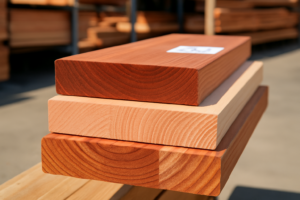
Lumber grading is a standardized system that tells you a board's structural integrity. Grades like #1, #2, and Select Structural indicate the number of defects, such as knots, splits, or bark along the edge (known as wane).
Most big-box retailers stock a broad category called "#2 & Better." While it sounds promising, this grade allows for a much wider range of quality.
A single pallet of "#2 & Better" can be a total crapshoot. For a contractor in the Bay Area, that inconsistency is a gamble that costs you time and money.
How Lumber Is Cared For
Even a perfectly graded board can be ruined by poor storage. Big-box stores often keep their lumber outside or in open-air racks, exposed to the Bay Area's fog, sun, and rain. This fluctuation in humidity is a recipe for disaster, causing wood to warp, cup, and twist.
A professional lumberyard takes a different approach:
- Protected Storage: Lumber is kept under cover in environments that maintain a stable moisture content.
- Careful Handling: Trained staff move materials without causing damage that degrades quality.
- Real Quality Control: Shipments are inspected upon arrival. Low-quality material is sent back, so it never hits the racks.
This dedication to care means the wood you buy is in the same prime condition as the day it left the mill. To get a deeper understanding of what these grades mean, take a look at our guide to understanding framing lumber grades.
The Lumberyard Advantage You Can Actually See
Finding a reliable lumber source keeps your projects moving. For builders across Berkeley, Oakland, and the wider Bay Area, that answer is a professional lumberyard. This isn't just about buying wood; it's about partnering with a business built for quality.

A pro lumberyard operates on a model of expertise and accountability. Every step, from sourcing to delivery, is geared toward providing contractors with material they can trust. Our goal is to eliminate the high cull rates you’ve come to expect elsewhere.
Rigorous Sourcing and Inspection
Our quality control starts before a single 2×4 hits our yard. We build relationships with reputable mills known for their meticulous drying processes. When a shipment arrives, our team inspects it for signs of trouble—if it's not right, it gets rejected.
This means you aren’t the one doing quality control on a busy job site.
A professional lumberyard stakes its reputation on the quality of every board it sells. We understand that one bad delivery can cause costly delays and damage a builder’s good name.
The upfront cost of premium lumber may seem higher, but the hidden expenses of cheap materials add up fast. Wasted boards, extra labor sorting, and delays from running back to the store all eat into your bottom line.
The Power to Choose Your Materials
One of the biggest differences is the transparency and control we offer. At Truitt & White, we believe professionals deserve to know what they’re getting. That’s why we give you options that put you back in charge.
- Hand-Picking Your Order: Walk our aisles and select the exact boards you need. You can sight each piece for straightness, check the grain, and avoid knots.
- Pre-Culled Packages: Don’t have time to pick? Our yard crew can assemble a pre-culled package for you. We’ll hand-select the straightest, cleanest lumber, saving your crew time and eliminating waste.
This is why so many Bay Area contractors rely on us. When you’re ready to see the difference for yourself, explore our selection of high-quality lumber for the East Bay.
Frequently Asked Questions About Lumber Quality
1. Is lumber from a big-box store really that much worse?
Yes, it often is. Big-box stores focus on high volume and low prices, so they often stock lower, more inconsistent grades of lumber like "#2 & Better." This grade allows for more defects like knots and warping, leading to a higher cull rate on your job site.
2. Why is some lumber more expensive than others?
Price is usually determined by three things: grade, species, and any special treatments. Higher-grade lumber has fewer defects and costs more, while woods like cedar or redwood are pricier due to their natural durability. Treatments like pressure-treating, as explained in our guide on what is treated lumber, also add to the cost.
3. Can I save money by buying more expensive lumber?
It sounds counterintuitive, but yes. While the per-board price at a professional lumberyard may be higher, your total project cost is often lower. You waste less material, spend less time sorting bad boards, and avoid costly delays, which saves you money in the long run.
4. What should I look for when inspecting lumber?
Check for four main issues. A crown is a slight bow that can be installed "up," but a severe one is bad. A twist means the board won't lie flat. A cup is a "U" shape across the board's width, and wane is missing wood or bark on the edges.
5. Does the Bay Area climate require special lumber?
Yes, it does. For builders in Berkeley, Oakland, and San Francisco, our unique coastal climate and seismic codes demand stable, high-quality materials. Properly dried lumber is essential to prevent framing from shifting, which can cause drywall cracks and sticking doors later on.
At Truitt & White, we get it. Your reputation is built on the quality of your work, and that starts with the materials you use. Our team knows lumber, and we’re here to help you get the right boards for the job—straight, reliable, and ready to go. Visit our Berkeley showroom for expert advice.