Direct Answer: Truitt & White, a family-owned Berkeley lumber yard serving the San Francisco Bay Area since 1946, stocks and orders engineered lumber for contractors: beams, headers, I-joists, rim board, and matching connectors, supplied to the engineer’s spec.
Your engineer hands back the plans with an LVL callout and an I-joist layout. You order the beam, the truck shows up, and at 9 a.m. on framing day the crew is standing around because the hangers do not fit the joist depth.
That is the most common way an engineered lumber order goes sideways in Berkeley and Oakland, and it has nothing to do with picking the wrong beam. Truitt & White has supplied engineered lumber to Bay Area contractors out of our Berkeley lumberyard since long before I-joists existed, and the pattern we see is always the same: the beam gets all the attention and the rest of the package gets ordered in pieces.
Our position on this is simple. Take off the whole package at once, from the beam down to the nails that go in the hangers, and do it with the engineer’s spec and the joist layout side by side. Below is what that package includes, what each piece does, and why an old East Bay house changes the math.
Who Stocks Engineered Lumber for Contractors in the San Francisco Bay Area?
We do. Our lumberyard at 642 Hearst Avenue in Berkeley supplies engineered lumber to general contractors, remodelers, builders, and developers across Berkeley, Oakland, and San Francisco, plus the broader East Bay, Marin, and the Peninsula.
What that covers on the supply side:
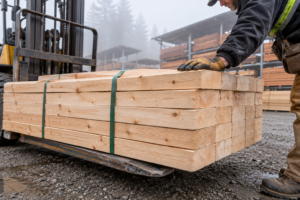
- Engineered beams and headers (LVL, PSL, glulam) built to the spec on your plans
- I-joists and solid sawn floor framing, cut and labeled by location
- Rim board, blocking, and squash blocks that go with the joist system
- Hangers, straps, and connectors picked against the actual members
- Columns and posts where the load has to keep going down
Some depths and lengths sit in the yard. Others are a special order, which is the single biggest factor in your timeline. We break that down in what’s in stock and what gets ordered in.
On cost, we will not quote a number here, because the drivers move: member type, depth, length, grade, ply count, connector type, and stock versus special order all change the total. A long, deep beam that has to be ordered in behaves nothing like a stock-depth I-joist run. Call the yard at 510-841-0511 with the spec for real numbers.
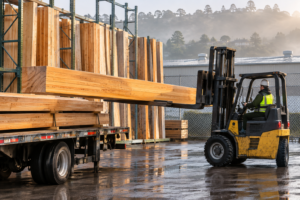
Delivery runs Monday through Friday, 7:00 a.m. to 3:00 p.m., in two-hour windows. Schedule at least two days ahead, and more than that if the package includes a special order member.
What a Full Engineered Lumber Package Actually Includes
The beam is one line on a longer list. Here is the rest of it, and what each piece is doing.
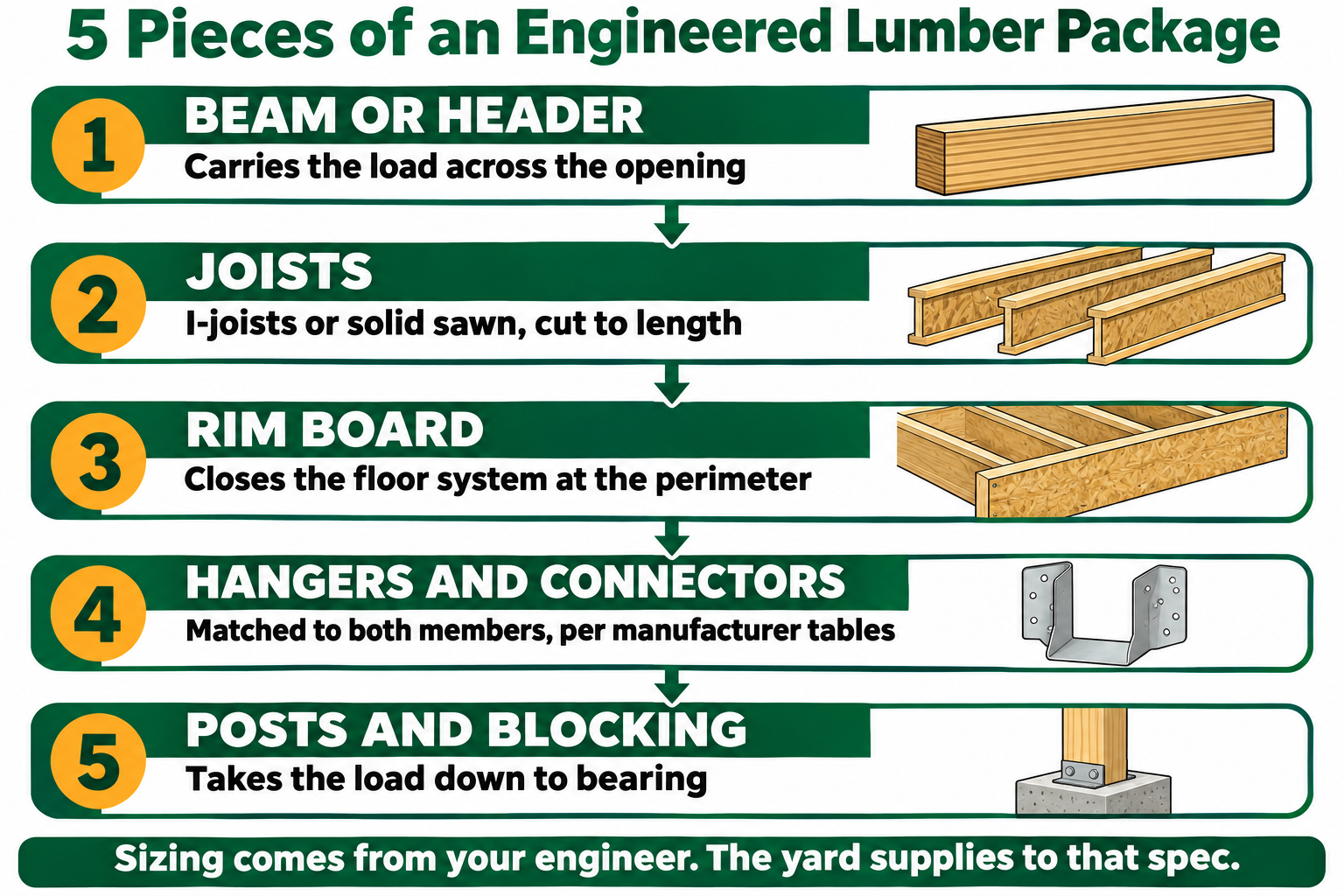
- Beam or header. Carries the load across the opening you just made. LVL, PSL, and glulam each behave differently in an exposed ceiling versus buried in a wall. We cover that in picking the right beam for an East Bay remodel.
- Floor framing. I-joists or solid sawn joists, cut to length. I-joists run straighter and longer; solid sawn still earns its spot in short spans and patch-in work.
- Rim board. Closes the floor system at the perimeter, transfers vertical load, and gives you something to nail siding and hangers to. Dimensional lumber is not a substitute here unless the plans say so.
- Hangers and connectors. Sized to the member being hung and the member carrying it. More on this below.
- Posts or columns. The load has to land somewhere. A new flush beam often means a new post, a new footing, or both.
- Blocking, squash blocks, and web stiffeners. Manufacturer-required at bearing points and under point loads. Easy to leave off a take-off and annoying to source mid-framing.
- Fasteners. The nail or screw called out in the connector schedule, in the right length and coating.
Miss one of these and the crew stops. We have had customers tell us the thing they value most is leaving with everything the job needed, not most of it.
Connectors Are Where Packages Fall Apart
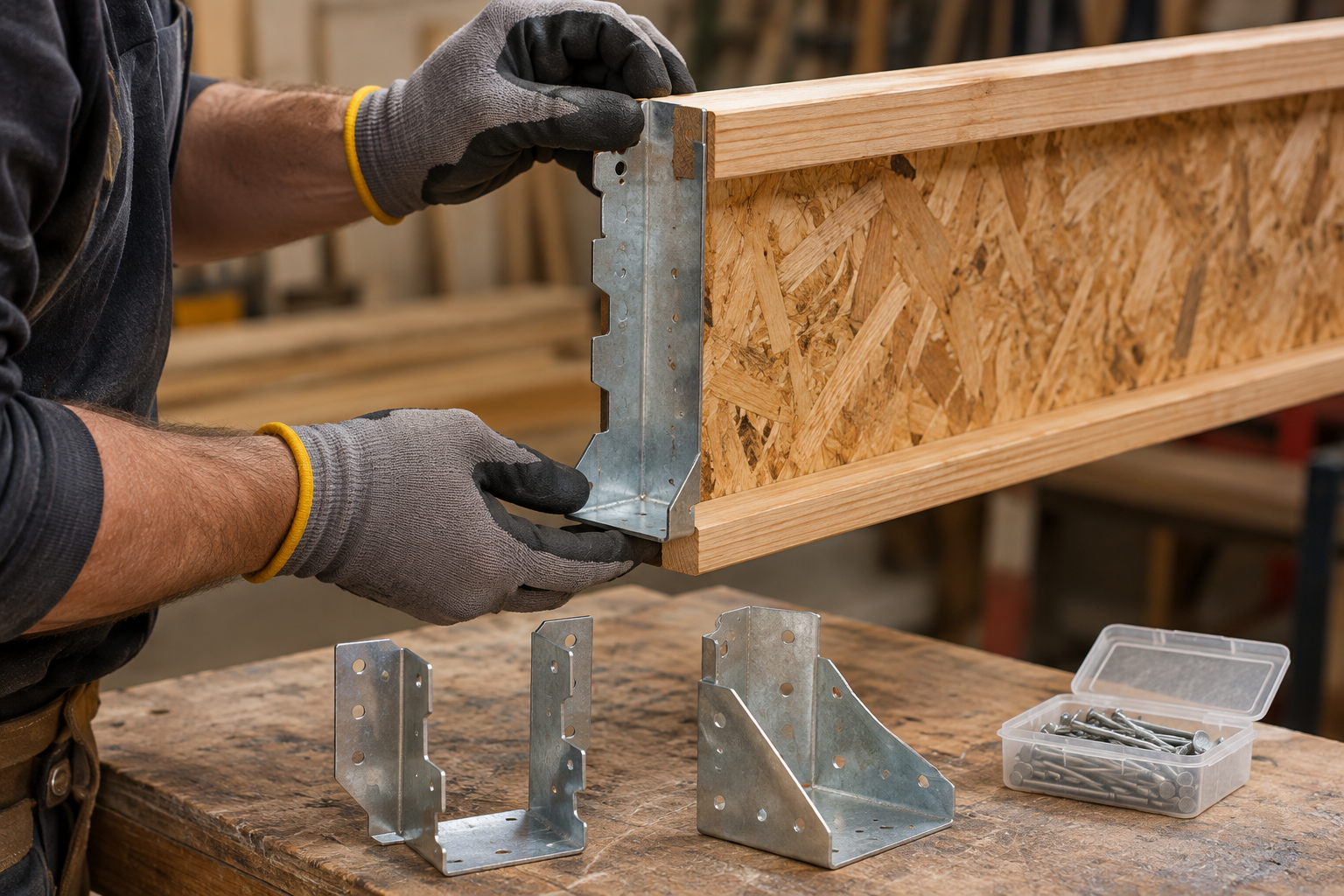
If a package goes wrong, it is usually hardware. The members show up fine and the hangers do not match.
A hanger has to suit both members: the joist or beam going into it, and the member carrying it. An I-joist does not hang the way a solid sawn joist does, even at the same depth, because the flange and web change how the connector grabs it.
Things that trip crews up:
- Depth mismatch. A hanger sized for a 2×10 will not carry an I-joist of similar depth correctly.
- Top-flange versus face-mount. Which one works depends on what the joist is landing on and what the plans allow.
- Nail schedule. Connectors are rated with a specific fastener in specific holes. Substituting what is in the truck voids the rating.
- Coating. Exterior and damp conditions, including enclosed crawlspaces in the fog belt, call for the right finish on the steel.
Connector selection follows the manufacturer’s tables, not habit and not what worked on the last job. The published load values from groups like APA, The Engineered Wood Association and the individual connector manufacturers assume the exact assembly they tested.
The fix is boring and it works: bring the joist layout and the beam spec together so hangers get picked against both at the same counter. Our fastener room is set up to work a project list item by item, which is exactly how this should be done.
The Package at a Glance
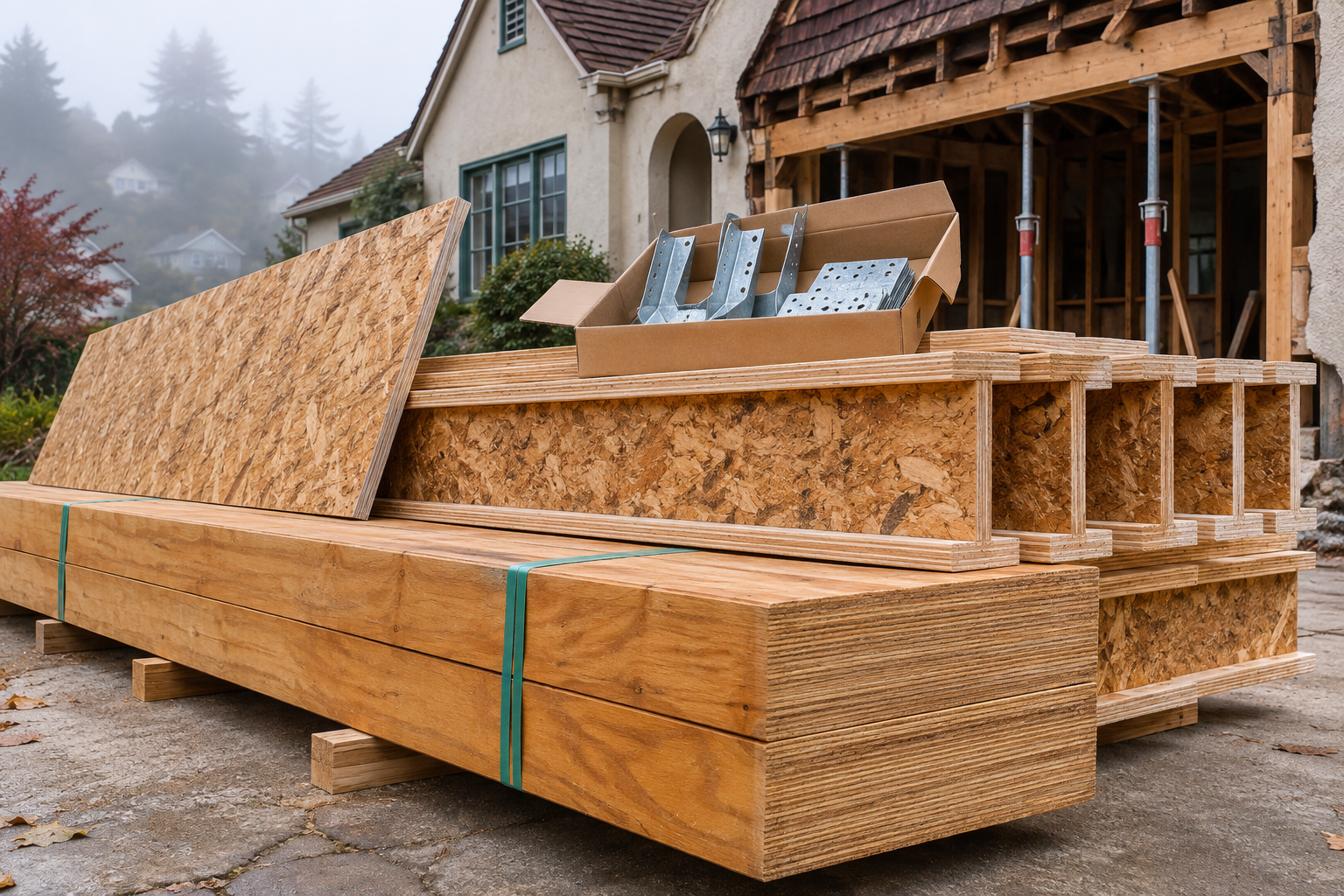
A quick visual of the five pieces most remodel packages need, in the order the load travels.
What the Yard Needs to Pull Each Piece
Use this as a take-off checklist before you call. The more of the right column you have in hand, the faster the package comes together.
| Package Item | What It Does | What We Need From You |
|---|---|---|
| Beam or header | Spans the new opening | Type, depth, width, ply count, length, exposed or concealed |
| I-joists or joists | Carries the floor or roof | Series, depth, spacing, lengths, joist layout sheet |
| Rim board | Closes and ties the floor system | Thickness and depth to match the joists |
| Hangers and connectors | Joins members and transfers load | Connector callouts plus both member sizes |
| Posts and columns | Takes the load to bearing | Size, height, and bearing detail from the plans |
| Fasteners | Makes the connector rating real | The nail or screw schedule on the connector |
Old East Bay Framing Changes the Package
Roughly 46 percent of Berkeley’s housing stock was built before 1940, and the median house here dates to the mid-1940s. That is why this category behaves differently in the East Bay than it does in a tract-built market.
When you open a wall in a 1920s house, the new engineered member is meeting framing that is neither level nor consistent. A few things to sort out at take-off rather than with the floor open:
- True-dimension lumber. Old 2x8s are often a full two inches by eight inches. A modern I-joist or hanger sized to today’s dimensions will not drop into that pocket without a plan.
- Depth matching. If a new floor has to meet an existing one, the depths have to work out before the order, not after.
- Bearing conditions. Settled walls, old posts, and unreinforced cripple walls change where the load can actually land. That is an engineer’s call.
- Access. Hearst Avenue to a Berkeley hills driveway with a 20-foot beam is a real logistics question. Tell us the site conditions when you schedule.
We see the same pattern on ADU work, where new framing has to meet an existing house in several places at once. Our ADU material list guide walks through how to stage that.
Is Engineered Lumber Really as Strong as Solid Wood?
This one comes up constantly, usually from a homeowner looking over the contractor’s shoulder who is nervous about paying for something that looks like glued-up plywood.
The honest answer: engineered members are manufactured for consistent, predictable strength. The defects that make one 4×12 stronger than the next are spread out and accounted for. They also come straighter, with less shrinkage, and in longer lengths than solid sawn timber of the same depth.
Solid sawn still has its place:
- Short spans and simple patch-in framing
- Exposed timber where you want the look and character of real sawn wood
- Conditions where moisture exposure makes an engineered product the wrong call
If you are still deciding between the two for a floor, TJI joists versus solid lumber covers the tradeoffs in more detail, and what engineered wood actually is is a good starting point for the homeowner on the project.
And on sizing: we do not size beams, headers, or joists, and no article should. That number comes from your project’s engineer or the manufacturer’s sizing software, based on loads, spans, and conditions we cannot see from the counter. Our role is to supply, cut, label, and deliver to that spec. The sooner we see the spec, the sooner the package is staged.
Frequently Asked Questions About Engineered Lumber Packages
Who stocks engineered lumber for contractors in the San Francisco Bay Area?
Our Berkeley lumberyard at 642 Hearst Avenue supplies engineered lumber to contractors throughout Berkeley, Oakland, San Francisco, and the broader East Bay. That includes LVL, PSL and glulam beams, I-joists, rim board, posts, and matching connectors, cut and labeled by location and delivered to the jobsite. Some depths are stocked and others are special order, so call 510-841-0511 with your engineer’s spec and we can tell you what is on the ground and what has to come in.
Can you size the beam for me if I tell you the span?
No, and you should be careful with anyone who will. Beam, header, and joist sizing depends on loads, tributary area, bearing, and seismic conditions that have to be evaluated on your specific project. That number comes from your engineer or the manufacturer’s sizing tools. Bring us the spec and we will supply exactly what it calls for.
How far ahead should I order an engineered lumber package?
Depends entirely on whether the members are stock or special order. Stock depths and common lengths move quickly. A deep beam, a long length, or a multi-ply assembly can add real lead time, so get the spec to us as soon as the engineer signs off rather than the week before framing.
Why can’t I just buy the beam from you and pick up hangers somewhere else?
You can, and it works until it does not. The risk is that the hanger gets picked against a member nobody at the second counter has seen. Hangers have to match both the member being hung and the member carrying it, and I-joists hang differently than solid sawn. Sourcing the members and the connectors together is how you avoid losing a morning.
What should I bring to the counter to put a package together?
The engineer’s spec with depths, widths, and lengths; the joist layout sheet; and the connector callouts. If there is an existing floor the new framing has to meet, bring that dimension too. Our breakdown of what the yard needs to order an engineered beam goes line by line.
Putting an Engineered Lumber Package Together?
Our lumberyard at 642 Hearst Avenue in Berkeley has supplied engineered lumber to Bay Area contractors since 1946, and the staff behind the counter have seen what an old East Bay floor system does to a straightforward beam order. If you have the engineer’s spec and the joist layout in hand, the Lumberyard and Hardware line is 510-841-0511, or you can look over the engineered lumber and beams page first.