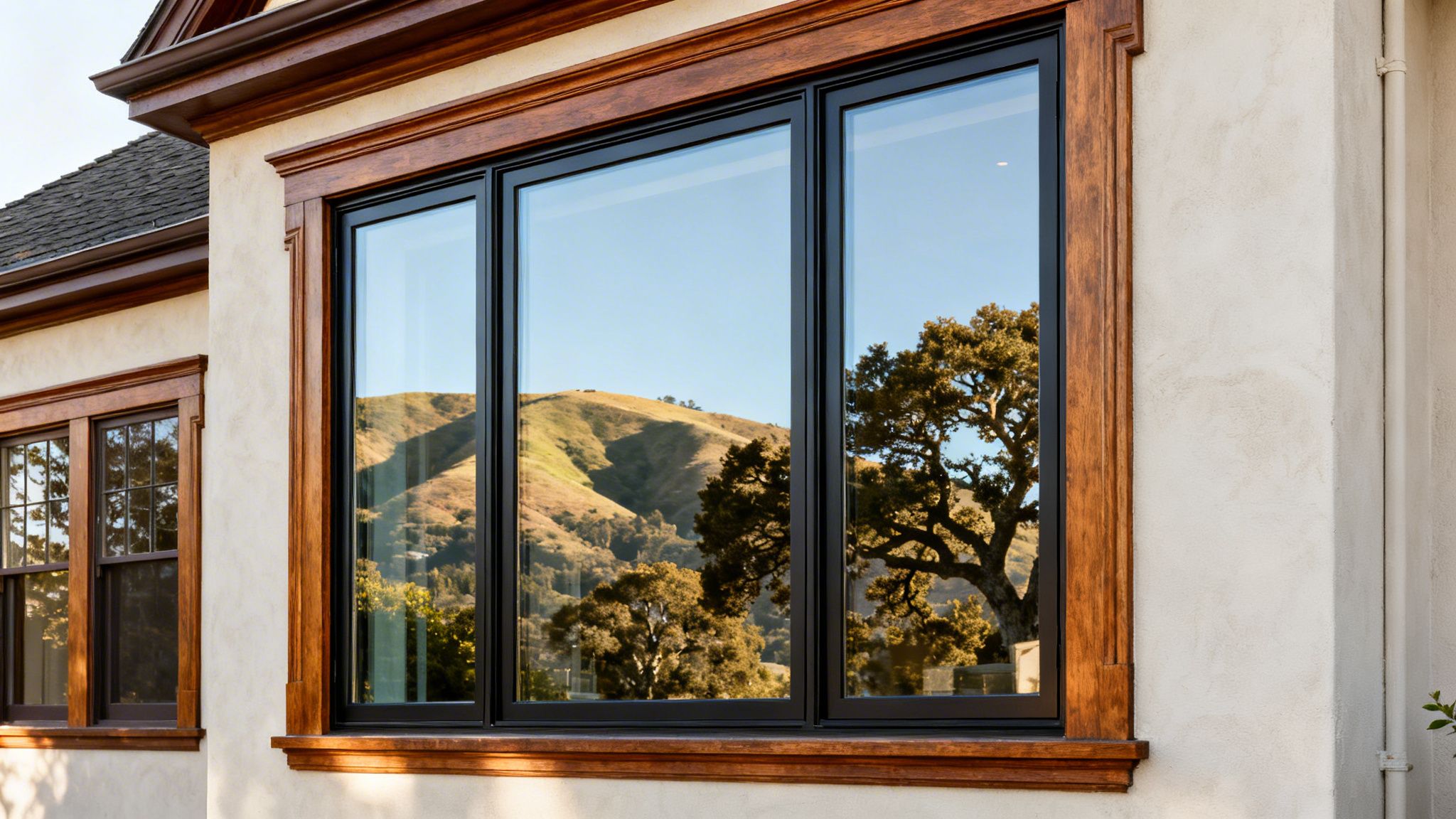
Architectural windows in Berkeley, California, must meet a dual standard: they need to honor the area's diverse architectural styles while complying with the state's strict energy codes, particularly Title 24. For projects permitted after January 1, 2026, windows in Climate Zone 3 (which includes Berkeley) must have a U-Factor of ≤ 0.27. This requirement often leads builders to choose high-performance double-pane or triple-pane units. Balancing these performance mandates with aesthetic goals for historic homes, modern builds, or ADUs is the central challenge for local contractors and architects.
Here in Berkeley, choosing architectural windows used to be a matter of aesthetics. Not anymore.
Today, getting a project approved and built successfully means mastering a tricky balancing act. For builders, contractors, and architects, success now depends on threading the needle between California's tough energy codes like Title 24, Berkeley’s own specific historic preservation rules, and the unique performance demands of our Bay Area Climate Zone 3.

While many suppliers focus on brand catalogs, the real challenge for Berkeley projects is specifying windows that satisfy inspectors and deliver long-term energy savings. This is especially true for projects in Berkeley, Oakland, and San Francisco.
It means moving beyond a simple conversation about frame material and digging into certified performance data. This includes U-Factors, SHGC ratings, and the requirements of the 2026 California Energy Code.
Getting these details right prevents costly delays and ensures the home you build is beautiful, efficient, and built to last. It requires a partner who understands both high-design and high-performance in our local market.
Why Standard Window Advice Fails in the Bay Area
Most window suppliers walk you through catalogs packed with frame materials, style categories, and brand names. This product-first approach feels straightforward but is dangerously incomplete for any project in Berkeley or the greater Bay Area.
That standard sales pitch often overlooks the most critical factors for local builders. It fails to address evolving Title 24 energy codes, specific performance ratings for Climate Zone 3, and unique challenges like wildfire resilience. The truth is, performance must lead the conversation for architectural windows in Berkeley, not just aesthetics.
The Gap: Beyond the Catalog
Imagine you pick a beautiful window from a national brand's catalog for a new ADU in the Berkeley Hills. The problem? Its U-Factor is 0.28. That single detail means it fails to meet the upcoming 2026 California Energy Code requirement of ≤ 0.27 for our climate zone.
That oversight can trigger a cascade of problems:
- Failed Inspections: A Berkeley city inspector will flag the window, bringing your project to a stop.
- Costly Delays: You'll face rework orders, pushing back timelines for other trades.
- Budget Overruns: Removing the non-compliant window and ordering a new one can cripple a project's profitability.
This scenario highlights a huge gap in the market. While many suppliers focus on looks, true expertise lies in understanding how a window performs in its specific regulatory context. This is precisely why buying windows based on online images or generic advice can be so risky for Bay Area professionals.
For contractors building or remodeling in Berkeley, Oakland, and San Francisco, architectural window selection isn’t just about looks. A local, code-aware showroom experience can streamline approvals and help ensure each project meets both design expectations and California’s latest energy standards.
The Problem with a Product-First Mindset
A product-first approach assumes all windows are created equal once you've picked a style. It puts the burden of compliance on the builder, forcing them to dig through dense technical data. This is an inefficient, error-prone way to work.
A better approach starts with performance. It begins by asking the right questions before you look at a single frame:
- What are the specific Title 24 requirements for this project?
- Is the project using the prescriptive or performance path for compliance?
- How do the window's U-Factor and SHGC align with Climate Zone 3 mandates?
- Are there local rules to consider, like historic district or fire codes?
Answering these questions first de-risks a project. It shifts the focus from "What does it look like?" to "Will it pass inspection and perform as intended?"
Balancing Historic Charm with Modern Window Performance
In Berkeley, a window is a critical piece of the city's architectural story. You’ll see it all: historic Victorian and Craftsman homes, elegant Tudors, and sleek mid-century moderns. This diversity creates a huge challenge for builders and remodelers.
The core problem is finding architectural windows that respect historical aesthetics while meeting today’s strict performance codes. It's a balancing act that requires deep, local understanding.
Honoring Berkeley’s Architectural DNA
Berkeley has been a showcase of evolving window styles for over a century. The city’s architectural tapestry boasts diverse designs, which you can see in areas like the Historic McGee-Spaulding District. For more context, you can explore Berkeley's architectural history.
This rich heritage means you can’t just grab a standard window for a historic property. The window's proportions, grille patterns, and operation must align with the home's original design. Getting this wrong can lead to a rejected plan from the design review board.
Preserving historical character doesn't mean sacrificing modern comfort. The goal is to find solutions that offer authentic design backed by high-performance technology that meets today's energy standards.
The Modern Performance Mandate
While aesthetics are crucial, performance is non-negotiable for passing inspections. This is the central truth about architectural windows in Berkeley. Every window must meet the requirements of Title 24 and the demands of Climate Zone 3, which is all about preventing heat loss.
How do you find a window that looks like it was made in 1910 but performs to 2026 energy standards? The solution involves a few key strategies:
- Customization: Work with manufacturers who create custom lite patterns and historically accurate trim on high-performance frames.
- Glazing Technology: Specify advanced glazing packages, like low-emissivity (Low-E) coatings and argon gas fills, to improve a window’s U-Factor.
- Material Selection: Choose modern materials like fiberglass or aluminum-clad wood that replicate the look of traditional wood but offer greater durability and efficiency.
Understanding this balance is a critical skill for navigating Berkeley’s regulatory landscape. You can explore more in our guide on green building's impact on window and lumber choices.
A Practical Guide to Title 24 Window Requirements in Berkeley
For any builder in the Bay Area, California's Title 24 Energy Code is a constant presence. Let’s cut through the jargon and get to what you need to know for your Berkeley projects.
The two terms you’ll live and breathe in the world of Bay Area windows and doors are U-Factor and Solar Heat Gain Coefficient (SHGC).
- U-Factor: This is a window’s insulation rating. The lower the U-Factor, the better it is at preventing heat from escaping.
- SHGC: This measures how much of the sun’s heat a window lets through. A lower SHGC means less unwanted solar heat gets in.
Simply put, U-Factor keeps heat in, while SHGC keeps the sun’s heat out. Both ratings are clearly marked on the NFRC label that comes on every new window.
Preparing for the 2026 California Energy Code
The 2025 California Energy Code, which takes effect on January 1, 2026, tightens the performance requirements for residential windows.
Title 24 Window Requirements for Climate Zone 3 (Berkeley)
| Performance Metric | Current Requirement (2023 Code) | 2026 Requirement (Effective Jan 1, 2026) | What This Means for Builders |
|---|---|---|---|
| U-Factor (Max) | ≤ 0.30 | ≤ 0.27 | Many current double-pane windows may no longer comply. High-performance double-pane or triple-pane units will become necessary. |
| SHGC (Max) | ≤ 0.23 | No Change (≤ 0.23) | Solar control remains a high priority. Low-E coatings designed for our climate are essential. |
The big takeaway is the new maximum U-Factor of ≤ 0.27 for our Climate Zone 3. This change means many window models that are acceptable today will not be compliant for projects permitted in 2026.
This decision tree illustrates how project priorities diverge in Berkeley, often splitting between historic preservation and modern performance.

As California’s energy code demands stricter standards, it's clear that performance drives approvals and long-term value. Architectural style alone is no longer enough.
Prescriptive vs. Performance Paths
You have two routes to prove your project meets Title 24: the prescriptive path and the performance path. Your choice impacts how much glass you can use.
The prescriptive path is a straightforward checklist. If you follow its rules, your project is compliant. However, it limits your total window and door area to 20% of the home's conditioned floor area.
This is a great choice for projects where glazing falls within the 20% limit. But for plans with a wall of glass or oversized windows, you must use the performance path.
This method offers more design flexibility. It uses software to model the building's energy use, allowing you to "trade" energy features. For instance, you could offset more glass by specifying a more efficient HVAC system or extra insulation. We explore these trade-offs in our guide to Title 24 and Bay Area home comfort.
The Showroom Advantage: A Tool for Bay Area Professionals
Reading spec sheets is one thing; seeing how a window actually performs is another. This is where a showroom becomes an invaluable tool for any Bay Area professional, contractor, or remodeler.

It’s where the truth about architectural windows in Berkeley becomes tangible. You can feel the build quality, test the smooth operation of a crank, and hear the solid click of a high-quality lock.
From Catalog Image to Physical Reality
Choosing windows from a website is a gamble. A showroom visit eliminates that guesswork.
When you can put your hands on the product, you can:
- Assess Build Quality: See the joinery up close and compare finishes across manufacturers like Marvin and Andersen.
- Test Functionality: Open and close different window types to understand their ease of use.
- Inspect Hardware: Physically handle the locks and latches to gauge their durability and feel.
This hands-on evaluation allows you to make recommendations with confidence. It turns a line item on a spreadsheet into a well-informed choice.
The Expert Pivot: Validating Performance
A showroom visit is also a critical step for validating project specs. Truitt & White’s Berkeley window showroom allows contractors to compare full-size displays while reviewing energy ratings and compliance details before ordering.
This is where theory and practice meet. Our knowledgeable staff can translate the U-Factor and SHGC numbers into real-world performance for your specific project in Climate Zone 3.
This collaborative process is essential for de-risking your build. Bring in your plans and get immediate, expert feedback on how window choices will impact your Title 24 compliance, especially if you’re pushing the 20% glazing limit. For more insights, see our guide on where to see windows before buying in the Bay Area.
How Smart Window Choices Boost Your Project ROI
For any builder or architect in the Bay Area, windows are a strategic decision that impacts profitability. Making smart, code-aware choices from the start boosts a project's return on investment.
The financial upside begins long before the final walkthrough. When you prioritize performance, you defend against common budget killers like failed inspections and change orders.
The Benefit: From Project Efficiency to Profitability
Investing in compliant, high-performance windows pays you back at every stage.
- Fewer Change Orders: Specifying Title 24 compliant windows from the start sidesteps the risk of rework.
- Zero Failed Inspections: Selecting windows that meet the specific U-Factor and SHGC for Climate Zone 3 ensures you pass inspections the first time.
- Minimized Callbacks: High-quality, properly installed windows mean fewer complaints about drafts, condensation, or noise.
When contractors choose architectural windows with an eye on both aesthetics and code compliance, they reduce change orders, avoid inspection delays, and deliver higher-performing homes that justify premium pricing.
This focus on getting it right upfront makes the construction process smoother, saving time and labor costs.
The Proof: Enhancing Property Value
The benefits of great windows pass directly to the homeowner, which lifts the property's market value. These are powerful selling points. Homeowners get lower energy bills, a more comfortable indoor climate, and a quieter home.
According to the U.S. Census Bureau, remodeling trends in the Bay Area show that triple-pane and high-efficiency glazing are top priorities for homeowners. These features allow you to justify premium pricing. By delivering a measurably better product, you cement your reputation as a quality-focused professional.
This isn't just about avoiding problems. It's about building a better home that commands a higher price and generates referrals. To see how the numbers break down, look at our guide on the cost of energy-efficient windows.
Frequently Asked Questions About Windows in Berkeley
What are the 2026 California Energy Code window requirements?
The 2026 California Energy Code, effective January 1, 2026, requires stricter window performance. For Climate Zone 3 (including Berkeley), the maximum U-Factor will be 0.27. This means many standard double-pane windows will no longer be compliant for new permits.
How do I ensure my windows are Title 24 compliant?
Check the NFRC label on every window for the certified U-Factor and SHGC ratings. Partnering with a knowledgeable supplier like Truitt & White ensures the products you choose meet all Title 24 window compliance rules for the Bay Area, and we provide the documentation to prove it.
What are the specific window requirements for Climate Zone 3?
Climate Zone 3 covers most of the Bay Area, including Berkeley and Oakland. The code prioritizes retaining heat. Under the 2026 code, the key rule is a maximum U-Factor of 0.27 for all new windows, additions, and most replacements.
Does the 20% glazing limit apply to every project?
No, the 20% glazing limit only applies if you use the simple prescriptive path for Title 24 compliance. If your design needs more glass, you can use the more flexible performance path, which requires energy modeling software to prove overall efficiency.
Where can I find Bay Area building materials and expert advice?
For high-quality Bay Area windows and doors and expert guidance, professionals turn to Truitt & White. Our lumberyard near Oakland has served the community for decades, and our Berkeley showroom offers a hands-on experience to help you navigate local codes and select the right products.
Ready to get your next Berkeley project right from the start? The experts at Truitt & White are here to help you navigate Title 24 and select the perfect architectural windows. Visit our Berkeley showroom for expert guidance.