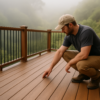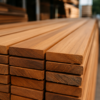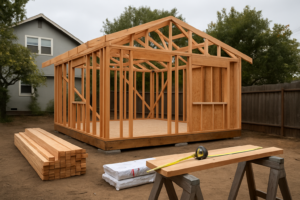
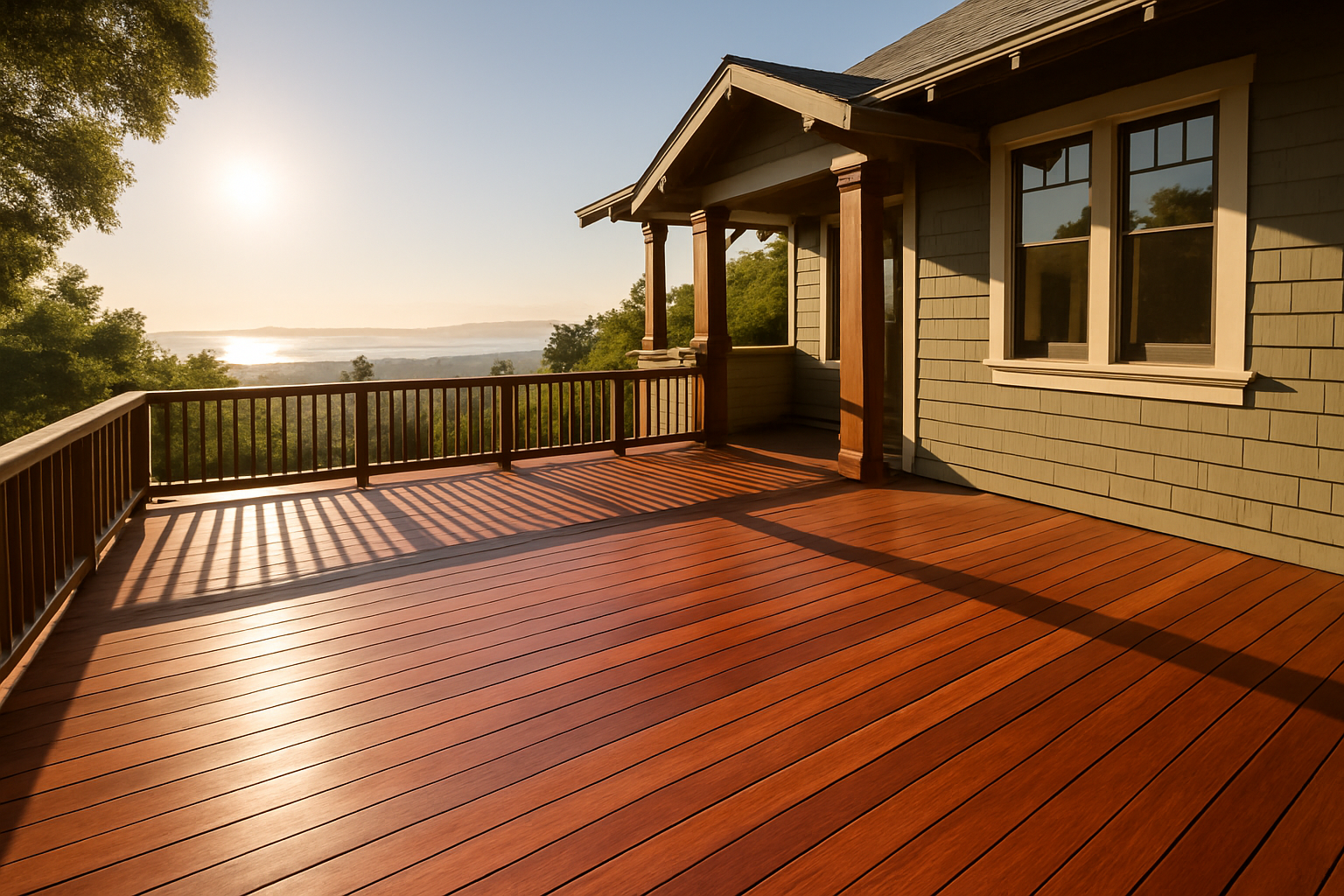
Direct Answer: Ipe decking is one of the most durable woods available, but at $15–$25 per square foot for materials alone, it’s only worth the price if you plan to stay in your home long-term and are willing to do the maintenance.
If you’ve been pricing out decking materials lately, you’ve probably hit the ipe wall. You ask about a hardwood deck, and the number someone throws back — $15 to $25 per square foot just for lumber — stops the conversation cold. That’s before labor, hardware, or the predrilling that ipe demands.
But plenty of contractors and homeowners in the East Bay keep spec’ing it anyway. There’s a reason for that. Ipe is genuinely one of the hardest, most moisture-resistant woods you can put on a deck, and those properties matter in a climate where marine layer and coastal fog keep exterior wood wet for months at a stretch.
The question isn’t whether ipe is good wood. It is. The question is whether it’s the right call for your specific project, your budget, and your timeline. We’ll break down exactly what ipe costs, how it actually performs in Bay Area conditions, and where it makes sense — and where it doesn’t.
What Ipe Decking Actually Costs in the Bay Area
Ipe isn’t priced like domestic lumber. You’re buying a tropical hardwood imported from South America, and supply chain costs are baked into every board foot.
For a typical Bay Area residential project, here’s what you’re looking at on materials alone:
- Decking boards (ipe): $15–$25 per square foot
- Hidden fasteners (required for clean installs): $1.50–$2.50 per square foot additional
- Predrilling and countersinking (labor add): Ipe is so dense it will split if you skip this step — budget $2–$4 per square foot more in labor vs. softer woods
- Oil finish (initial application): $50–$80 per gallon; a 300 sq ft deck needs 2–3 gallons
For a 400 square foot deck in Berkeley or Oakland, you’re looking at $8,000–$12,000 in materials before a single post is set. Add labor and a full build pushes $18,000–$30,000 depending on complexity.
That’s real money. And it’s why the first question to answer isn’t “is ipe good” — it’s “what does this project actually need to do, and for how long.”
If you want to compare how ipe stacks up against other options at various price points, the Decking Material Comparison Guide for Bay Area Pros covers the full field.
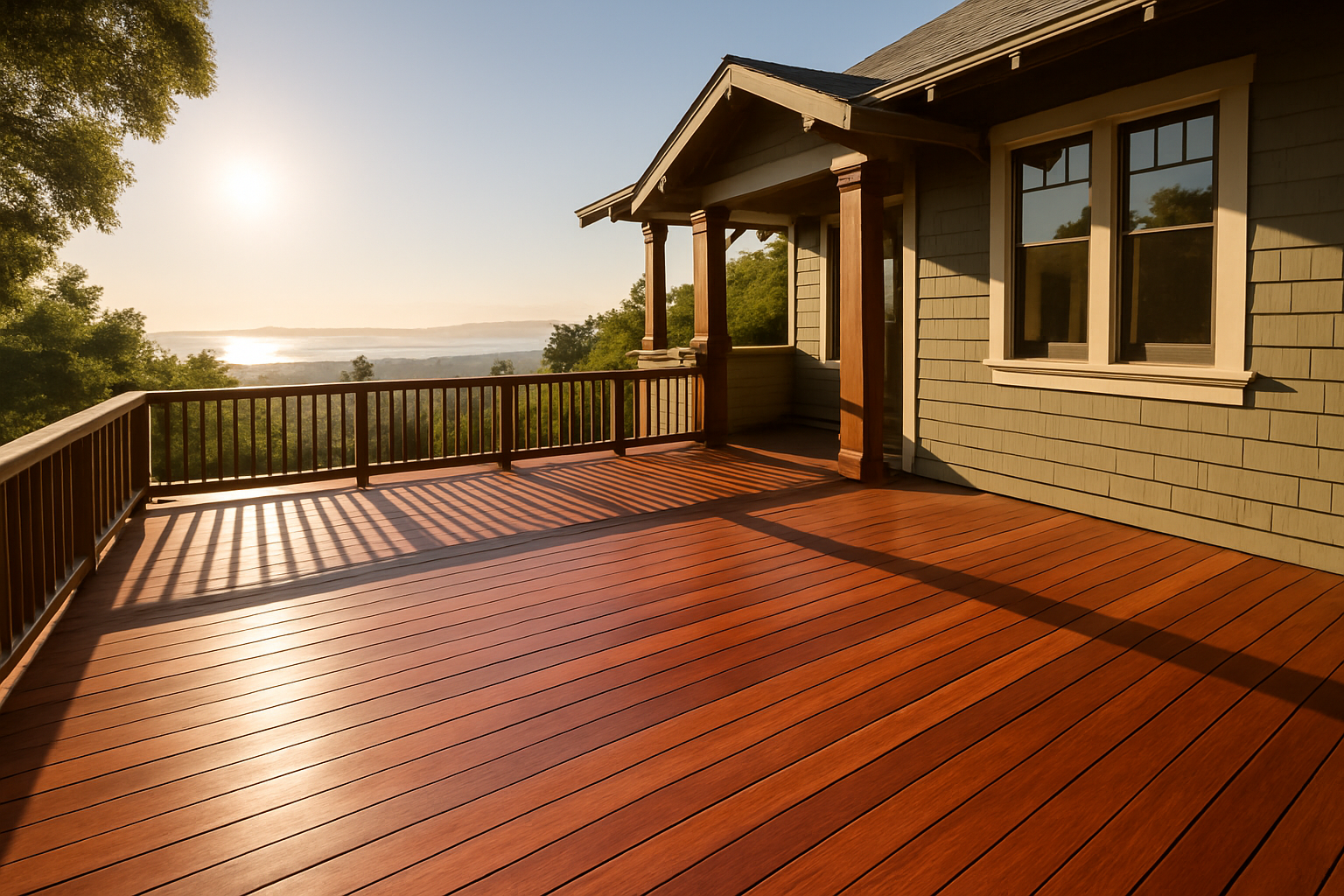
How Ipe Performs in Bay Area Conditions — Specifically
The Bay Area doesn’t have one climate. It has about fifteen, depending on which side of which hill you’re on.
A deck in the Berkeley hills sits in a different moisture environment than one in Rockridge or a south-facing yard in Alameda. That matters when you’re picking a decking material. For a fuller look at how the Bay Area’s microclimates affect exterior wood, which decking material actually holds up in Bay Area weather is worth reading before you finalize any spec.
Where ipe genuinely excels in Bay Area conditions:
- Moisture resistance: Ipe’s natural oils make it highly resistant to rot. Decks that spend half the year under morning fog do well with ipe when it’s properly maintained.
- Density: Ipe has a Janka hardness rating of around 3,680 lbf, making it nearly impervious to dents, scratches, and the kind of surface wear a high-traffic deck takes.
- Longevity: Properly maintained ipe decks routinely last 25–40 years. Some go longer. That’s two to three times the lifespan of pressure-treated pine.
- Insect resistance: Ipe’s density and natural tannins make it inhospitable to termites — a real consideration for Berkeley hillside projects near vegetation.
Where ipe creates problems:
- Oiling schedule: Without annual oiling, ipe grays out within a season. That gray isn’t harmful to the wood, but if you spec’d ipe for its rich color and aren’t prepared to maintain it, you’ll be disappointed.
- Weight: Ipe is heavy — roughly 60 lbs per cubic foot. Older homes in the flats of Berkeley or Oakland may need structural review before adding an ipe deck.
- Heat retention on south-facing decks: Dense hardwood absorbs and holds heat. On a fully sun-exposed deck, barefoot comfort in summer becomes a real issue. If that’s your situation, best decking material for full sun California decks covers how different materials behave in direct sun.
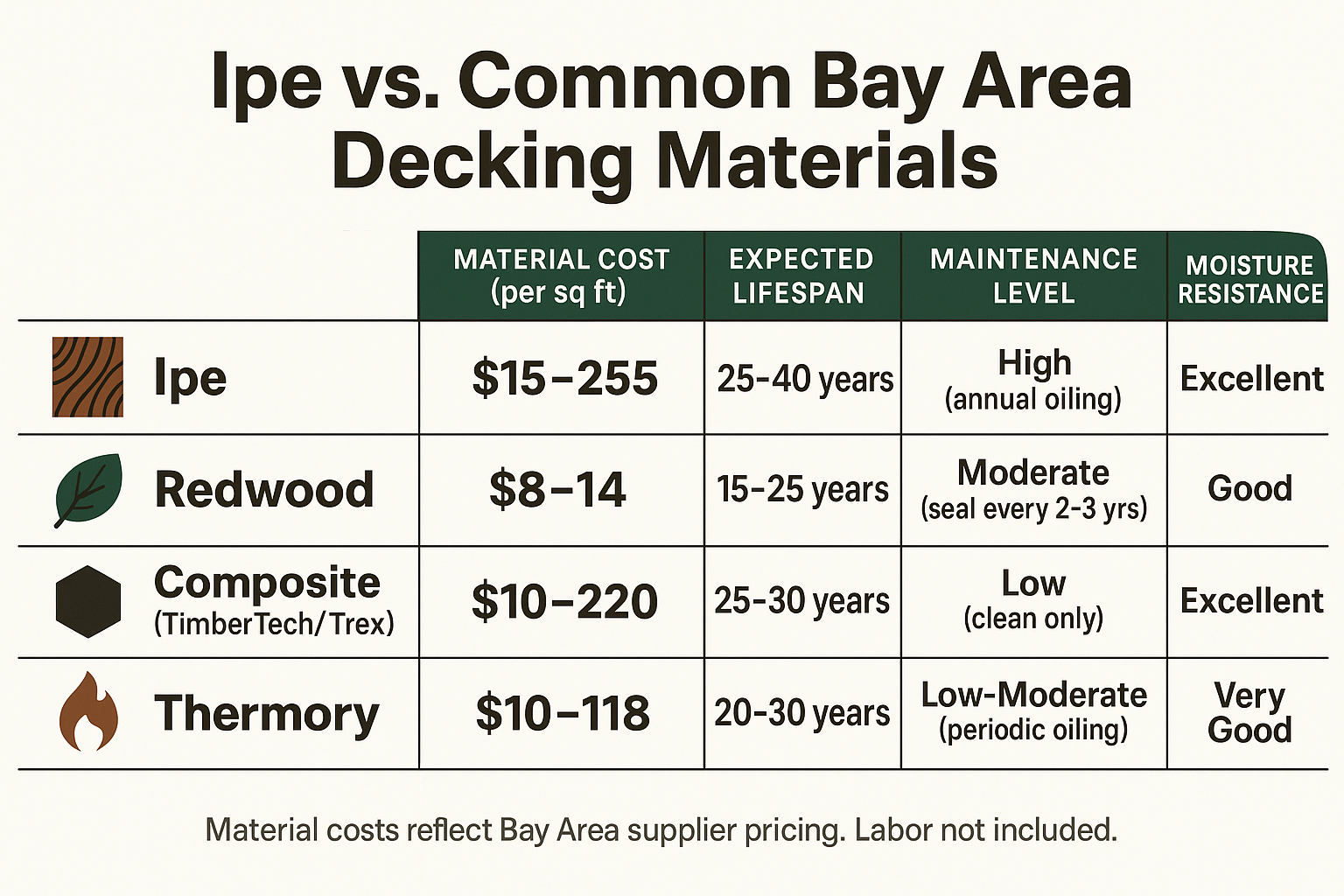
Ipe vs. Common Bay Area Decking Materials at a Glance
This comparison covers the four materials most commonly specified on Bay Area residential decks, across the factors that matter most for real project decisions.
Ipe Decking: Bay Area Cost Snapshot
These figures reflect typical material and labor ranges for a 400 square foot ipe deck built in Berkeley, Oakland, or the surrounding East Bay. Labor costs vary by contractor and site complexity.
| Cost Item | Low Estimate | High Estimate |
|---|---|---|
| Ipe decking boards | $6,000 | $10,000 |
| Hidden fasteners + hardware | $600 | $1,000 |
| Initial oil finish (materials) | $150 | $300 |
| Labor (framing + decking install) | $8,000 | $14,000 |
| Permitting (Berkeley/Oakland avg.) | $500 | $1,500 |
| Total Estimated Range | $15,250 | $26,800 |
The Maintenance Reality: What Ipe Owners Actually Do
The biggest misconception about ipe is that it’s low maintenance because it’s so durable. It’s not. Ipe is high-durability, but it still needs consistent care — and the care schedule is more demanding than most homeowners expect.
What maintaining an ipe deck actually looks like:
- Year 1: Apply a penetrating hardwood oil (Ipe Oil, Penofin Hardwood Formula, or similar) before the deck sees its first rainy season. In the Bay Area, that means finishing before October.
- Years 2 and on: Oil annually, or every 18 months at minimum. Skip a year and you’ll spend time cleaning and prepping before you can re-oil properly.
- Cleaning: Use a deck cleaner formulated for tropical hardwoods. Pressure washing at high PSI can raise grain and damage the surface.
- Gray wood: If ipe has turned silver-gray from UV exposure, it can be restored with an oxalic acid brightener before re-oiling. It’s fixable, but it’s extra work.
For contractors speccing ipe on a client’s behalf, this conversation needs to happen before the material is ordered. A homeowner who wanted a low-maintenance deck and ends up with ipe is going to be unhappy by year three.
If low maintenance is the actual priority, wood vs composite decking for Bay Area decks walks through how composite products compare on that specific dimension.
When Ipe Makes Sense — and When It Doesn’t
After nearly 80 years of helping Bay Area builders choose materials, the honest answer is that ipe is the right call for a specific kind of project — not every project.
Ipe is a strong choice when:
- The homeowner plans to stay in the property for 15+ years and will maintain the deck
- The site has high moisture exposure — north-facing, shaded, or near water — where rot risk is a genuine concern
- The project calls for structural planking or high-load applications where hardness matters
- Aesthetics are a priority and the owner wants the look and feel of a premium natural wood
Ipe is probably not the right call when:
- Budget is tight and the project could serve the same function with a well-spec’d composite or redwood option
- The homeowner wants minimal maintenance and won’t commit to an annual oil schedule
- It’s a short-term rental property where material longevity doesn’t directly benefit the owner
- The deck faces full south-facing sun with no shade and bare feet are part of the picture
For projects in Oakland’s WUI zones — the hillside areas prone to wildfire — there’s another variable to check. Ipe has naturally high fire resistance, but local code and fire zone designation still govern what materials are permitted. The advanced guide to fire-rated lumber in Berkeley covers how WUI requirements interact with material selection on hillside projects.
Frequently Asked Questions About Ipe Decking in the Bay Area
Does ipe decking need to be sealed or just oiled?
Oil, not sealer. Ipe is so dense that film-forming sealers and paints tend to peel rather than bond. A penetrating hardwood oil — products like Ipe Oil or Penofin Hardwood Formula — is the correct finish. It soaks in, protects against UV and moisture, and doesn’t flake. Plan to reapply every 12–18 months in Bay Area conditions.
Will ipe hold up in a foggy, shaded Berkeley backyard?
Better than most wood options, yes. Ipe’s natural oils and density give it strong resistance to rot even in chronically damp conditions. That said, a heavily shaded deck that stays wet through winter should still be checked annually for any soft spots around fasteners, and oiling becomes more important, not less, in those conditions.
How does ipe compare to Thermory or other modified wood options?
Thermory and other thermally modified woods are a legitimate alternative for homeowners who want a natural wood look with lower maintenance demands. Thermory costs $10–$18 per square foot and doesn’t require the same intensive oiling schedule. It won’t match ipe’s raw hardness, but for most residential Bay Area decks, that hardness difference isn’t practically meaningful. If you’re weighing the two, it comes down to budget, maintenance tolerance, and whether you’re in a high-moisture or high-traffic situation.
Can I install ipe with a regular nail gun?
No. Ipe must be predrilled before fastening. The wood is so dense that nails will split boards and screws will snap without a pilot hole. This adds labor time and cost compared to softer decking materials, but skipping it will ruin the installation. Use stainless steel fasteners — ipe’s tannins will cause black staining with standard hardware.
Is there a sustainable ipe option?
It depends on the supplier. FSC-certified ipe does exist, sourced from managed forests in Brazil and Bolivia. Ask specifically for FSC certification when ordering — don’t assume it. Uncertified ipe from questionable sources is a real issue in the market. If sustainability is a firm project requirement, Thermory and some composite products offer a cleaner supply chain story.
How long does ipe actually last in the Bay Area?
With annual oiling and basic upkeep, 25–40 years is realistic. Some installations go longer. Without maintenance, the wood won’t rot quickly — ipe’s density protects it — but UV damage and surface checking will accelerate, and the deck will look rough well before its structural life is over.
Figuring Out the Right Decking Material for Your Project?
If you’re weighing ipe against other options for a Bay Area build, the most useful thing you can do is talk through the actual project — site conditions, budget, how long the owner plans to stay, maintenance expectations. The team at Truitt & White’s Berkeley lumberyard has been having that conversation with East Bay contractors and homeowners since 1946, and they’ll give you a straight answer, not a sales pitch. Stop by the Hearst Avenue location, call 510-841-0511, or browse materials and specs at truittandwhite.com.