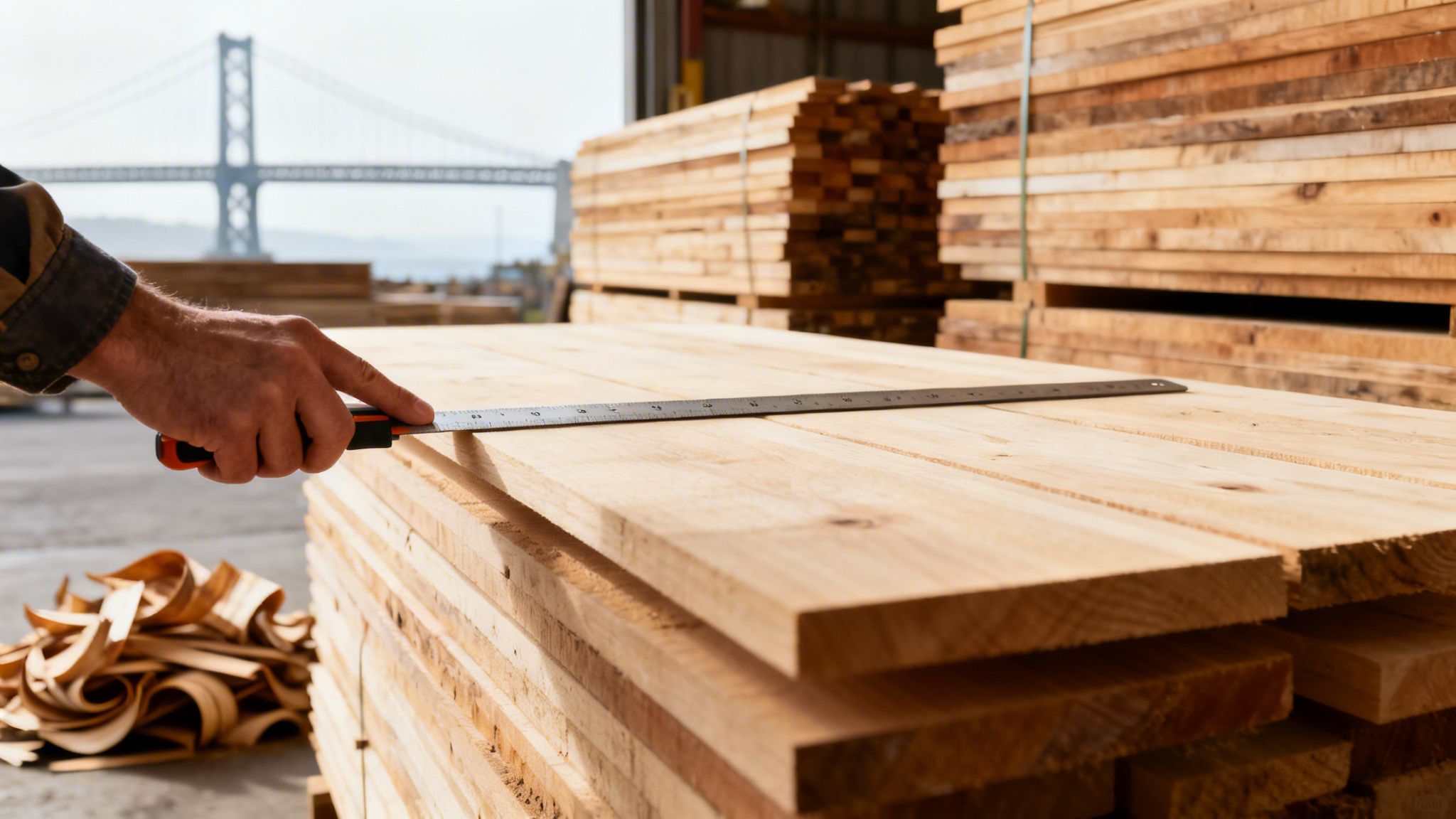
Picking a lumber supplier for your Bay Area project is more than just getting the lowest price. You are choosing a partner. For builders in Berkeley, Oakland, and across the East Bay, this means focusing on reliability, material quality, and deep local knowledge. These factors are what truly protect your timeline and your bottom line.
Why Your Lumber Supplier Is Your Most Important Partner

It’s easy to treat lumber like a commodity. However, for busy contractors and builders, that is a costly mistake. The "cheapest" bid often hides expensive problems that show up on the jobsite, putting your profit and reputation at risk. Lumber is not a commodity—its quality varies widely, and that variation has real-world consequences.
The Hidden Costs of “Cheaper” Lumber
Low-bid lumber almost always comes with a high cull rate. When your crew wastes time sorting through warped, checked, or twisted boards, those initial savings get eaten up by labor costs. Inconsistent supply from a cheap supplier can disrupt your entire project schedule.
A single bad delivery doesn’t just waste material; it wastes time. Jobsite delays caused by unusable lumber or incomplete orders can cost thousands in lost productivity. These delays create a domino effect, pushing back subcontractors and stressing your relationship with the client.
Reliability Matters More Than Price Alone
Choosing a supplier is about building a strategic partnership. A reliable, quality-focused supplier becomes an extension of your team. They deliver:
- Consistent Quality: Straight, usable boards with the right moisture content for our unique Bay Area climate.
- Accurate Takeoffs: Complete, job-ready orders that eliminate frustrating reorders and last-minute runs to the yard.
- Protected Materials: Lumber stored correctly to protect its integrity, so it performs as expected on your jobsite.
A true partner understands their success is tied to yours. If you're interested in this philosophy, you might want to read about why Truitt & White is the best choice for contractor supplies in the Bay Area. We act as a dependable partner for builders who demand quality and consistency.
How to Spot Quality Lumber and Avoid Jobsite Headaches

When lumber hits your jobsite, you learn a lot about your supplier. Getting past the price per board foot means looking at details that impact build quality and labor efficiency. Quality lumber isn’t a luxury; it’s the foundation of a project that stays on schedule and on budget in the Bay Area.
Lost labor hours from culling a delivery are a real cost that can blow up a budget. The key is to partner with a supplier who prioritizes quality control.
More Than Just a Straight Board
When a stack of lumber arrives, every board should be ready for the job. A small savings on the initial quote evaporates when your crew has to toss 15% of the material into the waste pile. Here’s what to look for:
- Check for Straightness: Look for bowing, twisting, and cupping. A few bad boards are normal, but a high percentage of warped lumber is a red flag for poor storage or low-grade sourcing.
- Inspect Moisture Content: Lumber in the Bay Area must be acclimated to our climate. Wood with high moisture content will shrink and warp as it dries, leading to nail pops and drywall cracks. A quality Berkeley lumberyard manages its inventory to match local conditions.
- Understand the Grade Stamp: This stamp tells you the wood’s species, moisture content, and structural rating. A reliable supplier delivers consistently graded material that is right for the application.
If you want to dig deeper into these issues, our guide explains why some lumber is warped or unusable when it arrives.
The Real Cost of a Bad Delivery
Subpar lumber creates a ripple effect. Framing crews slow down, fighting twisted studs that throw off layouts. This leads to more jobsite waste, which costs money to haul away and means you paid for material you couldn’t use.
The true measure of a lumber supplier isn't the price per board but the final cost to your project. This includes wasted material, lost labor, and schedule delays. This is especially true for precision work like ADU construction in Oakland or remodels in San Francisco.
Finding a Supplier Who Cares About Quality
A supplier’s commitment to quality is clear in how they run their yard. As you evaluate partners for Berkeley building materials, ask how they store their lumber. Is it covered and protected from the elements? Properly stored lumber holds its integrity.
The products a supplier carries is another clue. High-performance materials like Accoya cladding signal a commitment to quality. At Truitt & White, our operation as a contractor-focused lumberyard near Oakland is built on providing job-ready materials. By integrating our lumber supply with our Bay Area windows and doors showroom, we help ensure your whole building envelope is coordinated.
Evaluating a Supplier’s Inventory and Sourcing Strategy
A reliable supplier has the right materials ready when you need them. Period. When choosing a lumber supplier, their inventory depth and sourcing strategy are critical factors that protect your timeline. Relying on a supplier with thin stock is a huge risk.
In the Bay Area, project schedules are everything. You cannot afford to stop a job for weeks waiting on a backordered item. A deep, local inventory means your supplier has anticipated your needs, keeping your project moving forward without costly interruptions.
Beyond What You See in the Yard
Where a supplier's materials come from is as important as what they have on hand. A resilient sourcing strategy is built on strong relationships with multiple mills and manufacturers. This protects your projects from being derailed by a single point of failure.
Ask potential suppliers about their sourcing network. Do they have multiple options for common materials like Douglas Fir and plywood? A supplier with a diverse network can pivot quickly to keep your project supplied.
A supplier’s inventory is more than just stacks of wood; it's a measure of their commitment to your project’s continuity. A well-managed inventory is your best insurance against supply chain disruptions.
This proactive approach is the hallmark of a true project partner. They plan for what you’ll need tomorrow. For a deeper dive, you can learn more about our approach to effective construction supply chain management.
Protecting Materials from the Elements
Finally, how a supplier stores their inventory directly indicates material quality. Lumber left exposed to the Bay Area’s sun and rain will warp and degrade. This leads to higher cull rates and performance issues on your jobsite.
Look for a yard that keeps materials protected. Organized cantilever pallet rack systems for lumber storage are a sign of a well-run operation. At Truitt & White, our Berkeley lumberyard is designed to maintain the integrity of our products, ensuring they arrive at your site in job-ready condition.
The Difference Between a Retailer and a Project Partner
When picking a lumber supplier, you are choosing a member of your project team. Are you working with a simple retailer or a true project partner? In the fast-paced Bay Area market, the difference can make or break your schedule and budget.
A retailer’s job is done once the truck leaves their yard. A partner, however, understands their role isn’t finished until your project is framed and ready for the next trade. This distinction is clear in the services that surround the materials.
How Service and Logistics Can Derail a Schedule
We have all seen it happen. Your framing crew is on-site in Oakland, but the delivery is missing a critical beam. Just like that, your crew grinds to a halt. One missing piece can stall the job for a day, costing you thousands in wasted labor.
This is where a partner proves their worth. Their value is not just in the grade of their lumber; it’s in the reliability of their logistics. They provide services that prevent these expensive headaches in the first place.
Supplier Service Level Checklist
| Service Feature | Basic Supplier (The Minimum) | Partner Supplier (The Ideal) |
|---|---|---|
| Order Accuracy | Fills the order as written. | Proactively reviews plans and verifies takeoffs to catch errors. |
| Delivery | Provides a vague, all-day delivery window. | Gives a tight, reliable window and communicates ETAs. |
| Completion Rate | A delivery that's 95% complete is "good enough." | Understands that anything less than 100% complete is a failure. |
| Problem Solving | Delivers what's on the P.O. and considers the job done. | Acts as an extension of your team to quickly solve shortages. |
| Code Expertise | Sells materials with no context. | Advises on local codes like Title 24 to ensure compliance. |
A partner supplier is invested in your success. They anticipate problems, offer solutions, and provide a level of support that saves you time and money.
Beyond Lumber: A Coordinated Approach
The best suppliers see the bigger picture. A successful build demands that all major components of the building envelope work together. A simple retailer sells you lumber; a project partner helps coordinate the entire system.
The most valuable suppliers act as an extension of your team. They offer expert advice, anticipate challenges, and adapt when plans change, saving you time and money at every turn.
This integrated approach is a game-changer for Bay Area builders. At Truitt & White, we don’t just operate a Berkeley lumberyard; we also have a dedicated Bay Area windows and doors showroom. This unique setup allows us to align your framing package with your window and door order, ensuring everything fits as designed.
Thinking through a supplier's inventory process is key. This flowchart covers what to look for, from initial stock checks to how they source and store materials.

As the visual shows, it's not just about having the material on hand. A reliable supplier has strong relationships for sourcing what they don't stock and proper facilities to protect the quality of everything they sell.
A Partner Who Understands Bay Area Code Compliance
A true project partner brings deep, local knowledge to your job. With California’s building codes always changing, a supplier who understands the nuances of regulations like Title 24 is a massive advantage.
For instance, with the 2025 California Energy Code (effective January 1, 2026) on the horizon, your window package must meet the tough new U-Factor requirements for our Climate Zone 3. A partner can guide you through these complex decisions, helping you select Berkeley building materials and systems that are guaranteed to be compliant. That’s expertise you won't find at a big-box store.
Why Local Knowledge Matters for Bay Area Builders
For any builder in Berkeley, Oakland, or anywhere in the Bay Area, your supplier's local know-how is vital. Building here is a different ballgame. Our unique microclimates, sophisticated clients, and progressive building codes create a landscape where a generic approach doesn't work.
Choosing the right lumber supplier means finding a partner who gets it. They need to understand our region’s commitment to sustainable building and stay updated on local building codes.
Sustainability Is No Longer Optional
In the Bay Area, "green building" is a core value for homeowners and a requirement from building departments. California’s codes are among the strictest in the nation. This is where a local supplier with deep community roots becomes your most valuable player.
A knowledgeable partner can guide you toward materials to achieve green building certifications like LEED. They can provide the paperwork you need, like Forest Stewardship Council (FSC) certificates, to prove your materials are responsibly sourced. That’s a level of detail you won’t get from a national chain.
Your supplier should be a resource for navigating the Bay Area’s sustainability goals, not just a place to buy materials. Their expertise helps you meet client expectations and regulatory demands.
To get a better sense of how global trends shape our local market, you can explore detailed insights on the lumber market in 2026.
Navigating Title 24 and Local Building Codes
A supplier with decades of Bay Area experience does more than sell lumber. They understand the real-world impact of local building codes. They can help you coordinate your framing package with your Bay Area windows and doors to meet tough energy performance targets.
This integrated approach helps you navigate rules like California’s Title 24. For instance:
- Climate Zone 3 Expertise: They know most of the Bay Area is in Climate Zone 3 and can point you to windows that meet specific performance targets.
- 2026 Code Preparation: They are already preparing for the 2025 California Energy Code (effective January 1, 2026), which requires a U-Factor of 0.27 or lower for windows in Climate Zone 3.
- Integrated Solutions: They help you see the building envelope as a system, ensuring your structural plans and energy compliance strategy are aligned.
This local expertise turns your supplier into a true project partner. They help you avoid expensive mistakes and failed inspections by providing the right Berkeley building materials from day one. You may also be interested in our article on the smart reasons East Bay homeowners are choosing local lumber.
Making the Right Choice for Your Next Build
It all comes down to this: choosing a lumber supplier is a critical business decision. The right choice protects your budget, schedule, and reputation. It's about finding a partner who delivers consistent quality, reliable service, and deep local expertise.
When you look past the initial price per board, you see where the real value lies. A supplier who provides straight, job-ready lumber saves you money in labor and reduces jobsite waste. A partner with reliable logistics prevents costly project delays.
The Partner Advantage
For contractors and architects in the Bay Area, this partnership is everything. You need a supplier who understands the demands of building in Berkeley, Oakland, and San Francisco. They provide materials suited for our climate and offer guidance on complex local building codes.
The best suppliers don't just sell you materials; they invest in your success. They become an extension of your team, helping you build more efficiently and avoid costly errors.
That’s the difference between a retailer and a project partner. At Truitt & White, our integrated supply of premium lumber, windows, and hardware from our full-service Berkeley lumberyard has supported local builders for decades. Our team at this dedicated lumberyard near Oakland knows what it takes to get the job done right here.
If you’re looking to evaluate your current supplier, our guide on how to tell if you're getting a fair price on lumber offers more clarity. We invite you to experience the difference a dedicated project partner can make.
Frequently Asked Questions about Bay Area Lumber and Building Codes
For builders, architects, and homeowners across the Bay Area, juggling local building codes and material choices can be a challenge. Here are answers to some common questions we hear.
How will the 2026 California Energy Code affect my project?
The 2025 California Energy Code, effective January 1, 2026, raises the bar for energy efficiency. It demands better performance from the entire building envelope, not just individual components. This means your supplier must be an integrated partner, not just a lumber source. They can help you source compliant systems, like energy-efficient windows in the Bay Area, that work together to meet the new standards.
What are the Title 24 window requirements in Climate Zone 3?
Most of the Bay Area, including Berkeley and San Francisco, is in Climate Zone 3. To achieve Title 24 window compliance under the 2026 code, windows must have a U-Factor of 0.27 or lower. A knowledgeable supplier can guide you to products from brands like Marvin and Andersen that meet this tough requirement, ensuring your project passes inspection.
What are the key material requirements for Bay Area building?
Building in the Bay Area requires materials that can handle our diverse microclimates and strict codes. This includes using properly acclimated lumber to prevent warping, selecting windows that meet Title 24 energy standards, and sourcing sustainable materials to meet local green building expectations. Working with a supplier who understands these Bay Area building materials is essential for a successful project.
Why does a lumberyard need to know about Climate Zone 3 requirements?
A supplier who understands Climate Zone 3 requirements is more than a lumberyard; they are a project partner. They can ensure your window package meets the specific U-Factor and SHGC values mandated by Title 24. This expertise prevents costly orders of non-compliant materials and ensures a smoother inspection process.
How do I find a Berkeley lumberyard that understands Title 24?
Look for a supplier with a long history of serving local builders and a dedicated window and door department. Truitt & White has been a Berkeley lumberyard for decades, with an expert team focused on Title 24 window requirements and other local codes. We act as a partner to contractors, providing integrated material packages that ensure compliance from frame to finish.
At Truitt & White, our team has been helping Bay Area professionals navigate these exact challenges for decades. We’re more than just a supplier; we're your project partner.
Visit our Berkeley showroom for expert guidance on your next project.