Direct Answer: Aromatic eastern red cedar does repel clothes moths, but only when the wood’s oils are actively releasing. Older, unsealed surfaces lose most of that effect without maintenance.
A lot of Bay Area homeowners have a cedar closet that hasn’t smelled like cedar in years. They installed the lining, enjoyed it for a season or two, and now it’s just a closet with reddish walls. Meanwhile, the moths came back. The closet didn’t fail — the maintenance did. And most people were never told maintenance was part of the deal.
The chemistry behind aromatic cedar is real. The wood releases natural oils — primarily cedrol and related compounds — that repel adult clothes moths and can kill larvae at high enough concentrations. But that oil release slows significantly as the wood surface oxidizes and seals over. A cedar closet that worked well in year one can lose most of its repellent effect within two to four years without upkeep.
Before you decide whether cedar lining makes sense for a closet project, it’s worth understanding what you’re actually buying — and which species you’re buying. Those two things matter more than most product descriptions will tell you.
Aromatic Cedar and Western Red Cedar Are Not the Same Wood
This is the most common mistake buyers make, and it’s an easy one given how loosely the word ‘cedar’ gets used at retail. There are two completely different species involved, and confusing them leads to real disappointment.
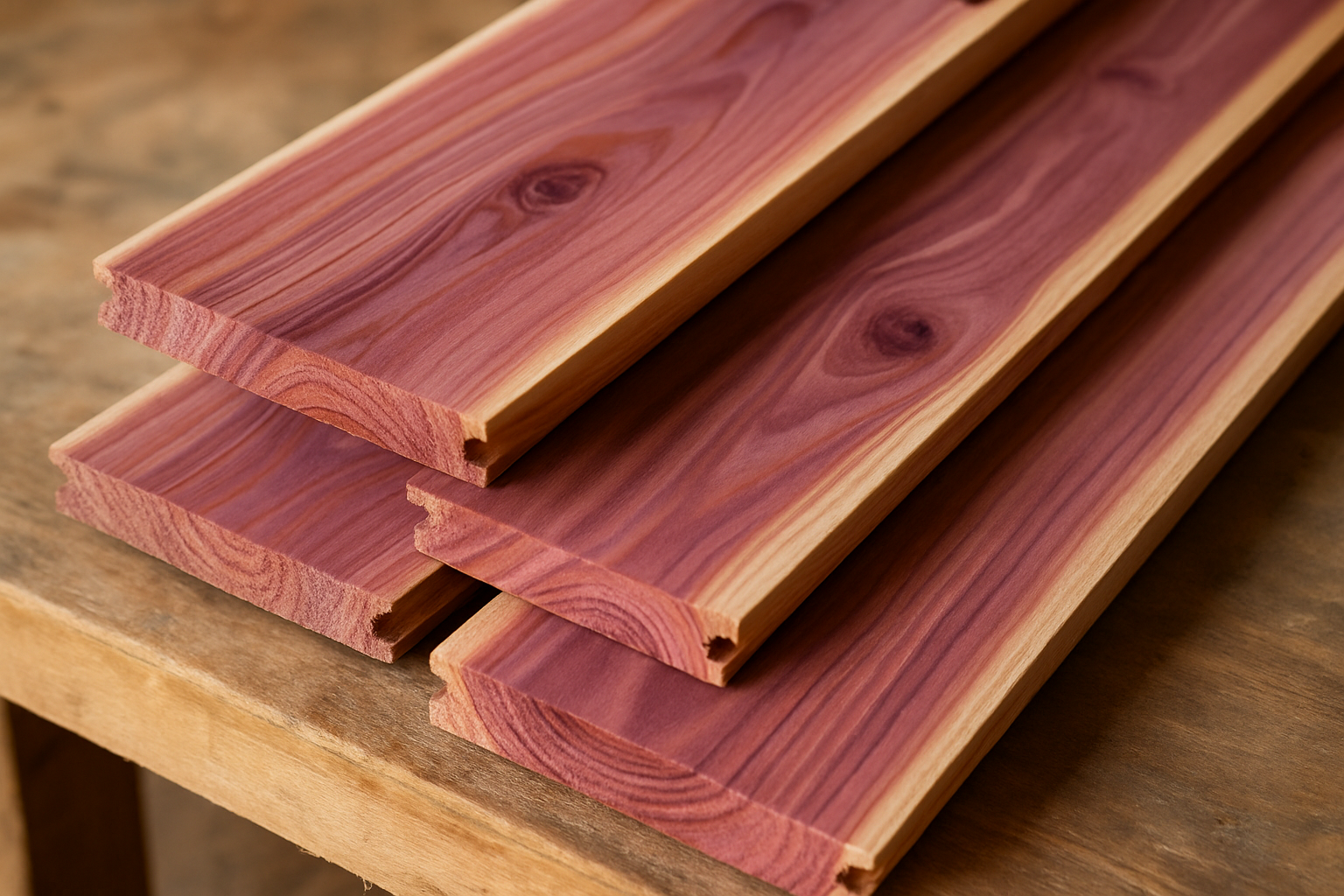
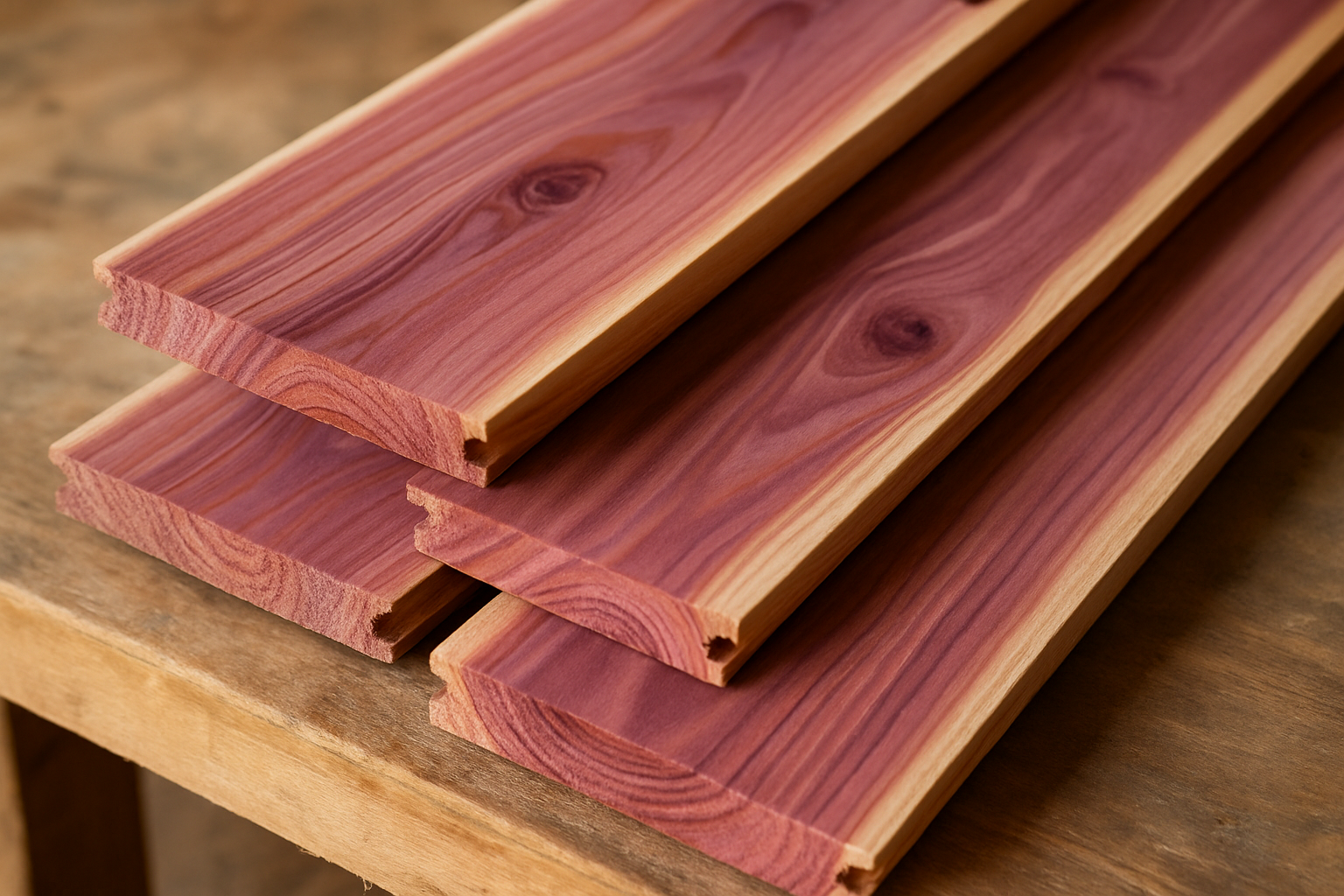
Aromatic eastern red cedar (botanically Juniperus virginiana) is the species with documented moth-repellent chemistry. It has a distinctive reddish-purple heartwood, a sharp resinous scent, and the oil profile that makes it useful in closet applications. This is what you want for a cedar closet lining.
Western red cedar is a different species altogether — excellent for exterior siding, decking, fencing, and trim work, but it does not carry the same aromatic oil chemistry. If you ask for ‘cedar boards’ without being specific, there’s a real chance you’ll receive western red cedar, which will look fine on the wall but won’t do much for the moths.
When you’re sourcing material for a closet project, ask specifically for aromatic cedar lining boards or eastern red cedar tongue-and-groove panels. The product should have the characteristic reddish heartwood and a noticeable resinous smell when freshly cut. If it doesn’t smell strongly when you open the bundle, that’s a sign the oils have already begun to off-gas during storage.
How a Cedar Closet Actually Works — And Why It Stops
The standard application is 3/8-inch tongue-and-groove aromatic cedar panels applied to the interior walls and ceiling of a closet. The goal is to create a cedar-rich enclosed space where oil vapors concentrate at levels high enough to affect moth activity.
For that to work, a few conditions have to be in place:
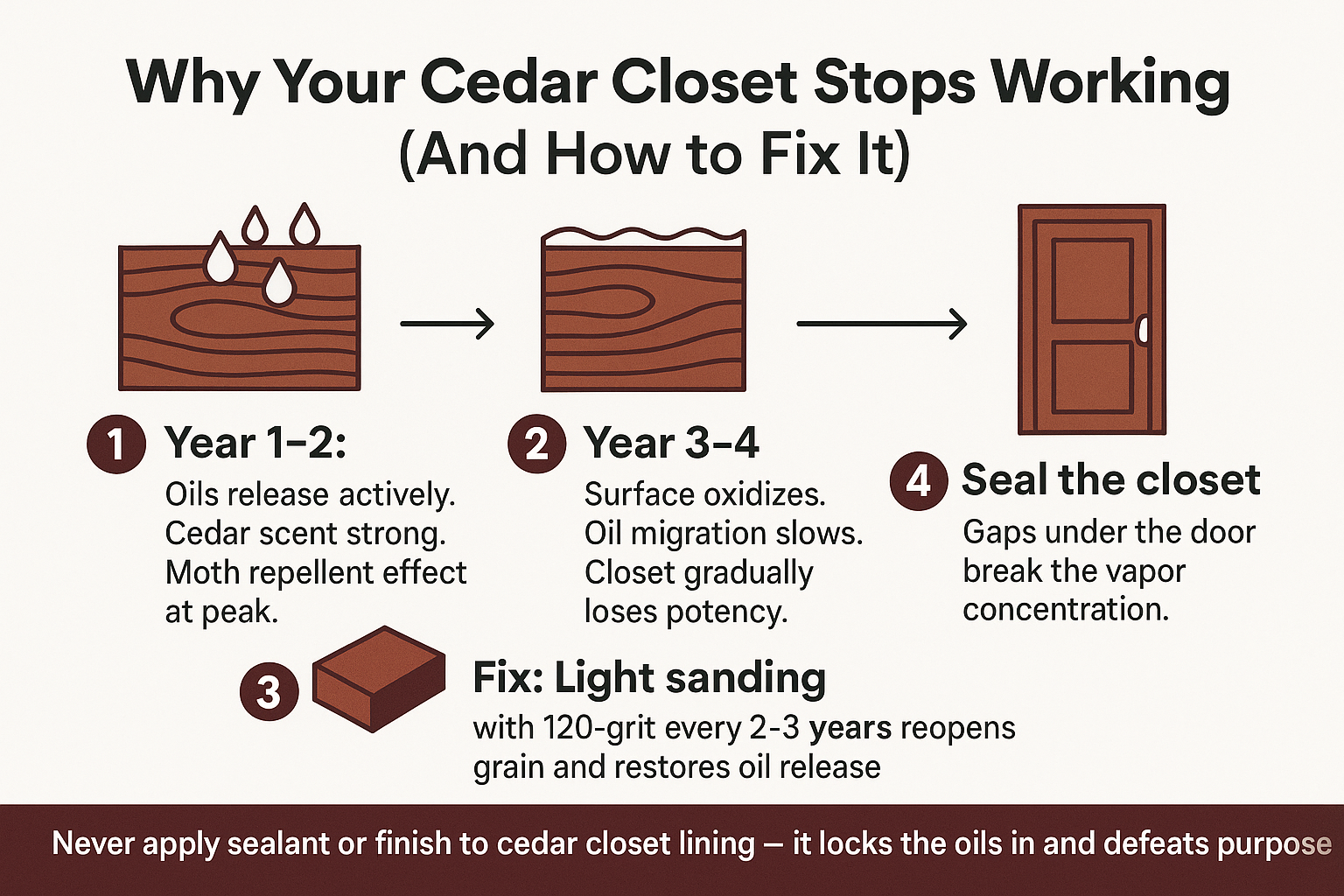
- The closet needs to seal reasonably well. A significant gap under the door breaks the microenvironment the cedar is trying to create. Vapors escape, concentration drops, and effectiveness drops with it.
- The wood surface needs to stay open. As cedar oxidizes, a thin film forms over the grain and slows oil release. This is normal — but it means the closet gradually loses its potency.
- The surface should be lightly sanded every few years to reopen the grain and restore oil migration to the surface. This is not a complicated process. A light pass with 120-grit sandpaper is enough. But it’s maintenance most homeowners were never told to do.
Many people conclude that cedar closets are a myth because theirs stopped working. What actually happened is that the wood did what it was supposed to do until the surface sealed — and then nobody sanded it. The wood is still viable. The maintenance just wasn’t performed.
Do not apply any finish, sealant, or paint to cedar closet lining. That locks the oils in permanently and defeats the entire purpose of the wood.
Cedar Closet Performance: What Affects It Over Time
This infographic breaks down the four main factors that determine whether a cedar closet keeps working — or quietly stops.
The Moisture Benefit Bay Area Homeowners Often Overlook
Moth repellent gets most of the attention, but there’s a second functional reason to line a closet with aromatic cedar — especially in older Berkeley, Oakland, or East Bay homes.
Bay Area closets on exterior walls can be surprisingly damp. The marine layer, seasonal fog, and humidity swings that come with living near the coast mean enclosed spaces accumulate condensation. In homes with aging wall insulation or original plaster construction, that problem is worse. The result is often a musty smell in closets — sometimes mistaken for mold — that has nothing to do with moths.
Aromatic cedar has two properties that help here. First, its natural oils carry mild antimicrobial properties that resist the bacteria and fungi responsible for that musty odor. Second, cedar is hygroscopic — meaning it absorbs and releases moisture as humidity fluctuates. Inside an enclosed closet, that natural buffering effect helps moderate the humidity swings that cause condensation to form on walls and stored items.
This isn’t a substitute for fixing an actual moisture problem — if you have water intrusion or significant condensation, that needs to be addressed at the source. But for the typical Bay Area closet that smells vaguely stale in winter and again in the foggy months of June and July, cedar lining is doing real work beyond moth control.
Aromatic Cedar vs. Western Red Cedar: Key Differences
Buyers often encounter both species at lumber yards. Here’s what separates them for closet and exterior applications.
| Feature | Aromatic Eastern Red Cedar | Western Red Cedar |
|---|---|---|
| Botanical name | Juniperus virginiana | Thuja plicata |
| Heartwood color | Reddish-purple, distinctive | Pinkish-brown, more uniform |
| Moth-repellent chemistry | Yes — cedrol and related oils | No documented repellent effect |
| Common closet application | 3/8″ T&G lining panels | Not typically used for closets |
| Common exterior applications | Limited | Siding, decking, fencing, trim |
| Scent when fresh | Sharp, resinous, strong | Milder, woodsy |
| Maintenance for closet use | Sand lightly every 2–3 years | N/A |
What a Cedar Closet Project Actually Involves
A standard cedar lining project for a reach-in closet is manageable for a capable DIYer or a finish carpenter working on a remodel. The material is the 3/8-inch tongue-and-groove aromatic cedar panels — sold in bundles sized for wall coverage. Most projects cover the back wall, side walls, and ceiling of the closet space.
A few practical notes:
- Calculate coverage carefully. Cedar panel bundles are sold by square footage, and it’s easy to underestimate wall and ceiling area in a closet with shelving cutouts or irregular dimensions. Add at least 10% overage for waste and cuts.
- Acclimate the wood before installation. Bring the panels inside and let them adjust to interior humidity for 48 to 72 hours before fastening. Bay Area humidity swings are real enough that skipping this step can lead to gapping or buckling after installation.
- Use finish nails through the tongue, not face nails, to keep the surface clean and unfinished. Face-fastening and then applying any filler or paint defeats the purpose.
- Address the door gap. If the closet door doesn’t seal reasonably well at the bottom, add a door sweep before you assess whether the cedar is working. Without containment, you won’t get the vapor concentration needed for effective moth control.
Costs vary depending on closet size, panel quality, and whether you’re doing the work yourself or incorporating it into a larger remodel. Talking to a lumber yard that stocks the material — and can help you estimate coverage — is the most reliable way to get to an accurate number for your specific project.
Frequently Asked Questions About Cedar Closets
How long does a cedar closet stay effective before it needs maintenance?
Most aromatic cedar closet linings begin to lose noticeable potency somewhere between two and four years after installation, depending on how well the closet is sealed and how the wood was stored before installation. A light sanding with 120-grit paper is all it takes to reopen the grain and restore oil release. Plan on doing this every two to three years as routine upkeep.
Can I put a finish on my cedar closet lining to protect it?
No. Any finish, sealant, varnish, or paint will seal the wood’s surface and block the oil vapors from releasing. The wood will look fine, but the moth-repellent benefit will be gone. Leave cedar closet lining completely unfinished.
Will cedar closet lining kill an existing moth infestation?
Cedar can kill larvae at high concentrations, but it is not reliable as a treatment for an active infestation. If you already have clothes moths in a closet, the first step is to remove, inspect, and clean all stored items — including dry cleaning or freezing any wool or natural fiber pieces. Cedar works best as a preventive measure in a clean, sealed closet, not as a cure for an established problem.
I asked for cedar boards at a lumber yard and what I got doesn’t smell like much. What happened?
You may have received western red cedar, which is a different species with a much milder scent and no significant moth-repellent chemistry. Or the aromatic cedar panels were stored for a long time and had already off-gassed some of their surface oils during storage. Ask specifically for aromatic eastern red cedar tongue-and-groove lining boards and check that they have the reddish-purple heartwood and a sharp resinous smell when you open the bundle.
Does cedar closet lining actually help with the musty smell in Bay Area closets?
Yes, in a meaningful way. Cedar’s natural oils have mild antimicrobial properties, and the wood naturally absorbs and releases moisture as humidity changes — which helps reduce the condensation-driven mustiness that’s common in older East Bay homes with exterior-wall closets. It won’t fix a structural moisture problem, but for the typical coastal humidity situation, it does real work.
How much aromatic cedar lining do I need for an average closet?
Measure all the wall surfaces and the ceiling you plan to cover, add them up in square feet, and then add 10% for waste and cuts. A standard reach-in closet might run anywhere from 30 to 60 square feet of coverage depending on depth and height. The staff at a lumber yard can help you check your measurements and estimate bundle quantities before you buy.
Getting the Right Material for a Specific Project
One thing that separates a good lumber yard experience from a frustrating one is whether the person behind the counter understands what you’re actually trying to accomplish — not just what category of product you’re asking for.
Kim T., who came in to the Hearst Avenue location for a different kind of project, put it well in a recent review: “Doug was super helpful and knowledgeable, gave great suggestions to a problem I was facing with my project. Jerrel was friendly and helpful with cutting my boards, making sure it was exactly what I was looking for.”
That kind of materials-matching help matters when you’re working with specialty boards like aromatic cedar lining panels. Getting the wrong species, the wrong thickness, or the wrong quantity can mean a second trip and wasted cuts. It’s worth taking a few minutes to describe the project — closet dimensions, whether you’re covering walls and ceiling, whether the door seals well — before you start pulling product off the shelf.
If you’re building or remodeling and have questions about other interior or exterior wood choices, the difference between hardwood and softwood is a useful starting point for understanding what you’re working with, and engineered wood options are worth knowing about for structural applications in the same project.
Looking for Aromatic Cedar Lining Boards for Your Next Project?
Truitt & White carries aromatic eastern red cedar tongue-and-groove lining panels at the Hearst Avenue lumberyard in Berkeley. If you want help estimating coverage, checking species, or figuring out what else you need for a closet or interior finish project, stop by the yard at 642 Hearst Avenue or call the lumberyard directly at 510-841-0511. The staff can help you get the right material the first time.