It’s a common question for contractors and homeowners in the Bay Area: why does a quote from the lumber yard seem higher than prices at a big-box store? You might wonder if you're overpaying, or if there's more to it than just the price per board. The short answer is you’re not just buying wood; you’re investing in quality, less waste, and expert support—factors that often lower your total project cost.
The price difference reflects a significant gap in lumber grade, straightness, and moisture content. When you understand these factors, you can make a smarter choice for your project's budget and timeline.
Breaking Down the True Cost of Lumber
When comparing quotes, it's easy to focus only on the price per board. However, this overlooks critical factors that truly impact your budget and schedule. A common misstep is assuming all lumber is a commodity—that a 2×4 is just a 2×4.
This assumption can lead to costly rework, frustrating delays, and wasted material. While material costs have risen due to tariffs and supply chain issues, the biggest price differences between a lumber yard and a retailer come down to grade, quality, and service.
Why an Apples-to-Apples Comparison Matters
For builders in Berkeley and Oakland, efficiency is everything. Time wasted picking through warped boards or making extra trips for returns eats directly into your profit margin. For a deeper look into how materials affect your bottom line, learn more about managing contractor markup on materials in our detailed guide.
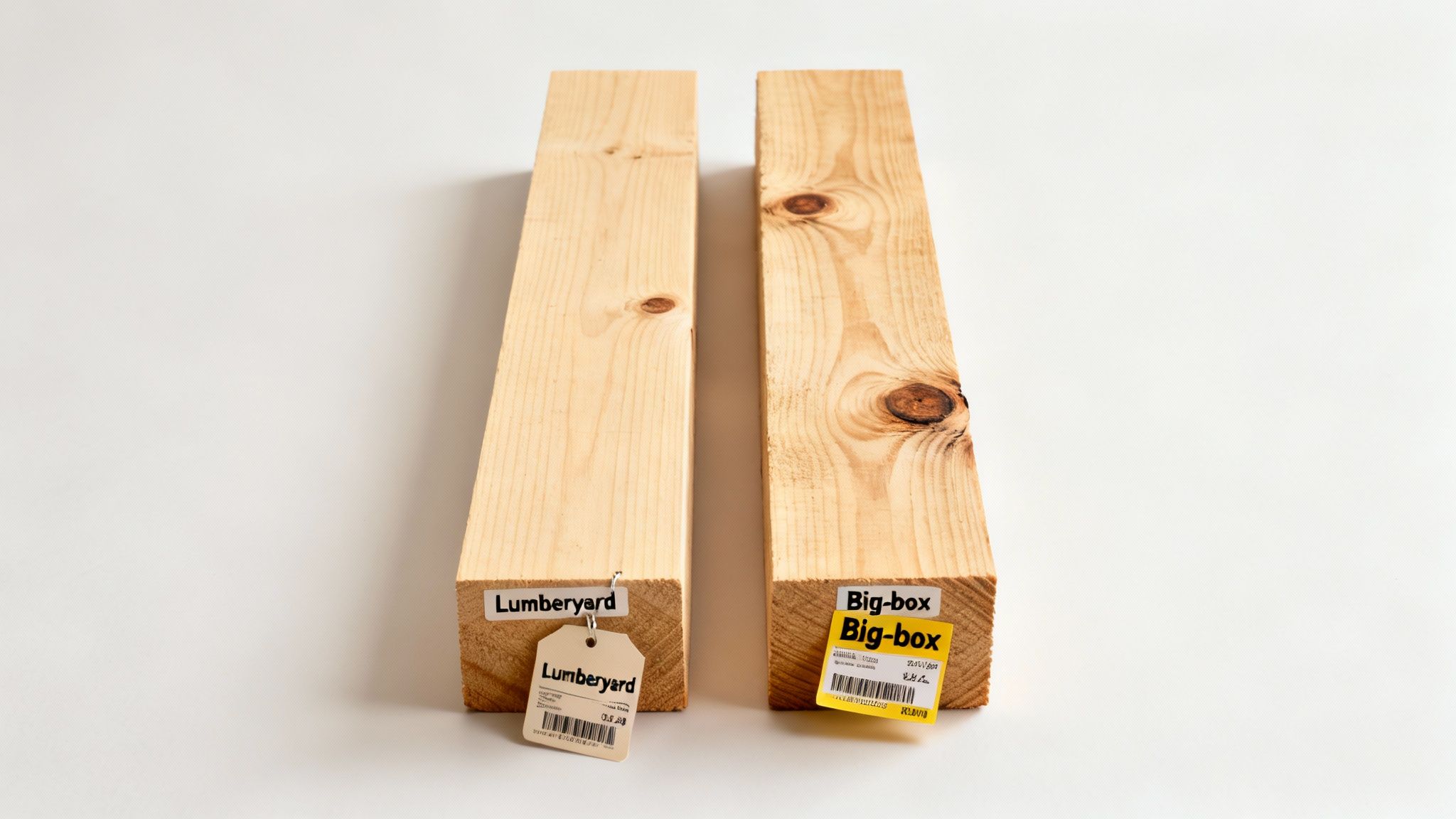
The cheapest price per board is rarely the best value. Once you factor in waste, labor, and delivery, the true cost tells a very different story.
The table below summarizes the key distinctions between the two types of suppliers.
Lumber Yard vs. Big-Box Store at a Glance
Here’s a side-by-side look at what influences the true cost and value for your project. This isn’t just about the initial price—it’s about what you get for your money from start to finish.
| Factor | Local Lumber Yard | Big-Box Store |
|---|---|---|
| Lumber Grade | Primarily #1 or Select Structural | Typically #2 or Economy grade |
| Material Quality | Straighter, less waste, consistent moisture | Higher chance of warp, knots, and splits |
| Expertise | Knowledgeable staff with project experience | General retail staff with limited expertise |
| Services | Custom milling, job-site delivery, returns | Limited to basic cuts and in-store pickup |
| Inventory | Specialty woods and sustainable options | Commodity products, limited selection |
| Best For | Professional projects requiring high quality | Small DIY or non-structural projects |
Ultimately, this comparison shows that your choice of supplier should align with your project's needs. For demanding jobs in the Bay Area where quality and efficiency are non-negotiable, a local lumber yard provides unmatched value.
Comparing Lumber Quality and Grade
The single biggest reason lumber from the yard seems more expensive is the quality and grade of the wood itself. It's easy to assume a 2×4 is just a 2×4, but this common misunderstanding can quickly lead to budget overruns.
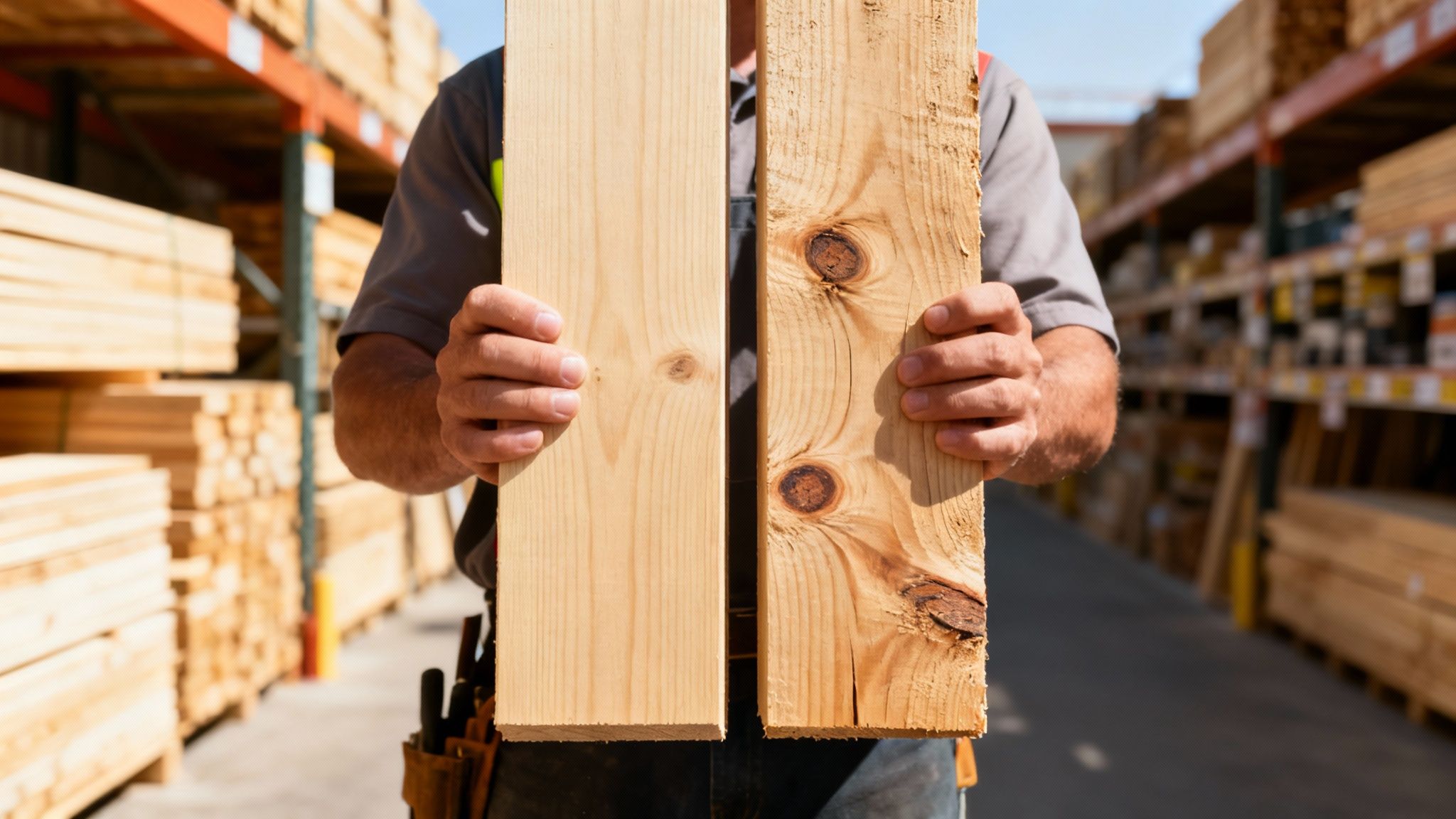
Big-box retailers often stock #2 grade or Economy grade lumber. While affordable, this grade allows for more defects like large knots, warping, and splits. For a professional contractor, this means a higher percentage of unusable material.
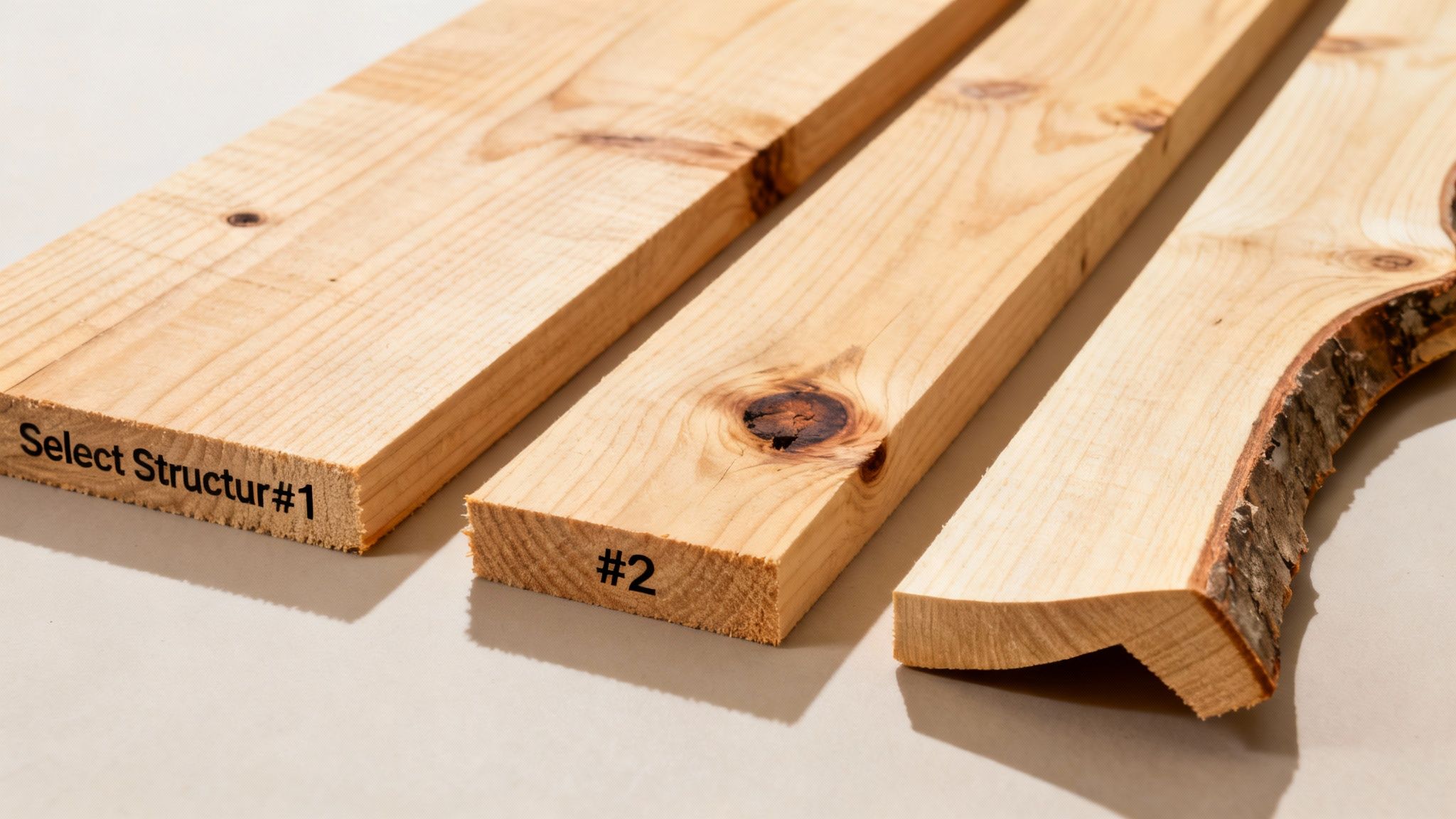
The Hidden Cost of Low-Grade Lumber
Every warped or split board you discard is wasted material you’ve already paid for. Big-box stores operate on massive economies of scale, often at the expense of quality control. In contrast, a local yard like Truitt & White specializes in #1 or Select Structural grades to minimize waste and maximize jobsite efficiency.
Lower-grade lumber may have a higher waste factor from warping, knots, and splits, which can cost you more in the end. This is a critical factor to consider when comparing quotes.
A lower sticker price often hides the true cost of a project. When you factor in the labor spent culling bad boards and the material that ends up in the dumpster, higher-grade lumber is almost always the more economical choice.
Why Grade Matters for Bay Area Construction
For projects in Berkeley, Oakland, and across the Bay Area, structural integrity is non-negotiable. California’s strict building codes demand materials that perform reliably, especially in a seismically active region.
Using higher-grade lumber offers several key advantages:
- Less Waste: You buy what you need and use what you buy, protecting your profit margin.
- Increased Efficiency: Your crew spends their time building, not digging through defective inventory to find a straight board.
- Structural Confidence: Straighter, stronger boards ensure your framing is plumb and true, preventing costly callbacks.
- Better Finishes: High-quality framing provides a solid foundation for smoother installation of drywall, cabinetry, and trim.
Understanding quality also extends to specific applications, like comparing cedar and pressure-treated fence wood for outdoor projects. To learn more about how wood is classified, check out our guide on understanding framing lumber grades.
Uncovering the Hidden Costs of Cheap Lumber
Focusing only on the price per board is one of the most common and expensive mistakes in construction. The real story isn’t about the cost per 2×4; it’s about the total project cost. Any perceived savings from lower-quality lumber can evaporate quickly.
These hidden costs aren't line items on an initial quote. They appear later in the dumpster full of discarded material, in the extra labor hours, and in frustrating project delays. For a contractor framing a home in Berkeley, that’s a direct hit to the bottom line.
The lure of a cheaper price tag often masks the true expense. A lower-quality lumber package can easily result in 15-20% more waste, turning perceived savings into a significant loss.
The Real Price of Waste and Labor
Imagine your crew starts framing a project in Oakland with lower-grade lumber. Before they drive a single nail, they spend hours sorting through the stack, setting aside twisted and split boards. That isn’t just wasted time; it’s lost productivity.
These hidden costs add up quickly:
- Discarded Material: Every unusable board is money thrown away. Higher-grade lumber has a much lower cull rate.
- Extra Labor: When your crew is sorting and cutting around defects, they aren't building. They're doing quality control that should have happened at the source.
- Project Delays: Running out of usable lumber means unplanned trips back to the store, creating a domino effect of delays.
- Long-Term Risks: Inferior materials can lead to callbacks for issues like sagging floors or cracked drywall. Protecting your materials is key; learn how to prevent wood rot in our guide.
From Per-Board Price to Total Project Value
A slightly higher upfront cost for quality lumber is an investment in efficiency and risk management. It pays for itself with a smoother, faster, and more profitable build. Smart project management involves looking beyond the lumber itself and considering broader strategies to reduce overall construction costs.
A local lumber yard becomes a strategic partner in this process. We ensure you have the right materials to keep your Bay Area project on track and on budget.
The Real Value: Expert Service and Support
When you just look at the price tag, the real difference isn't just in the wood; it's in the robust support system that comes with it. At a big-box store, you're often on your own. At a local lumber yard, you gain a partner invested in your project's success.
This support translates directly into saved time, money, and headaches. For builders, contractors, and architects in the Bay Area, this partnership is invaluable.
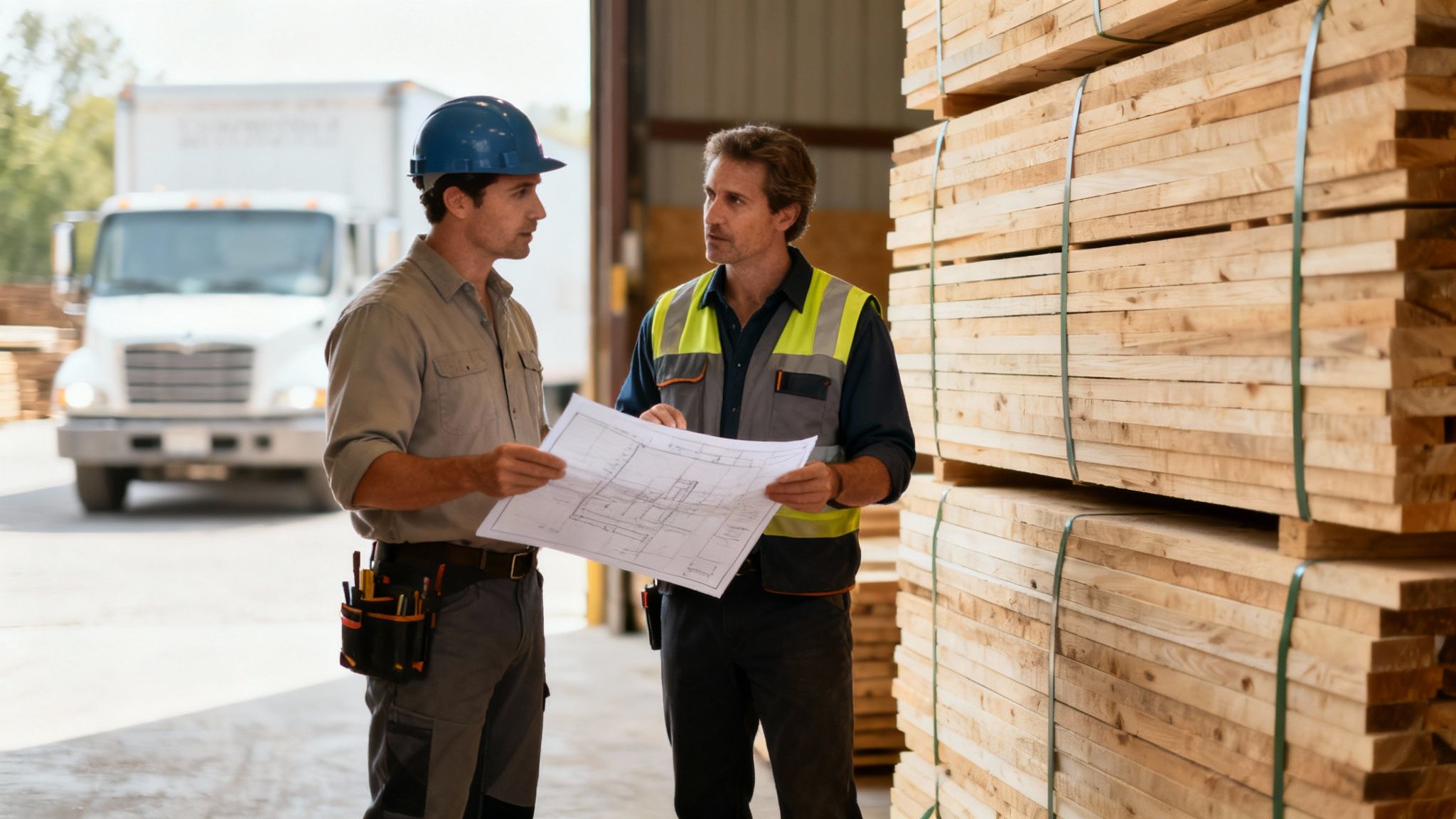
Specialized Services That Keep Your Project Moving
Unlike a retail aisle, a real lumber yard offers specialized services that are essential for any professional builder. This level of support is crucial for keeping your project in Berkeley, Oakland, or San Francisco on schedule.
Here’s what you can expect:
- Custom Milling: Need non-standard dimensions? A lumber yard can mill materials to your exact specifications, saving time and labor on-site.
- Precise Delivery Scheduling: Get materials exactly when and where you need them, avoiding clutter on tight urban job sites.
- Dedicated Support: You have a single point of contact who understands your project's scope, from quote to final delivery.
The Value of a True Building Partner
Expert service pays for itself by keeping your project on track. Truitt & White is upfront about pricing and quality, and we encourage side-by-side comparisons. Our team can explain material differences and offer options like engineered or locally milled wood to fit your budget.
A local lumber yard doesn’t just sell you wood; they sell you a smoother project. The expertise, reliability, and tailored services are built into the cost, delivering a higher return on investment through efficiency and fewer mistakes.
This approach transforms the supplier relationship from a transaction into a partnership. You can read more about our commitment to customer service excellence for professional builders on our blog. That "premium" you pay is an investment in a support system that pays for itself.
Sourcing Specialty and Sustainable Materials
For high-end or green building projects in the Bay Area, the difference between a local lumber yard and a big-box store is clear. An architect or custom builder sources for performance, not just price. While a retail giant focuses on high-volume commodity products, a dedicated yard is where professionals find specialty and sustainable materials.
This is where you find materials like FSC-certified lumber and advanced engineered wood products. These are essential for meeting modern design and performance targets.
Meeting Bay Area Green Building Standards
Building in California involves compliance with standards like the state’s Title 24 energy codes. According to the California Energy Commission, these standards are designed to reduce energy use in new and existing buildings. Meeting these codes or aiming for a LEED certification requires specific, high-performance materials you won't find in a retail aisle.
This curated inventory is a major reason why lumber from the yard has a higher price tag. That price difference is an investment in:
- Code Compliance: Sourcing materials that meet or exceed local energy and environmental standards.
- Superior Performance: Using products engineered for better insulation, durability, and structural integrity.
- Unique Design: Accessing specialty woods that unlock greater architectural creativity.
Sustainability and specialty sourcing add to the cost, but for Bay Area professionals, this lumber delivers unmatched value. For a deeper dive on how sourcing impacts cost, you can watch this detailed video breakdown.
For high-end and eco-conscious projects, the price difference for specialty lumber isn't an expense—it's a strategic investment in quality, compliance, and lasting value.
This focus on green building is central to our mission. As an eco-friendly lumber supplier in the East Bay, we provide materials that help our partners build better, more sustainable projects.
Making the Right Choice for Your Building Project
So, where should you buy your lumber? The answer is about matching the supplier to your project's specific demands. The best choice comes down to your goals for quality, budget, and long-term performance.
For a small, non-structural DIY project, a big-box store might suffice. But for professional jobs or any project where reliability is key, a local lumber yard is the clear winner. The value from expert advice, higher-grade materials, and dependable service outweighs the initial price difference.
This decision tree breaks down a simple framework for choosing a supplier.
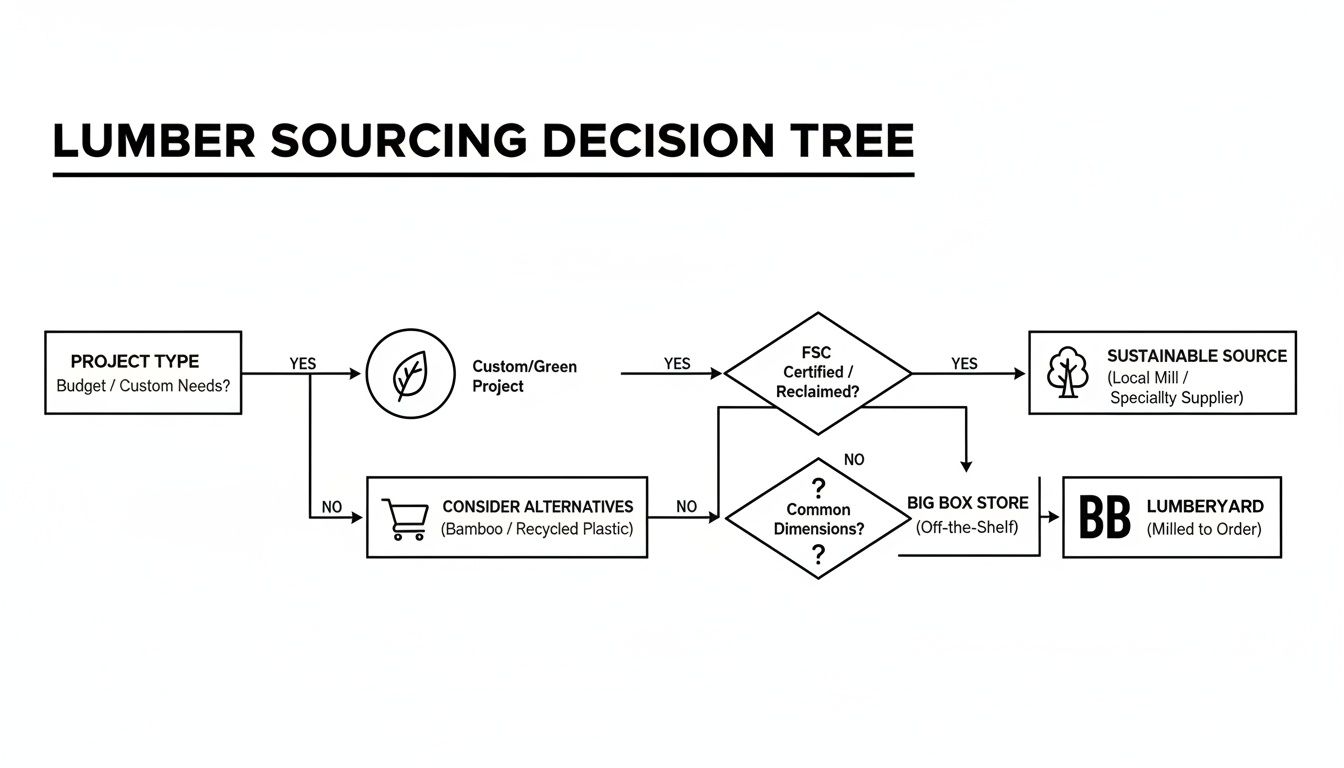
As the flowchart shows, a big-box store can be a viable option for standard projects. But as soon as custom or specialized work is required, a lumber yard provides the quality and support you need.
An Apples-to-Apples Comparison Checklist
When looking at quotes, it's easy to miss the bigger picture. When comparing quotes, ask for a full breakdown.
- What grade is the lumber? Always confirm the grade (#1, #2, Select Structural, etc.). This is the biggest driver of quality and price.
- Does the price include delivery? Get details on delivery fees, scheduling options, and job site drop-off.
- What is your policy on returns? Find out how they handle unusable or leftover materials. A flexible return policy can save you money.
- What is the expected waste factor? Factor in a potential waste percentage of 15-20% for lower-grade lumber to get a realistic total cost.
If you’re building in Berkeley, Oakland, or anywhere in the Bay Area, come talk to us before making a big purchase. We’ll walk you through costs, help you compare options apples-to-apples, and make sure you get the right lumber at a fair, transparent price.
Visit our Berkeley showroom for expert advice. Connect with our experts today.
Frequently Asked Questions About Sourcing Lumber
Here are concise answers to common questions about choosing between a lumber yard and a big-box store.
Is the lumber at Home Depot really lower quality?
Yes, in most cases, it is. Big-box stores prioritize volume and low prices, so they typically stock #2 grade or lower commodity lumber. A local lumber yard focuses on higher grades like #1 or Select Structural, which means straighter, stronger boards and less waste.
Can I get contractor pricing at a lumber yard?
Of course. Building relationships with professionals is the core of our business. We offer contractor accounts and competitive pricing on volume orders and bundled project quotes, which are often more cost-effective when you factor in service and quality.
Why is straight lumber so important for my project?
Using straight, high-grade lumber is critical for structural integrity, especially in a seismically active region like the Bay Area. It ensures your walls are plumb and your floors are level. This prevents a cascade of expensive problems and ensures finishes like drywall and cabinetry install correctly.
Does a lumber yard deliver to job sites?
Absolutely. Timely, precise job site delivery is a key service that sets lumber yards apart. Our dedicated fleet can deliver materials directly to your site in Berkeley, Oakland, or across the Bay Area, keeping your project on schedule.
How do I compare quotes accurately?
To make a true apples-to-apples comparison, look beyond the price per board. Always ask for the specific lumber grade being quoted, confirm if the price includes delivery, and factor in a realistic waste percentage—often 15-20% or more—for lower-grade material.
For nearly eight decades, Truitt & White has been the Bay Area's trusted partner for premium building materials and expert advice. If you want to ensure your next project is built with the highest quality lumber, visit our Berkeley showroom for a transparent, no-nonsense consultation.
Connect with us today for a project quote.