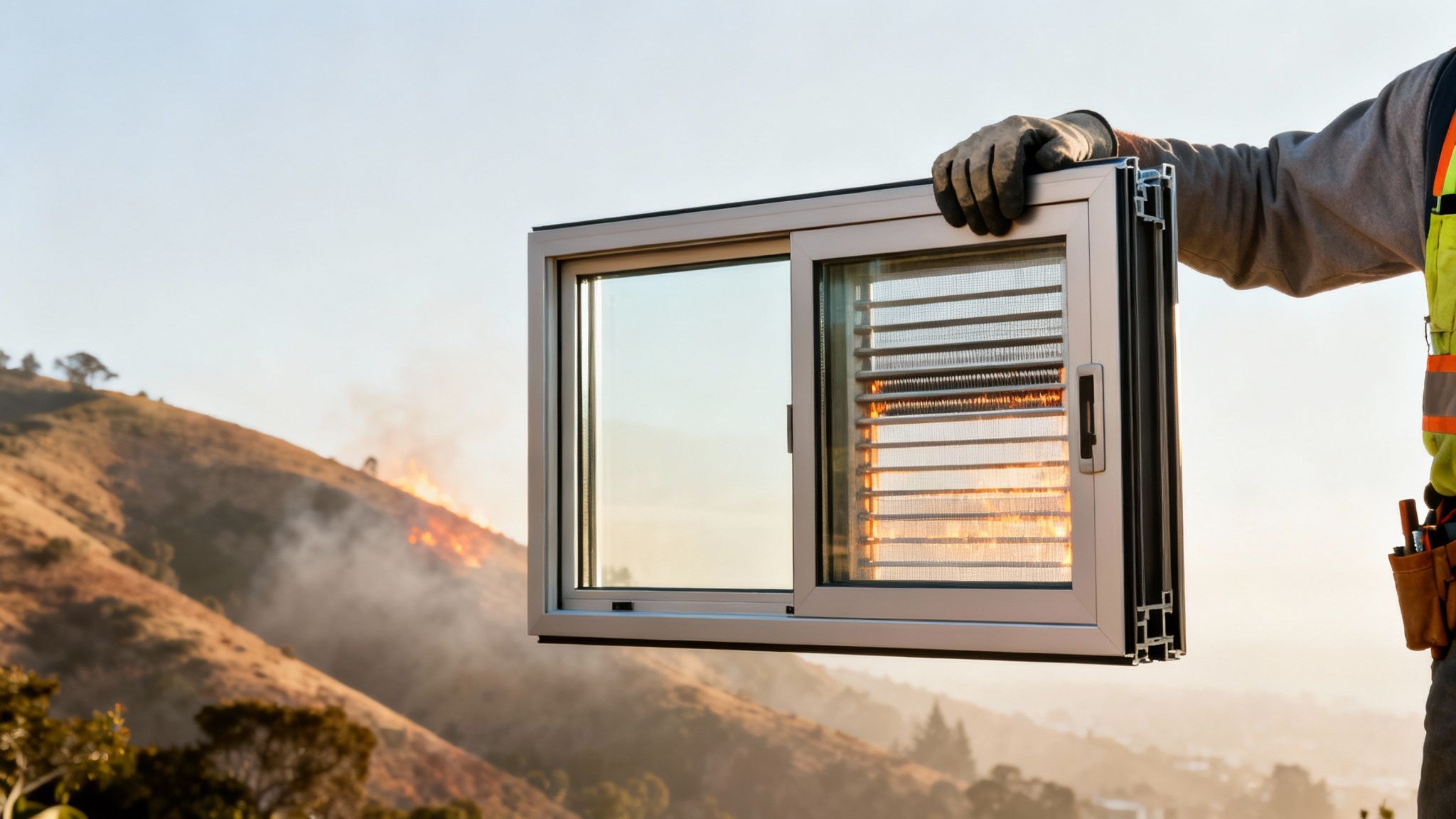
If you’re a contractor in the East Bay, especially the Berkeley or Oakland hills, listen up. New fire zone window codes are no longer optional—they are a strict requirement. Installing standard windows in a Wildland-Urban Interface (WUI) zone will fail inspections, cause costly rework, and disrupt your project schedule.
The rules have changed. New codes now mandate tempered glass, ignition-resistant frames, and ember-safe vents. These rules are outlined in Chapter 7A and reinforced by local city ordinances.
Why East Bay Fire Zone Window Codes Demand Your Attention
Wildfire risk in the East Bay hills is a year-round reality. As a result, building codes have become much tougher. For professional contractors, what was once “best practice” is now the standard for any new construction or major remodel in a fire zone.
Getting this right protects your business and your reputation. Ignoring these updates can sink a project fast, creating problems that affect your schedule and your budget.
The Stakes of Non-Compliance
Failing to meet current window codes is a big risk. Here’s what you face if your windows aren’t compliant:
- Failed Inspections: Inspectors in Berkeley and Oakland know what to look for. One wrong window can result in a red tag and a work-stoppage order.
- Costly Rework: The contractor pays for new, compliant windows and the labor to replace the old ones. This directly hurts your profit margin.
- Project Delays: Waiting for the right materials and getting back on an inspector’s schedule can delay your project by weeks. This can frustrate clients and delay your next job.
- Damaged Reputation: Homeowners hire you for your expertise. A failed inspection suggests you are not up-to-date, which damages client trust.
Many contractors quote or install windows that don’t meet updated Chapter 7A or local Title 24 codes. This often happens with windows bought online—they may look fine but lack the specific fire-resistance ratings required in the Bay Area.
The rules are getting more complex. Cal Fire’s recent updates to Fire Hazard Severity Zone (FHSZ) maps pushed nearly four million Californians into higher-risk zones. This means more areas now require these strict building rules.
Cities like Berkeley are also enforcing their own wildfire plans. These local rules mandate double-pane, ember-resistant windows for new builds in Very High Fire Hazard Severity Zones (VHFHSZ). You can learn how new hazard maps impact building requirements in California from CalMatters. It’s essential to check a property’s WUI status before ordering materials.
Decoding Chapter 7A and WUI Window Requirements
Understanding Chapter 7A of the California Building Code is critical for contractors in the East Bay. Think of it this way: a standard window keeps out rain and wind. A WUI-compliant window is a home’s shield against wildfire.
This difference can give a home a fighting chance when disaster strikes. It is a key part of the window code changes east bay contractors must know in fire zones.
Key Differences Between Standard and WUI Windows
These requirements are not minor details. They determine if a window can resist catching fire. Inspectors in Berkeley and Oakland know exactly what to look for. Our comprehensive building permit checklist can help you prepare.
Here’s what separates a WUI-compliant window from a standard one:
- Tempered Glass: At least one pane in a dual-pane window must be tempered. This glass is up to four times stronger than regular glass. When it breaks, it crumbles into small, dull pieces, helping it hold its structure longer under heat.
- Ignition-Resistant Frames: The frame material is crucial. Materials like fiberglass, aluminum-clad wood, or properly rated vinyl resist igniting. Standard vinyl can melt, and untreated wood can catch fire.
- Multi-Pane Glazing: WUI codes require dual-pane insulating glass. The gap between the panes acts as a thermal break. It slows the transfer of radiant heat from a fire into the house.
This decision tree gives you a quick visual guide for your project.
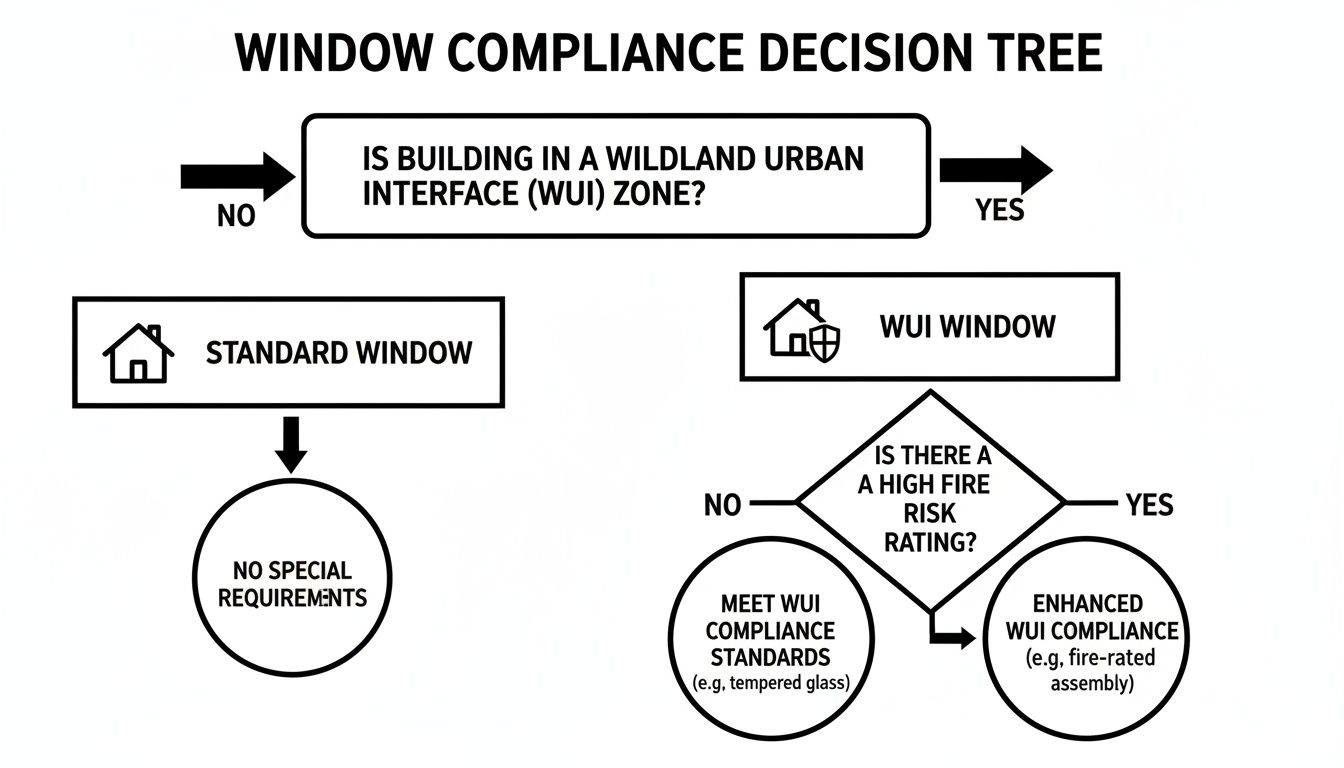
As the flowchart shows, the first step is to confirm the property’s location and fire hazard zone.
The Role of Glazing in Fire Resistance
Glazing is central to fire resistance. During a wildfire, radiant heat can ignite furniture or flooring from across a yard. It happens long before flames touch the house.
Dual-pane windows create an essential buffer. Research shows they withstand higher temperatures much longer than single-pane units. That extra time can prevent a total loss.
A key takeaway for contractors is that single-pane windows are an automatic failure in WUI zones. Explaining this to a homeowner isn’t just about code—it’s about demonstrating your commitment to their safety.
When you understand the code, you can explain these requirements to homeowners with confidence. You can clarify why a WUI-approved, aluminum-clad window is a necessary investment, not just an upgrade. This knowledge ensures every window you install is ready for wildfire country and tough inspections in Berkeley and Oakland.
Diving into the Local Fire Codes: What Berkeley and Oakland Require
State codes like Chapter 7A set the baseline. However, local rules in cities like Berkeley and Oakland add another layer of requirements. An inspector in the East Bay hills will be checking for compliance with these specific ordinances.
These are not just suggestions; they are enforceable rules. A window that passes in another county could fail in the Berkeley hills. Understanding these local differences is a key part of the window code changes east bay contractors must know in fire zones.
Berkeley’s “Zone 0” and the EMBER Plan
Berkeley is a leader in wildfire preparedness. Its EMBER (Ember-Resistant, Defensible Space, and Home Hardening) plan is a prime example. The plan creates a critical area called “Zone 0,” the first five feet from a home’s foundation.
In Zone 0, everything must be non-combustible or ignition-resistant. This directly impacts your window choices and installation.
- Window Placement: Windows must not compromise this non-combustible zone.
- Surrounding Materials: Trim, siding, or decorative elements near windows in this zone must meet fire-resistance standards.
- Vents and Openings: All vents near windows must be ember-resistant, with a mesh screen of 1/8-inch or finer.
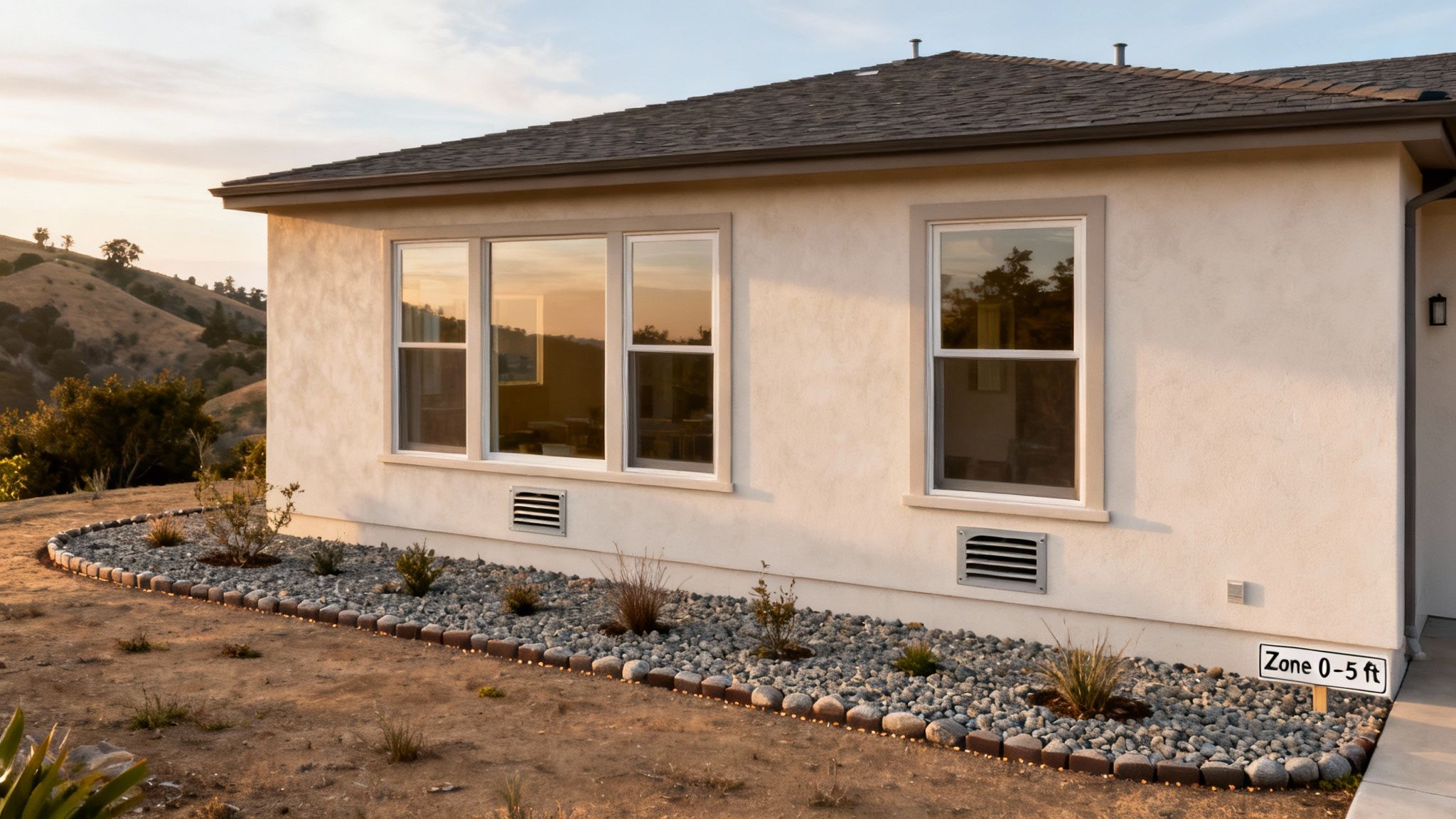
This focus on Zone 0 means even small details matter. For example, using bark mulch in a flowerbed under a window can cause a failed inspection. You must consider the entire assembly, not just the window.
Oakland’s Take: Defensible Space and Home Hardening
Oakland also emphasizes defensible space. This connects directly to home hardening requirements for windows. The city’s rules aim to prevent fire from jumping from vegetation to the structure.
An inspector will look at how your window installations contribute to the home’s fire resilience. This means ensuring frames, glazing, and vents work together to form a hardened shell. The goal is to eliminate weak points where heat or embers could enter.
An inspector in the Oakland hills won’t just check your window’s WUI sticker. They will assess its placement and integration with the home’s overall fire defense strategy.
This requires careful material selection. Every component must stand up to high heat and block embers.
Emergency Escape Windows and Local Security Bar Rules
A local rule that often surprises contractors involves emergency escape windows, especially on homes with security bars. The steep lots in our hills create unique evacuation challenges.
In fire-prone areas, Berkeley Municipal Code Section 19.48.020 requires permits for any window bars that might slow an escape. You can read the details of these requirements directly from the Berkeley municipal code.
If you are replacing windows on a home with security bars, you must ensure they have a compliant quick-release mechanism. An inspector will test it during the final walkthrough.
The Hidden Costs of Installing Non-Compliant Windows
For an East Bay contractor, a failed window inspection in a fire zone is a costly problem. The immediate issues are clear, but the long-term damage to your business can be worse.
Cutting corners on window code compliance is a risk you can’t afford. The financial problems start when an inspector red-tags your job.
The Immediate Financial Impact
Once non-compliant windows are installed, fixing the problem is expensive. The inspector will issue a correction notice, and work stops until it’s resolved. This leads to several direct costs.
Here’s a breakdown of the expenses:
- City Fines and Re-Inspection Fees: Cities like Berkeley and Oakland issue fines and charge for re-inspections.
- Cost of New, Compliant Materials: You must buy a second set of correct, code-compliant windows at your own expense.
- Wasted Labor Hours: You paid your crew to install the first set of windows. You’ll pay them again to remove them and a third time to install the new ones.
The real risk here is that many contractors quote projects based on windows their clients find online. A homeowner might pick a stylish, modern window that looks perfect for their Berkeley hills remodel, not realizing it lacks the necessary WUI rating, tempered glass, or ignition-resistant frame to pass inspection.
Protecting Your Reputation and Liability
Installing the wrong windows can also damage your professional reputation. Word travels fast in the East Bay. A failed inspection can brand you as a contractor who doesn’t know the local rules.
The liability risks are even more serious. If a fire occurs and non-compliant windows contributed to the damage, the legal and financial consequences could be devastating. Learn more in our guide to Bay Area window replacement.
Educating homeowners is your best defense. By explaining why fire-rated windows are necessary, you protect them, your project, and your integrity. This positions you as a trusted expert.
How to Source and Specify Compliant Windows
Knowing the fire codes is only half the battle. Finding the right products is the other half. For East Bay contractors, sourcing windows that meet both Chapter 7A fire codes and Title 24 energy rules requires attention to detail.
This guide will show you what to look for when specifying windows for projects in Berkeley, Oakland, and other WUI zones. A compliant window means a passed inspection and a safe home.
Reading the Manufacturer Data Sheets
The manufacturer’s data sheet is your source of truth. Don’t rely on marketing claims. You need to check the technical specifications for evidence of compliance.
Here are the key things to look for on a spec sheet:
- WUI Approval Label: Look for explicit language like “WUI Compliant,” “WUI Approved,” or meeting ASTM E2886 standards.
- Fire-Resistance Ratings: The data should list ignition-resistant materials, such as aluminum-clad wood, fiberglass, or fire-rated vinyl composites.
- Glazing Specifications: The sheet must confirm the window has multi-pane glazing with at least one pane of tempered glass.
- U-Factor and SHGC: The window must also meet Title 24 energy codes. Check the U-factor and Solar Heat Gain Coefficient (SHGC) for your climate zone.
Many contractors use tools like glazing takeoff software to ensure accuracy. These programs help make sure every unit specified meets project requirements.
Checklist for Specifying Compliant Windows
Use this checklist when ordering windows for projects in East Bay WUI zones. It helps you double-check that every product meets code.
| Feature to Check | What to Look For | Why It’s Critical for Compliance | Example Compliant Materials |
|---|---|---|---|
| Frame Material | Ignition-resistant materials listed in Chapter 7A. | Prevents the frame from catching fire from flying embers. | Aluminum-clad wood, fiberglass, rated vinyl |
| Glazing Type | Dual-pane glazing with at least one pane of tempered glass. | Tempered glass is much stronger and more heat-resistant than standard glass. | Tempered + Annealed IGUs |
| Energy Performance | U-factor and SHGC numbers that meet or exceed local Title 24 requirements. | Ensures the home is energy-efficient, a separate but equally important code requirement. | Low-E coatings, argon gas fill |
| Screens & Vents | Ember-resistant screens with mesh no larger than 1/8-inch. | Blocks embers from entering the home through open windows or vents. | Non-combustible metal mesh |
| Manufacturer Warranty | Warranty that explicitly covers use in a WUI-rated assembly. | Protects you and your client if a product fails to meet its performance claims. | Check specific brand warranty details |
>
This checklist is about more than passing an inspection. It ensures you install a product that genuinely protects the home.
Building Client Trust at the Showroom
Reading about a window is one thing. Letting a homeowner see and touch it is another. It turns an abstract code requirement into a real feature.
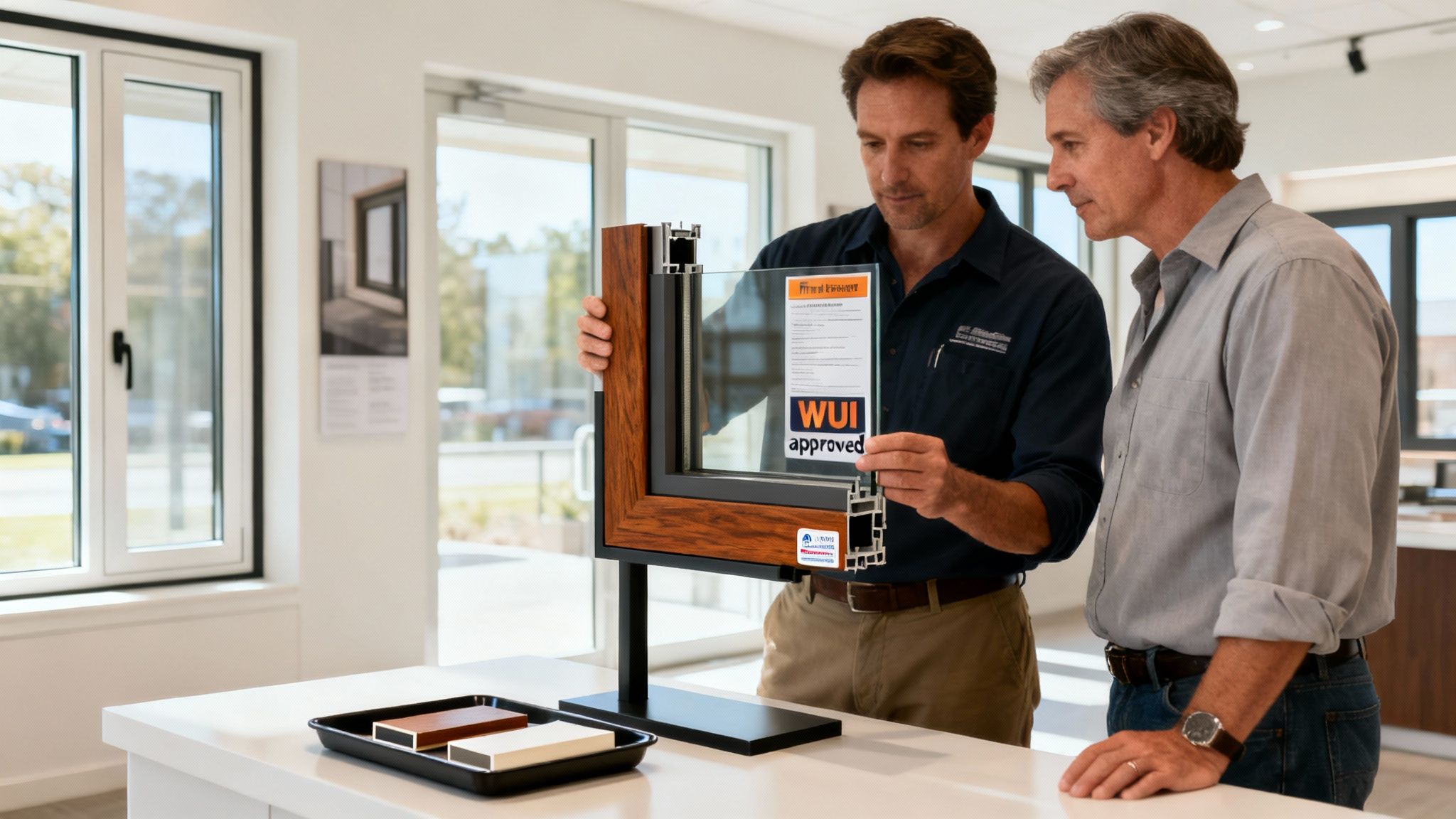
Bringing clients to the Truitt & White Window & Door Showroom in Berkeley is a great idea. It lets them see the quality of fire-rated products firsthand. It also gives them a chance to get answers from our local experts.
This step helps prevent surprises about cost or appearance. When a client understands the value, the conversation shifts from price to safety.
By partnering with a knowledgeable supplier, you ensure every window you order is aligned with local codes. You can learn more in our guide to quality windows in the East Bay. Sourcing the right windows protects your project, your client, and your reputation.
Partner with a Local Expert on Fire Code Compliance
Staying current on fire code updates is a critical part of your business. Navigating Chapter 7A, Title 24, and local ordinances in Berkeley and Oakland can be complex. Partnering with a local expert is the smartest way to protect your projects.
At Truitt & White, we are more than a supplier. We are your partner in compliance. Our team’s deep, localized knowledge is an asset for any contractor in the East Bay hills.
Your Go-To Resource for WUI Window Knowledge
The experts at our Berkeley Window & Door Showroom deal with these regulations daily. They know what inspectors in Berkeley, Oakland, and surrounding WUI zones look for. This helps you avoid common mistakes that lead to failed inspections.
We can walk you through the essentials:
- Verifying Product Ratings: We’ll show you how to confirm a window has the necessary WUI approval and tempered glass specs.
- Material Selection: Our team can explain the performance differences between aluminum-clad frames, fiberglass, and other ignition-resistant materials.
- Code-Aligned Flashing: We stock the specific flashing systems and accessories for WUI-compliant windows.
Before quoting a job in the East Bay hills, bring your plans to us. We’ll help you double-check the property’s WUI status and identify the exact window specs required.
Building Homeowner Trust Through Education
Homeowners are more concerned about wildfire safety than ever. Searches for terms like “fire safe windows” and “Berkeley WUI requirements” are increasing. They expect contractors to have proactive, code-compliant answers.
Bringing homeowners to our showroom lets them see fire-rated products for themselves. This builds trust and explains why specific materials are needed. It positions you as a knowledgeable expert committed to their safety.
Understanding the broader benefits of meeting security compliance in all your operations is also valuable. A commitment to compliance protects both you and your clients.
Let’s work together to build safer, more resilient homes in the Bay Area. Working on a remodel in Berkeley, Oakland, or a nearby WUI zone? Visit Truitt & White to see wildfire-compliant windows in person and talk to a local expert who knows the code.
Frequently Asked Questions About Fire Zone Window Codes
Navigating fire zone window codes in the East Bay can be complicated. Here are answers to some of the most common questions we hear from contractors at our Berkeley showroom.
1. Do I need tempered glass on all windows in a WUI zone?
Not always, but it is a common requirement. Chapter 7A states that at least one pane in a multi-pane window must be tempered glass in high-risk areas. However, local cities like Berkeley often have stricter rules. You must check the specific code for your job site before ordering.
2. Can I use vinyl windows in a high fire hazard area?
This is risky and depends on the product’s fire rating. While some manufacturers offer WUI-rated vinyl windows, most standard vinyl windows will fail ignition-resistance tests. It is safer to use materials like fiberglass or aluminum-clad wood, which are designed for the high heat in Very High Fire Hazard Severity Zones.
3. How do I confirm if a property is in a WUI zone?
Check the official Cal Fire Fire Hazard Severity Zone (FHSZ) maps online. Then, visit the local city planning department’s website. Both the City of Berkeley and the City of Oakland have public maps that outline these zones. Verifying a property’s WUI status first is a crucial step.
4. What happens if an inspector fails my window installation?
A failed inspection means a work stoppage. You will have to remove the non-compliant windows and replace them with code-compliant ones at your own cost. This causes project delays and can damage your profit margin and client trust. Our window inspection checklist can help you prepare.
5. Are ember-resistant vents required for windows?
Yes, they are. In most WUI areas, any ventilation opening must be resistant to embers, including vents in a window assembly. These vents have a fine metal mesh screen, usually 1/8-inch or smaller, to block embers. This is a critical detail that inspectors check carefully.
Working on a remodel in Berkeley, Oakland, or a nearby WUI zone? Visit Truitt & White to see wildfire-compliant windows in person and talk to a local expert who knows the code inside and out. Get in touch with our team today!