Quick Answer
If you're choosing between redwood vs composite decking in the Bay Area, redwood usually wins on natural appearance, lighter handling, and lower upfront cost, while composite wins on low maintenance and uniform performance. The right pick depends on your site's climate, structural needs, maintenance expectations, and schedule.
You’re probably looking at a real project, not an abstract materials debate. The deck has to fit the house, hold up in Bay Area weather, meet the job’s budget and timeline, and avoid headaches a few years down the road.
That’s why redwood vs composite decking isn’t a simple wood-versus-synthetic choice. In Berkeley, Oakland, San Francisco, and the East Bay, coastal fog, inland heat, sun exposure, seismic requirements, and material lead times all matter. If you’re still in the planning phase, this guide on how to plan a deck in the Bay Area is a useful starting point before you lock in species, profile, or framing details.
Introduction
Contractors around the Bay Area ask the same question in different ways. Is the client going to maintain a wood deck, or do they just want it to look decent with minimal upkeep? Is the site damp and shaded, or hot and exposed? Is this a custom home where the material itself matters, or a practical rebuild where service life and predictability matter more?
Both redwood and composite make sense on the right project. Both can also be the wrong call if they’re matched poorly to the site or the owner. The difference usually comes down to how the deck will be used, what kind of structure is underneath it, and how honest the client is about maintenance.
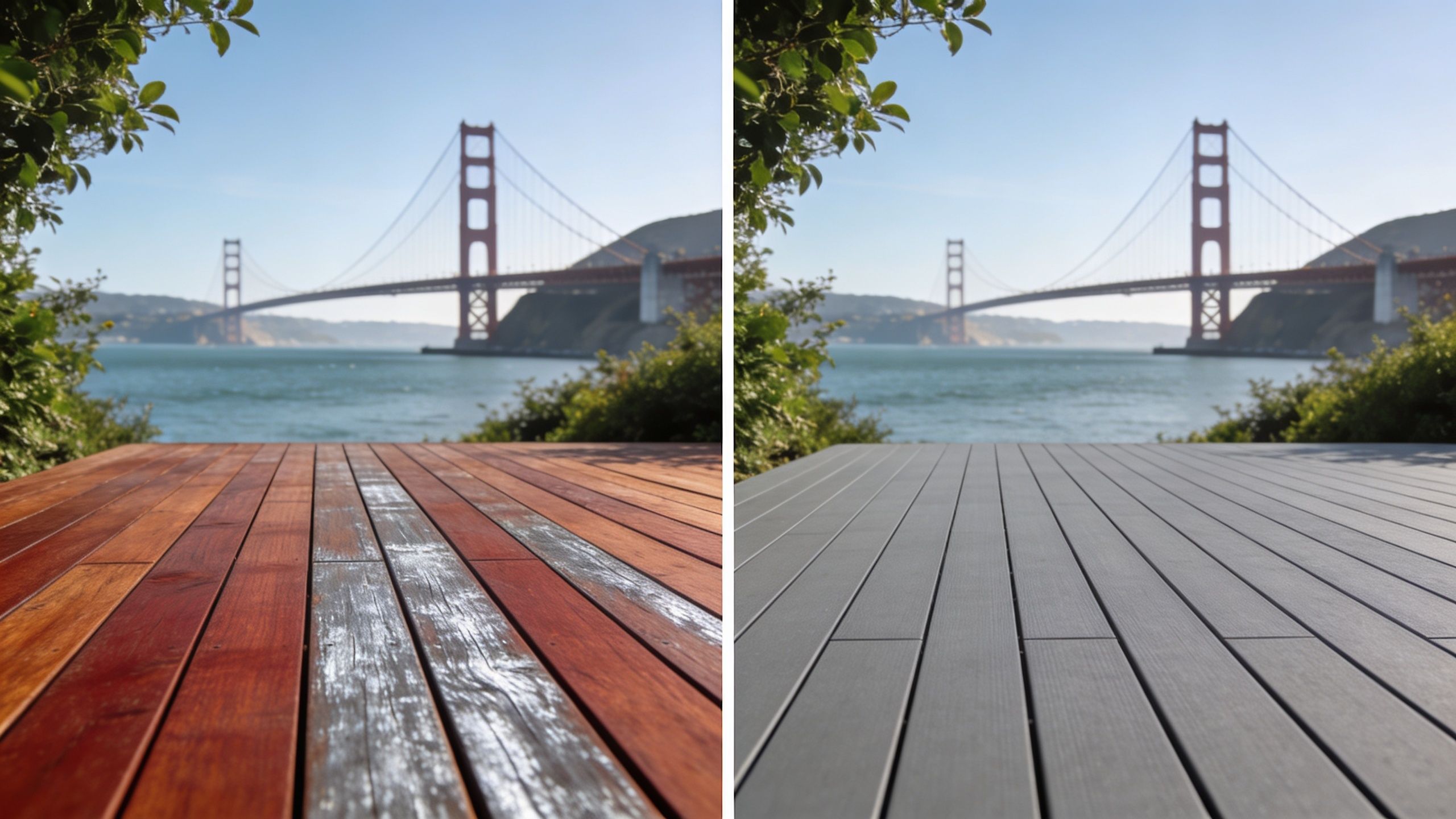
Redwood vs Composite Decking A Head-to-Head Comparison
A contractor in Berkeley can build two decks with the same footprint and get two very different service lives, just based on exposure. One sits in afternoon fog and shade. The other bakes in inland heat. That is why this comparison has to go past generic pros and cons.

| Category | Redwood | Composite |
|---|---|---|
| Upfront cost | Lower material cost on many jobs | Higher material cost |
| Ongoing upkeep | Needs cleaning and periodic sealing if the owner wants to hold color and limit weathering | Basic cleaning, no staining cycle |
| Appearance | Natural grain and color variation | Controlled color and more uniform surface |
| Handling on site | Lighter, easier to rip and trim | Heavier, often tied to brand-specific fasteners and edge details |
| Structure | Some profiles work over wider spacing, depending on span and application | Often wants tighter joist spacing to reduce bounce and board deflection |
| Bay Area fit | Strong on architecturally traditional homes and custom wood-driven projects | Strong on rentals, high-use family decks, and owners who want less upkeep |
For projects with hard western exposure or all-day sun, this guide to the best decking material for full sun in California helps sort out heat, fade, and comfort issues.
Upfront cost and long-term ownership
Redwood usually gives you an easier starting number. According to this redwood vs composite decking cost analysis, redwood often lands lower on upfront material and labor cost because the boards are lighter and simpler to work with, while composite starts higher but can reduce maintenance expense over time.
That gap matters on large backyard decks, rebuilds tied to a tight remodel budget, and projects where the client wants real wood without paying for a more expensive exotic species. Around the East Bay, it also matters when you are matching the deck budget to the house and not building a premium outdoor package in a neighborhood that will not support it.
Composite pencils out better for a different owner. If they will not seal, will not refinish, and want a surface that stays presentable with cleaning and routine inspection, the higher initial spend can make sense.
Practical rule: If the homeowner wants wood aesthetics but has no interest in a maintenance cycle, price composite early so nobody wastes time.
Maintenance requirements
Here, jobs get decided.
Redwood needs regular attention if the owner wants to preserve color and keep the surface in good shape. In Berkeley and Oakland, some clients accept that because they like the material and understand that weathering is part of owning a wood deck. Others say they will maintain it and never do.
Composite is more forgiving. It still needs washing, and shaded sites can still collect debris and mildew film, but it does not ask for sanding, staining, or sealing on the same cycle as redwood. That makes it a practical choice for rentals, second homes, and busy households.
Lifespan and durability
Service life depends less on marketing claims than on grade, detailing, and exposure.
Premium redwood, especially heartwood in the right application, can hold up for a long time in Bay Area conditions if it is installed correctly and maintained. Composite generally gives you more predictable resistance to rot and insects, which is one reason it shows up on projects where the owner wants a durable walking surface without committing to a finishing schedule, as discussed in this redwood vs composite overview.
I tell contractors the same thing at the yard counter. Redwood can last very well here, but only if the deck can dry out and the owner will care for it. Composite is more tolerant of neglect, but it is not bulletproof. Lower-end products can still scratch, get hotter in direct sun, and show installation mistakes fast.
Performance in Bay Area weather
Bay Area weather changes by zip code. Fog along the coast and in parts of Berkeley keeps framing and deck boards damp longer. Walnut Creek, Concord, and other inland sites put more stress on the deck from heat and UV. In the hills, wind exposure and undersides open to air can shift the equation again.
On foggy or shaded jobs, redwood performs best when you give it drainage, airflow, and enough access for cleaning. On hot, exposed jobs, composite often wins on owner convenience, but board temperature and expansion become real installation issues. If the project includes a raised deck or a more specialized support approach, it helps to review PA concrete foundation options alongside local engineering and code requirements.
The material choice matters. The build details matter just as much. Good flashing, proper fastener selection, framing that drains, and joist spacing matched to the board you are using will do more for deck life than a sales brochure ever will.
Appearance and Architectural Style
Some jobs are decided by maintenance. Others are decided the moment the client holds two samples in daylight.

Redwood fits homes where material character matters
Redwood brings warmth that manufactured boards still don’t fully replicate. Grain variation, color shift, and the way it weathers are part of the appeal, not defects. On older homes in Berkeley, traditional houses in Oakland, and custom residential work in the hills, redwood usually looks like it belongs there from day one.
It also gives you a choice in how the deck ages. Some owners want to keep the richer red-brown tone with regular sealing. Others prefer to let it drift toward a silver patina. Either way, the material feels honest.
If the design direction leans heavily toward natural wood, this guide to the best wood for a deck helps compare wood options in the right context.
Composite fits cleaner, more controlled design work
Composite works well where the architecture is crisp and controlled. Modern remodels, contemporary rear-yard decks, and homes with a more minimal palette often benefit from composite’s consistent color and uniform board appearance.
That consistency is the selling point. You’re not sorting boards for color or grain character in the same way, and the finished surface reads cleaner from a distance. For some projects, especially newer builds, that’s exactly what the design needs.
Matching the deck to the house
A deck shouldn’t look like it was chosen from a spreadsheet alone.
- For Craftsman and traditional homes: Redwood usually feels more natural and less imposed.
- For modern and contemporary work: Composite often aligns better with cleaner lines and more uniform finishes.
- For mixed-material remodels: Either can work, but the railing, siding, trim, and stair detailing need to support the choice.
A deck can be structurally sound and still look wrong on the house. Sample boards in outdoor light usually settle the argument faster than a catalog does.
Installation Details for Bay Area Builders
Builders usually feel the difference between these materials before the owner ever does. Handling, cutting, fastening, spacing, and movement all change the pace of the job.

Weight, handling, and crew time
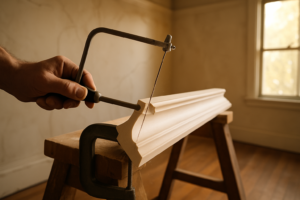
Redwood is easier on a crew. It’s lighter, simpler to move around the site, and easier to cut without specialized tools or system-specific hidden fasteners. That matters on hillside access, backyard remodels with limited staging, and any job where labor efficiency is part of the margin.
Composite boards are heavier and often come with more installation rules. The product can still be a good choice, but it rewards crews who follow the manufacturer’s spacing, fastening, and ventilation requirements closely.
Joist spacing and deflection
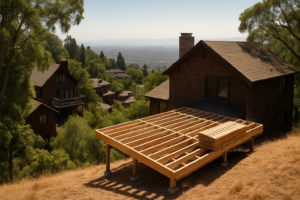
In seismic zones like the Bay Area, redwood has structural advantages. Redwood decking can allow joist spacing up to 24 inches, while composites often require 16-inch spacing to limit sagging and deflection, as noted in this seismic decking comparison.
That spacing difference affects more than the frame. It can influence material count, labor, and how stiff the finished deck feels underfoot. If you're still working through the framing layout, a deck joist spacing calculator is a practical place to check assumptions before ordering.
Seismic movement and fastening
Wood has some give. In Bay Area conditions, that flexibility is useful. The same seismic comparison notes that redwood’s natural flexibility offers better energy absorption during seismic events.
Composite needs a little more caution here because movement and fastening tolerances matter. Expansion and contraction aren’t reasons to avoid it, but they are reasons to install it exactly as specified and avoid treating it like ordinary dimensional lumber.
For projects where the structure itself needs extra planning, especially raised or freestanding work, it can help to review PA concrete foundation options as a general foundation reference before final engineering. Local code, soil conditions, and the project engineer should always drive the final foundation decision.
What works on site and what doesn’t
A few practical patterns show up again and again.
- Redwood works well on custom jobs where the crew wants easier handling, real wood appearance, and less fight during cutting and fitting.
- Composite works well when the framing is dead-on, the fastening system is followed carefully, and the owner values a low-upkeep surface more than natural variation.
- What doesn’t work: Treating composite like redwood, or selling redwood to a client who has no interest in annual upkeep.
Truitt & White supplies both wood and composite decking materials along with fasteners, structural lumber, and jobsite hardware from the Berkeley lumberyard, which helps when a contractor wants to compare board samples and framing implications at the same time.
Environmental Impact and Sustainability
In the Bay Area, plenty of clients care about the environmental side of the material decision just as much as the maintenance side. That conversation gets better when it stays grounded in what each product is.

Redwood as a renewable building material
Redwood has a straightforward environmental case when it’s responsibly sourced. It’s a natural material, renewable, recyclable, and biodegradable. For clients trying to align a project with green building priorities, that’s often the simplest story to understand.
It also fits the preferences of owners who want fewer petroleum-based products in the project. If the deck is part of a broader material package with low-toxicity and natural-finish priorities, redwood tends to pair well with that approach.
For a broader look at material choices in this lane, this guide to eco-friendly lumber in the East Bay is useful background.
Composite and recycled content
Composite has its own sustainability argument. Many products are made with 55 to 95 percent recycled materials, which can appeal to clients who want to put recycled content into the project. That can be a valid priority, especially if the owner is focused on waste diversion and low maintenance over the life of the deck.
The trade-off is manufacturing footprint. According to this comparison of wood vs composite decking environmental impact, composite production can carry 2 to 4 times higher embodied carbon than redwood. So the greener choice depends on which environmental measure the client cares about most.
Some owners hear "recycled content" and stop there. That’s only part of the picture. Recycled feedstock and manufacturing impact are related, but they aren’t the same question.
The better sustainability question
The better question isn’t which material wins in every category. It’s which trade-off fits the project.
If the client wants a renewable, biodegradable material with a natural finish, redwood is usually the cleaner fit. If the client values recycled content and wants to avoid an ongoing finish cycle, composite may fit their priorities better even with the higher manufacturing footprint.
Making the Right Choice for Your Project
The right answer usually becomes obvious once the project priorities are honest.
For a custom home where the deck is part of the architecture, redwood is hard to beat. It looks right on many Bay Area houses, feels more natural underfoot, and suits clients who value craftsmanship and don’t mind maintenance. It also makes sense where structural span and material handling matter.
For a rental, a family deck with heavy use, or a project where nobody wants to deal with sealing, composite is often the smarter call. It gives you a more controlled finish and a lower-maintenance ownership experience. That’s often worth the higher entry cost if the owner’s real goal is convenience.
There’s also a timing issue that gets overlooked. Recent supply chain disruptions tied to logging restrictions and wildfires in Northern California have caused redwood price and availability swings, which can make composite more competitive for time-sensitive Bay Area jobs, according to this look at wood availability and decking competition. If the bid depends on steady lead times, don’t assume redwood will always be the simpler path.
Some clients also need help seeing the deck in the context of the whole yard. If the material choice is tied to patio layout, planting, or outdoor flow, it can help to explore AI-powered landscape design before finalizing colors and board style.
Frequently Asked Questions
Is redwood or composite better near the coast?
On foggier coastal sites, composite often appeals because it avoids the yearly sealing cycle. Redwood still works well, but it needs more owner participation if appearance and service life are priorities. Good ventilation and drainage matter with either material.
Which one is easier for a crew to install?
Redwood is generally easier to handle and cut on site because it’s lighter and less system-dependent. Composite can install cleanly, but crews need to stay tight to manufacturer requirements on spacing, fastening, and ventilation.
Does redwood still make sense if the client wants low maintenance?
Usually not. Redwood is a good fit for clients who want real wood and accept the upkeep that comes with it. If the owner wants to install it and mostly forget about it, composite is usually the safer recommendation.
Can composite end up being the practical choice even if it costs more upfront?
Yes. Higher upfront cost doesn’t always mean higher ownership burden. On projects where maintenance gets deferred, composite can be easier to justify because the surface stays serviceable without the annual finish schedule.
Are redwood supply issues something I should factor into a Bay Area bid?
Yes, especially on time-sensitive work. Recent supply disruptions from logging restrictions and wildfires in Northern California have caused redwood price fluctuations and availability issues, which can make composite more competitive for schedule-driven jobs, as noted in the earlier wood-versus-composite supply discussion.
Does local code decide the material for me?
Usually no, but structure, span, attachment, and site conditions can narrow the options. For any project involving permitting, seismic concerns, or unusual framing, check the manufacturer requirements, talk with your engineer when needed, and confirm details with the local building department.
Get Expert Guidance on Decking Materials
The answer in redwood vs composite decking depends on the job in front of you. Site exposure, framing, design, maintenance expectations, and product availability all matter more than a generic pros-and-cons list.
If you want to compare decking samples, talk through structural lumber and hardware, or sort out what makes sense for a Berkeley, Oakland, San Francisco, or East Bay project, it’s worth having that conversation before the order is written.
If you’re weighing redwood vs composite decking for an upcoming project, Truitt and White can help you compare materials in person at the lumberyard and hardware store at 642 Hearst Ave, Berkeley, CA 94710, or talk through project needs by phone at (510) 841-0511. For general questions, you can also reach out through info@truittandwhite.com.