Quick Answer
Replacing replacement weather stripping for exterior doors starts with identifying the profile you already have at the jamb, head, and bottom of the door. Then match it with a durable material suited to your climate, remove the old seal, clean the surfaces, and install the new one carefully for a tighter, more efficient door. For related upgrade planning, see this Bay Area guide to energy-saving renovations.
A draft at the front door usually shows up before you see the problem. You feel air at your ankles, hear a slight rattle when the wind picks up, or notice the door takes more effort to latch cleanly.
That usually points to worn or poorly matched weather stripping. If you're sorting through replacement weather stripping for exterior doors, the right fix isn't just buying a new sweep from the shelf. It starts with matching the existing profile and choosing a material that can handle Bay Area fog, sun, and moisture. If you're also looking at wood entry systems, these bespoke wooden door considerations are worth reviewing because seal choice and door material need to work together.
Identifying Your Door's Existing Weather Stripping Profile
The most common mistake is buying weather stripping by appearance alone. A seal can look close enough in the package and still fail once the door closes.
Start with the door shut. Look at the top, both side jambs, and the bottom edge. You're trying to answer a simple question. Does the seal push into a groove, stick onto the surface, fasten mechanically, or slide into a holder?

Kerf-in and compression seals
A kerf-in seal has a narrow spine that presses into a slot cut into the jamb or stop. The visible part is usually a flexible bulb or flap that compresses when the door closes. This is common on newer entry systems and many premium door units.
If you pull a small section free and see a dart-shaped or barbed insert, it's kerf-in. Don't substitute adhesive foam for this unless you're making a temporary repair. The fit and compression are different.
Adhesive-backed foam and surface-applied strips
Foam tape is easy to spot. It peels and sticks directly to the stop or jamb surface. It's usually the product people add after the original seal has failed or gone missing.
Surface-applied compression seals can look similar at first glance, but they often mount with fasteners or sit in a carrier. They’re more durable than basic foam and make more sense on a busy exterior door.
Practical rule: If the old material leaves behind adhesive residue when you remove it, you're likely dealing with a stick-on product, not a true kerf system.
V-strip and door bottom seals
A V-strip, sometimes called a tension seal, is a folded strip that springs against the door edge. You'll usually find it at the head or side where a door has a narrow but inconsistent gap.
At the bottom, look for a door sweep, door shoe, or an insert in the bottom rail. That lower edge does a lot of work, and it often fails first because it sees dirt, water, and foot traffic.
A quick door anatomy refresher helps here. This guide to the parts of a door is useful if you're trying to distinguish the stop, jamb, threshold, and bottom edge before ordering parts. For a broader overview of preventing energy loss with door seals, Wilcox Door Service also lays out the common seal types in a practical way.
What to inspect before you buy
- Check the corners: Look for gaps where the head meets the side seals.
- Inspect the threshold: Wear at the threshold can make a good sweep look bad.
- Look for paint buildup: Old paint can change the groove size or keep a new seal from seating fully.
- Confirm door alignment: A sagging slab can mimic weather stripping failure.
If the profile is unclear, remove a short sample and bring it with you. That's faster than guessing and making two trips.
Choosing the Right Replacement Materials for the Bay Area Climate
A front door in Pacifica, Berkeley, or Marin can look fine and still leak air because the replacement seal was chosen for price, not for exposure. In the Bay Area, fog, salt air, summer sun, and wind-driven moisture all shorten the life of the wrong material.
For most exterior doors here, silicone or EPDM is the safer choice for the perimeter seal. Both stay flexible longer than basic vinyl, and that matters when the seal has to compress every day without cracking, flattening out, or sticking to the frame in heat. Vinyl still has a place on protected openings, but it is usually a budget replacement, not the long-term fix I recommend for a primary entry.
Selecting the right material gets easier once you match it to the door condition, the exposure, and the profile already in the frame.

What works well and what tends to disappoint
| Material | Where it works | Trade-off |
|---|---|---|
| Silicone | Good for doors exposed to sun, moisture, and frequent use | Higher material cost |
| EPDM | Strong choice for exterior jamb seals and mixed exposure | Fewer profile options in some systems |
| Vinyl | Works on sheltered doors and lower-wear openings | More likely to stiffen or shrink over time |
| Foam | Useful for temporary repairs or light-duty gaps | Wears out quickly on active exterior doors |
Foam is the one I see overused. It can quiet a draft for a while, but on a working exterior door it often compresses early, tears at the corners, or loses adhesion after a wet season.
Matching material to the opening
Exposure changes the recommendation. A west-facing door in Oakland or Walnut Creek gets heat and UV. A coastal opening in San Francisco, Alameda, or Half Moon Bay deals with moisture and salt. A recessed side door under a deep overhang can get by with a less expensive material because the seal is not taking the same daily abuse.
Door construction matters too. If the weather stripping fits into a kerf in the stop, stay with that profile unless you have confirmed a compatible substitute. If you are unsure which part you are replacing, this guide to the parts of a door and frame components helps identify the stop, jamb, threshold, and bottom edge before you order material.
Manufacturer-matched parts are usually the right move on premium doors from Marvin, Andersen, and similar brands. The profile controls compression. Too little compression leaks air. Too much compression creates drag, latch problems, and premature wear on both the seal and the hinges.
Title 24 and why material choice affects compliance
California Title 24 does not approve weather stripping by material type alone. It looks at the performance of the full door assembly. For new construction and many replacement situations, exterior swinging doors are generally expected to be weatherstripped, and the installed assembly has to limit air leakage to the rated level required for the product category. In practice, that means the replacement seal has to restore a tight, even seal at the head, jambs, and bottom, not just fill part of the gap.
That is where generic DIY advice often falls short. A cheap stick-on seal may reduce a draft at first, but if it changes the way the door closes or leaves gaps at the corners, it does not help you meet the intent of the code. The better approach is to use a durable profile that matches the original system and works with the threshold and sweep as a set. For a broader overview of preventing energy loss with door seals, Wilcox Door Service covers the common seal types well.
If this is part of a permitted remodel or a door replacement tied to energy paperwork, verify the door's tested performance before substituting parts. Weather stripping looks simple, but on a Title 24 job, fit and compression matter just as much as material.
Measuring, Sourcing, and Preparing for Installation
Bad prep ruins more weather stripping jobs than bad cutting. If the jamb is dirty, the threshold is chewed up, or the door is out of adjustment, the new seal won't last.
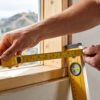
Measure the opening itself, not the old material. For a replacement door project, this how to measure for replacement doors guide is a useful reference, and the same habit applies to weather stripping. Measure head, latch side, hinge side, and the bottom separately because wear isn't always even.

What to have on hand
You don't need a truck full of tools, but you do need the right ones.
- Tape measure: For each leg of the opening and the bottom edge.
- Utility knife or shears: For clean cuts on flexible material.
- Putty knife or scraper: To lift old adhesive and loose fragments.
- Drill and bits: Needed for sweeps, carriers, and pilot holes.
- Cleaner and rags: Use them before any adhesive or fastener goes in.
- Hacksaw: Useful when trimming aluminum-backed sweeps or carriers.
Prep steps that actually matter
Pull the old material completely. Leaving behind small fragments at the corners usually creates the very gap you're trying to fix.
Then clean the contact surfaces. Adhesive-backed strips need a clean, dry stop. Kerf grooves need to be free of paint, dust, and old seal remnants. Bottom edges need extra attention because grit chews up sweeps and hides misalignment.
If the threshold is warped, loose, or rotten, replace or repair that first. A new sweep can't make up for a bad landing surface.
If you're sourcing materials locally, bring in a sample of the old seal and a few photos of the jamb and threshold. That makes matching much easier than trying to describe the profile from memory.
Installation Procedures for Common Weather Stripping Systems
A front door can look square, latch fine, and still leak because the seal was installed with the wrong profile tension or the wrong bottom contact. That shows up often on Bay Area entries, where cool damp mornings, afternoon sun, and seasonal swelling can change how a door closes over the course of a day. Installation has to account for that movement, and for Title 24 goals, the seal needs consistent compression without making the door bind.
The lower edge takes the most abuse. Generic front door advice does not always translate well to a service door or detached garage entry, so this DIY guide to garage weatherstripping is a useful comparison for wider bottom-seal setups. If the opening also needs frame correction, this how to install a door frame reference helps explain how jamb position and reveal affect the final seal.

Installing kerf-in weather stripping
Start at one top corner and seat the barb into the kerf slot by hand. Work down the jamb in short sections. Do not stretch the material to make it look straight. It will shrink back and leave the corners open.
A plastic putty knife or other non-marring tool helps push the barb fully into painted or tight kerfs. On older Bay Area homes, paint buildup in the groove is common, especially after several repaint cycles. If the kerf is packed with finish, clean it out first or the new seal will twist and sit proud of the stop.
The goal is even compression from top to bottom. The bulb should touch the door consistently, especially at the latch side where small reveal changes show up fast.
Installing adhesive-backed weather stripping
Adhesive-backed strips are the quickest to apply and the easiest to install poorly. Set the strip in place with the door closed as a reference, then peel the backing a little at a time and press it down without pulling tension into the material.
Use this type only where the conditions support it. On a protected side door, it can be a reasonable short-term repair. On a main entry exposed to sun, fog, and repeated wet-dry cycles, adhesive-backed products usually age faster than kerf-in or mechanically fastened systems. For Title 24-minded upgrades, longer-lasting compression seals are usually the better call because they hold their shape and air seal more reliably over time.
Installing tubular gaskets and screw-fastened jamb seals
Tubular gaskets in metal or reinforced carriers are a better fit for doors that see heavy use, mild frame irregularities, or stronger wind exposure. Hold the carrier in place with the door nearly closed so you can judge compression before drilling. Then mark, pre-drill, and fasten the strip evenly along the jamb.
Screw placement matters, but the bigger issue is alignment. If the carrier drifts in or out as you fasten it, the bulb compresses unevenly. One section will crush flat while another barely touches the slab. That usually shows up first as latch resistance or a draft near the top corner.
Check the door several times during installation instead of waiting until the end. A small adjustment early saves a lot of hole patching later.
Installing the bottom sweep
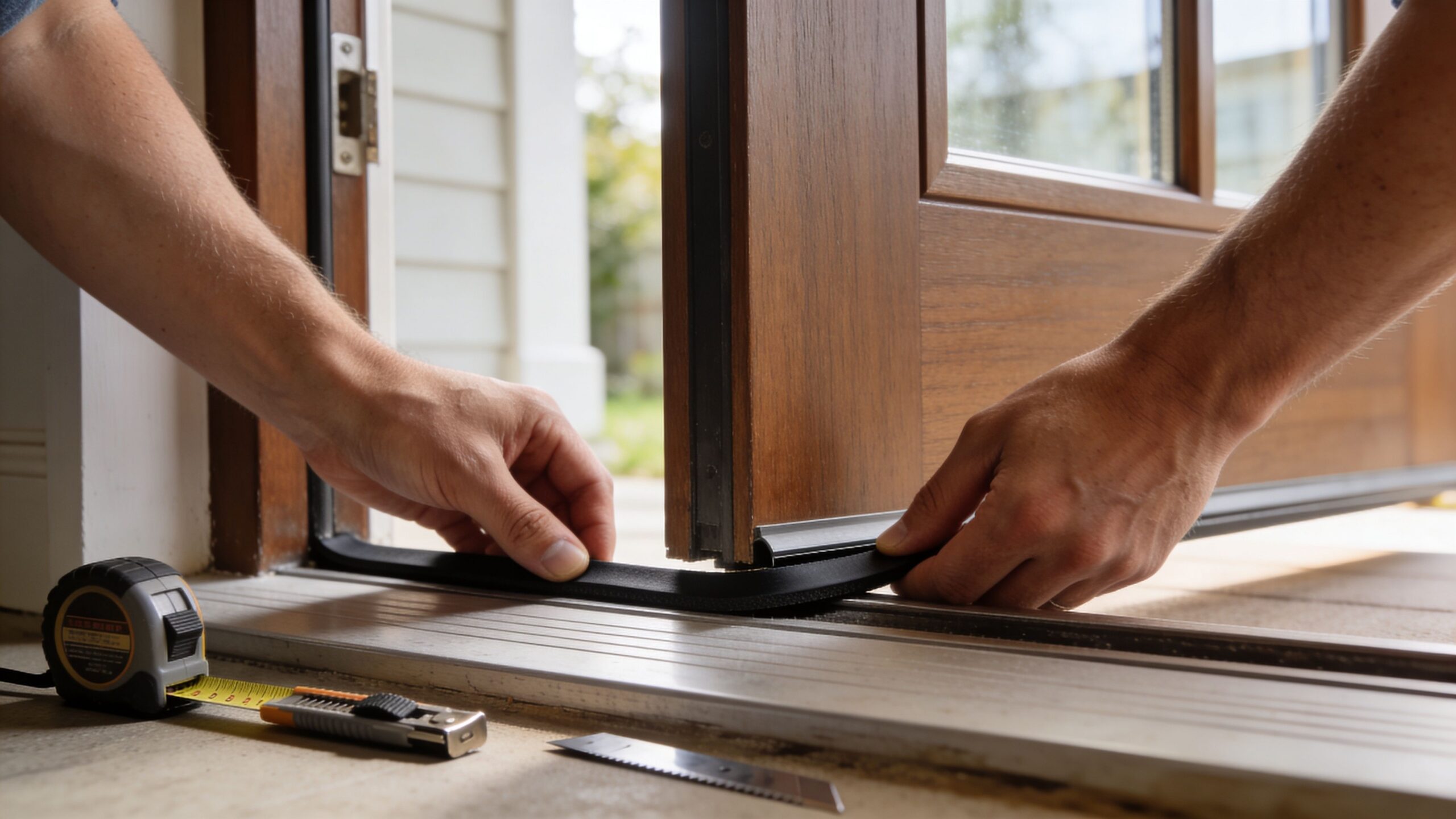
Bottom sweeps need light, continuous contact with the threshold. Close the door, hold the sweep in position, and mark the mounting line so the seal just kisses the threshold across the full width. Then open the door, trim the sweep or carrier if needed, pre-drill, and fasten it in place.
Too little contact leaves an air gap. Too much contact makes the door drag, wears the sweep quickly, and can scrape finish off a wood threshold or catch on an uneven saddle.
On older entries, test both corners before tightening all the screws. Many thresholds are slightly out of level, and one side often needs a minor adjustment. For outswing doors or exposed locations near the coast, choose a sweep material that stays flexible in damp, salty air and does not take a permanent set after a season of compression.
A good sweep seals with light contact and lets the door operate normally.
Final checks after installation
Open and close the door from both sides. Watch the latch, check the top corners, and look for any spot where the seal is crushed flat or not touching at all.
Then do a practical field check. On a cool or windy day, run your hand around the perimeter from the inside. If the seal is installed correctly, the door should latch cleanly, the compression should look even, and you should not feel a concentrated draft at the head, latch side, or threshold.
Troubleshooting Common Installation and Performance Issues
If the door still leaks after new weather stripping goes in, don't assume the product is bad. The first suspect is usually fit.
If you still feel a draft
Look at the corners first. A small opening where the head seal meets the jamb seal can leak more than a long section with good compression.
Also inspect the bottom edge with the door closed. If the threshold is worn unevenly, the sweep may be sealing one side and missing the other.
If the door is hard to close
The replacement profile may be too large, or the seal may be mounted too far into the opening. Check for over-compression at the latch side and top corner.
On older doors, hinge adjustment may be part of the fix. A sagging slab can push too hard against one jamb and barely touch the other.
If the adhesive keeps peeling
That's usually a prep issue or a product mismatch. Dust, old finish, and moisture all work against adhesive-backed weather stripping, especially on exterior entries.
For a more reliable repair, move to a kerf-in profile, a screw-fastened carrier, or a better-matched door bottom system if the opening allows it.
If the new seal solved one problem and created another
That happens when the door itself needs correction. Weather stripping won't fix a warped threshold, a loose frame, or a slab that's out of plane.
If the opening is part of a larger door replacement or upgrade, supplier guidance becomes essential. It’s easier to sort out profile, threshold compatibility, and code-related product selection before the wrong parts get cut and installed.
Frequently Asked Questions About Door Weather Stripping
How do I know which replacement weather stripping for exterior doors I need?
Start with the profile, not just the material. Exterior doors use several attachment styles, including kerf-in seals that press into a groove, adhesive-backed strips, screw-fastened carriers, and bottom sweeps or shoes. If the new piece does not match the original shape and reach, it may install cleanly and still leak.
For Bay Area homes, that matters even more on older openings where jambs, thresholds, and door slabs are rarely perfectly uniform. Bring in a short sample if you can, plus clear photos of the hinge side, latch side, head, and threshold. That usually saves a wasted trip and the wrong part.
How often should exterior door weather stripping be replaced?
It depends on sun exposure, traffic, and material quality. The U.S. Department of Energy guidance referenced by This Old House notes that installing or replacing weatherstripping on exterior doors and operable windows can reduce heating and cooling costs by more than 20%, and replacement often falls in the 2 to 5 year range depending on conditions, as outlined in this This Old House guide to weatherstripping.
A shaded side door may last much longer than a west-facing front entry that gets afternoon sun and daily use.
Will new weather stripping help with energy bills?
Usually, yes, if air leakage at the door is the problem and the seal is matched to the opening. The U.S. Department of Energy notes that weatherstripping helps seal air leaks around movable parts like doors. Angi also connects replacement weatherstripping with lower heating and cooling costs in its discussion of weatherstripping replacement cost and energy efficiency.
For California projects, energy performance is not just about comfort. If the door is part of a permitted remodel, Title 24 compliance can affect what gets approved, so use products that fit the door correctly and support a tight seal instead of relying on generic foam.
Can I use any weather stripping on a Marvin or Andersen door?
No. Use the profile made for that door system whenever it is available. Marvin, Andersen, and other premium manufacturers design their doors around specific compression ranges, corner details, and threshold relationships.
A substitute can create drag at the latch, leave a gap at the head, or interfere with how the multipoint hardware pulls the panel in. It can also complicate warranty and code questions. On higher-end doors, exact fit usually costs less than trial and error.
Does Bay Area weather really change which material I should buy?
Yes. Coastal air, winter moisture, summer UV exposure, and temperature swings across microclimates all affect service life. A basic vinyl or low-density foam strip that holds up in a protected inland opening may fail quickly near the coast or on a sun-hit entry.
In this region, silicone and EPDM are often the better choice for exterior perimeter seals because they stay flexible longer and recover compression better. For metal components at the bottom of the door, corrosion resistance matters too.
Should I replace just the bottom sweep or all the weather stripping?
Replace only the failed part if the rest of the system still fits and compresses evenly. That is common when the bottom sweep has worn from threshold contact but the jamb seals are still in good shape.
Replace the full set when the seals are flattened, brittle, painted shut, or mixed from past repairs. A pieced-together fix often leaves one side of the door sealing harder than the other, which is where callbacks start.
How much does weather stripping replacement usually cost?
Cost depends on the door size, the type of seal, and whether the job includes perimeter seals, a sweep, threshold adjustment, or manufacturer-specific parts. Angi reports that as of 2026, the average cost to replace weatherstripping on an exterior door is about $200 to $600 per door, with a typical spend around $350, and material and labor can run $10 to $40 per linear foot.
National averages are only a rough reference. On Bay Area jobs, I would want to see the opening before giving a useful number, especially if the door is older, out of square, or tied to a Title 24 scope where the seal needs to perform, not just fit.
Get the Right Weather Stripping for Your Project
Good replacement weather stripping for exterior doors depends on three things. Matching the existing profile, choosing a material that fits the exposure, and installing it with care at the jamb, head, and threshold.
For Bay Area projects, climate and code awareness matter. If you're working on a premium entry system, an exposed coastal opening, or a door tied to a larger remodel, use parts that match the opening instead of forcing a generic substitute. If you need help with compatible products, replacement parts, or door system guidance, this Truitt & White window and door service page is the right starting point.
If you'd like help sorting out weather stripping, door hardware, or a replacement door package, visit Truitt and White. For lumber, hardware, tools, and jobsite supplies, stop by the Lumberyard and Hardware at 642 Hearst Ave, Berkeley, CA 94710 or call (510) 841-0511. For door and window product guidance, visit the Windows and Doors Showroom at 1831 Second Street, Berkeley, CA 94710 or call (510) 649-4400. You can also reach out through info@truittandwhite.com.