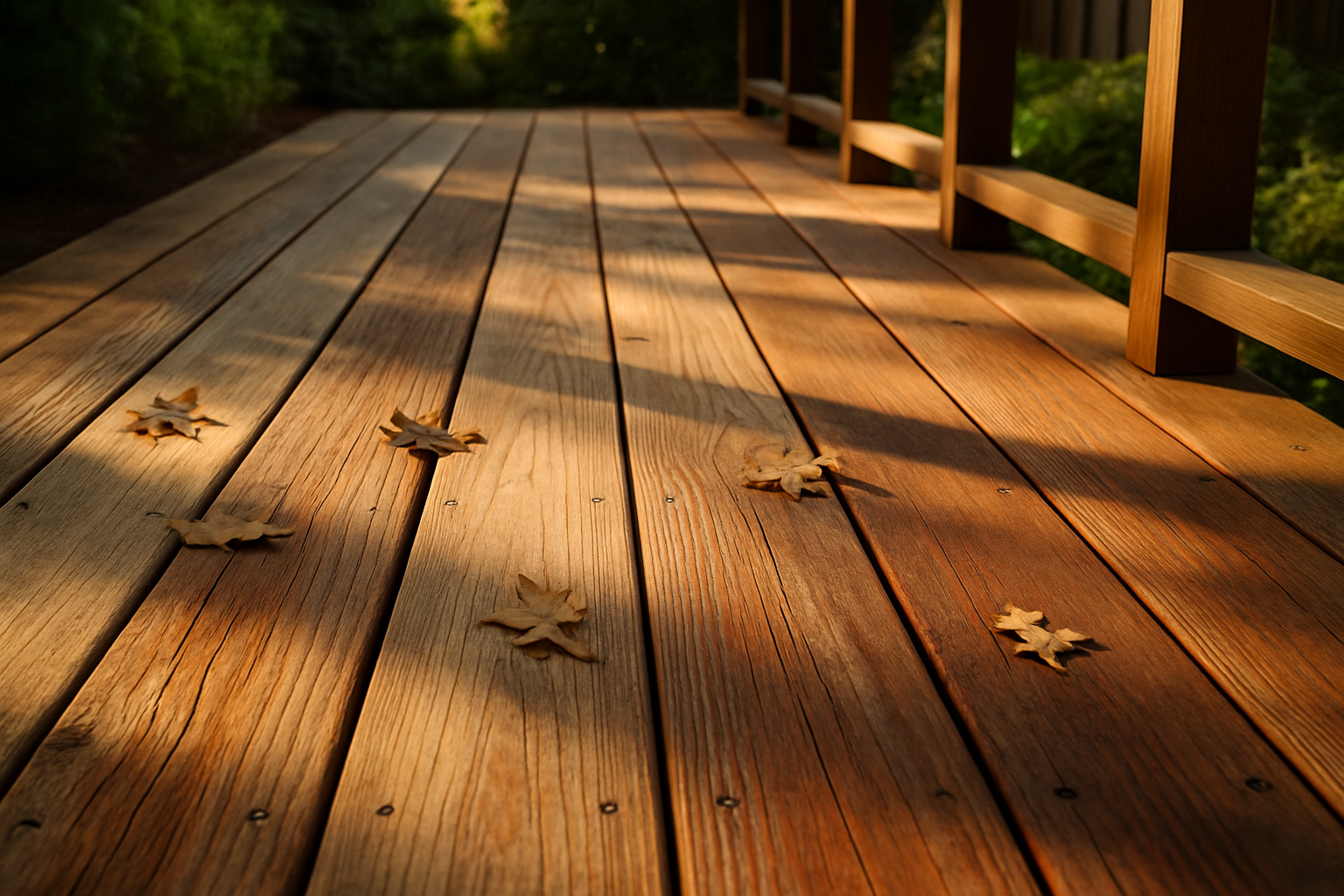
Direct Answer: Redwood heartwood, thermally modified wood like Thermory, and certain composite brands hold up best in Bay Area sun, but the right choice depends on your specific microclimate, not just sun exposure.
Most decking guides written for California assume the problem is heat. Pick a light color, add some ventilation, and you’re done. But if your deck is in Berkeley, Oakland, Rockridge, or anywhere else in the inner East Bay, you already know that’s only half the picture.
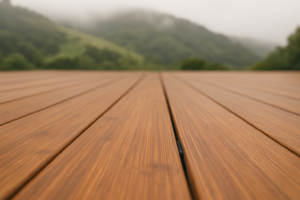
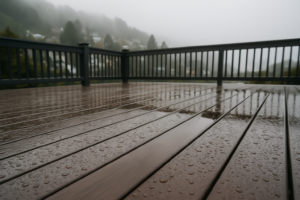
The real challenge here is the combination: marine fog most mornings, then direct UV by early afternoon, then cooling off again by evening. That daily cycle, damp, then bright, then damp again, is genuinely hard on exterior wood. Materials that perform fine in a dry inland climate or a fully shaded yard can fail quickly when they’re absorbing moisture every morning and baking it back out every afternoon.
This article focuses on the three material types that consistently come up in real conversations with Bay Area builders and homeowners: redwood, thermally modified wood, and composite decking. Each one handles that fog-plus-sun combination differently, and the differences matter more than most national content admits.
Your Microclimate Matters More Than You Think
“Full sun” means something different depending on where your deck actually sits. A south-facing deck in Rockridge can see six or more hours of direct sun on a July afternoon. A deck three miles west in the Temescal corridor might get that same fog bank until noon and lose an hour or two of real UV exposure every summer day.
That difference changes which materials make sense. A deck that stays moist longer needs stronger resistance to fungal growth and wood movement. A deck that gets intense afternoon sun needs a surface that won’t trap heat at skin-contact levels or fade unevenly.
Before you pick a material, it helps to map your own site honestly:
- Morning fog burn-off time: Does your deck dry out by 10 a.m. or closer to 1 p.m.?
- Slope and orientation: South-facing slopes catch the most direct sun; north-facing decks may stay damp most of the day
- Neighboring structures or hillside shade: A deck shaded by a neighboring home in the afternoon is a fundamentally different environment than an open rooftop or backyard deck
- Proximity to the coast: Decks closer to the bay or the hills above it see more sustained marine layer than those a few miles inland
Getting this right at the start saves a lot of grief later. We see it frequently: someone picks a material based on a national comparison chart and ends up with boards that are cupping, fading, or running uncomfortably hot within two seasons.
For a deeper look at how Bay Area fog patterns change the wood vs. composite decision overall, this breakdown on fog and sun and decking decisions covers the split in more detail.
The Composite Heat Problem Nobody Puts in the Brochure
Composite decking gets recommended constantly, and for good reason in some situations. It resists rot, holds color better than most wood options, and needs far less seasonal maintenance. But there is one tradeoff that comes up repeatedly in real buyer conversations, and it deserves an honest mention rather than a footnote.
Composite surfaces get hot. Not uncomfortable-but-manageable hot. Hot enough that homeowners describe barefoot children having to run across the deck to avoid burning their feet. Some buyers use phrases like “blisters” and describe the surface as genuinely painful to stand on in direct summer sun. Even composite brands that market heat-mitigating technology include disclaimers warning against extended skin contact on sunny days.
This is especially relevant for south-facing East Bay decks that lose their fog cover by midday. A composite board in full afternoon sun in Rockridge in July can reach surface temperatures significantly above air temperature, and the effect is worse on darker color selections.
This doesn’t make composite a bad choice, it makes it the wrong choice for certain situations:
- Decks where kids or pets use the surface barefoot during summer afternoons
- South-facing decks with no shade structure overhead
- Rooftop or elevated decks with no neighboring shade source
For decks that stay partially shaded, or where the primary use is evenings and weekends, composite can still be a good fit. TimberTech and Trex both offer capped composite boards with some heat-reduction claims, though the improvement is real but partial, not a solution for full-sun situations.
If you’re weighing composite brands specifically, this guide on choosing a composite decking brand in the East Bay walks through what to look for before you commit to a product.
Redwood: What the Grade Label Actually Tells You
Coast redwood has been the go-to decking choice in the Bay Area for decades, and it earns that reputation, but only when you buy the right grade. This is where a lot of buyers make a mistake that costs them real money.
Redwood’s natural resistance to rot, fungal growth, and insects comes from tannins concentrated in the heartwood of the tree, the dense, darker-colored wood at the center. The sapwood, which is the lighter wood from the outer rings, contains far less tannin. It looks like redwood, it mills like redwood, and it’s often sold in the same bin as heartwood-dominant boards. But it performs more like pine in wet conditions.
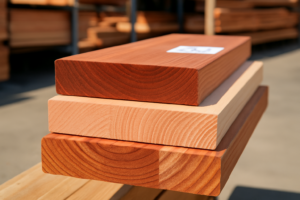
The grade that actually delivers the rot resistance redwood is known for is Construction Heart (Con Heart). This grade specifies heartwood-dominant boards and is the appropriate choice for any ground-level deck, deck framing that stays close to grade, or any Bay Area application where the wood will see regular moisture contact.
A few practical points on redwood for fog-belt conditions:
- Tannin bleed is real, freshly installed redwood will run dark brown water across concrete or light-colored surfaces for the first season, especially after rain or morning fog. Plan for it.
- Redwood is grown and milled in Northern California, which generally means better availability and more consistent grain than species hauled from further away
- Coast redwood stays dimensionally stable through the fog-plus-sun cycles of the Bay Area better than many imported species
- It takes stain and sealant well, which extends its appearance life significantly
The practical takeaway: if you’re buying redwood for a Bay Area deck and the boards look very pale or streaky, ask specifically about the grade. Con Heart costs more than a mixed-grade board, but you’re buying the part of the tree that actually does the work.
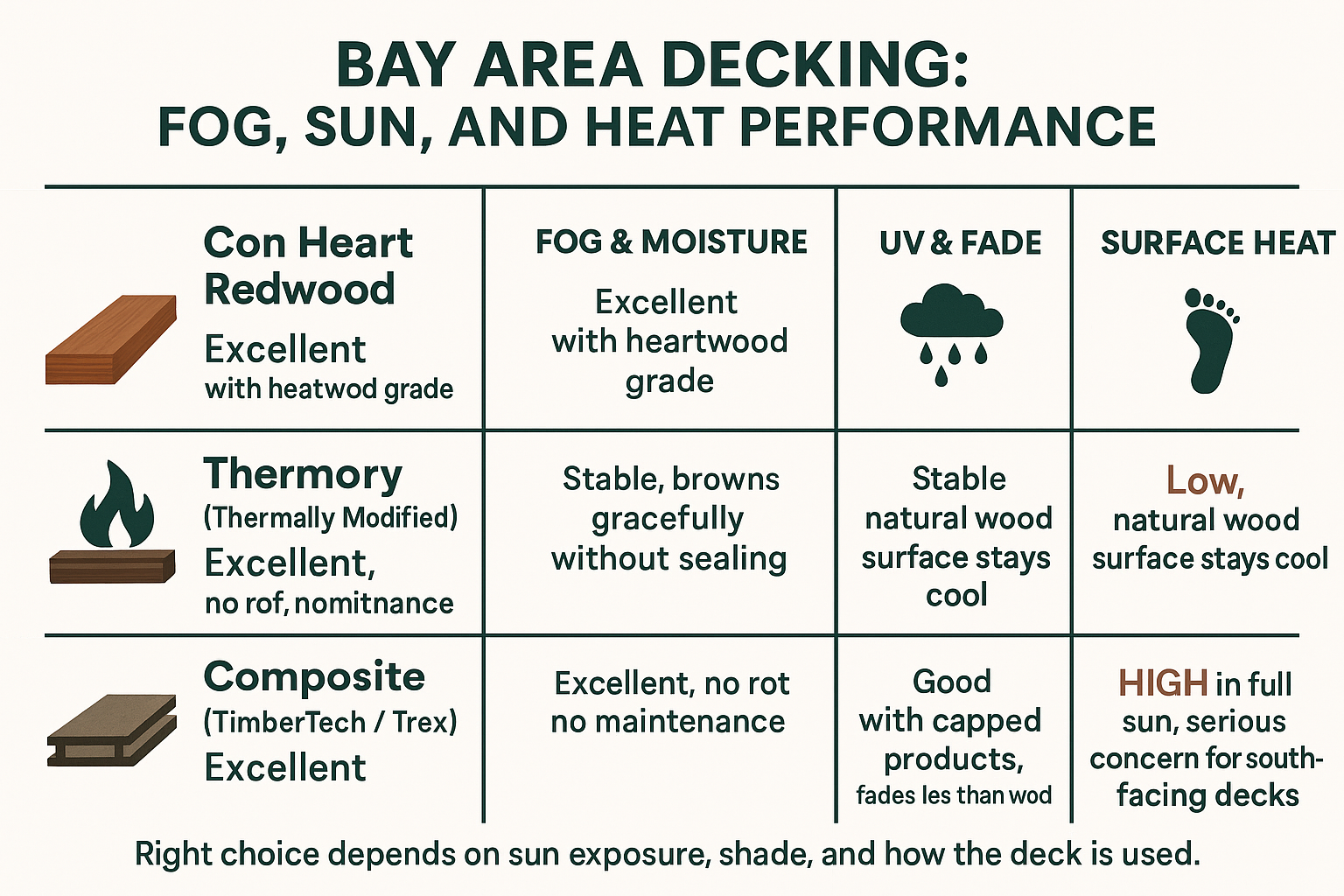
Bay Area Decking at a Glance: Three Materials, Three Conditions
This chart shows how redwood, thermally modified wood, and composite each handle the specific conditions Bay Area decks face, fog, UV, and heat.
What Thermally Modified Wood Actually Is
Most Bay Area homeowners haven’t heard of thermally modified wood, but architects who work on fog-belt projects are increasingly specifying it. Thermory is the brand we stock, and it’s worth explaining what the modification process actually does, because buyers who are skeptical of marketing language respond better to the mechanics than to vague performance claims.
The process heats the wood to temperatures between roughly 160°C and 230°C (320°F to 445°F) in a controlled, low-oxygen environment, no chemicals involved. At those temperatures, the sugars and simple carbohydrates inside the wood break down and largely convert to carbon. Those sugars are what fungi and wood-boring insects feed on. Remove the food source, and you substantially reduce the biological activity that causes rot.
The heat also drives out much of the wood’s bound moisture and changes the cellular structure in a way that makes the board dimensionally more stable. That means less swelling, less shrinking, and less cupping through the daily moisture cycle of a Bay Area morning fog. For a deck that gets damp before breakfast and sun-baked by lunch, that dimensional stability matters over the long term.
Thermory is typically made from ash or pine, both of which are fast-growing and responsibly sourced. The modification process is third-party verified for environmental performance by Thermory’s certification documentation, which is worth noting for projects with sustainability specifications.
The tradeoff: thermally modified wood costs more than redwood, and it’s a product most lumberyards don’t stock locally. It’s not an everyday commodity purchase. But for a high-exposure south-facing deck or a rooftop application where long-term performance matters more than upfront cost, it’s a legitimate answer to a problem that redwood and composite each solve only partially.
For a direct performance comparison between Thermory and cedar or composite, this article on whether Thermory actually outperforms cedar and composite goes deep on the data.
Quick Material Reference: Bay Area Deck Conditions
This table summarizes the key tradeoffs across the three material types most commonly discussed for Bay Area full-sun decks. Use it as a starting point, not a final verdict, your specific site conditions matter.
| Material | Best For | Main Limitation | Maintenance Level |
|---|---|---|---|
| Con Heart Redwood | Fog-belt decks, ground-level builds, traditional look | Grade confusion, sapwood boards underperform | Moderate, stain or seal every 2-3 years |
| Thermory (Thermally Modified) | High-exposure south-facing decks, rooftop applications, architect-specified projects | Higher upfront cost, less widely stocked | Low, browns naturally, periodic oiling optional |
| Composite (TimberTech / Trex) | Shaded decks, low-maintenance priority, evening-use decks | Surface heat in full afternoon sun | Very low, wash and inspect annually |
| MOSO Bamboo | Eco-conscious buyers, moderate exposure | Varies significantly by product and coating | Moderate, coating integrity is key |
Frequently Asked Questions About Bay Area Deck Wood
Does redwood actually resist rot, or is that just a reputation?
It resists rot well, but only when you’re buying Con Heart grade, which is heartwood-dominant. The heartwood is high in tannins that naturally inhibit fungal growth and insect activity. Sapwood-heavy boards labeled as redwood don’t carry that protection. Always ask about the grade before buying for a deck that will see regular moisture contact.
Is composite decking really that hot in the Bay Area?
On a south-facing deck with direct afternoon sun, yes, it can be uncomfortably hot for bare feet, and some homeowners describe it as genuinely painful for children. The effect is worse with darker color selections. Composite performs better in shaded situations or where the primary use is evenings. If your deck gets full afternoon sun in summer, this is a real tradeoff to weigh before you decide.
What’s the difference between Thermory and regular wood?
Thermory goes through a high-heat modification process that breaks down the sugars inside the wood, the same sugars that fungi and insects feed on. The result is a board that resists rot and dimensional movement without any chemical treatment. It’s also more stable through the daily moisture-then-sun cycles typical of Bay Area fog-belt conditions. The process is mechanical, not chemical.
Does it matter which direction my deck faces when I’m choosing a material?
Yes, meaningfully. A south-facing deck in the East Bay will get significantly more intense afternoon sun than a north or east-facing deck nearby. That changes the heat retention concern for composite, the UV fade rate for any wood, and how quickly fog burns off the surface each morning. Map your actual sun exposure before picking a product.
Is tannin bleed from redwood a problem I need to plan around?
Plan for it in the first season, especially if the deck drains onto concrete, pavers, or light-colored surfaces. Freshly installed Con Heart redwood will run dark brown water after morning fog or rain until the surface tannins stabilize. It’s not a defect, it’s a natural property of the wood, but it can stain adjacent surfaces if you’re not prepared for it.
Do I need a permit to replace my deck in Berkeley or Oakland?
In most cases, yes. Berkeley and Oakland both require building permits for deck replacement or new construction above a certain size threshold, and Oakland hillside areas carry additional WUI fire zone requirements that affect material choices. Check with your local building department before starting work, material selection can affect what gets approved.
The Grade and Fastener Questions Are Where Projects Go Wrong
Most decking decisions that go badly wrong don’t fail because someone picked the wrong species, they fail because of a grade call or a fastener choice made without enough information.
With redwood, the grade issue is covered above. But fasteners matter too, especially on Bay Area decks. Coastal moisture and fog accelerate corrosion on standard fasteners faster than most homeowners expect. Stainless steel or hot-dipped galvanized fasteners are the practical standard for any exterior application that will see regular moisture. Standard zinc-plated screws will rust and bleed staining streaks across the boards within a few seasons.
With composite decking, the fastener system is often product-specific, many composite manufacturers specify proprietary hidden fastener clips that maintain warranty coverage. Using generic screws can void coverage on some products.
With thermally modified wood, the modification process makes the material slightly more brittle than unmodified wood, so pre-drilling near board ends is a practical step most installers recommend to avoid splitting.
This is the kind of detail that doesn’t make it into national buying guides but comes up constantly in conversations at the yard. As one longtime contractor customer put it, the lumber sales team here is exactly where you take these questions before you commit, not after the first boards are down. Giacomo P., who has been coming to Truitt & White for years, put it simply: “Love working with Joe, and the whole lumber sales team.” That kind of materials-specific guidance, grade selection, orientation, fastener type, is what a knowledgeable local supplier yard is positioned to provide.
For more on how Bay Area conditions change the broader wood vs. composite decision, the wood vs. composite decking guide covers the full comparison. And if you’re still sorting out material categories overall, the decking material comparison guide for Bay Area pros is a solid reference.
Have Specific Site Conditions You Want to Talk Through?
The right decking material for a south-facing Oakland hillside deck is not the same answer as for a fog-heavy Temescal backyard or an elevated Berkeley rooftop, and getting that call right at the material selection stage saves real money on rework later. The lumber sales team at Truitt & White’s Hearst Avenue location in Berkeley is available to talk through grade selection, fastener specs, and how your specific microclimate should shape the decision. You can reach the lumberyard at 510-841-0511, or browse product information at truittandwhite.com.