Quick Answer
To measure a rough opening for windows, measure the framed opening at three points for width and three points for height, then use the smallest width and the smallest height. In most cases, the rough opening is 1/2 inch larger than the nominal window size, which leaves 1/4 inch clearance on each side for shimming and adjustment.
If you're looking at a framed opening right now, the mistake that causes trouble is usually simple. Someone measures once, writes down the biggest number, and assumes the opening is good enough.
That doesn't work, especially in older Bay Area houses where walls move, sills slope, and openings aren't always square. If you want to know how to measure rough opening for windows the right way, you need the tape, the level, and a method that holds up when the framing isn't perfect.
Essential Tools and Pre-Measurement Checks
You are standing in a 1920s Bay Area bungalow with plaster opened up, the framer says the opening is ready, and the window order needs to go out today. That is the job where bad prep costs money. In older houses around Oakland, Berkeley, and San Francisco, the opening can be racked, the sill can be out of level, and the framing can still look acceptable at first glance.
Before you measure, get the right tools in your hand. A 25-foot tape measure, a 4-foot level, a pencil, a notepad, and a stable ladder cover most openings. On remodels, I also like a small square, a flashlight, and a flat bar so I can check whether finish materials are hiding the true edge of the framing.

A second person helps on tall openings and makes the reading more reliable. One person holds the hook tight. The other reads and records. That matters more once you get into high walls, mulled units, or wide openings where the tape wants to bow.
Check the opening before you trust the number
Clean the opening first. Mud, siding fragments, old shims, nails, and drywall lumps all change the reading. If the tape is riding over debris instead of sitting on framing, the number is already wrong.
Then inspect the framing itself. Look at the king studs, trimmers, header, and sill for bowing, water damage, rot, split lumber, or repairs that changed the opening after the plans were drawn. In Bay Area remodel work, that comes up all the time, especially where old windows were swapped more than once.
Use the level on the sill and jamb areas. A sill that is out of level affects more than height. It affects shim thickness, reveal, drainage setup, and whether the unit can be installed without stressing the frame. That trade-off matters with tighter manufacturer tolerances. The old half-inch rule is a starting point, but brands such as Marvin, Andersen, and Milgard may call for clearances or installation details that need to be checked against the current product instructions before you order.
A quick field checklist helps:
- Clear the opening fully so you are measuring framing, not finish buildup.
- Check sill level to see whether your height reading will need extra shim space.
- Look for bowed or proud framing that can pinch one part of the unit.
- Identify the true measurement point before you write anything down.
- Confirm the product line because flange details, replacement conditions, and code requirements can change the opening you need.
If the tape will not sit flat and repeat the same reading twice, stop and fix the condition before you measure.
For wider spans or diagonals, a laser can save time. The Bosch Blaze 65 ft Laser Distance Measuring Tool is useful when furniture, stair rails, or finished interiors make a tape hard to run cleanly across the opening.
Know what type of measurement you are taking
New construction and replacement work are different jobs. In new work, the reference point is the rough framing. In replacement work, the visible frame, trim, and interior finish can hide the actual condition of the opening, and older Bay Area homes often have settled enough that the existing unit is telling only part of the story.
Title 24 can affect the choice too. Glass package, frame type, and installation method all need to line up with the energy requirements for the project, so it makes sense to confirm the product and installation path before final measurements get turned into an order.
If the remodel also includes doors, the same discipline applies to adjacent openings. Our guide on how to measure for replacement doors lays out the door-side process so the whole package gets ordered off verified field dimensions instead of assumptions.
How to Measure a Rough Opening for a New Window
A new opening looks simple until you put a tape on an older Bay Area frame and find the framer gave you three different widths. That is why window orders should start from the tightest measured points, then get checked against the manufacturer's installation tolerance before anyone treats the standard half-inch allowance as automatic.
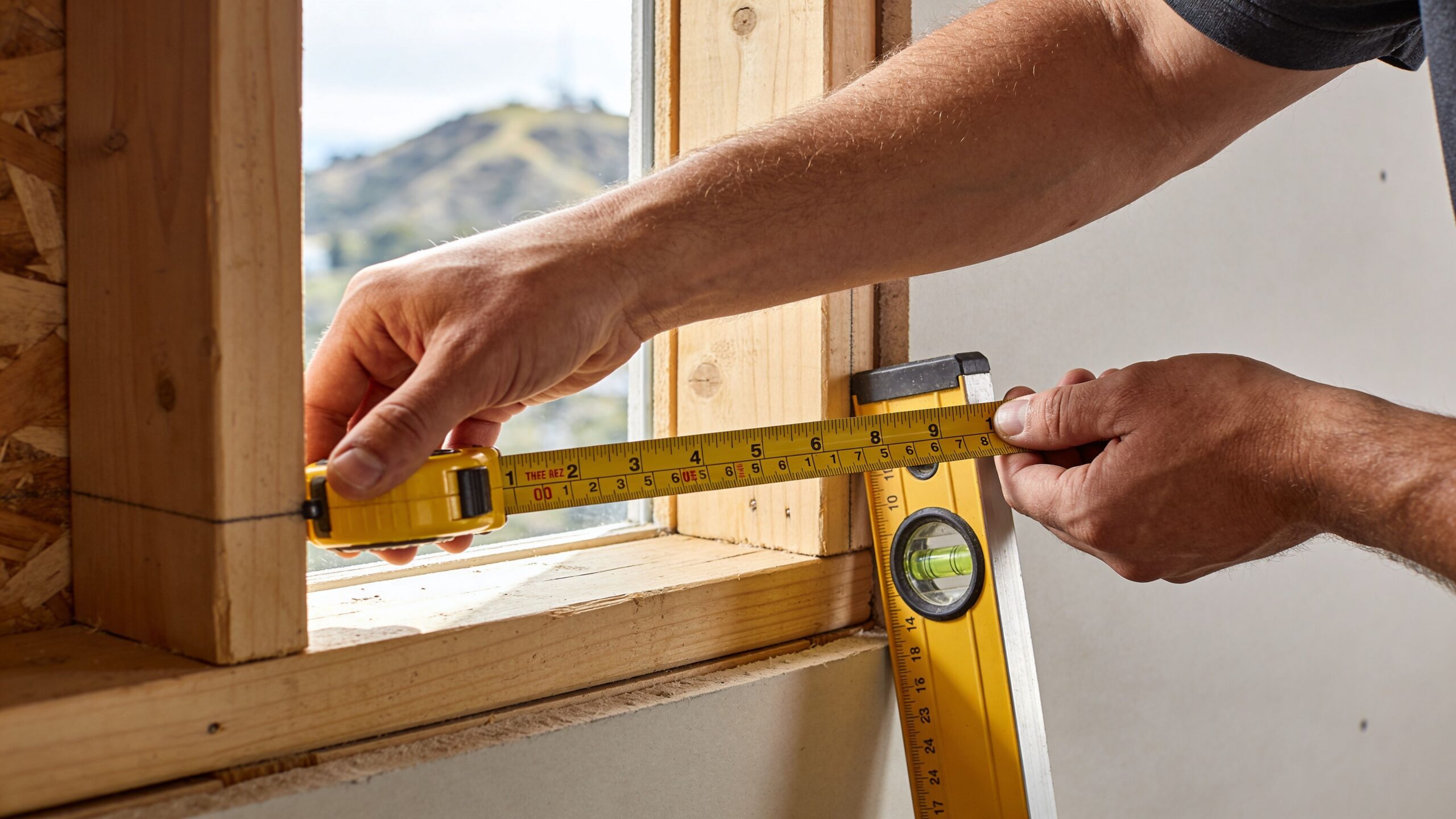
Measure the framed opening in three places for width and three places for height. Use the smallest width and the smallest height as your working rough opening. That is the number that matters in the field, because the unit has to clear the narrowest part of the frame.

Measure width the way installers actually use it
Run the tape from jack stud to jack stud at the top, middle, and bottom of the opening. Keep the tape straight and tight to the framing, not floating over bowed lumber or drywall buildup.
Write down all three readings. Order decisions start from the smallest one.
That standard 1/2-inch larger than the nominal unit size rule is still a good baseline for many new-construction windows, but it is only a baseline. Marvin, Andersen, and Milgard can each have different published clearances depending on frame style, nail-fin condition, and installation method. In Bay Area remodels and additions, that detail matters, especially when the framing is a little out of square and the energy package has to satisfy Title 24.
Measure height from the actual bearing points
Measure from the rough sill to the underside of the header at the left, center, and right. Use the same reference point each time. If the sill has a crown, a taper, or a layer of debris, clean it off and measure from the framing that will support the window.
Keep the smallest reading here too.
A lot of bad orders come from measuring to the wrong surface. Contractors will sometimes catch the tape on a temporary sill strip, a sloped sub-sill, or extra sheathing at one side and end up with a number that looks clean on paper but does not match the opening.
Use the tightest width and the tightest height. The window has to fit the opening you have, not the one the plans showed.
A field example
Say the width reads 36 5/8 inches at the top, 36 1/2 inches in the middle, and 36 3/4 inches at the bottom. Your working rough opening width is 36 1/2 inches.
If the height reads 48 5/8 inches, 48 1/2 inches, and 48 3/4 inches, your working rough opening height is 48 1/2 inches. That opening will usually suit a nominal 36-inch by 48-inch window, assuming the manufacturer calls for the common half-inch of total clearance.
Before the order goes in, compare those field numbers to the brand's published rough opening requirement. That step is where the generic rule and the specific product schedule need to match.
Check the opening conditions before you release the order
Width and height alone do not tell you whether the installation will go smoothly. Look at the sill for level, the studs for bow, and the corners for rack. In older Bay Area homes, especially where additions tie into original framing, the opening can meet the target size and still need correction before the unit goes in.
That matters for water management too. If the opening needs adjustment, handle that before you get into flashing and sealants. Our guide to weatherproofing windows and doors covers the installation details that should follow a verified rough opening, not guesswork.
Measuring for Replacement Windows in Existing Walls
Replacement work is where generic instructions start falling apart. You're often measuring from the inside, through trim lines, plaster returns, or old jamb conditions, and the visible opening isn't always the true one.

In older California homes, especially in Berkeley, Oakland, and San Francisco, the frame may have shifted enough that standard tutorials don't tell you what to do next. Guidance summarized from Lowe's replacement window measuring resource notes that out-of-square conditions tied to seismic movement are common, and that precise measurement and shimming are critical for the airtight seals needed in Title 24-driven replacement work.
Measure the existing frame, not the trim package
For insert or replacement units, start with the existing jamb-to-jamb width and head-to-sill height inside the house. Measure at multiple points, just like you would on a framed opening, because old units rack over time.
Be careful with plaster returns and interior stool details. They can hide the true frame edge, and if you measure to the wrong surface, the order will be off before the old unit even comes out.
Watch the sill and side jambs in older homes
Bay Area remodels often have one side dropped slightly, or a sill that isn't level anymore. If the old sash shows uneven reveals or rubbing, treat that as a warning sign and verify the opening carefully.
A homeowner may first notice drafts, sticking sash, condensation, or other signs you need new windows, but from the contractor side the key question is whether the existing frame is sound enough for an insert or whether you're headed toward a full-frame replacement.
In replacement work, the visible opening can lie to you. Always find the actual frame lines before you trust the number.
Know when "measure only" turns into "open it up"
If you can't confirm the true jamb conditions, sill condition, or frame depth, a site measurement may only get you partway. That's common in remodels with heavy trim build-ups, patchwork plaster, or previous retrofit inserts.
If you're sorting through that decision, this article on replacing windows yourself gives a clear look at where straightforward replacement ends and more invasive work begins.
How to Verify Squareness and Avoid Costly Errors
Width and height don't tell the whole story. An opening can have workable dimensions and still be racked enough to cause a bad fit, poor operation, or seal problems.

To check squareness, measure diagonally corner to corner in both directions. If the two diagonal measurements differ by more than 1/4 inch over 6 feet, the opening is out of square. Fine Homebuilding survey data cited in the same measurement guidance says 92% of window installation failures trace back to non-square or non-plumb rough openings, which is why this check belongs on every opening before the order is final in that Fine Homebuilding reference.
The diagonal check
Run the tape from the top left corner to the bottom right. Then measure from the top right to the bottom left.
If the numbers match, the opening is square. If they don't, note the difference and decide whether the condition is within a reasonable shim range or whether framing correction is the better fix.
What to avoid on site
Most bad measurements come from a handful of repeat mistakes:
- Measuring the wrong surface. Exterior sheathing, trim edges, or finish layers can inflate the opening and give you a number that doesn't match the framing.
- Using the largest reading. The window doesn't care about the wide side. It has to clear the tight side.
- Skipping the level check. A twisted jamb or dropped sill can turn a "correct" measurement into a bad install.
- Trusting one pass with the tape. Repeat the measurement and confirm it before you write the order.
If an opening is fighting the level and the diagonals don't agree, fix the framing problem on paper before it shows up on the jobsite.
For a broader look at warning signs before replacement, this window inspection checklist for Bay Area properties is a useful companion to the field measurement notes.
Calculating Your Final Window Order Size
Oversimplified advice can lead contractors astray. The usual rule is easy enough: if you know the rough opening, subtract the standard installation allowance to get the nominal window size.
But the rough opening rule is only a starting point. Generic advice to add 1/2 inch often fails with premium brands because Marvin, Andersen, and Milgard can vary by product line and install method, and industry discussions show up to 25% of replacement projects run into sizing issues when those manufacturer differences are missed, as summarized in Woodland Windows' discussion of rough opening variation.
Example from field measurement to order size
If your smallest rough opening reading is 36 1/2 inches wide by 48 1/2 inches high, the nominal order size under the standard rule is 36 inches by 48 inches.
Here's the math in a simple format:
| Measurement | Your Smallest RO Reading | Standard Allowance | Nominal Window Size to Order |
|---|---|---|---|
| Width | 36 1/2" | 1/2" | 36" |
| Height | 48 1/2" | 1/2" | 48" |
That works when the manufacturer's instructions match the standard clearance approach. It does not replace the actual product chart.
Why manufacturer specs come first on premium units
A nail-fin new construction unit, a block frame replacement, and a specific series from Andersen or Marvin may not use the same deduction logic. That's where contractors lose time. The opening may be measured correctly, but the order still ends up wrong because the spec sheet wasn't the one tied to that product line.
If you're also dealing with bedroom conversions, basements, or code-sensitive sleeping rooms, size and operation requirements matter beyond simple fit. A general explainer on egress window requirements can help frame those discussions, but for California code questions, verify the exact project requirements with the local building department or design professional.
For Bay Area replacement projects where energy performance matters, this overview of window replacement and Title 24 comfort considerations is worth reviewing before you finalize the order.
Frequently Asked Questions About Window Measurements
The bad orders usually start on houses that looked simple at first glance. A contractor gets a quick tape on an older Berkeley or San Francisco opening, the plaster hides the actual condition, and the problem shows up only after the window is on site. That is why rough opening measurement in the Bay Area needs more than a generic rule.
Do I measure the rough opening or the window itself?
Measure the opening that will receive the new unit.
On new construction, that means the rough opening. On replacement work, it means the existing frame or prepared opening based on the install method. Full-frame, insert, and retrofit flange installs all use different reference points. Sash size and visible glass do not tell you what to order.
Is the rough opening always 1/2 inch bigger than the window?
A 1/2 inch total allowance is a common field starting point. It is not an ordering rule by itself.
Marvin, Andersen, and Milgard each publish product-specific requirements, and those can change by series, frame style, and install condition. Nail-fin units, block frame replacements, and specialty shapes can require different clearances. Use the exact installation documents for the unit being ordered.
What if the opening isn't square?
Check both diagonals first. Then decide whether the opening can be corrected during installation or needs framing repair before the order is released.
Slightly out-of-square openings show up all the time in older Bay Area homes. Many can be shimmed and set correctly if the discrepancy is minor and the substrate is sound. A racked opening, dropped header, or crowned sill should be fixed before the window is ordered.
Can I measure from the outside of the house?
Only when the framing is exposed and you can see the true opening clearly.
For replacement work, outside dimensions are often deceptive. Stucco returns, trim, old aluminum frames, and buried retrofit parts hide the actual fit dimension. Interior jamb measurements usually give the better starting point, then field verification confirms whether the wall needs to be opened.
How precise do I need to be?
Measure to the nearest 1/8 inch.
That level of accuracy matters even more on custom units and older homes that are already out of plumb or out of level. Write every number down as you go. After a few openings, memory is not reliable.
Do older Bay Area homes need a different measuring approach?
The tape measure procedure stays the same. The inspection does not.
Older homes are more likely to have settled framing, tapered plaster, uneven sills, and layers of earlier replacement work. Width and height alone are not enough. Check diagonals, level, plumb, and the condition of the surface where the new window will sit.
Can I shim any bad opening back into shape?
Shims are for adjustment and support. They are not a cure for bad framing.
Use them to tune reveals, carry load correctly, and keep the unit aligned. If studs are bowed, the sill is badly out, or the opening is visibly racked, reframing is usually faster than fighting the install and risking performance problems later.
How does Title 24 affect window measurements?
Title 24 does not change the measuring method. It raises the cost of getting the opening wrong.
On Bay Area replacement jobs, a poor fit can affect air sealing, insulation details, and how closely the installed window matches its rated performance. That matters when the project has energy compliance requirements. For job-specific code questions, confirm the details with the local building department or design team.
What if I'm ordering Marvin, Andersen, or Milgard?
Confirm the exact series before finalizing the order.
Brand alone is not enough. The series, frame type, and installation method control the clearance requirements and ordering logic. The safe path is simple. Match the field measurements to the manufacturer paperwork for that exact unit, then release the order.
When should I stop measuring and open the wall?
Stop when the existing conditions cannot be verified with confidence.
Plaster build-up, hidden rot, buried fins, and multiple generations of retrofit work can all make a clean-looking measurement unreliable. In those cases, a small exploratory opening costs less than a reorder, a return trip, and a crew waiting on the wrong window.