Quick Answer
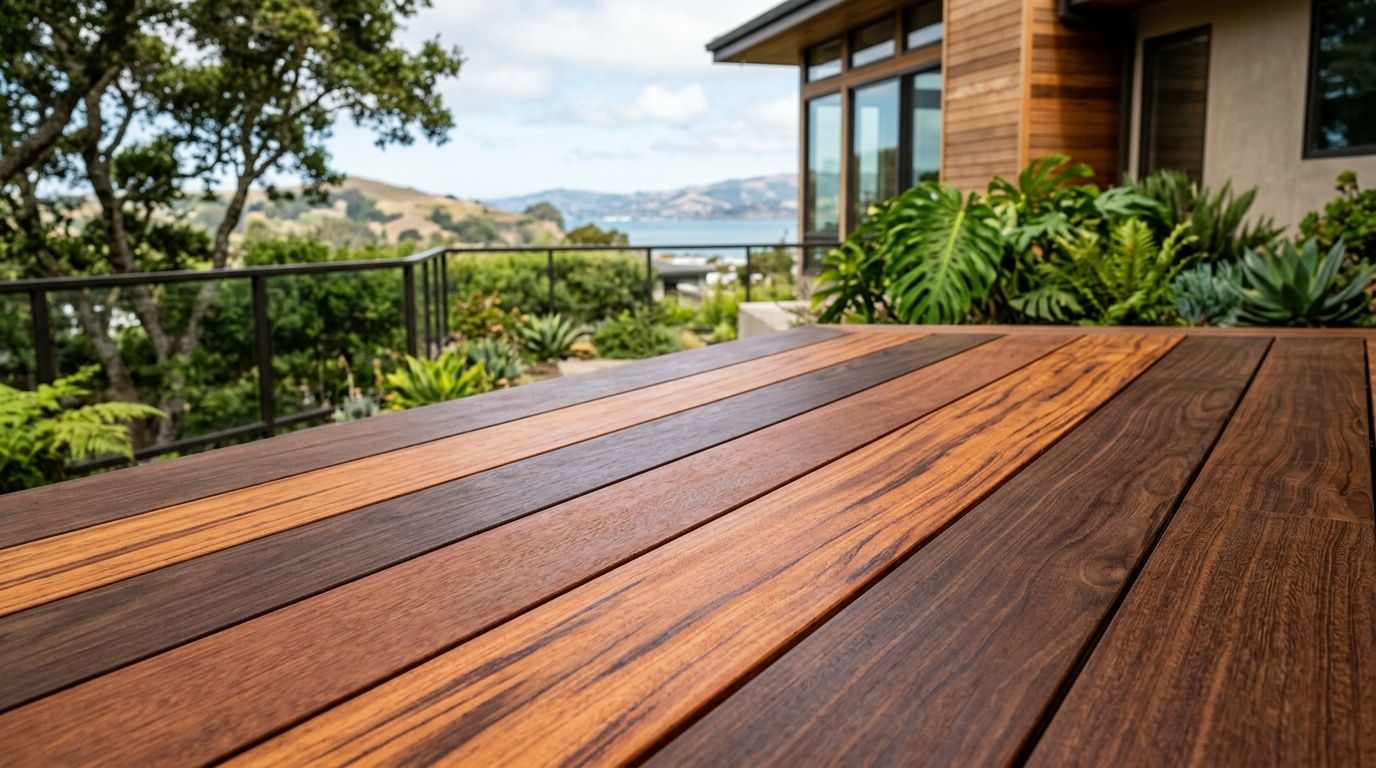
Tropical hardwood decking usually means dense exterior woods such as Ipe, Cumaru, and Massaranduba. They’re chosen for high-end decks because they resist wear, rot, insects, and weather better than most alternatives. In the Bay Area, they work well when you match the species to the site, verify legal sourcing, and install them with proper ventilation, acclimation, and end sealing.
If you're planning a deck in Berkeley, Oakland, San Francisco, or elsewhere in the Bay Area, you're probably balancing three things at once: appearance, long-term performance, and whether the material will hold up in a specific microclimate. Tropical hardwood decking earns its place on that shortlist because it handles punishing exterior conditions better than most wood products, but it also asks for more care during selection and installation.
The premium label isn't just about color or grain. Hardness matters on a deck that sees furniture movement, foot traffic, wet winters, and summer exposure. Species commonly used for tropical hardwood decking sit at the top of the durability range, which is why they keep showing up on custom residential and architectural jobs where the owner wants the deck to stay sharp for years.
Understanding Tropical Hardwood Decking Species
The category is broad, but in practice most Bay Area builders are usually looking at a short list. Ipe and Cumaru are the names that come up most often for premium deck work. Depending on the look and spec, you may also consider woods such as Tigerwood or Garapa if the visual goal is lighter color, more movement in the grain, or a less uniform surface.

The market direction supports what a lot of contractors already see on the ground. The global wooden decking market projection says the market is expected to grow from USD 8.1 billion in 2025 to USD 10.1 billion by 2035, with tropical hardwoods leading the premium segment because of their durability and appearance.
Ipe and Cumaru for high-wear decks
Ipe is the species many builders reach for when the job has very little tolerance for wear, movement, or premature aging. It has a tight, dense look and tends to read as refined rather than rustic.
Cumaru gives you a similar premium feel, but with its own color variation and grain character. On projects where the client wants tropical hardwood performance without every board looking identical, Cumaru often lands well.
Practical rule: If the deck is going to get hard use, heavy furniture, or constant weather exposure, start the conversation with the densest species first and work backward from there.
Lighter and more expressive options
Tigerwood and Garapa serve a different design goal. Tigerwood is usually chosen for contrast and visible striping. Garapa is often considered when the project calls for a lighter natural tone.
Those woods can be a good fit, but they aren't automatic substitutes for Ipe or Cumaru. On a high-end deck, the right answer depends on how much movement in color the client wants, whether the deck will be left to weather naturally, and how much visual variation the architect is trying to control.
Match the look to the whole project
Builders who already spend time helping clients choose interior finishes know the same principle applies outside. The way you compare undertones, grain, and aging behavior in choosing hardwood flooring is similar to how you should compare exterior hardwood decking, especially when the deck needs to sit comfortably next to siding, doors, and window trim.
For a closer look at species and application fit, this guide to the best wood for deck projects is a useful starting point. It helps narrow the conversation before you're ordering material.
Key Performance Metrics for Decking Durability
If you're specifying tropical hardwood decking, hardness is one of the quickest ways to explain why it performs differently from standard deck lumber. The Janka test measures the force required to embed a steel ball halfway into the wood. For deck work, that matters because it gives you a practical read on dent resistance and wear.

What the numbers mean on a real job
According to RMFP's tropical hardwood comparison, Ipe rates at 3,680 lbf, Cumaru at 3,330 lbf, Red Oak at 1,290 lbf, and pressure-treated pine around 690 lbf. That gap is why a tropical hardwood deck usually stands up better to dragged chairs, dropped tools, planter pots, and concentrated foot traffic.
A softer board can still make a serviceable deck. It just won't absorb abuse the same way. On custom work, clients often understand the value quickly once they realize deck damage usually comes from ordinary daily use, not one dramatic failure.
Strength and fire considerations
For projects where a contractor needs harder technical backing, Ipe technical data from Tropical Forest Products notes that ASTM-D143 testing shows Ipe is approximately three times stronger than teak and eight times harder than California Redwood. The same source also states an A1 fire rating for Ipe, which makes it worth discussing early on when the site has heightened fire concerns.
Dense tropical hardwood isn't just harder to dent. It also changes how the deck feels after years of use. Boards tend to stay more solid under traffic and show less casual abuse.
Sourcing matters as much as performance
High performance doesn't excuse loose sourcing. For Bay Area architects, owners, and builders with sustainability goals, chain-of-custody paperwork isn't a side issue. It's part of the spec.
The Nova USA material on certified tropical hardwood makes the point clearly: only third-party certified wood, such as FSC-certified material, can guarantee legal sourcing, which is especially important for LEED-oriented projects and environmentally conscious clients. In practice, if the paperwork is vague, treat that as a problem early, not after submittals are due.
Comparing Hardwoods with Composite and Softwood Decking
No deck material wins every category. Tropical hardwood, composite, cedar, and pressure-treated pine each solve a different problem. The mistake is comparing only the purchase price and ignoring how the deck is supposed to look and behave after years outside.

Where tropical hardwood earns its keep
Tropical hardwood makes sense when the owner wants real wood, long service life, and a surface that doesn't feel disposable. It also gives you a deck that can be refinished and allowed to age naturally instead of being locked into a manufactured appearance.
Composites appeal to clients who want lower routine upkeep and broad color choice. Cedar brings warmth and a familiar softwood look. Pressure-treated pine remains the practical choice when budget is the driving factor.
The trade-offs side by side
| Material | What it does well | Where it gives ground |
|---|---|---|
| Tropical hardwood | Dense, durable, naturally resistant to rot and pests | Heavier, harder to cut and drill, more demanding install |
| Composite | Low routine upkeep, consistent appearance options | Can feel less natural underfoot and in finish |
| Cedar | Attractive grain, lighter weight, easy to work | Softer surface, more vulnerable to dents and wear |
| Pressure-treated pine | Readily available, economical | More prone to checking, warping, and ongoing upkeep |
Installation quality decides a lot of the outcome
A fair comparison has to include installation habits. Tropical hardwood punishes shortcuts faster than softer woods do. If the crew skips predrilling where it's needed, ignores board movement, or treats dense hardwood like cedar, the job gets slower and uglier.
For California sun exposure, material choice also ties directly to heat and comfort. This look at the best decking material for full sun in California is worth reviewing if the deck sits in an exposed orientation.
The wrong install can make a premium board behave like a problem material. The wood isn't the issue. The sequence usually is.
Sourcing, Sustainability, and Bay Area Building Codes
Bay Area deck jobs often carry more scrutiny than a simple backyard platform elsewhere. Clients ask about legal sourcing. Architects ask for documentation. Some sites trigger stricter fire requirements. If you're using tropical hardwood decking, you need answers before the first delivery hits the jobsite.
What to ask for from the supplier
Certified sourcing is the first checkpoint. If the material is being sold as responsibly harvested, ask for actual documentation, not a vague assurance. For LEED-minded projects or any client who cares where the wood came from, third-party certification is the cleanest way to avoid confusion later.
You should also verify species, dimensions, and availability before the deck is framed around a specific board profile. Dense imported material can require more planning than commodity decking, especially if the project depends on matching lengths or a narrow visual spec.
Fire code conversations need to happen early
Not every Bay Area site faces the same fire exposure. Berkeley hills, inland edges, and certain interface zones can trigger requirements that affect more than just the decking surface. Substructure, attachments, and adjacent assemblies matter too.
That doesn't mean tropical hardwood is off the table. It means the deck package should be reviewed in the context of the property and jurisdiction. If you're sorting through those questions, this guide to fire-rated lumber needs in Berkeley WUI zones is a useful place to start before finalizing material decisions. For code-specific compliance, the building department or project design professional should make the final call.
Maintenance expectations should be part of the sourcing discussion
Sustainability and maintenance are connected. A client who wants the original deep color should understand that exterior hardwood doesn't keep that look on its own. It needs cleaning and periodic oiling. A client who's happy with a silver-gray patina has a simpler maintenance path.
That conversation belongs up front because it changes product choice and owner satisfaction. Some people love the weathered look. Others call it a problem because nobody told them it was coming.
- For color retention: plan on regular cleaning and periodic oiling.
- For natural weathering: plan on routine cleaning and let the surface turn silver over time.
- For lower surprises: write the maintenance path into the handoff conversation before the deck is built.
Installation Best Practices for Lasting Results
Most failures with tropical hardwood decking don't come from the species itself. They come from moisture mismanagement, rushed storage, or install habits borrowed from softer lumber. Dense hardwood needs a tighter process.

Start with storage, acclimation, and airflow
Let the boards acclimate to the site before fastening them down. That matters in the Bay Area because conditions can shift hard between coastal fog, shaded canyons, and inland heat. A deck installed straight off delivery without time to adjust is more likely to move in ways the owner notices later.
Ventilation matters just as much. The underside of the deck needs airflow so moisture exposure stays balanced. When the top and bottom of a board live in different moisture conditions, you increase the chance of cupping and related movement.
The guidance in Teak Wood Supply's note on avoiding tropical hardwood decking problems is clear on one point that gets missed too often: apply a wax-based end sealant such as AnchorSeal to freshly cut board ends immediately to slow moisture migration and reduce checking and splitting.
Pay attention to board orientation and fastening
Quarter-sawn stock is worth asking about when stability is the priority. The same source notes that quartersawn cuts can reduce seasonal expansion and contraction by up to 50% compared to flat-sawn stock. That won't eliminate movement, but it can make a visible difference on a premium deck.
Fastener choice also affects both appearance and serviceability:
- Face-screwing: more visible, but straightforward and easier when a board has to be replaced later.
- Hidden fasteners: cleaner surface appearance, but they can complicate repairs and may not suit every board profile.
- Stainless hardware: the safer call for dense exterior hardwood where corrosion resistance matters.
Freshly cut ends are the danger point. If they aren't sealed right away, the boards can start telegraphing that mistake before the project is even finished.
Build the estimate around total project value
Hardwood jobs usually cost more in labor because cutting, drilling, handling, and fastening are slower. That's normal. The better way to frame the quote is around the whole deck assembly, how long the owner plans to stay in the property, and what level of maintenance they're willing to live with.
For framing assumptions and deck layout planning, a deck joist spacing calculator can help sort out the structural side before material ordering. If you're pricing a tropical hardwood package, bring the deck dimensions, board preference, fastening method, and finish expectations into the takeoff from the start.
Long-Term Maintenance Schedules and Finishing Options
A tropical hardwood deck can age two different ways, and both are legitimate. The mistake is assuming the wood will hold its original color without help. It won't.

Keeping the original color
If the owner wants that fresh, rich hardwood look, the deck needs cleaning and oiling on a repeating schedule. The verified guidance available for tropical hardwood care describes oiling every 1 to 2 years as the basic pattern for maintaining appearance over the long term.
That schedule isn't difficult, but it is real. Skip it, and the color fades out of the boards even though the deck itself is still structurally sound.
Letting it weather naturally
Some clients prefer the silver-gray patina. That's a perfectly good path, especially on modern or coastal projects where the weathered look fits the architecture. In that case, maintenance shifts toward cleaning and surface care rather than trying to preserve the original tone.
Either way, tell the owner what to expect before turnover. Hardwood disappoints people only when appearance change gets framed as failure instead of normal aging.
Estimating Costs and Ordering Your Decking
The right way to price tropical hardwood decking is project by project. Species, board width, lengths, fastening method, waste factor, and site access all affect the final number. That's why broad pricing talk is usually less useful than a proper takeoff.
What to bring when you're ordering
Come prepared with the deck dimensions, desired species, approximate board pattern, and whether you want face screws or a hidden system. If the project has design review, fire concerns, or sustainability documentation requirements, mention that early.
If you want a sense of the maintenance side after installation, this guide to professional deck refinishing gives a practical look at what refinishing and sealing work involves over time.
Why the quote should include more than decking boards
Material price alone never tells the whole story on hardwood. Dense boards affect labor, blades, drill bits, fasteners, and installation pace. At the same time, they can reduce replacement headaches later because the finished surface holds up so well.
For project-specific availability and ordering, this hardwood decking supplier page for Oakland-area projects is the most direct next step. At the Berkeley lumberyard, Truitt & White can help contractors and serious homeowners sort through species, dimensions, and related hardware for a deck package that fits the job.
Frequently Asked Questions About Hardwood Decking
Is tropical hardwood decking worth it for a Bay Area project?
It can be, especially when the deck is exposed to heavy use, wet winters, or strong sun and the client wants real wood. The value usually shows up in wear resistance, long service life, and the look of a natural material that still feels substantial years later.
Will tropical hardwood decking turn gray?
Yes, if you leave it unfinished or stop maintaining the original color. That's normal weathering, not a defect. Some owners want the silver look, while others prefer to clean and oil the deck to hold onto the darker tone.
Is tropical hardwood decking hard to install?
Yes, compared with cedar or pressure-treated lumber. Dense boards take more effort to cut, drill, and fasten correctly, and that labor needs to be accounted for from the start.
Do I need certified wood for my deck?
If the project has LEED goals, a client focus on legal sourcing, or design documentation requirements, certified material is the safer path. Even when it isn't mandatory, asking for third-party certification helps avoid vague sourcing claims.
What matters most during installation?
Moisture control and airflow. Boards should acclimate before installation, the underside of the deck needs ventilation, and freshly cut ends should be sealed right away to reduce checking and splitting.
How do I figure out the budget before I order?
Start with dimensions, species choice, and fastening method. If you're helping a client frame the overall construction budget, this article on how to determine your deck budget is a useful general planning resource, but the actual material quote should come from your supplier based on the exact deck package.
Call to Action
Planning a high-end hardwood deck in the Bay Area usually comes down to a few job-specific decisions fast. Species availability, fire-zone requirements, fastening method, lead times, and finish expectations all affect what should be ordered and when.
If you want to talk through the practical side before you commit, stop by the lumberyard or call. We can help you sort out board options, code-related questions, and the ordering details that tend to cause delays once framing is underway.
For Truitt and White, visit the Lumberyard and Hardware at 642 Hearst Ave, Berkeley, CA 94710, call (510) 841-0511, or reach out through truittandwhite.com or info@truittandwhite.com to discuss your tropical hardwood decking project.