
No, not all Grade 2 lumber is the same. It's not even close.
That grade stamp on a board is a minimum passing grade, not a promise of quality. For builders, that small difference can lead to wasted time, more discarded boards, and a lot of frustration on the job site.
Why That Grade Stamp Doesn't Tell the Whole Story
If you're a builder in Berkeley or Oakland, this probably sounds familiar. You get two quotes for Grade 2 lumber, and one price is double the other. It’s easy to think a supplier is overcharging.
But that price gap often points to a huge difference in material quality. So, why is lumber pricing so inconsistent, and how do you know you're not getting ripped off? Recent insights show that factors like tariffs, sourcing, and even how the lumber is stored affect the final price.
This chart breaks down the factors that influence lumber quality, going far beyond what that simple Grade 2 stamp tells you.
What this really means for you is that the “same grade” doesn’t always mean the “same quality.” Big-box lumber is often lower-quality stock that hasn’t been stored properly. This leads to higher cull rates and more labor costs on-site.
Grade 2 Lumber At-A-Glance: The Hidden Variables
This table shows the gap between what a grade stamp guarantees and what you often find on a job site.
| Factor | What the Stamp Says (Minimum) | What Contractors Actually Find |
|---|---|---|
| Knot Size | Allows knots up to 3.5" on a 2×10 | Better mills provide smaller, tighter knots |
| Moisture Content | Can be high (19%+) in "Green" lumber | Varies wildly; poorly stored wood is often saturated |
| Strength | Meets a baseline structural value | Can vary by 30-50% depending on defects |
| Straightness | Permits a certain amount of wane and warp | Can range from arrow-straight to unusable pretzels |
| Holes/Defects | One hole allowed every 2 feet | Lower in premium stock, higher in budget lumber |
The bottom line is that relying only on the grade stamp is a gamble. The difference between a low-end #2 and a high-end #2 is something you can see, feel, and measure in wasted material and labor.
Even within the #2 grade, strength can vary a lot due to knots and other defects. The National Grading Rule for Dimension Lumber allows #2 grade to have large knots and splits. That's much more lenient than what you’d find in #1 grade lumber.
For those who want to dig deeper, understanding specific lumber milling techniques like quarter-sawing can reveal more about a board's stability.
If you’ve ever wondered why some lumber quotes seem sky-high, we’re happy to walk you through it. Stop by Truitt & White in Berkeley to compare apples to apples—and get straight boards, straight talk, and help that saves you time.
Decoding the Lumber Grade Stamp
So, what does that "Grade 2" stamp actually mean on a job site? Think of it as a general category, not a precise measurement. It just confirms a board meets minimum structural requirements.
Grading agencies like the Western Wood Products Association (WWPA) set the rules. But it’s human graders on the mill floor who make the call, often at high speed. This process allows a wide range of quality to get bundled under the same grade.
What the Grade Stamp Really Measures
A Grade 2 stamp is about structural integrity, not looks. It measures how well the board can hold up a wall or floor.
Here are the key things a grader looks for:
- Knots: The size, type, and location of knots are a big deal. A large knot in the middle of a joist is a bigger problem than a small one near the edge.
- Wane: This is bark or a lack of wood on the corner of a board. A little bit is fine in Grade 2, but too much weakens the piece.
- Grain: Wood is strongest when the grain runs straight. A steep, diagonal grain can seriously weaken it.
- Splits and Checks: These are separations in the wood fiber. Small surface checks are common, but splits that run through the board are a red flag.
Because this is all done by eye, there's always some variability. This is the main reason why not all Grade 2 lumber is created equal.
The Spectrum of Quality Within Grade 2
The grade stamp only tells you a board met the minimum standard. It’s like two students who both passed an exam; one might have scored a 70% while the other got an 89%. They both passed, but their performance was different.
A Grade 2 stamp is the floor, not the ceiling, for quality. It tells you what a board isn't (i.e., below standard), but it doesn’t tell you how much better it might be. This is the crucial detail most contractors miss.
A high-quality mill might produce Grade 2 lumber where most boards are nearly Grade 1 quality. A lower-quality mill might ship Grade 2 where many boards are barely clearing the bar. Our guide on framing lumber grades explains this in more detail.
Why the Mill of Origin Matters Most
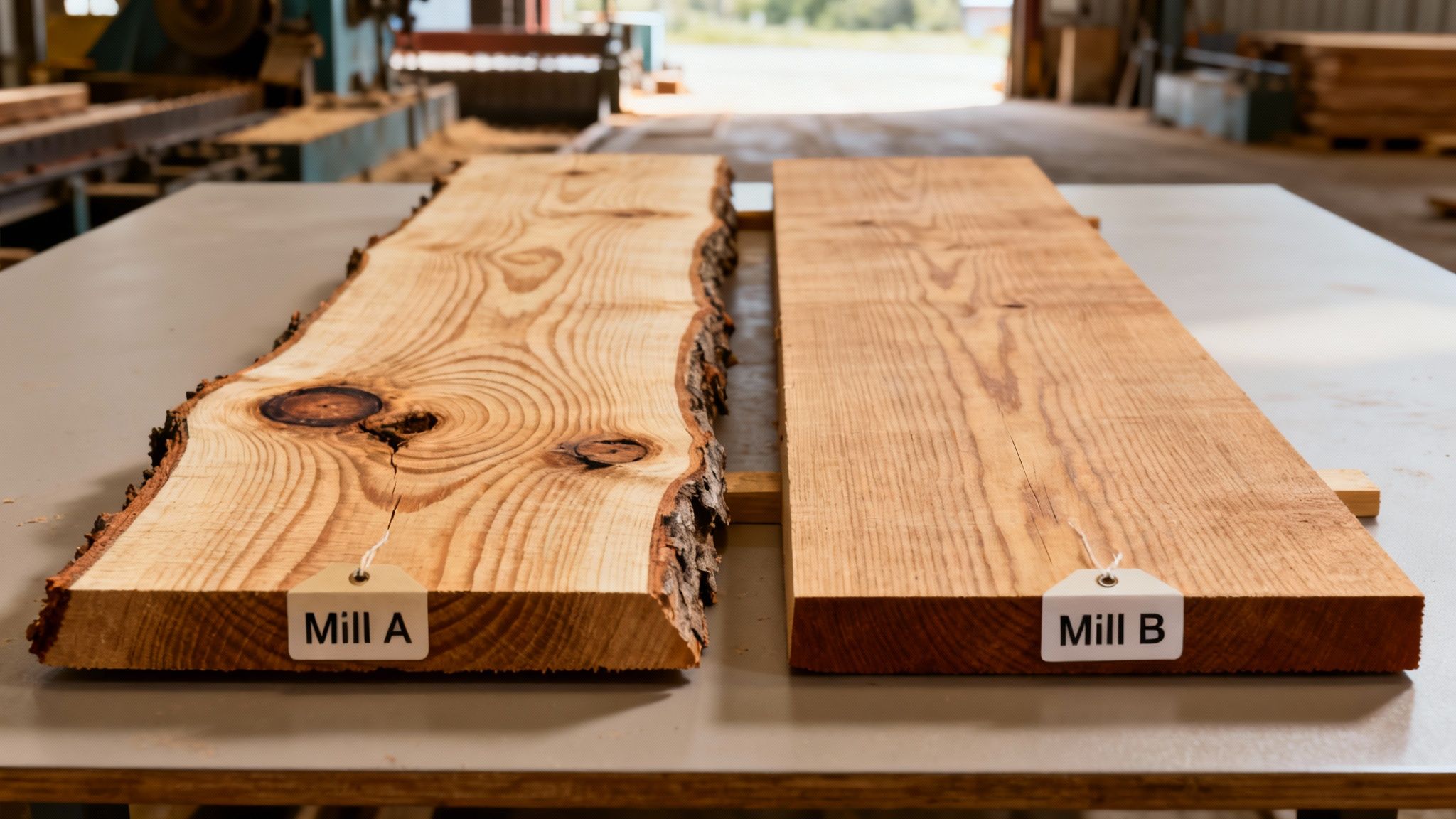
You can grab two boards with the exact same grade stamp and find they are worlds apart in quality. The reason is almost always the mill of origin. The ink stamp doesn't capture how the lumber is sourced, cut, and handled.
Many contractors assume if the grade is the same, the product is the same. But the quality of the raw timber and the mill's standards truly define the board in your hands.
From Forest to Frame
The journey from a tree to a framing stud has many variables. A top-tier mill often sources timber from forests with slow-growth trees. These trees produce denser, stronger, and more stable wood.
On the other hand, a high-volume mill might use faster-growing timber. This wood is less dense and more likely to twist and warp.
Species and Regional Strength
Not all wood species are created equal. For builders here in the Bay Area, working with Douglas Fir or Hem-Fir offers a clear advantage. These species are known for their superior strength, which helps meet California's tough seismic codes.
A #2 board from one mill can be structurally superior to another. This is especially true for projects in Oakland and San Francisco.
The Mill's Quality Control Standards
A mill’s internal quality control is the biggest differentiator. Some mills that supply big-box stores may have looser standards. For you, that means more defects and a higher cull rate.
A reputable lumberyard like Truitt & White partners with mills that hold themselves to a higher standard. They know that straight, strong lumber saves contractors time and money.
Some mills build a reputation for consistent quality. For example, Weyerhaeuser delivers exceptional quality that goes beyond the basic grade stamp. Before you buy, ask your supplier where their wood comes from.
Calculating The True Cost Of Cheap Lumber
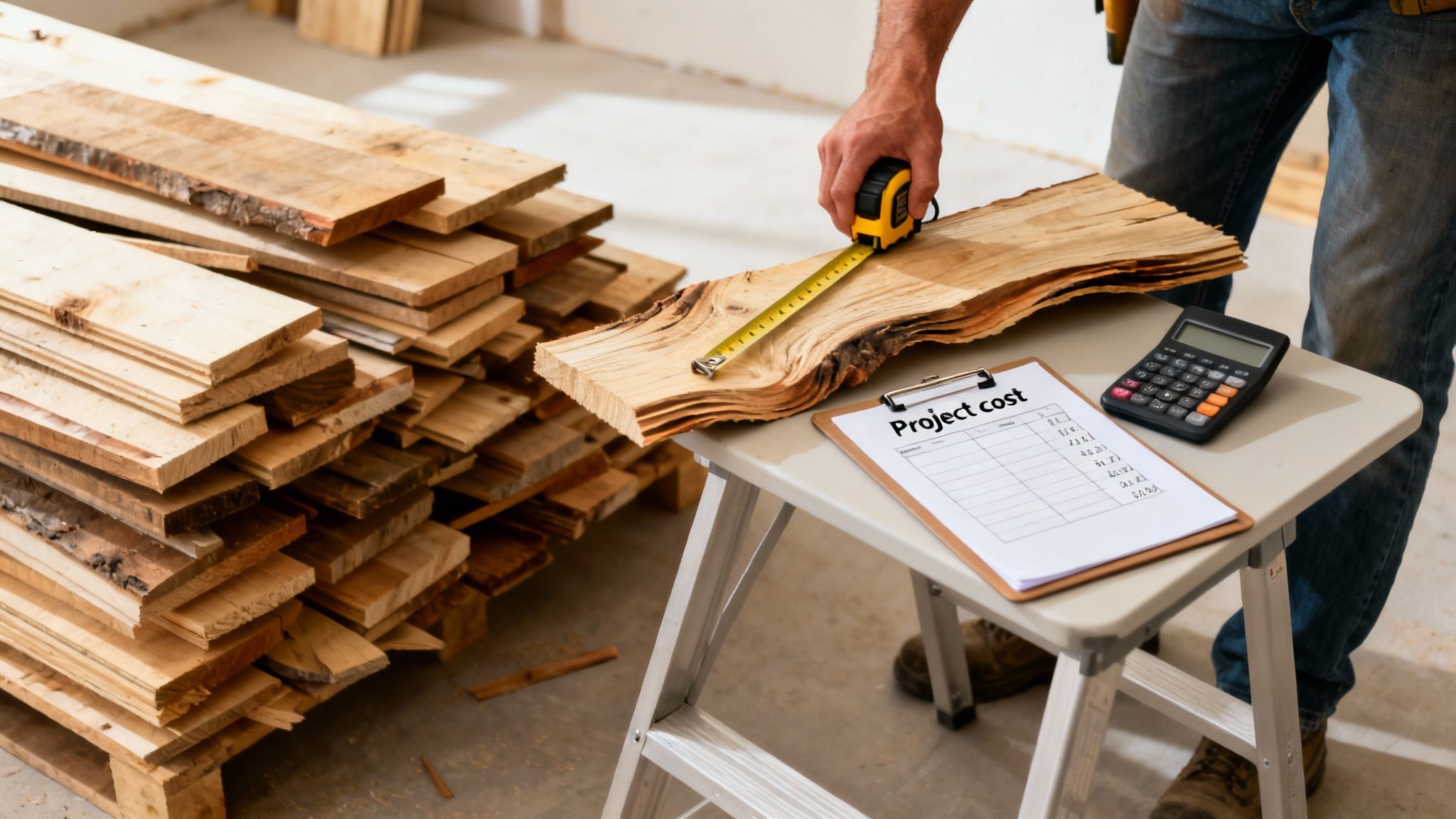
Focusing only on the price-per-board is a costly mistake. The real math is in the total project cost. A "great deal" on lumber often hides expenses that erase any savings.
Experienced contractors in the Bay Area know a cheap quote is rarely the best value. That lower price usually reflects lower quality control. This means more work and more waste for your crew.
Uncovering The Hidden Costs
Lower-quality lumber brings hidden costs to the job site. These costs show up in your labor hours and material waste.
Here are the main hidden costs to factor in:
- Higher Cull Rates: A "cheap" lumber package has more unusable boards. You’ll set aside more pieces that are warped, twisted, or cracked.
- Increased Labor Costs: Your crew's time is valuable. Sorting through a bad stack and fighting bowed studs adds unbillable hours to the project.
- Project Delays: When your cull rate is high, you can run out of usable material. This leads to expensive delays while you wait for another order.
The question isn't just "Is all Grade 2 lumber really the same?" but rather, "What is the total financial impact of choosing a lower-quality supplier?" A better lumber package from a trusted yard means fewer unusable boards.
A Tale Of Two Quotes
Imagine you're framing a small addition in Berkeley. You get two quotes for what looks like the same Grade 2 lumber package. The initial numbers might look tempting, but the story changes once the job starts.
Cost Comparison: Big-Box vs. Quality Lumberyard
This example shows how quickly "savings" disappear on the job site.
| Cost Factor | Big-Box Store Quote | Truitt & White Quote |
|---|---|---|
| Initial Material Cost | $4,000 (Looks cheaper) | $4,500 (Seems higher) |
| Cull Rate (Waste) | 15% (or $600) | 5% (or $225) |
| Extra Labor (Sorting/Fixing) | 8 hours (at $75/hr = $600) | 1 hour (at $75/hr = $75) |
| Total Project Cost | $5,200 | $4,800 |
In this scenario, the "cheaper" option costs $400 more once waste and labor are counted. This math shows why paying a bit more upfront for quality is a smart move. It's a key part of calculating your contractor markup on materials correctly.
Before assuming the lowest quote is the best deal, compare total project costs. Consider the waste percentage, board straightness, and time lost sorting materials.
How to Source Better Grade 2 Lumber
Now you know the variables behind a "Grade 2" stamp. You can approach your next lumber purchase with a sharper eye. Sourcing better material is about inspecting smarter and partnering with a quality supplier.
Whether you're framing a home in Berkeley or Oakland, the goal is the same. Start with straight, reliable boards to save time and money.
Your Pre-Purchase Inspection Checklist
Don't just take the supplier's word for it. A few minutes of hands-on inspection can prevent hours of frustration. A good construction quality control checklist should always include checks for lumber.
Here are key things to check before you buy:
- Look for the 'KD-HT' Stamp: This stands for Kiln-Dried and Heat-Treated. It confirms the lumber has a moisture content of 19% or less, which is critical for preventing warping in the Bay Area's climate.
- Check for Straight Grain: Sight down the edge of a few boards. You want to see grain that runs parallel to the board's length.
- Inspect for Minimal Wane: Wane is bark on the corner of a board. A little is okay in Grade 2, but too much reduces your nailing surface.
Questions to Ask Your Lumber Supplier
A good supplier will be transparent and happy to answer your questions. Their response tells you a lot about their material and service.
Before finalizing your order, ask these three questions:
- Can I inspect a pack before delivery? Reputable yards are confident in their stock. Ask your supplier if you can inspect boards, or better yet, choose them yourself.
- What is your return policy on unusable boards? A good supplier will have a fair policy for culling severely warped or defective pieces.
- Where do you source your lumber from? Knowing the mill of origin gives you insight into the quality you can expect.
Partnering with a knowledgeable local hardware store often provides better value. You get bundled services like delivery, load help, and expert advice that you won't find at a big-box store. For reliable quality lumber in the East Bay, an expert team makes all the difference.
Straight Boards Mean a Smarter Business
The real question isn’t whether all Grade 2 lumber is the same. The question is: what’s your time worth? A grade stamp is just the starting point.
Fixating on the cost-per-board misses the big picture. The sharpest contractors in the Bay Area know that the total project cost is the only number that matters. When you start with straight lumber, you save hours and reduce expensive waste.
It’s a shift from a cost-per-board mindset to a value-per-project strategy. This approach doesn’t just protect your bottom line; it builds a reputation for quality.
Investing in better lumber isn't an expense; it’s a strategic move. It makes your business more efficient and profitable. For more tips, check out our guide on selecting the best lumber for residential and commercial builds.
Frequently Asked Questions About Grade 2 Lumber
Why does the price of Grade 2 lumber vary so much between suppliers?
Pricing varies due to the lumber's origin, the mill's quality standards, and how it's stored. A higher price often reflects denser wood from slow-growth trees and stricter quality control, leading to less waste for you on the job.
Is it worth paying more for lumber from a local lumberyard vs. a big-box store?
Yes, it's often a smarter investment. Local yards like Truitt & White typically source from higher-quality mills. This means straighter boards, a lower cull rate, and less wasted labor, which saves you money on the total project cost.
What are the biggest red flags to look for when inspecting lumber?
Look for severe twisting, bowing, or crowning. Also, check for large, loose knots, especially in the middle of the board, as well as splits that run deep into the wood. These are all signs of a lower-quality piece.
How does the Bay Area climate affect which lumber I should choose?
The Bay Area's damp winters and dry summers mean wood can expand and contract. Always choose kiln-dried (KD) lumber with a moisture content of 19% or less. This minimizes warping and ensures stability after installation.
What’s the single most important factor besides the grade stamp?
The mill of origin is the most critical factor. Reputable mills have higher standards, use better raw timber, and produce more consistent, reliable lumber. Ask your supplier where they source their materials.
If you’ve ever wondered why some lumber quotes seem sky-high, we’re happy to walk you through it. Stop by Truitt & White in Berkeley to compare apples to apples—and get straight boards, straight talk, and help that saves you time. Connect with us for expert advice.