Quick Answer
TL;DR: Solar Heat Gain Coefficient, or SHGC, is the fraction of solar radiation that enters through a window and becomes heat indoors. It runs from 0 to 1, and an SHGC of 0.25 means 25% of available solar energy comes through as heat. Lower SHGC usually means less cooling demand, which matters in many Bay Area homes.
If you're comparing windows for a remodel, addition, or new build, SHGC is one of the numbers that can make or break comfort. In Berkeley, Oakland, San Francisco, and the wider Bay Area, that matters because the right glass for one elevation or microclimate can be the wrong choice a few miles away.
Defining Solar Heat Gain Coefficient
A contractor specs the same low-e glass on two window lines, then the whole-unit performance shifts. That happens all the time with SHGC, especially once frame material changes. In the Bay Area, where Title 24 compliance and microclimates can push a project in different directions, that detail matters.
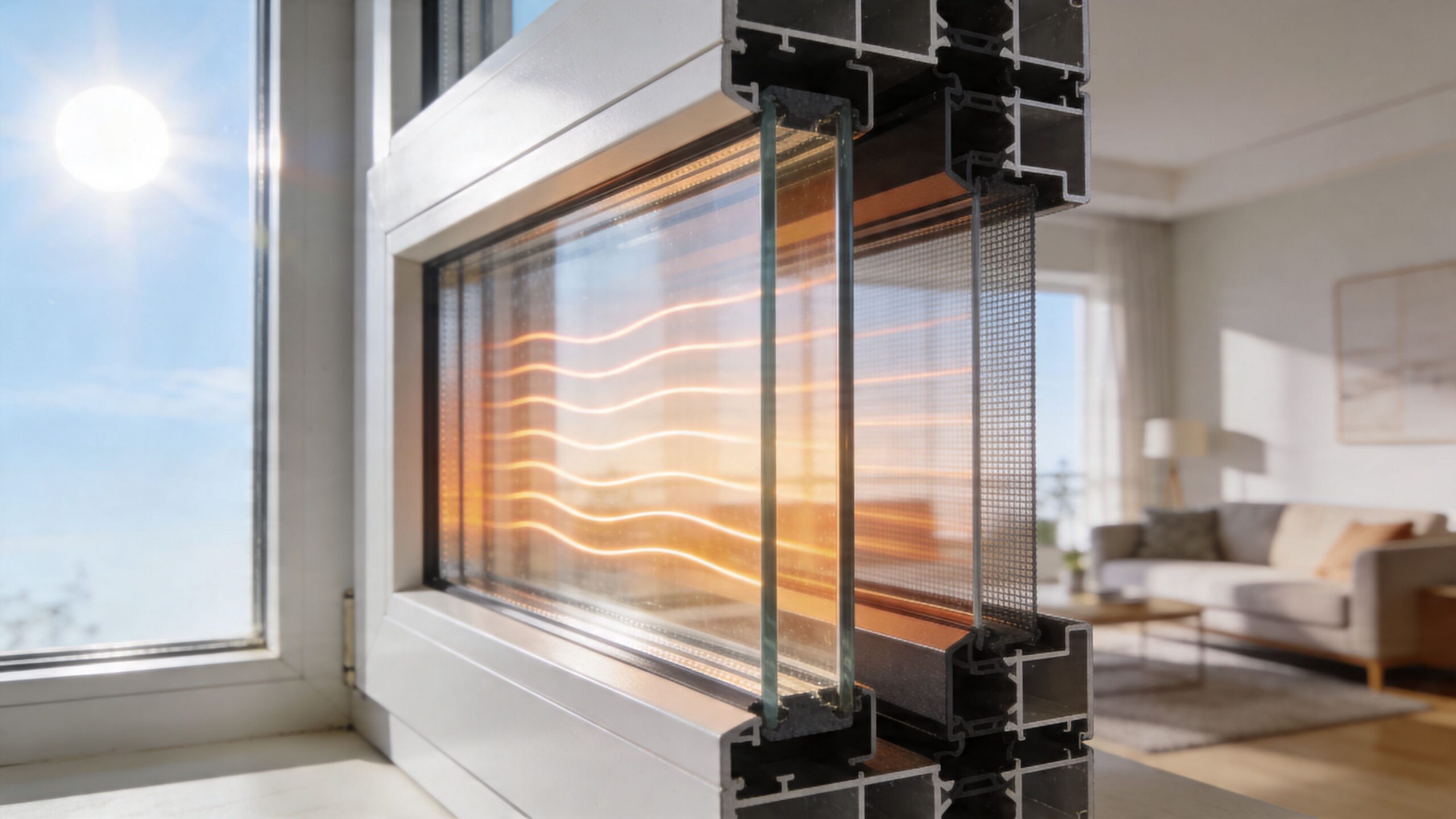
Solar Heat Gain Coefficient measures how much of the sun’s energy passes through a window and ends up inside as heat. The number includes direct solar radiation that comes through the glazing, plus heat the glass absorbs and re-radiates inward.

What the number actually means
SHGC is expressed from 0 to 1. Lower numbers block more solar heat. Higher numbers admit more solar heat.
In practical terms, a window rated 0.25 allows 25% of available solar energy to enter as heat. Product makers and trade references also note that lower-SHGC low-e glass can cut cooling demand in hot, sun-exposed conditions, while clear glass with much higher SHGC can drive large afternoon heat buildup indoors (Vinyltek).
Lower SHGC is not automatically the right call. A home in foggy Daly City, a hillside project in Berkeley, and an inland job in Walnut Creek do not want the same solar gain profile. Orientation, overhangs, occupancy patterns, and the local code path all affect the right target.
One more point contractors miss early in design. SHGC is a whole-window performance issue, not just a glass issue.
SHGC isn't the same as U-factor or visible light
SHGC, U-factor, and visible transmittance answer different questions, and mixing them up leads to bad specs.
| Metric | What it measures | What lower means |
|---|---|---|
| SHGC | Solar heat entering through the window | Less solar heat gain |
| U-factor | Heat transfer through the window assembly | Better insulation |
| Visible Transmittance | Amount of daylight that comes through | Less visible light |
A well-built spectrally selective low-e package can keep SHGC down without making the room feel cave-like. That is why two windows with similar daylight levels can still perform very differently on west and southwest exposures.
If the project is trying to control heat on an existing elevation before full replacement, solar screen for windows can help reduce solar load as part of the strategy.
For a broader review of ratings, glazing options, and performance trade-offs, this guide on choosing energy-efficient windows is worth keeping in the mix.
Why the definition matters in the field
SHGC shows up in comfort complaints fast. A family room with big west glass in Oakland can overheat every afternoon, while the rest of the house stays reasonable. The same size opening in San Francisco may need a different balance because cooling load, fog cover, and winter sun are not the same.
Frame material also affects the whole-unit SHGC more than many online guides admit. Wood, fiberglass, and vinyl frames change sightlines, glass area, thermal behavior, and the tested assembly rating. On brands like Marvin or Andersen, two products can use similar glazing and still post different whole-unit numbers because the frame package changed.
That is why SHGC should be reviewed at the product-line level, not assumed from the glass spec alone.
How to Read SHGC on an NFRC Label
The rating that matters is the one on the NFRC label. That's the number you can compare across products.
Manufacturers market glass packages in different ways, but the NFRC label gives you a standardized performance snapshot. If you're reviewing Marvin, Andersen, Milgard, or another line, start there instead of starting with brand language.

Where to find the SHGC value
On the NFRC label, SHGC appears as its own line item. You're looking for a decimal value, typically somewhere between very low solar gain and relatively high solar gain.
Don't rely on brochure language like "sun-control glass" or "high-performance package" without checking the actual label. The label tells you what the tested assembly does.
Why whole-unit ratings matter
The NFRC process evaluates the entire window assembly, not just the center of the glass. That includes glazing, frame, and spacers.
A lot of specs go off track when a contractor sees the same glass package listed in two different product lines and expects the performance number to stay the same. It often doesn't, because the assembly changed.
When two windows use similar glass but carry different NFRC ratings, the frame and spacer system usually explain the difference.
What to compare side by side
When I review labels with contractors, these are the first items worth lining up:
- SHGC for solar heat control on the exposure you're dealing with
- U-factor for overall insulating performance
- Visible Transmittance if daylight matters to the design team
- Assembly basis so you're comparing whole-window values, not a glass-only claim
You also want to make sure the rated unit matches what you're ordering. Size, operation type, and frame construction can affect the final performance.
If you're sorting through code implications, this article on California energy code window rules for Climate Zone 3 gives useful context for Bay Area projects. For project-specific compliance, the local building department or a qualified energy consultant should make the final call.
How SHGC Affects Bay Area Heating and Cooling Loads
A contractor in Walnut Creek can fight afternoon heat all summer with one glass package, while the same package feels perfectly balanced on a project in Pacifica. That is normal in the Bay Area. Marine air, inland heat, slope exposure, and window orientation all change how hard solar gain hits the building.
That is why SHGC needs to be read as a load-control number, not just a product spec.
For many local projects, a lower SHGC is the safer starting point on sun-exposed elevations because overheating is usually the first comfort complaint. West-facing bedrooms, upstairs family rooms, and large south-facing glass areas are where we see the most trouble calls.

Why low SHGC is common in Bay Area specs
Across much of the Bay Area, code compliance and comfort goals both push projects toward lower SHGC values, especially on south and west elevations. That signals the direction Title 24 and local climate conditions are pushing.
In practice, lower SHGC usually reduces cooling load, limits late-day temperature spikes, and gives the HVAC system less to fight. On replacement jobs, that often matters more than homeowners expect. A room can have decent insulation and still overheat because the glass is admitting too much solar energy.
The catch is that the target number is not always the same from one opening to the next. A shaded north-facing unit in Berkeley does not need the same SHGC strategy as a west-facing mulled assembly in Danville.
Orientation changes the answer
A window on the west side behaves differently from the same unit on the north side.
- West-facing glass usually needs the most restraint because afternoon sun drives peak discomfort.
- South-facing glass can perform well with the right SHGC paired with overhangs or other shading.
- North-facing glass often lets you prioritize other factors first, because solar gain is usually less aggressive.
Higher SHGC can still make sense on selected openings where winter sun is useful and summer exposure is controlled. We do see that on some cooler Bay Area sites. But broad areas of high-SHGC glass on south and west elevations usually create more comfort complaints than they solve.
Title 24 and the Bay Area microclimate problem
Title 24 is based on modeled performance for the project location and configuration. In the Bay Area, that matters because Oakland hills, San Francisco fog belt conditions, and inland Contra Costa heat do not behave like one climate.
A window that pencils out in one microclimate can be the wrong call a few miles away. That is also where frame choice starts to matter more than many specs acknowledge. Two windows with similar glass can land at different whole-unit SHGC ratings because the frame material and sash design change the tested assembly. If you are comparing Marvin, Andersen, or another premium line across wood, fiberglass, and vinyl options, that difference can affect both comfort and compliance.
For a practical code and comfort overview tied to replacement work, review this guide to Bay Area Title 24 window replacement and comfort requirements.
Choosing Glazing and Coatings to Control Solar Gain
The SHGC number doesn't appear by magic. It's built into the glass package.
In most current window lines, the main lever is the low-emissivity coating, often called low-e. The coating reflects portions of solar energy, especially near-infrared wavelengths, while still allowing useful visible light to pass.
What low-e coatings are doing
Modern low-e glass is the reason a window can stay bright without acting like a heater. In practical terms, these coatings help reject solar heat better than older clear glass and better than simple untuned tinting.
The placement of the coating matters too. Low-e coatings are commonly used on interior glass surfaces within the insulated glass unit, such as surface #2 or #3, depending on the glass design and the performance target.
Coatings, tint, and film aren't the same thing
Contractors sometimes group all solar-control products together, but they work differently.
| Option | Typical use | Main trade-off |
|---|---|---|
| Low-e coated glass | New windows and insulated glass packages | Best integrated performance when specified early |
| Tinted glass | Solar control through darker glass | Can reduce daylight and alter appearance |
| Aftermarket film | Existing windows that aren't being replaced | Needs compatibility review with existing glass |
If replacement isn't in scope, home window film installation can be part of a heat-control approach on existing glazing. For new construction or full replacement, though, it's usually better to choose the right factory glass package from the start.
What tends to work well
On Bay Area jobs, good results usually come from matching the glass package to the exposure and use of the room.
A few field-tested patterns hold up:
- Large west elevations usually benefit from stronger solar control.
- Bright living spaces often need a balance between visible light and heat rejection, not just the absolute lowest SHGC.
- Custom homes with broad glass areas need the glass and frame choice reviewed together before anyone assumes the code path is simple.
Some high-performance products can reach very low SHGC while still maintaining good daylighting characteristics. That matters when the architect wants clean glass and the owner doesn't want dark interiors.
For a broader look at performance-focused product selection, see best windows for energy efficiency.
Good glazing choices solve two problems at once. They keep the room usable in summer and keep the design from feeling dim or heavy.
Why Window Frames Matter for Whole-Unit SHGC
This is the part most online explanations skip. SHGC on the NFRC label is a whole-unit number, not a glass-only number.
That means two windows with the same insulated glass package can still end up with different SHGC ratings once the frame and spacer system are factored in. For contractors trying to hit a performance target, that's not a detail. That's the spec.
Why the same glass can rate differently
The NFRC label includes the effects of the glazing, frame, and spacers. According to NACHI, wood and fiberglass are excellent insulators, while aluminum is a poor one unless it's thermally broken, and that difference can alter whole-unit performance even when the glass is identical (NACHI).
That's why a Marvin or Andersen package with one glass option may not post the same whole-unit result across every frame line. The frame profile, thermal behavior, and assembly design all matter.
What to watch by frame type
You don't need a lab report to use this information well. You do need to stop assuming the glass spec tells the whole story.
- Wood frames insulate well and often make sense when appearance and thermal performance both matter.
- Fiberglass frames are strong and stable, and they're commonly part of high-performance assemblies.
- Vinyl frames can perform well and are often a practical choice where budget and efficiency need to stay aligned.
- Aluminum frames need closer review. If they aren't thermally broken, they generally won't help the overall performance target.
The question isn't just, "What glass are we using?" The better question is, "What does the whole rated unit do?"
Why this matters on Title 24 projects
A project can look compliant when everyone is talking about the glass package. Then the final unit rating shows up and the margin disappears.
This is especially important on custom homes and remodels where architects want a specific sightline or material palette. If you're comparing assemblies, use whole-unit NFRC labels and don't swap frame materials late without checking the new rating. For more on product selection in this category, quality windows in the East Bay is a useful reference.
Frequently Asked Questions About SHGC
What SHGC should I look for in the Bay Area?
For many Bay Area projects, a low SHGC is the right starting point, especially on south- and west-facing glass. Title 24 and ENERGY STAR generally point toward lower SHGC values in this region, but the right number still depends on orientation, glazing area, and local microclimate.
Is a lower SHGC always better?
No. Lower SHGC blocks more solar heat, which often helps with cooling and comfort. But some projects benefit from allowing more winter sun on selected exposures, so the best choice depends on the building, not just the rating.
Can two windows with the same glass have different SHGC ratings?
Yes. The NFRC SHGC rating covers the whole assembly, including the frame and spacers, not only the glass. That's why wood, fiberglass, vinyl, and aluminum-framed products can perform differently even when the insulated glass unit sounds the same in a quote.
Does SHGC affect daylight too?
Not directly in the same way visible transmittance does. SHGC measures solar heat gain, while visible transmittance measures how much light comes through. A well-chosen low-e package can keep SHGC down without making the room feel overly dark.
Where do I find SHGC when I'm comparing products?
Check the NFRC label on the actual product literature or showroom sample. That's the fastest way to compare one rated assembly against another without getting lost in marketing language.
Will low-SHGC glass fix a room that gets too hot?
It can help a lot, but it isn't the only variable. Orientation, overhangs, interior shading, air sealing, and frame type all affect how that room feels. If the problem is severe, treat SHGC as part of the fix, not the only fix.
Does SHGC matter for replacement windows, or only for new construction?
It matters for both. In replacement work, SHGC often shows up as a comfort issue first, especially in rooms with afternoon sun. In new construction, it also becomes a code and modeling issue, so it's worth deciding early.
How does SHGC relate to cost?
Products with stronger solar-control performance can change the price depending on the frame, glass package, size, and brand. There isn't a single cost answer that holds across projects. The better approach is to compare the actual rated units you're considering and review trade-offs in the showroom before ordering.
Let's Find the Right Windows for Your Project
SHGC is one of those numbers that looks simple until you're choosing actual windows for an actual building. Once orientation, frame material, glazing area, code requirements, and comfort complaints are on the table, the right answer usually comes from comparing complete rated assemblies, not picking a glass package in isolation.
If you're sorting through options for a remodel, custom build, or replacement project, it helps to review NFRC labels side by side and talk through how wood, fiberglass, vinyl, and aluminum-clad products will behave in your specific conditions. That's especially true on Bay Area jobs where microclimate and exposure can change the recommendation quickly.
If you'd like to talk through what is solar heat gain coefficient for your project, visit the Truitt & White Windows and Doors Showroom at 1831 Second Street, Berkeley, CA 94710, call (510) 649-4400, or reach out at info@truittandwhite.com. For lumber, hardware, and general building materials, the Hearst Avenue location is at 642 Hearst Ave, Berkeley, CA 94710, phone (510) 841-0511. More information is available at truittandwhite.com.
Sources
Vinyltek. "Solar Heat Gain Coefficient (SHGC): Why It Matters." 2024. https://www.vinyltek.com/solar-heat-gain-coefficient-shgc-why-it-matters/
USA Superior. "What Is Solar Heat Gain Coefficient?" 2024. https://usasuperior.com/what-is-solar-heat-gain-coefficient/
NACHI. "SHGC Ratings for Windows." 2018. https://www.nachi.org/shgc-ratings-windows.htm