
If you’ve gathered a few window replacement quotes for your Bay Area home, you’ve probably noticed they’re all over the map. One quote is high, another is surprisingly low, and you're left feeling unsure or pressured.
The simple answer to "why are window quotes so different for the same house?" is that you're not actually being quoted for the same thing. The price is a complex mix of window materials, glass technology, installation methods, and company warranties.
Cracking the Code on Window Pricing
When different window companies visit your home, it can feel like each one is speaking a different language. You’re left trying to compare bids that seem worlds apart.
According to recent homeowner feedback, this experience is very common. People are wary of sales reps using tactics like 3-hour presentations and “buy today” discounts. The industry has a reputation problem, especially in the East Bay, where many feel like they’re being upsold, not helped.
Common Missteps Homeowners Make
Most folks don’t feel equipped to compare window products, so they rely on the salesperson’s pitch. This opens the door for high-pressure tactics and misleading pricing that obscures the real costs.
A lower quote might look tempting, but it could be leaving out essential costs. Watch out for quotes that might be skimping on:
- Proper Installation: Is the contractor doing a quick retrofit or a comprehensive, full-frame replacement?
- Disposal Fees: Does the price include hauling away your old windows, or is that a surprise charge later?
- Code Compliance: Does the quote account for meeting California’s strict Title 24 energy codes?
The final price is so much more than just the window unit itself. It’s a combination of product, performance, and labor quality.
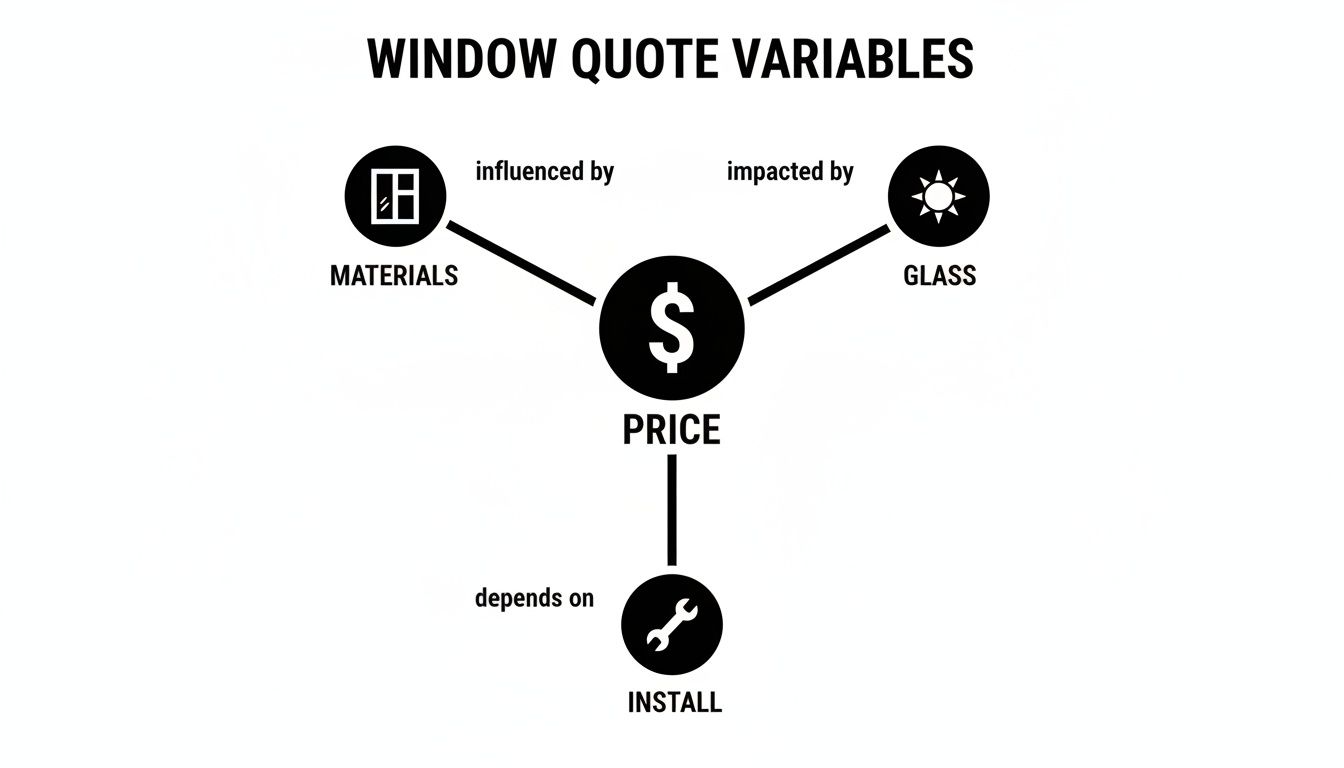
As you can see, these variables are what create such a wide range of final prices.
Arming Yourself with Knowledge
Your best defense against confusing quotes is getting transparent information. Arm yourself with knowledge first. Visit a local window store (not a sales rep's pitch deck) to see products and ask questions without pressure.
The key is to compare apples to apples. This means looking beyond the bottom-line number and digging into the specifics of the products, warranties, and installation methods being offered by each contractor.
At Truitt & White, we offer no-pressure consultations at our Berkeley Window & Door Showroom. Our team explains the pros and cons of different products and helps you meet California’s energy code. You can also start by exploring our window replacement cost estimator to get a solid baseline.
The Biggest Price Driver: Window Materials and Styles
The materials and styles of the windows are a primary reason quotes vary so much. It’s like buying a car—a basic sedan and a luxury SUV both get you from A to B, but the engineering, materials, and performance create a massive price gap.
The same principle applies to windows. A quote for a standard vinyl window might seem like a bargain compared to a premium wood-clad or fiberglass model.
Benefits of Energy-Efficient Windows in the Bay Area
For anyone building or renovating in Berkeley, Oakland, or anywhere in the East Bay, choosing the right window material is a balancing act. You must consider the budget, architectural style, and our unique climate.
Here’s a quick rundown of the most common options:
- Vinyl Windows: Vinyl is often the most budget-friendly choice. Modern vinyl windows offer great energy efficiency and are low-maintenance.
- Fiberglass Windows: Fiberglass is incredibly strong, durable, and won't expand or contract with the Bay Area's temperature swings.
- Wood Windows: For classic beauty, nothing beats real wood. It’s the go-to for historic homes in neighborhoods from Berkeley to San Francisco.
- Wood-Clad Windows: This hybrid option gives you the warm feel of wood on the inside, protected by a tough aluminum or fiberglass "cladding" on the exterior.
- Aluminum Windows: Known for their slim, modern look, aluminum windows are strong and long-lasting. Modern "thermally-broken" frames have seriously improved their performance.
Choosing the right material involves more than just looks. For instance, selecting the best solar screen material for windows can also affect your home's comfort and energy bills.
Window Material Cost and Performance Comparison
This table breaks down the key trade-offs between different window materials. It helps you understand what you're really paying for.
| Material | Average Cost per Window (Unit Only) | Durability | Energy Efficiency | Best For |
|---|---|---|---|---|
| Vinyl | $250 – $800 | Good | Very Good | Budget-conscious projects and rental properties. |
| Fiberglass | $600 – $1,800 | Excellent | Excellent | Homes in climates with extreme temperature swings; long-term durability. |
| Wood | $800 – $2,500+ | Good (with maintenance) | Very Good | Historic renovations and achieving a classic, high-end look. |
| Wood-Clad | $700 – $2,200 | Excellent | Excellent | Getting the beauty of wood inside without exterior maintenance. |
| Aluminum | $400 – $1,500 | Very Good | Good | Modern and contemporary homes with large expanses of glass. |
As you can see, the price for the window unit itself can vary by hundreds or even thousands of dollars depending on the material. This is the single biggest reason for a huge swing in quotes.
How Window Style Affects the Final Quote
Beyond the frame material, the style of the window—how it opens and operates—also creates major price differences. Some styles are more complex to build and install.
A simple, non-opening picture window is usually the least expensive option. At the other end, a large bay or bow window will be one of the priciest.
Here are a few other common styles:
- Double-Hung Windows: This classic style where both sashes slide up and down is typically moderately priced.
- Casement Windows: These windows are hinged on the side and crank open, creating an incredibly tight seal when closed. They usually cost more than double-hung windows.
- Awning Windows: Hinged at the top, these are fantastic for our climate because you can leave them open for ventilation even when it's drizzling.
A lower quote might simply be for a less expensive material, not necessarily a better deal. To learn more, our guide on how to choose the right replacement windows like a pro is a great place to start.
How Installation Methods Create Huge Price Gaps
The way a window gets installed is one of the biggest factors driving price differences. Two contractors can quote the exact same window for your Berkeley home, yet their final numbers can be thousands of dollars apart.
The installation method dictates the labor, materials, and skill required. This directly shapes the final cost and long-term performance.
Retrofit vs. Full-Frame: The Core Difference
A retrofit installation is like putting new lenses into your old glasses frames. It’s faster and costs less, but it only works if the existing frame is in perfect condition.
A full-frame replacement is like getting entirely new glasses—lenses, frames, and all.
Let's break down each approach:
- Retrofit (or "Pocket") Installation: The new window unit is inserted directly into the existing window frame. The old sashes and glass come out, but the original frame and trim stay.
- Full-Frame Replacement: The installer removes the entire window unit—frame, trim, and sills—exposing the rough opening. This is the only way to properly inspect for hidden water damage, repair rot, and install a modern weather barrier.
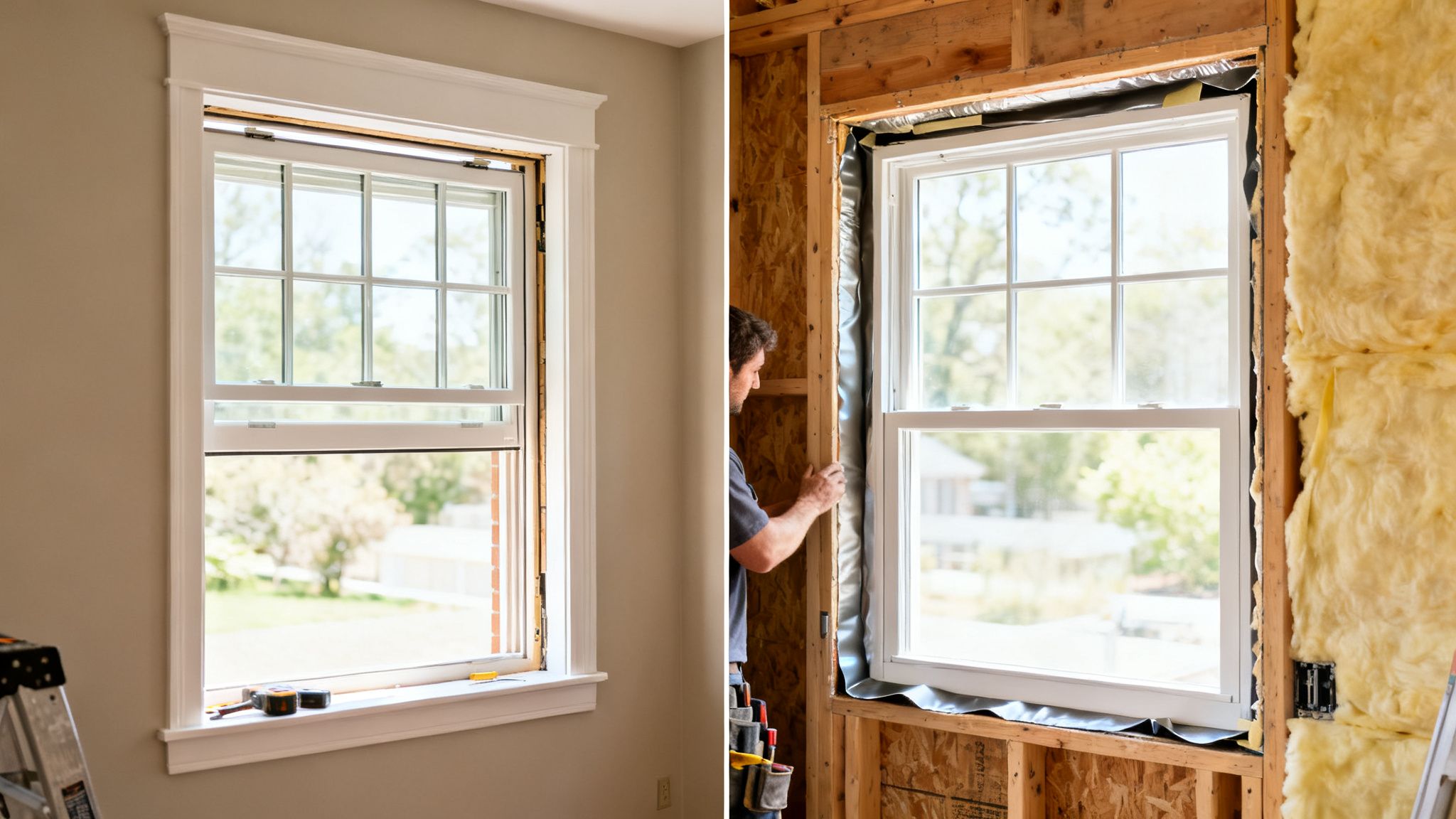
While a retrofit might be fine for a newer home, many older homes in Oakland and across the East Bay are hiding issues. A simple retrofit just can't fix these problems.
Why the Price Varies So Much
The price gap between these two methods is huge. A full-frame replacement is a far more labor-intensive project.
Imagine getting bids for your Oakland bungalow. One quote is $7,500, and another is $12,000 for identical windows. The installation method is almost certainly the hidden culprit. Full-frame replacements often average $500 to $1,500 per window in labor, while retrofits can be $300 to $850.
A low-cost quote is often based on a quick retrofit installation. A higher quote from a more thorough contractor likely includes a full-frame replacement, which is often the necessary approach for older Bay Area homes.
An experienced contractor who sees water stains or soft spots around your existing windows will recommend a full-frame replacement. It costs more upfront but prevents bigger problems later.
Which Method Is Right for Your Bay Area Home?
Choosing the right installation method is crucial. A top-of-the-line window that’s installed improperly will still leak air and water.
When you’re looking at a quote, think about these factors:
- Age of Your Home: If your house was built before the 1980s, a full-frame replacement is almost always the safer bet.
- Condition of Existing Frames: If your wood window frames feel soft, are peeling, or show water damage, a retrofit is off the table.
- Your Aesthetic Goals: A full-frame replacement allows you to change the style or size of your window trim.
A reputable installer will always inspect your existing windows thoroughly before giving you a quote. This detailed approach is a key part of our window and door field service. Always ask a contractor to specify in writing which installation method they are quoting.
The Critical Details in Your Glass Package
A huge part of the answer to "why are window quotes so different" is hidden in plain sight: the glass. Not all glass is created equal.
A lower quote might mean you're getting a bare-bones glass package that won't meet California's strict energy codes. Understanding a few key terms can help you see what you’re really paying for.

Decoding Your Glass Performance Ratings
A detailed window quote will show ratings like U-factor and SHGC. These numbers are critical for meeting California’s Title 24 energy standards.
Here’s a simple breakdown:
- U-Factor: This measures how well a window prevents heat from escaping. The lower the U-factor, the better it is at keeping your home warm.
- Solar Heat Gain Coefficient (SHGC): This measures how well a window blocks the sun’s heat. The lower the SHGC, the better it is at keeping your home cool.
A cheaper window often has a higher (worse) U-factor and SHGC. It saves you money upfront but can lead to higher energy bills.
Panes and Coatings Matter More Than You Think
The physical construction of the glass unit makes a huge difference. Most windows today are at least double-pane, which provides significantly better insulation than old single-pane windows.
The most important feature in any modern window is the Low-E (low-emissivity) coating. This is a microscopically thin, transparent metallic layer applied to the glass that reflects heat.
According to ENERGY STAR, windows with Low-E coatings can reduce energy loss by as much as 30–50%. A quote that doesn't include Low-E coatings is quoting an outdated product. You can dive deeper into these technologies in our guide on choosing energy-efficient windows.
Customizing Glass for the Bay Area Climate
Our local microclimates demand a smart approach to window selection. The ideal glass package for a foggy San Francisco home is different from one needed for a sunny East Bay wall.
For example:
- A South-Facing Wall in Oakland: This window gets intense sun. You would want a glass package with a very low SHGC to block solar heat.
- A North-Facing Window in Berkeley: This window gets little direct sun. Here, you would prioritize a low U-factor to prevent heat loss.
A knowledgeable expert will help you select different glass packages for different sides of your house. This level of detail is often missing from low-ball quotes.
The Hidden Factors: Warranties, Labor, and Company Stability
Once you get past the window and installation, the business side of things shapes the final price. This includes warranties, labor quality, and a company's overhead.
A higher price often signals a deeper commitment to accountability. You're not just buying windows; you're buying peace of mind.
Product vs. Labor Warranties: They Aren't the Same Thing
The warranty on the window is completely different from the warranty on the installation. This difference is a major reason some quotes are so much higher than others.
- Manufacturer's Product Warranty: This comes from the window maker (like Marvin) and covers defects in the window unit itself. It will not cover a single problem caused by a bad installation.
- Installer's Labor Warranty: This is the installing company's promise to stand behind their own craftsmanship. It covers problems like air drafts or water leaks around the frame.
A company offering a lifetime labor warranty will have a higher price than a crew that only guarantees work for a year. That extra cost is your insurance policy.
The Real Cost of a Professional Crew
The skill of the installation crew is another huge piece of the puzzle. A rock-bottom price can be a massive red flag that a company is cutting corners on their team.
A licensed, bonded, and insured installation team costs more than subcontractors paid by the job. That higher cost reflects proper training, workers' compensation, and liability coverage—all protections that safeguard you.
An established company invests in its people. They make sure their crews are factory-trained and current on building codes.
Company Overhead and Why It Matters to You
Finally, a good chunk of any quote is dedicated to "company overhead." This funds the support system that ensures your project runs smoothly.
Think about what that overhead really pays for:
- A Physical Showroom: A place like the Truitt & White Window & Door Showroom in Berkeley lets you see and operate products before you buy.
- Dedicated Support Staff: This means project managers and service technicians who are there to answer your calls and solve issues.
- Long-Term Stability: An established business with deep roots in the community, serving areas like Oakland and the greater East Bay since 1946, has a proven track record.
When you choose a company with this kind of infrastructure, you're investing in a partnership. That value is reflected in the final cost.
How to Compare Window Quotes Like an Expert
The key to cutting through confusing numbers is simple: ask the right questions. When you know what to look for, you are in control of the conversation.
True comparison isn’t about the bottom-line price. It’s about understanding exactly what you’re getting for your money.
Your Window Quote Comparison Checklist
Your most powerful tool is demanding transparency. Ask every contractor for a detailed, itemized quote that separates costs.
Once you have those quotes, it’s time to dig into the specifics. Vague answers are a major red flag.
Use this checklist to ask contractors the right questions:
| Checklist Item | Quote 1 Details | Quote 2 Details | Quote 3 Details |
|---|---|---|---|
| Installation Method (Full-Frame vs. Retrofit/Pocket) | |||
| Window Manufacturer (e.g., Marvin) | |||
| Product Line & Material (e.g., Elevate Fiberglass) | |||
| Glass Package Specs (U-factor, SHGC, Low-E) | |||
| Itemized Material Cost | |||
| Itemized Labor Cost | |||
| Permit & Disposal Fees | |||
| Labor Warranty Details (Length & Coverage) |
By asking these pointed questions, you force contractors to justify their pricing. For more tips, our guide on how to choose a contractor is a great resource.
Find a Partner, Not a Pitchman
Ultimately, work with a partner who is focused on education, not a high-pressure sale. Find a no-pressure environment where you can see the products for yourself.
Transparency is your best defense against confusing quotes. Gaining firsthand knowledge empowers you to evaluate bids based on value, not just price.
At the Truitt & White Window & Door Showroom in Berkeley, our team is here to help homeowners, builders, and architects across the East Bay do just that. We don’t work on commission. Connect with our experts today to get the clarity you need.
Frequently Asked Questions About Window Quotes
It's smart to be thorough when making a big investment in your home. Here are answers to some of the most common questions we hear from homeowners in the Bay Area.
How Can I Spot a High-Pressure Sales Tactic?
The classic red flag is a massive discount that’s only good if you sign the contract right now. A reputable company will provide a quote that's valid for a reasonable time, usually 30 days, so you can review it without pressure. Long presentations that avoid direct answers are also a warning sign.
Why Do Some Companies Insist All Homeowners Be Present for a Quote?
This is often a high-pressure sales strategy designed to prevent the "I need to talk it over with my partner" objection. A consultative partner will happily provide a clear quote for the entire household to review on your own time, regardless of who is present for the initial meeting.
Is the Lowest Bid Always a Bad Idea?
Not necessarily, but it demands a closer look. More often than not, a very low bid is a sign that corners are being cut on materials, installation method, or warranty coverage. Compare it line-by-line against other quotes to see if you're truly comparing the same job.
Should My Quote Include Permits?
Yes, absolutely. In cities like Berkeley and Oakland, replacing windows often requires a building permit, especially for a full-frame replacement. A professional quote should include the cost of pulling permits and managing inspections, ensuring your project is compliant with local codes.
What is the difference between a window quote and an estimate?
An estimate is a rough approximation of cost, often given without a detailed site inspection. A quote is a formal, detailed offer based on specific product selections, measurements, and a clear scope of work. Always ask for a formal quote to avoid surprises.
At Truitt & White, we believe an informed customer is an empowered one. Serving Berkeley, Oakland, and the wider East Bay, we are the go-to for homeowners who want facts, not fluff. Visit our Berkeley showroom or connect with our window and door experts for a consultation you can trust.