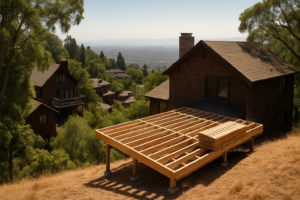
When building in the Bay Area, creating a fire-resistant home is about designing a complete defensive system. It’s not just about one product. It's about combining materials like Class A roofing, non-combustible siding, and WUI-compliant windows and doors to harden a home against embers and intense heat.
Building for Resilience in Bay Area Wildfire Zones
For builders, architects, and remodelers in the Bay Area, fire-resistant construction is more than a building code requirement. In high-risk areas like the Berkeley and Oakland hills—known as Wildland-Urban Interface (WUI) zones—it’s the foundation of safe, durable homes.
Local homeowners are focused on resilience, and demand for hardened homes built with high-performance materials has surged. Architects now list fire-resistant materials as a central trend. This reflects a major shift toward long-term value and safety in a region where wildfire risk is a constant reality.
Moving Beyond Basic Fire Safety Tips
Generic fire safety advice often isn't enough for professionals. Basic tips don't offer the specific product and installation guidance needed to meet strict California building codes. This guide digs deeper into the core components of a truly fire-hardened home.
Before we focus on the structure, remember that the first line of defense is the property itself. Understanding effective vegetation management strategies is crucial. Creating defensible space is the most critical first step in fire resilience.
A fire-hardened home is an integrated system. It's not just about one material, but how roofing, siding, windows, and assembly details work together to create a continuous barrier against ignition. This approach is essential for any new build or remodel in the East Bay hills.
This guide will give you the knowledge to:
- Select the right Class A roofing and non-combustible siding for your Bay Area projects.
- Understand the key specs for WUI-compliant windows and doors.
- Implement best practices for fire-resistant decking and hardening the foundation.
- Ensure your projects deliver lasting safety and value, meeting both code and client expectations.
Building for resilience combines smart material choices with a deep understanding of sustainable and safe construction. You can learn more about how these principles overlap by exploring our resources on green building materials and methods.
Choosing Your First Line of Defense: Roofing and Siding
A home’s exterior is its primary shield against wildfire. For any build in a high-risk WUI zone—including many parts of the Berkeley and Oakland hills—roofing and siding are the two most critical choices. These materials are your first and most important defense against wind-blown embers and radiant heat.
Getting this right is about creating a truly hardened exterior that protects the entire structure. We'll walk through the best roofing materials, go-to siding options, and the small-but-critical details that bring it all together.
Starting at the Top: Class A Roofing Materials
During a wildfire, the roof is the single most vulnerable surface. It’s a large target for embers that can travel for miles. This is why Class A rated roofing materials are non-negotiable for any project in the Bay Area’s fire-prone areas.
A Class A rating (tested under ASTM E108) means the material can withstand severe fire exposure without igniting or letting flames burn through to the roof deck.
Here are the top choices for builders in the Bay Area:
- Asphalt Shingles: Many modern architectural shingles carry a Class A rating. They are a solid, cost-effective solution for nearly any architectural style.
- Metal Roofing: Standing seam metal is exceptionally tough and completely non-combustible. Embers roll right off, and it offers a clean, modern look with a very long lifespan.
- Composite and Tile Roofing: Materials like concrete, clay, and slate are naturally non-combustible. Today's composite tiles can provide the look of classic wood shake without the fire risk.
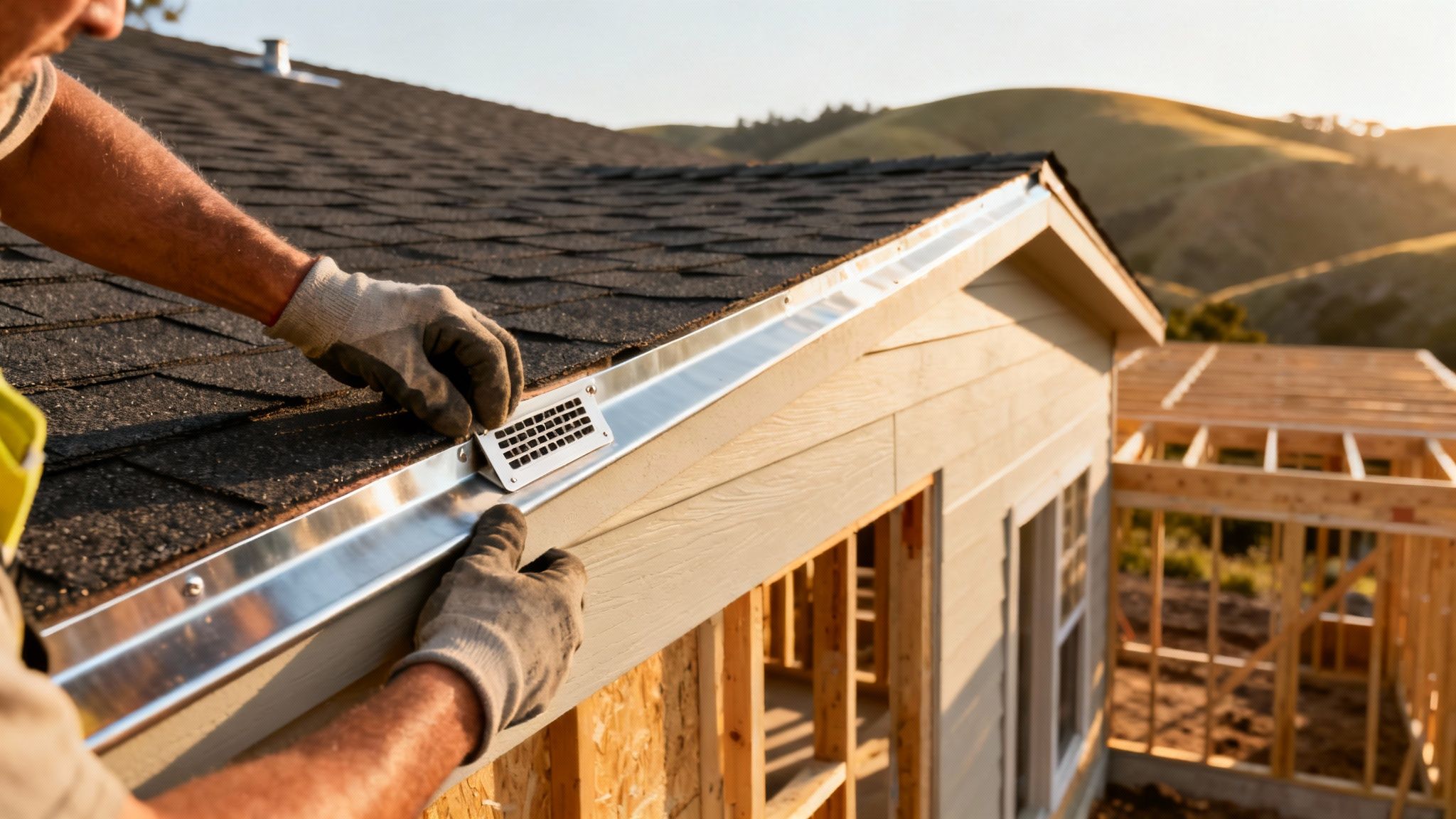
When specifying a roof, remember the assembly is as important as the material. A seamless roof-to-wall connection with tight flashing and zero gaps is what stops embers from entering the attic or wall cavities.
Comparing Class A Roofing Materials for Bay Area Homes
Choosing the right roofing isn't just about the fire rating. You also have to consider durability, cost, and style. Here’s a quick breakdown of common Class A options we see on local jobsites.
| Material Type | Fire Resistance Rating | Average Lifespan | Typical Cost per Sq. Ft. | Best For |
|---|---|---|---|---|
| Asphalt Shingles | Class A | 20-30 years | $4 – $7 | Budget-conscious projects needing design versatility. |
| Metal (Standing Seam) | Class A | 50+ years | $9 – $16 | Modern designs and clients prioritizing longevity and low maintenance. |
| Concrete/Clay Tile | Class A | 50-100+ years | $10 – $20 | Spanish, Mediterranean, and historic styles where authenticity is key. |
| Composite Slate/Shake | Class A | 30-50 years | $8 – $15 | Projects where the look of natural slate or wood is desired without the fire risk. |
Each of these materials provides excellent fire protection. The best choice balances the project's budget with the client's long-term goals and aesthetic preferences.
Building a Non-Combustible Barrier with Siding
After the roof, a home's walls are the next major vulnerability, especially when facing radiant heat. Using non-combustible siding materials creates an ignition-resistant barrier that protects the structural framing.
For fire-resistant construction in Northern California, fiber cement and stucco are two of the most trusted choices. Both options provide a durable, non-combustible exterior for any architectural style, from classic Berkeley bungalows to modern builds in Oakland. It's worth exploring different options for durable and stylish moulding, trim, and siding to find the perfect fit.
The numbers below highlight why this is so important for our local communities.
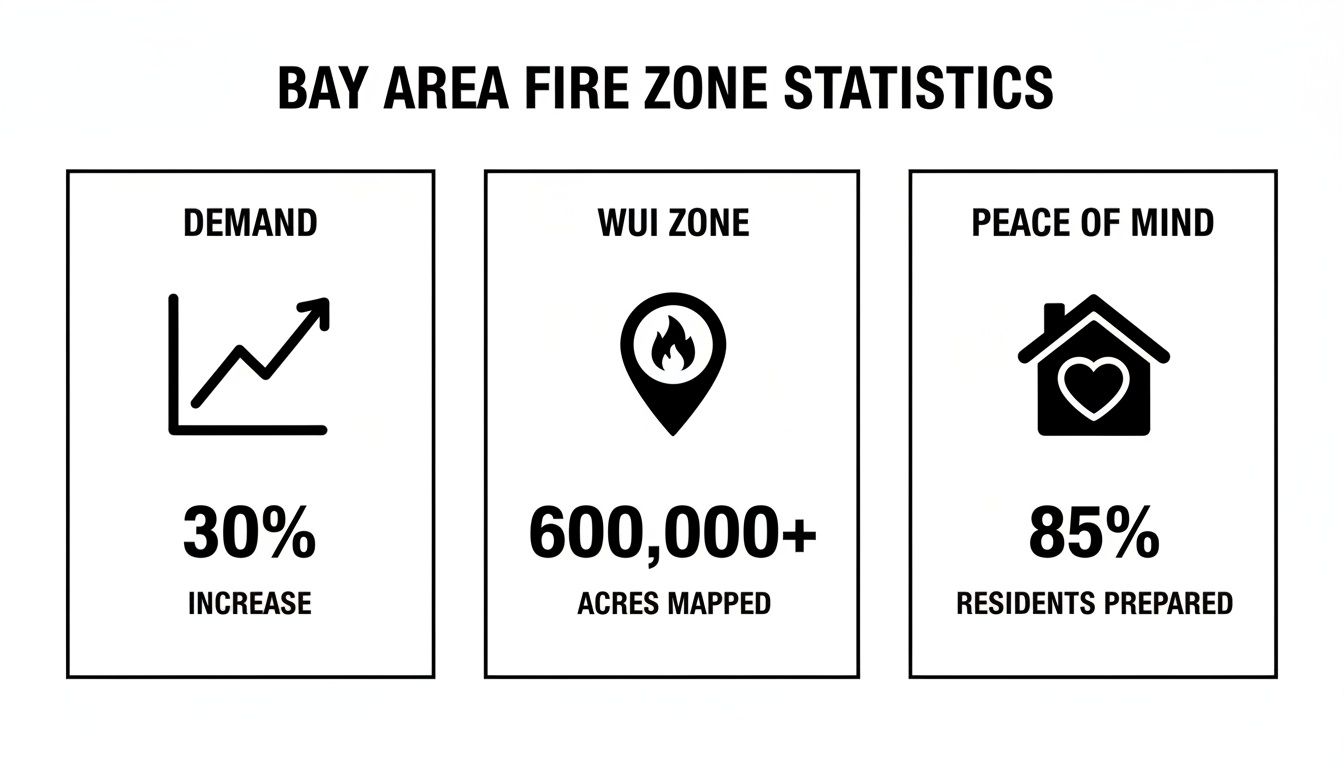
As WUI zones expand, homeowners are demanding more resilient building practices. Specifying fire-resistant materials is essential for both safety and peace of mind.
Securing Vulnerable Openings With WUI-Compliant Windows and Doors
You can build a fortress with Class A roofing and non-combustible siding, but if the windows and doors fail, the entire system is compromised. During a wildfire, these openings are easily weakened by extreme radiant heat and wind-driven embers.
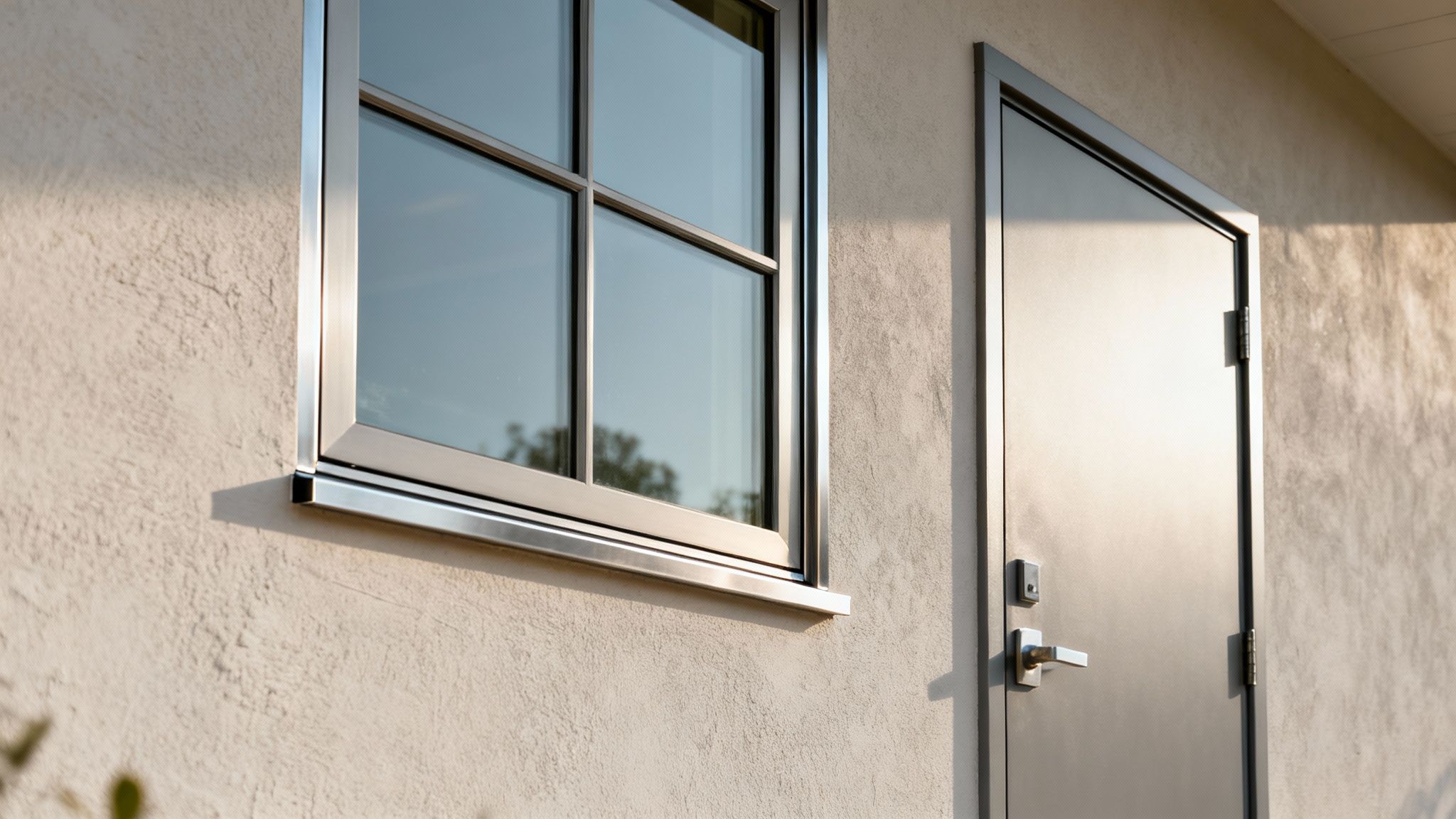
For anyone building in the Bay Area—especially high-risk zones like the East Bay hills—selecting and installing WUI-compliant windows and doors is a critical step. These are integral components of the home's fire defense system. A standard window can shatter in minutes under wildfire conditions, letting in superheated air and embers that can ignite a home from the inside.
Key Features of Fire-Resistant Windows
When sourcing windows for a project in Berkeley or Oakland, you need to look for specific features designed for wildfire conditions. These details ensure the window assembly holds its ground when it matters most.
- Tempered or Laminated Glass: Standard annealed glass is brittle. WUI codes demand that at least one pane is tempered glass, which is far more resistant to the thermal shock that causes shattering.
- Multi-Pane (Dual-Pane) Units: The air gap in a double-pane window acts as a powerful insulator. It dramatically slows heat transfer, protecting the inner pane from extreme radiant heat.
- Non-Combustible or Ignition-Resistant Frames: The frame is as crucial as the glass. Options like fiberglass, aluminum-clad wood, and some high-performance vinyl offer superior resistance compared to standard wood frames.
Brands like Marvin and Andersen offer product lines engineered to meet or exceed California's strict WUI codes. For a closer look, check out our guide on all-weather windows built to withstand the Bay Area climate.
The Critical Role of Proper Installation
Specifying the right window is only half the job. A fire-rated window can fail if embers find a way in around the frame. The installation is what truly fortifies the opening.
A fire-resistant window is only as strong as its installation. Meticulous flashing and sealing techniques are non-negotiable for preventing ember intrusion—a leading cause of home ignition during wildfires.
Your focus must be on creating a complete, impenetrable seal. Use high-quality flashing tape and fire-rated sealants to close every possible gap between the window frame and the rough opening. This level of detail ensures wind-blown embers cannot get lodged in a crevice and ignite the structure.
Fortifying Entryways with Fire-Rated Doors
Just like windows, exterior doors are a major vulnerability. A standard hollow-core door offers almost no resistance to fire. In WUI zones, every exterior door must function as a solid barrier against intense heat and flames.
The market for fireproofing materials is projected to hit $13.54 billion by 2035, a clear sign of the growing demand for safer building components. According to the latest industry analysis, smoke inhalation is a major risk, making fire-rated doors essential.
To ensure an entryway is truly hardened, look for these key features:
- Solid-Core Construction: Doors must be made from solid wood, metal, or have a core tested and rated for fire resistance.
- Non-Combustible Materials: Steel doors are an excellent choice for durability and fire resistance. High-quality fiberglass doors can also be specified with fire ratings.
- Tight-Fitting Seals: Good weatherstripping and a properly fitted threshold are crucial for blocking embers and smoke from entering around the door's edges.
By carefully selecting and installing WUI-compliant windows and doors, you turn a building's most vulnerable points into strengths. This approach not only meets code but delivers the real-world safety Bay Area clients deserve.
Hardening Decks and Foundations From the Ground Up
Wildfires don't just move through treetops; they creep along the ground, seeking weak points at a home's base. For builders and remodelers in hillside communities like Berkeley and Oakland, hardening a structure from the ground up is critical. This means fortifying the deck and the foundation.
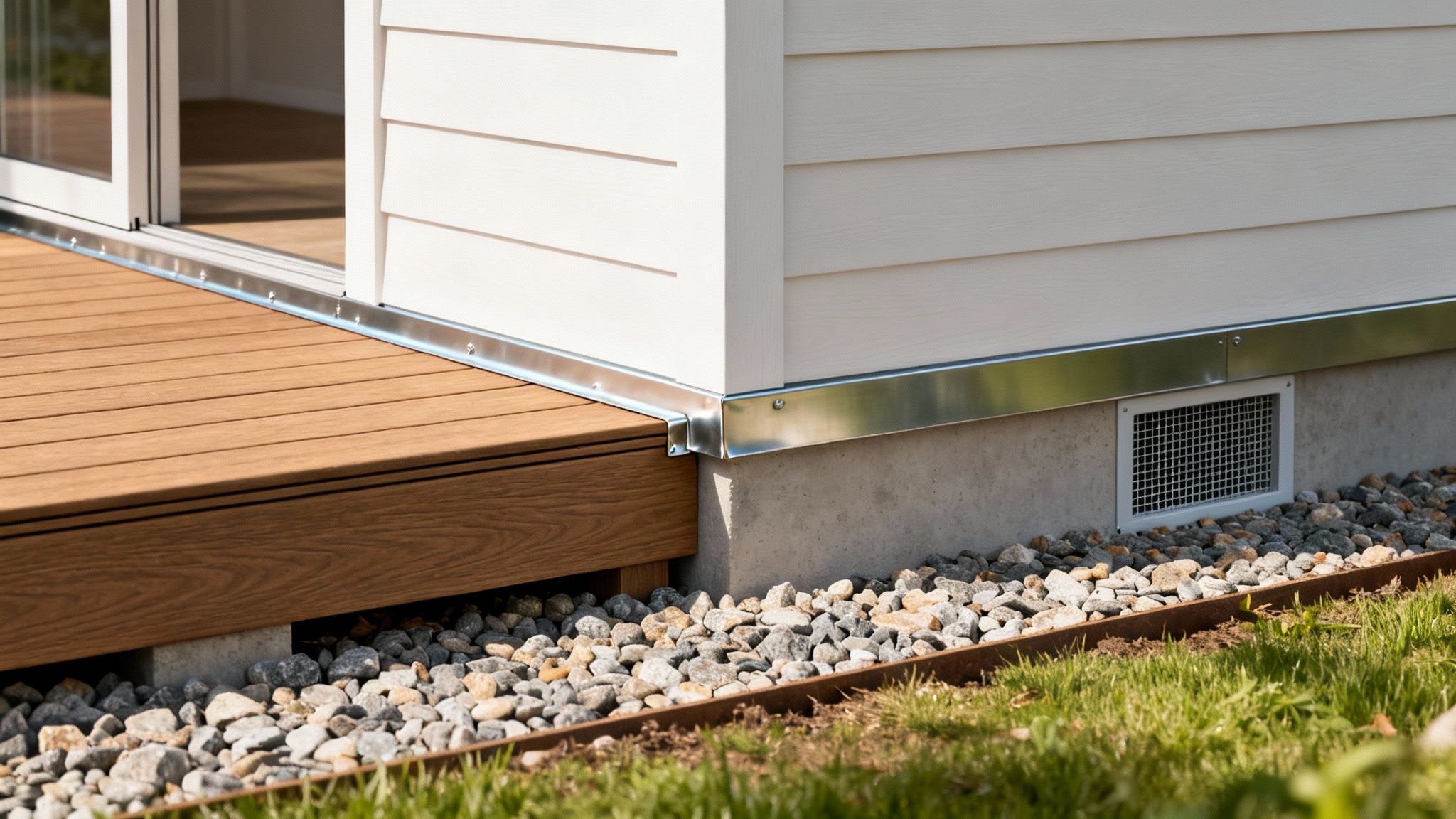
A traditional wood deck is essentially fuel attached directly to the house. Embers can get trapped between boards or collect underneath. Once ignited, the fire has a clear path to the exterior wall and into the home.
Choosing Ignition-Resistant Decking Materials
The first step in hardening a deck is choosing the right materials. Standard pressure-treated lumber offers very little fire resistance. When building in a WUI zone, you must specify products engineered to withstand ember attacks and intense heat.
Here are top choices for Bay Area projects:
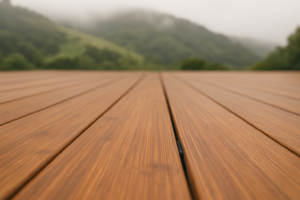
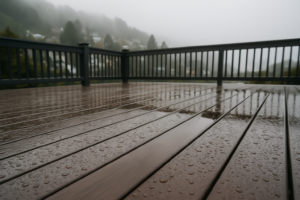
- Composite Decking: Many of today’s composite and PVC decking products carry a Class A or Class B fire rating, making them a smart, reliable choice for fire-resistant construction.
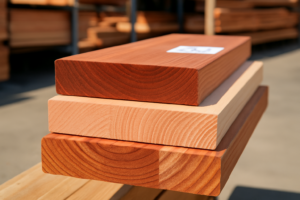
- Dense Hardwoods: Some hardwoods, like Ipe, are naturally fire-resistant due to their density. They outperform softwoods like pine or cedar by a significant margin.
- Non-Combustible Understructures: For an elevated deck, framing with steel creates a completely non-combustible support system. This drastically cuts the risk of a fire starting underneath the deck.
For a deeper dive into your options, check out Truitt & White’s complete deck building materials list to find products that satisfy local WUI codes.
Best Practices for Deck Installation
The materials you choose are only half the story. How you install the deck is just as important. Protect your build: fire-resistant essentials are all about the complete assembly, not just individual components.
A common point of failure is where the deck ledger board attaches to the house. Always use metal flashing to create a non-combustible barrier between the deck’s wood framing and the home’s siding. It’s a simple detail that can stop a deck fire from ever reaching the exterior wall.
Proper installation also means paying attention to small details that stop embers. Minimize gaps between deck boards where possible, and always keep the area beneath the deck clear of flammable debris.
Creating a Non-Combustible Zone Around the Foundation
The area immediately surrounding a home’s foundation is the "ember-ignition zone." California fire codes require the first five feet from exterior walls to be free of anything that can easily ignite.
Your job is to build a "firebreak" that stops a ground fire. Forget flammable bark mulch and overgrown bushes. You need materials that won't burn:
- Gravel or Crushed Stone: This is a simple, highly effective solution. A clean perimeter of gravel creates a non-combustible buffer.
- Concrete Pavers or Walkways: Hardscaping is a fantastic fire barrier that also adds attractive, usable space.
- Bare Earth: While not the most aesthetic choice, cleared soil is a viable way to create defensible space right up to the foundation.
This non-combustible perimeter stops embers from igniting nearby vegetation and denies flames a direct path to the siding. It’s a low-cost strategy with a massive impact on a home's survivability. Finally, ensure foundation vents are sealed with 1/8-inch or smaller metal mesh to block embers while maintaining airflow.
Why Assembly Details and Fire-Stopping Matter
A truly fire-resistant building is more than the sum of its parts. Even with the best Class A roofing and non-combustible siding, fire can enter small, unprotected gaps in the structure. These openings, often hidden within walls and floors, act like highways for smoke and flames.
This is where true craftsmanship comes in. Fire-stopping and fire-blocking are critical finishing details that prevent a fire from racing through a home's hidden spaces. Mastering these techniques delivers a resilient, code-compliant structure.
Sealing Penetrations with Fire-Stopping Materials
Every pipe, wire, and duct that runs through a wall or floor creates a potential breach in your fire-rated assembly. Fire-stopping is the process of sealing those gaps with specialized materials to restore the barrier’s original fire-resistance rating.
Common products for this include:
- Fire-Rated Sealants and Caulks: Applied around pipes and conduits, they create a tough seal that blocks smoke and flames.
- Intumescent Fillers: When heated, these materials expand dramatically to choke off gaps, stopping the fire in its tracks.
- Collars and Wraps: Essential for plastic pipes, they contain intumescent material that expands and crushes a melting pipe, sealing the opening.
The demand for these materials is growing rapidly. The global market is projected to grow from $1.3 billion to $3.3 billion by 2034, according to the latest industry research. Properly applying these products can significantly reduce fire spread through openings.
The Importance of Fire-Blocking in Concealed Spaces
While fire-stopping seals specific holes, fire-blocking addresses large, concealed spaces within a building’s frame. Empty cavities inside walls, floors, and soffits can act like chimneys, letting fire shoot from one level to the next in minutes.
Fire-blocking involves installing simple barriers—like solid lumber, plywood, or mineral wool—to obstruct these pathways. The technique compartmentalizes a fire, slowing it down and buying precious time for occupants to escape.
Fire-blocking is a simple yet powerful framing technique that dramatically improves a home’s resilience. By interrupting the flow of superheated gases and flames within concealed spaces, you can contain a fire to its room of origin for much longer.
This process is a fundamental part of building a resilient assembly. For a refresher on strong and safe wall assemblies, our guide on how to frame a wall offers valuable insights that tie in with these fire-hardening techniques.
Real-World Application for Bay Area Builders
For contractors in the East Bay, these principles are a daily reality. Imagine a kitchen remodel in an older Berkeley home where you run new plumbing and electrical through a fire-rated wall separating the kitchen from the garage.
- The Problem: The new holes for pipes and wires have compromised that wall's fire rating.
- The Solution: After installation, every penetration must be sealed. Use a flexible fire-rated caulk around the electrical conduit and an intumescent collar around a PVC drain pipe.
It’s the same when framing a new build in the Oakland hills. You must install fire-blocking at regular intervals within tall wall cavities and between floors. This is what separates a standard build from a truly fire-hardened one.
We're Your Partner in Building a Safer Bay Area
Building a fire-resistant home requires an integrated system of protection, from the roof down to the foundation. This guide has covered the crucial material choices and installation details that make a real difference. These are the fundamentals of creating a safer, more resilient Bay Area.
As a builder, contractor, or architect, you face the challenges of navigating complex WUI codes and sourcing the right products for jobs in high-risk areas like the Berkeley hills. The materials and techniques we've covered, from Class A roofing to fire-stopping sealants, are designed to give you a complete defense. You don't have to tackle it alone.
Your expertise on the job site, combined with our deep product knowledge, creates a powerful partnership. Let us help you find the right fire-resistant essentials to protect your next build and give your clients peace of mind.
Our team is here to provide practical guidance and an extensive inventory of code-compliant materials. Visit our Berkeley showroom on Hearst Ave or connect with our team of specialists to get started.
Frequently Asked Questions About Fire-Resistant Building
Building or remodeling in the Bay Area’s WUI zones brings up many specific questions. Here are clear answers to the most common queries we get from contractors, architects, and homeowners.
What is the difference between fire-resistant and fireproof?
While people often say "fireproof," no material can withstand fire indefinitely. The correct term is fire-resistant, which describes materials and assemblies designed to resist fire for a specific time period. This rating, measured in minutes or hours, provides crucial time for evacuation and for first responders to arrive.
Are composite decking materials truly fire-resistant?
Yes, many modern composite decking products are designed for high performance in fire-prone areas. The key is to look for options with a Class A or Class B fire rating. Always check the product’s spec sheet to ensure it meets local WUI codes for your project in the Oakland hills or elsewhere in the East Bay.
Do I need to replace all my windows to harden my home?
For new construction or a major remodel in a WUI zone, installing new, WUI-compliant windows with tempered glass is required. For an existing home, adding exterior fire-rated shutters can offer significant protection for older windows. However, a full window replacement is the most effective long-term solution.
How important is defensible space around a home?
Defensible space is critical—it’s the first line of defense that complements the home's structural hardening. This means clearing flammable vegetation and using non-combustible materials like gravel within the first five feet of the foundation. This simple step is incredibly effective at stopping a ground fire before it reaches your siding.
Where can I find materials that meet Bay Area WUI codes?
Sourcing the right WUI-rated products can be a challenge. Your best bet is to work with a local supplier like Truitt & White who knows the Bay Area codes and materials. We can point you directly to the specific roofing, siding, windows, and decking approved for use in high-risk areas.
For a complete approach to home fire safety, understanding modern interconnected smoke alarm systems can provide added peace of mind.
Building in a wildfire-prone area demands both expertise and the right materials. The team at Truitt & White has the expert guidance and the full range of code-compliant products to help you build smarter and safer. Stop by our Berkeley showroom or connect with us to talk with a specialist.