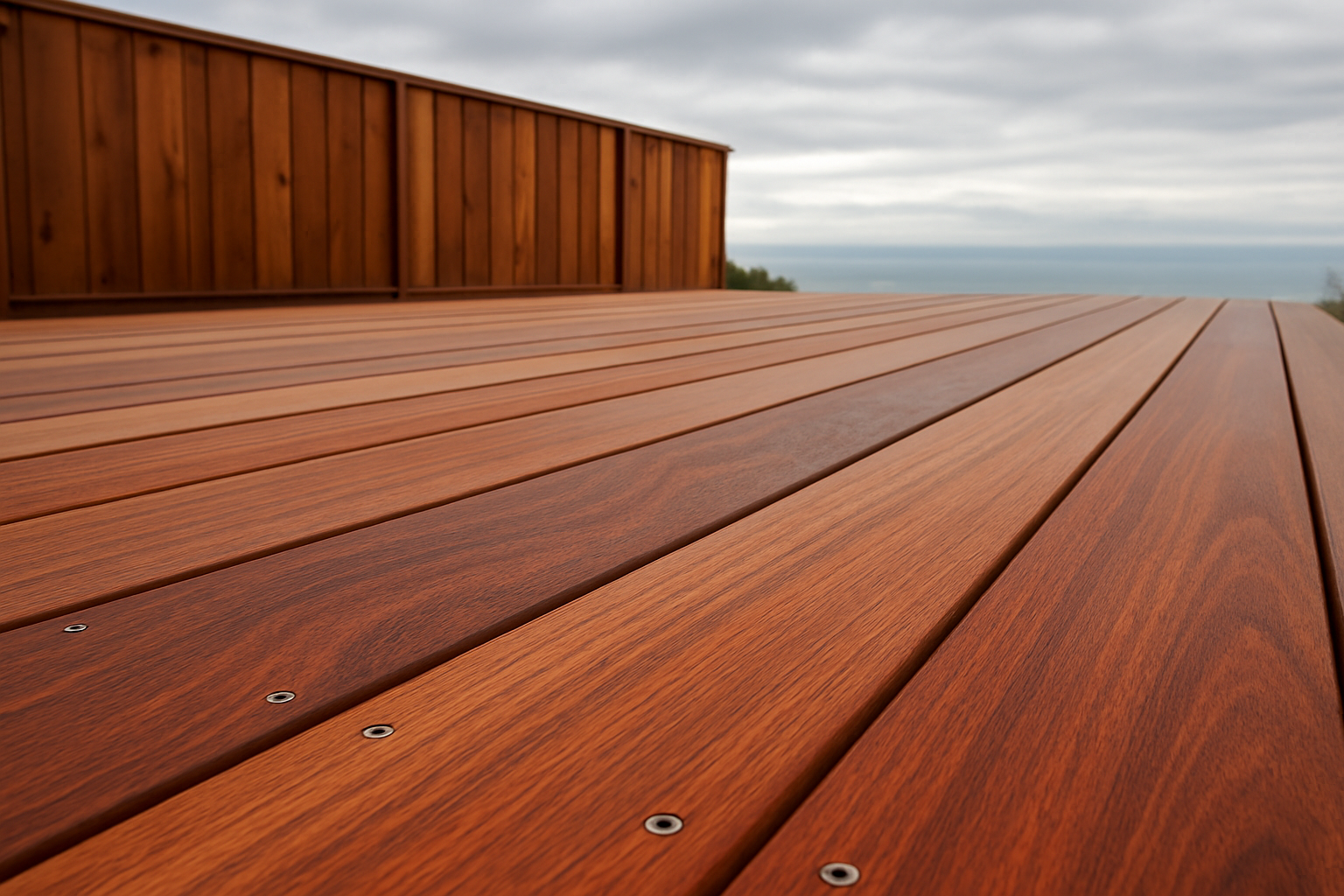
Direct Answer: Ipe is a dense, naturally fire-resistant tropical hardwood that performs well in Bay Area conditions, but it requires pre-drilling, stainless fasteners, regular oiling, and verified sourcing documentation before you buy.
A pattern we see regularly at the lumber yard: a buyer starts shopping composite decking, reads about heat retention, and pivots hard toward ipe. The reasoning makes sense. If a composite surface gets hot enough that you cannot touch it with bare hands on a south-facing deck in July, something cooler sounds like a real upgrade.
Ipe (pronounced ee-pay) is a legitimate high-performance material. It is denser than most domestic hardwoods, naturally resistant to rot and insects, and one of the few wood decking options that can meet ignition-resistant requirements in California’s WUI fire zones. But it comes with real trade-offs that do not always show up in the marketing.
This guide covers the three things that matter most for Bay Area buyers: what ipe actually takes to install correctly, how to verify that the wood you are buying was sourced legally and responsibly, and what honest maintenance looks like over time. If you are comparing ipe against composite on heat alone, we will address that too.
Why Ipe Comes Up When Composite Gets Too Hot
Our composite decking heat retention article covers the numbers in detail, but the short version is this: dark composite boards in full sun can reach surface temperatures well above what bare feet can tolerate. That is a real problem on west- or south-facing decks in Berkeley, Oakland, and the inland East Bay, where afternoon sun can be intense even on otherwise mild days.
Dense hardwoods like ipe do tend to run cooler than dark composite in full sun. Wood has lower thermal mass than composite, and the tight grain of tropical hardwoods does not absorb and hold heat the same way a solid composite plank does. But the gap narrows significantly in shade, and it nearly disappears on north-facing decks or spots with consistent marine layer cover.
Before treating hardwood as the automatic fix for a heat problem, it helps to think about the actual conditions on that specific deck:
- Full sun, south- or west-facing: ipe will likely run noticeably cooler than dark composite
- Partial shade or east-facing: the difference shrinks considerably
- Under a pergola or roof overhang: surface temperature is less of a factor; durability and maintenance become the deciding questions
If heat retention is genuinely the main concern, checking out how Bay Area fog and sun change the wood vs. composite decision gives a more complete picture of how microclimates affect that math.
What Ipe Actually Takes on the Jobsite
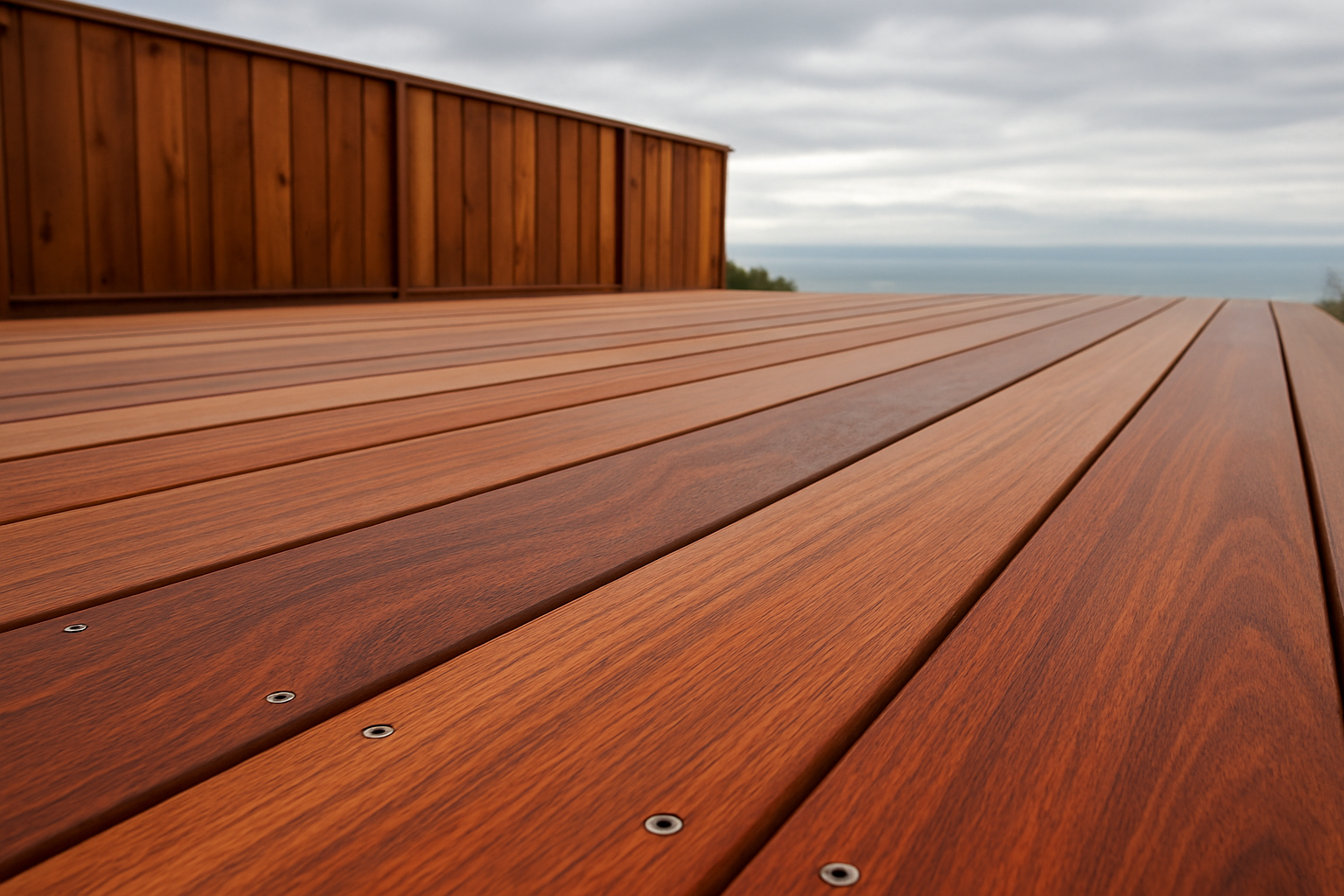
This is where buyers who researched ipe online often run into surprises. Ipe is one of the densest commercially available decking woods, with a Janka hardness rating around 3,680 lbf. That density is what gives it its durability and fire-resistance properties. It is also what makes installation different from composite or even most domestic hardwoods.
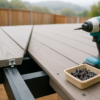
Pre-drilling is not optional. Drive a fastener directly into ipe without a pilot hole and you will split the board. Every fastener location needs a pre-drilled hole sized correctly for the fastener shank, and that requires sharp carbide-tipped bits. Standard twist bits dull quickly in ipe and produce ragged holes. Plan for bit replacement as part of your consumables budget.
Fastener selection matters just as much. Stainless steel fasteners are the right call for ipe in any Bay Area coastal or near-coastal environment. The tannins in tropical hardwoods react with carbon steel and galvanized hardware, causing staining that works its way into the grain. Screws should be countersunk cleanly and plugged if you want a finished look.
Hidden fastener systems, which work smoothly with most composite and some PVC decking profiles, are much harder to use with ipe. The density limits how cleanly you can cut the groove profile needed for clip-style systems, and most clip systems are not rated for boards this hard. Face-fastening with stainless screws remains the most reliable approach for most installers.
For projects in Oakland or Berkeley hillside WUI zones, ipe’s natural fire resistance is worth understanding precisely. It can qualify as ignition-resistant material under California’s WUI code, but only when the specific product is listed and documented. Assuming any ipe board qualifies without confirming the listing is a compliance risk. The 2026 WUI code changes for decking article covers what the current requirements actually say.
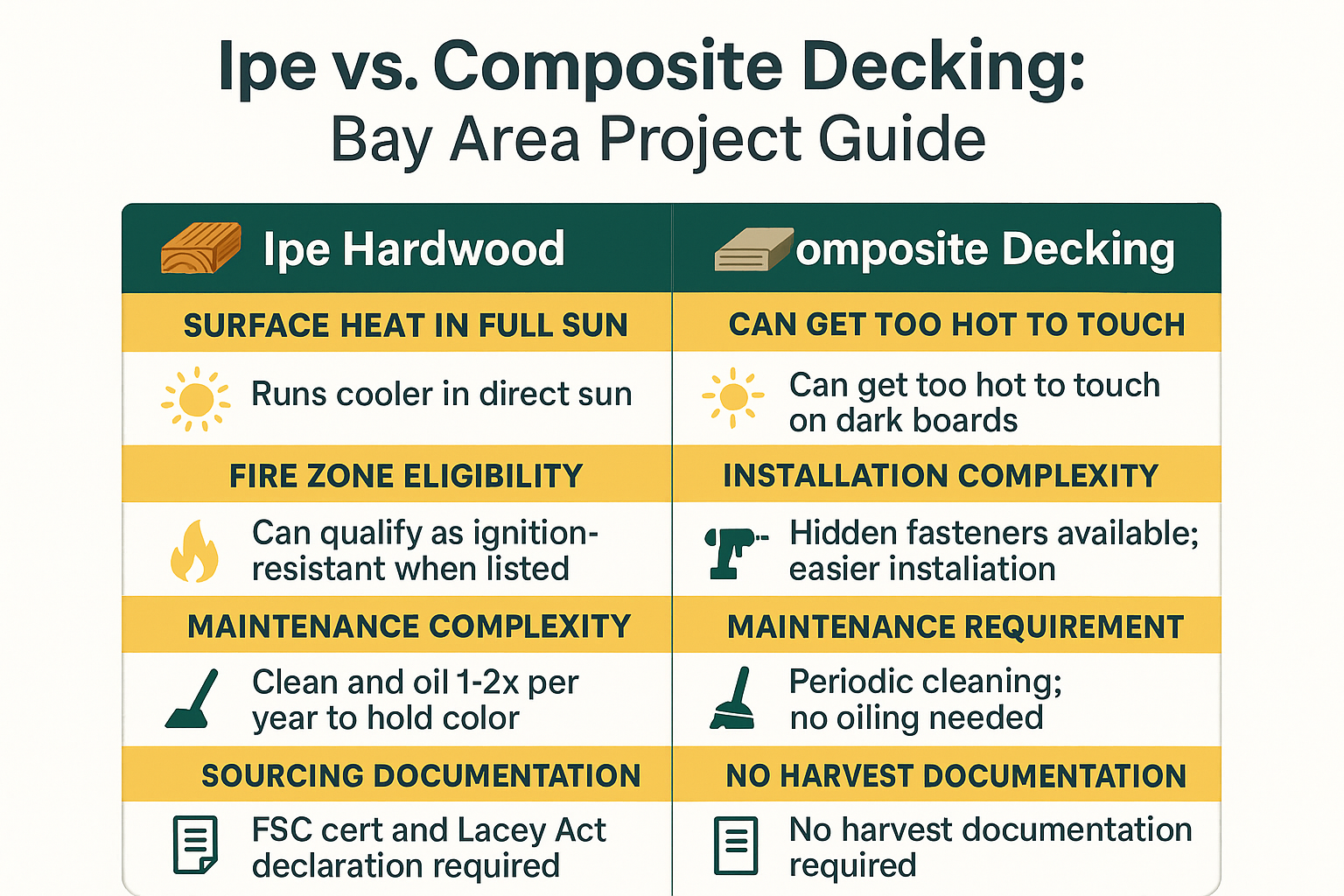
Ipe vs. Composite: Key Comparison for Bay Area Projects
This comparison covers the four factors that most directly affect the buy decision for Bay Area decking projects.
Sourcing Documentation: What to Ask and Why It Matters
Tropical hardwood sourcing is a real legal issue, not just a sustainability talking point. The U.S. Lacey Act requires importers of wood products to declare the species, country of harvest, and chain of custody for the wood they bring into the country. Phase VII of APHIS enforcement, which expanded declaration coverage beginning December 2024, brought more product categories under active compliance requirements.
For a buyer or contractor, this matters in two practical ways. First, purchasing wood that cannot be traced to a legal harvest creates liability, even when you are not the importer. Second, some Bay Area project specs and permit packages for public or commercial work now require sourcing documentation as part of material submittals.
FSC certification is the most widely recognized third-party chain-of-custody standard for tropical hardwoods. The Forest Stewardship Council maintains a public database where you can verify that a certificate number is current and covers the product type you are buying. In plain terms, FSC certification means an independent auditor has verified that the forest was managed legally and that the wood can be traced from that forest to the mill to you.
When buying ipe or any tropical hardwood, ask your supplier for:
- Species confirmation in writing (not just a label that says “hardwood decking”)
- Country of harvest and mill name if available
- FSC chain-of-custody certificate number, which you can verify independently
- A Lacey Act declaration from the importer if the project requires documentation
Not every supplier can produce all of this. If a supplier cannot tell you where the wood came from or declines to provide a certificate number, that is meaningful information.
Maintenance Realism: What Ipe Looks Like Three Years In
Ipe is sometimes sold with language that implies it is nearly maintenance-free because of its natural durability. That framing sets buyers up for disappointment.
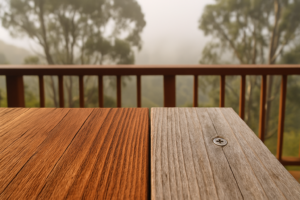
Ipe will weather to a silvery gray if left untreated. The gray patina is not structural damage, and some buyers prefer it. But if you want to hold the warm reddish-brown color that made you choose the wood in the first place, you need to clean and oil the deck on a regular schedule, typically once or twice per year depending on exposure.
In the Bay Area, the marine layer and salt air accelerate surface oxidation, particularly on west-facing decks near the bay or on exposed sites in coastal Marin. A deck in the Berkeley hills with afternoon sun and morning fog may need attention more often than the same material would in a drier inland climate. Plan for maintenance from year one, not as a reactive fix after the color is already gone.
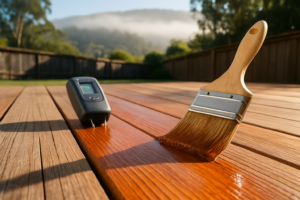
Oiling ipe is not complicated, but it does require the right product. Penetrating oil finishes formulated for dense tropical hardwoods work better than surface sealers, which tend to peel on wood this hard. The prep step, cleaning off oxidation and mill residue before the first application, matters as much as the oil itself.
For buyers comparing ipe to other decking options on long-term maintenance requirements, the Thermory vs. cedar and composite comparison and the redwood vs. composite vs. modified wood breakdown both cover the maintenance side of those materials in honest terms.
Ipe, Cumaru, and Garapa: A Quick Comparison
Ipe is the most recognized tropical hardwood decking option, but cumaru and garapa are worth knowing about. They share similar density and fire-resistance properties at somewhat different price points and workability levels.
| Species | Janka Hardness (lbf) | Fire Resistance | Workability | Relative Cost |
|---|---|---|---|---|
| Ipe | ~3,680 | High; can qualify as ignition-resistant when listed | Requires carbide bits, pre-drilling mandatory | Higher end of tropical hardwood range |
| Cumaru | ~3,540 | Similar to ipe; check product listing | Slightly easier than ipe; pre-drilling still required | Somewhat lower than ipe in most markets |
| Garapa | ~1,680 | Lower density; verify listing before WUI use | More workable; closer to domestic hardwoods | Generally lower than ipe or cumaru |
How to Think About the Buy Decision
Ipe and similar tropical hardwoods are genuinely high-performance materials. But they are not the right answer for every project, and they are not a universal upgrade over composite.
The honest framing is this: ipe is a high-performance, high-commitment option. It asks more from the installer, more from the buyer on maintenance, and more from the supply chain on documentation than most other decking materials. When those demands fit the project, the results are worth it. When they do not, other materials do the job better.
The three questions that actually drive the decision:
- Budget: Tropical hardwoods carry a price premium over most composite and domestic wood options. Get a specific quote based on your actual board footage before comparing categories.
- Maintenance commitment: If the buyer or property owner will not reliably oil the deck every year, ipe will gray out and the investment loses its most visible advantage.
- Documentation requirements: If the project has a material submittal requirement or the buyer wants FSC-certified sourcing for any reason, that needs to be confirmed before ordering, not after.
For contractors working on projects in WUI-designated areas of Oakland or Berkeley, verifying the specific product listing before spec-ing any ignition-resistant material is a non-negotiable step. The pressure-treated wood label guide covers how to read compliance documentation on treated products, and a similar discipline applies here.
Frequently Asked Questions About Ipe and Hardwood Decking in the Bay Area
Is ipe actually cooler to walk on than composite decking?
In full sun on a south- or west-facing deck, yes, ipe typically runs cooler than a dark composite board. Dense wood does not absorb and hold heat the way composite does. But the gap narrows in partial shade, and on a north-facing deck or one under regular fog cover, the difference is minimal. If heat retention is the main concern, the actual orientation and shade conditions of the deck matter more than the material category.
Does ipe meet California WUI fire code for Oakland and Berkeley hillside decks?
It can, but not automatically. Ipe’s natural density gives it ignition-resistant properties, and specific ipe products can be listed as ignition-resistant material under California’s WUI requirements. The key word is listed. You need the product to have an actual compliance listing, not just a general claim about the wood species. Verify the listing for the specific product before it goes on a spec sheet for a WUI project.
What does FSC certification actually mean for ipe decking?
FSC stands for Forest Stewardship Council. An FSC chain-of-custody certification means an independent auditor has verified that the wood was harvested from a legally managed forest and that it can be traced through the supply chain from that forest to the end buyer. It is the most recognized third-party standard for tropical hardwood sourcing. Ask your supplier for the certificate number and verify it on the FSC’s public database.
How often does ipe need to be oiled in the Bay Area?
For most Bay Area decks, once a year is the baseline. West-facing decks near the bay or in coastal Marin, where salt air and wind exposure are higher, may need attention twice a year to hold color. If the deck is allowed to gray out before oiling, it requires a cleaning step first to remove oxidation. Penetrating oil formulated for dense tropical hardwoods works better than surface sealers, which tend to peel on wood this hard.
Are cumaru and garapa good alternatives to ipe?
Cumaru is the closest comparison. It shares similar density and can carry similar fire-resistance properties, typically at a somewhat lower price point than ipe in most markets. Garapa is softer, more workable, and generally less expensive, but its density is lower, so it does not carry the same fire-resistance credentials. If you are spec-ing for a WUI zone, verify the listing for whichever species you choose, not just the category.
Can I use hidden fasteners on an ipe deck?
Most hidden fastener clip systems are not a good fit for ipe. The wood is too dense to cut a clean groove profile for clip-style systems, and many clip products are not rated for wood this hard. Face-fastening with stainless steel screws into pre-drilled pilot holes is the standard approach. It adds labor but produces a reliable, long-lasting result.
Ready to Spec Ipe or Compare Your Decking Options in Person?
If you are working through a decking decision and want to see actual material samples or talk through sourcing documentation for a specific project, the team at Truitt & White’s Hearst Avenue lumber yard in Berkeley can help. We carry tropical hardwood decking options and can speak to what documentation is available for the products we stock. Call the lumberyard at 510-841-0511, or stop by 642 Hearst Avenue any weekday to look at boards and ask real questions.